Our Weekly Economic News Roundup: From Sunk Costs to Spare Parts
October 31, 2026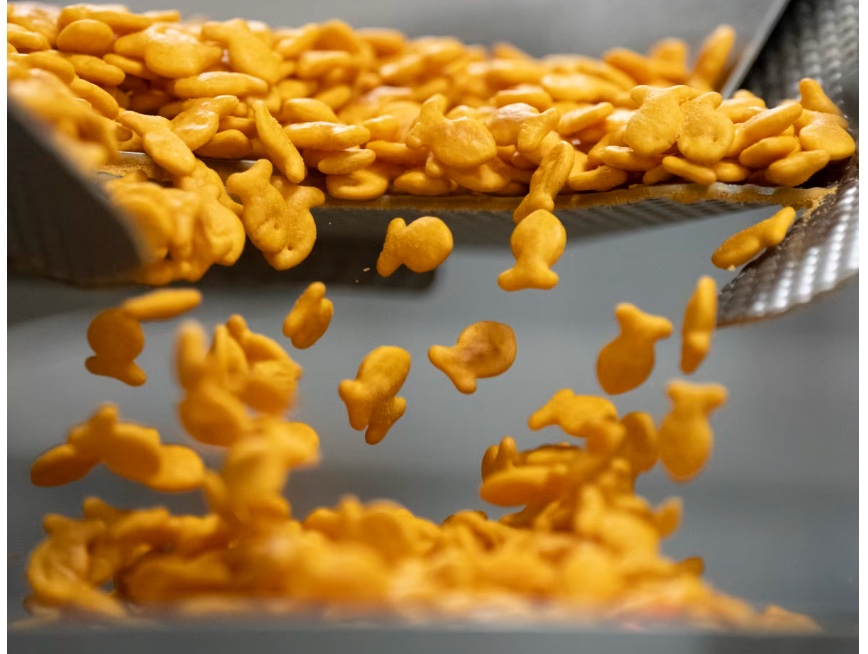
Campbell’s recently learned that it’s not easy to be gluten-free.
This is the story.
New Kinds of Goldfish
Our Goldfish story started with a Swiss baker whose wife was a Pisces. As a present, in 1958, he created the first Goldfish for her birthday. Four years later, Pepperidge Farms founder Margaret Rudkin saw them during a European vacation, bought the license, and created a new U.S. bar food. Approximately 10 years later, expanding the market to kids, Campbell’s added the smiley face. More recently, they created Goldfish Mega Bites (50% larger) and flavored versions. When a sales bump never emerged, they went back to kids.
At this point, Campbell’s knew it needed a gluten-free version. However, their R&D initially hit a glitch. Affecting the texture of the dough, gluten made it springier. As a result, when the gluten was removed, the stretched dough no longer popped back to form the normal Goldfish face. Instead, looking rather like the shark in Jaws, it remained stretched. The stretched dough was also too sticky for Campbell’s usual equipment.
So, they modified the equipment, tweaked the recipe, and will soon sell us a gluten-free Goldfish cracker with the right smile.
Our Bottom Line: Competitive Market Structures
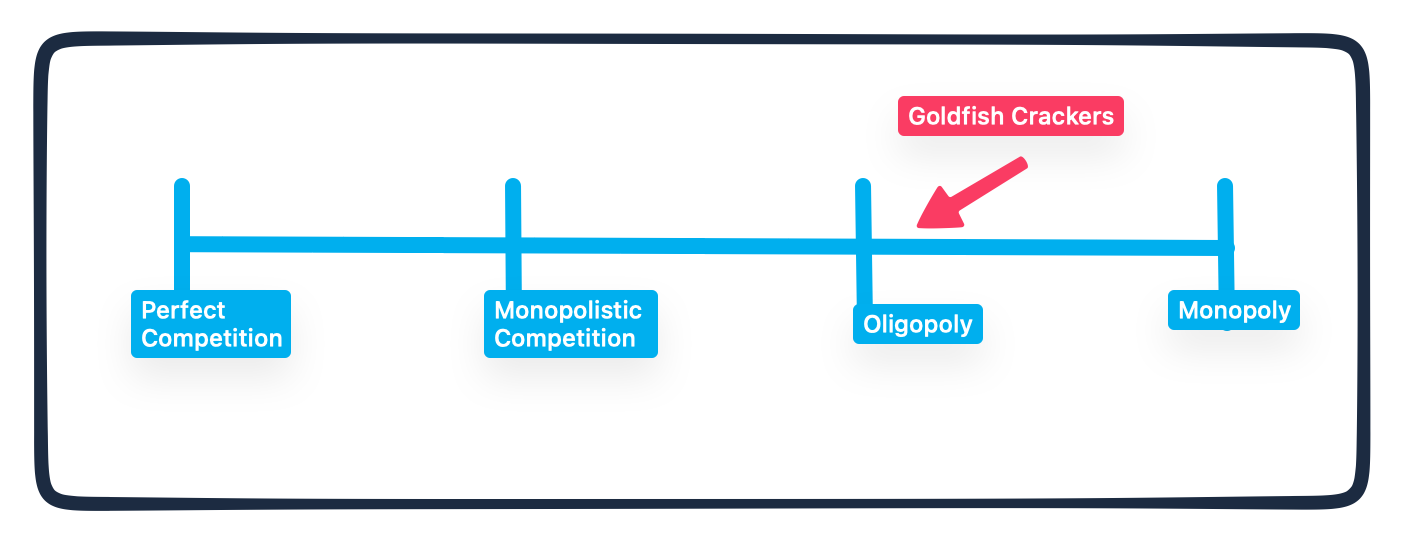
Whether looking at Starbucks’s monopolistic competition or Goldfish Crackers’ oligopolistic market, we see the power of the supply side. Rather than competing with price, they try to grab our attention with a gluten-free recipe.
One reason is their market structure.
Moving from left to right on our continuum of market structures, firms grow larger and more powerful. With perfect competition, we find markets populated by many small firms that produce almost identical products such as potatoes or asparagus. Next, monopolistic competition takes us to businesses that are somewhat larger like coffee shops and supermarkets. Coffee shops, for example, produce many of the same kinds of items but have something distinctive (iced chai) that gives them product differentiation. Then, with oligopoly, we have several large firms (like Campbell’s) that are dominant, and finally, at the other end, monopoly takes us to a single firm’s dominance.
As an oligopoly with massive manufacturing facilities and millions of customers, the gluten-free Goldfish required adjustments that retained their economies of scale:
My sources and more; Thanks to WSJ for inspiring today’s post and providing all of our facts.