6 Facts: What It’s Nice To Know About Money
November 19, 2026
Have you ever found a package delivery in a front yard bush? It appears that, worried about a porch pirate, the Amazon delivery person left my daughter’s package there.
Porch Piracy
If your household is typical, last year you received 167 packages. Now, though, with the holidays, when our online orders accelerate, so too does theft. During 2025, approximately 104 million packages were stolen in the U.S.
Package pirate MOs vary. Some just do it on impulse. Others follow the delivery truck. Aware of our video surveillance, thieves wear masks and wigs, and even pose as delivery drivers. Meanwhile, hacking into carrier sites, the planners use tracking information. Research indicates that homes located closer to the street get hit more often. Correspondingly, the ideal package is large enough to see from the street but small enough to carry. And contrary to other theft statistics, close to 50% are women, have a bachelor’s degree or higher, and have full-time jobs, while 21% earned more than $100,000 annually.
Porch Piracy Cues:
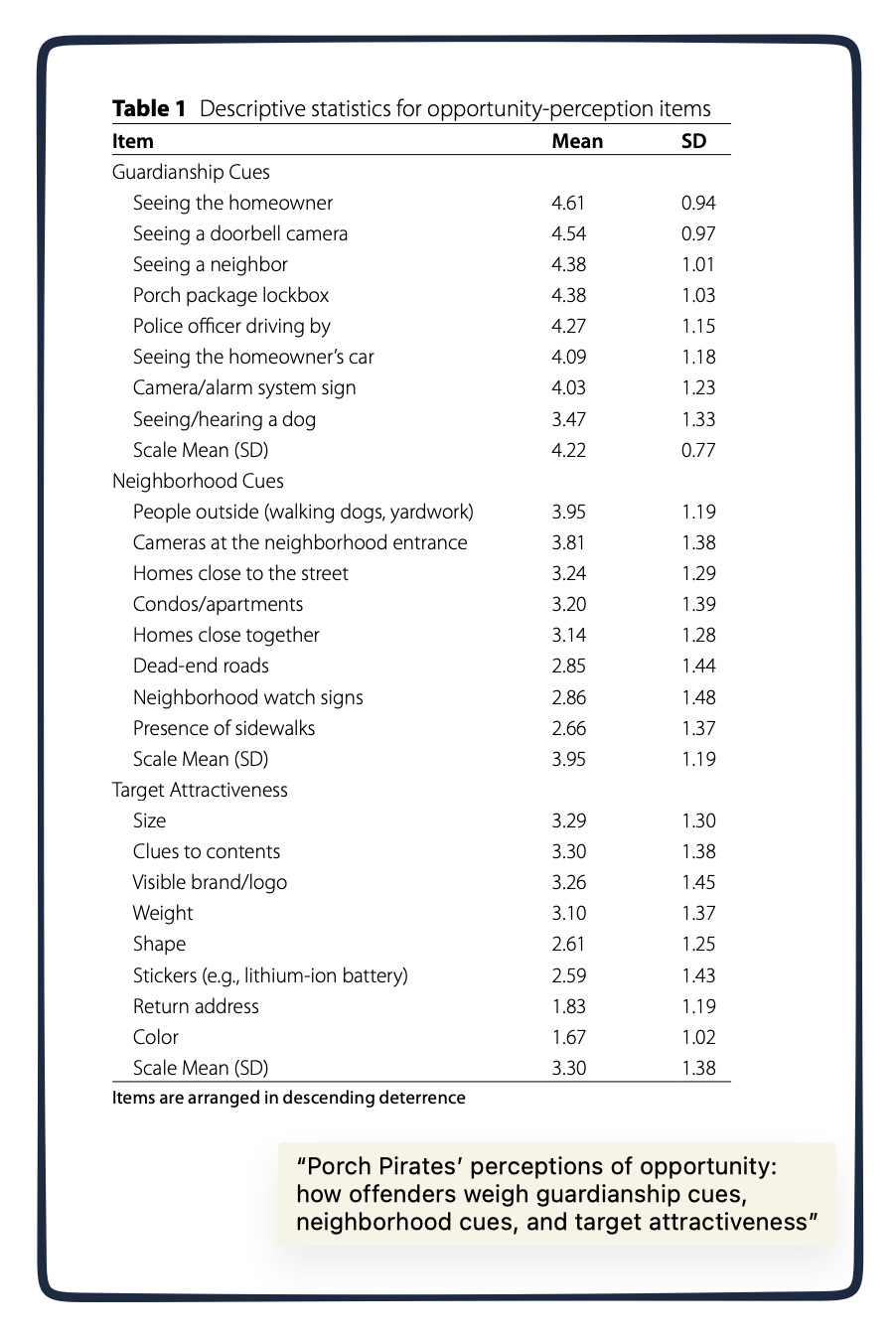
But the most typical statistic is never getting caught. The reason? When we realize our package was swiped, most of us contact the seller. Looking for a credit, a replacement, or our money back, we don’t want the police. As a result, one criminology college professor says porch thieves tend to be repeat offenders. After surveying 302 self-proclaimed porch pirates, he concluded that 57% had done it several times.
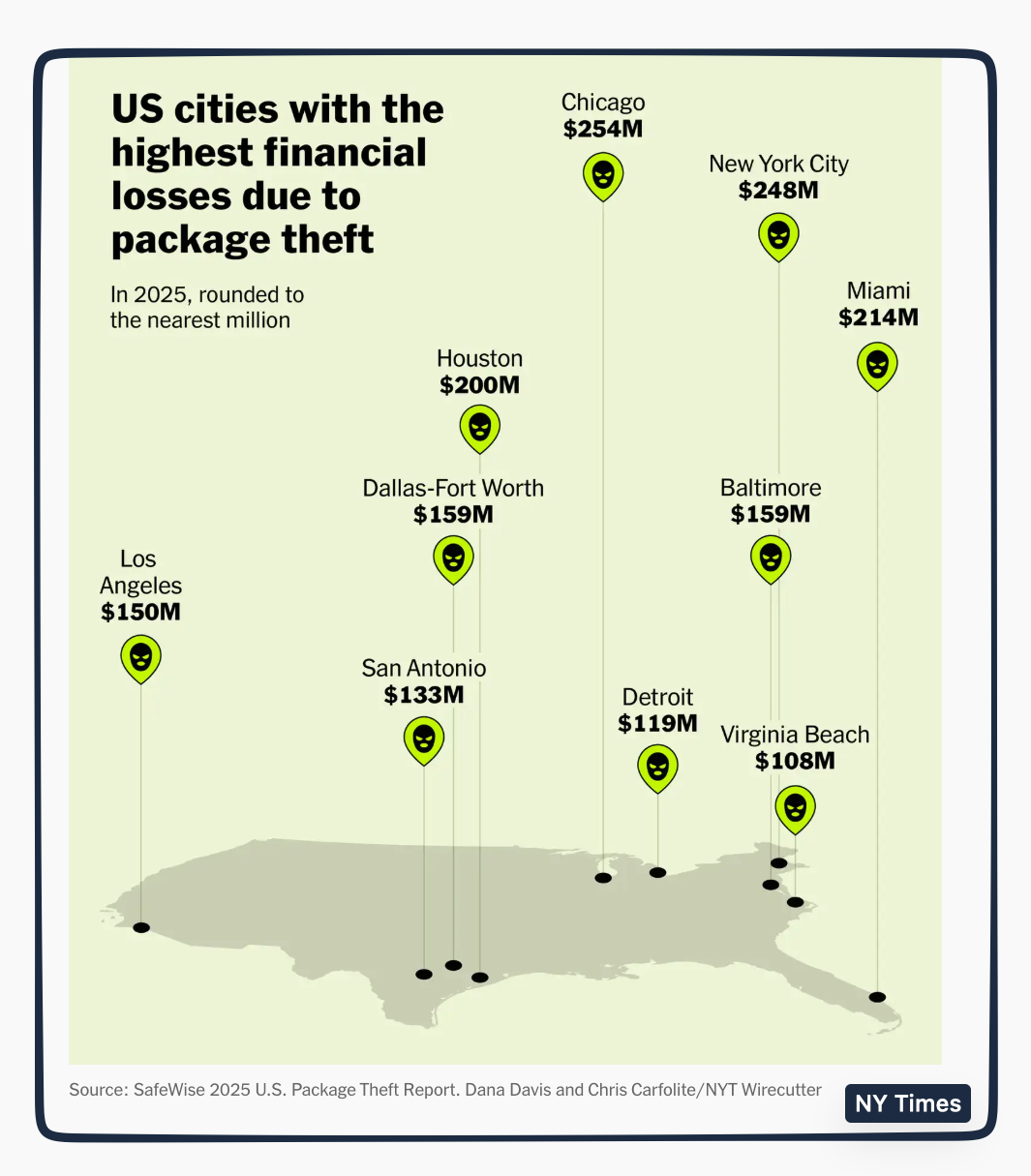
Happening everywhere, package swiping has no geographic concentrations. A city, though, is the more likely venue:
Our Bottom Line: Tradeoffs
In his Nobel lecture, economics laureate Gary Becker tells us that he began thinking about crime after rushing to an obligation on the Columbia University campus. Unable to find a parking space, he had to decide between an illegal spot and a costly parking lot. Choosing the illegal alternative, he said the tradeoff was worth it since the ticket was unlikely.
Similarly, explaining a rationale for crime, Becker suggested cost/benefit analysis. Criminals, he concluded, sidestep legitimate activities for their illegal benefits. Balancing the penalty and its likelihood with the benefit of the crime, they act rationally.
Dr. Becker could have been talking about porch piracy.
My sources and more: Thanks to this NY Times porch pirate article for inspiring today’s post. From there, we returned to Gary Becker. Then, Econlib and this new paper did a deeper dive into porch piracy.
Please note that several of today’s sentences were in a past econlife post.