Where Democracy and Free Markets Correlate
November 2, 2026
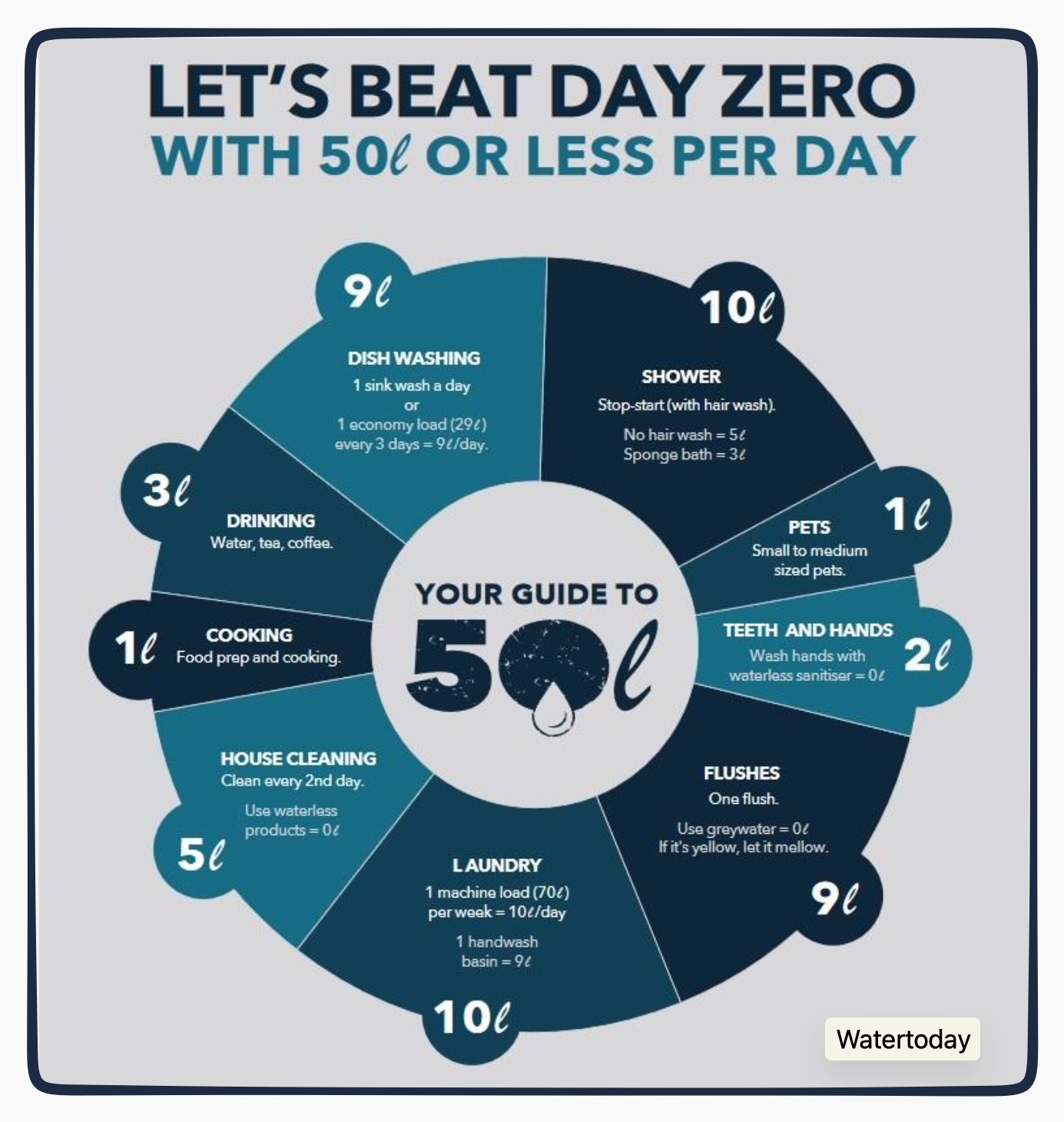
During a typical shower, we use 65 litres of water. When Cape Town South Africa almost ran out of water in 2018, people had to get used to 10 litres (with a hair wash!). At the same time, you could not wash your car or fill your swimming pool or flush more than once a day. With water pressure set at dysfunctionally low levels, the goal was to encourage conservation by making water use more costly.
Massively less than normal, residents learned how much water to use every day:
Now Johannesburg could run dry.
Water Woes
Johannesburg
Responding to water shortages, some Johannesburg residents acquired their own water storage tank while others scheduled more frequent water deliveries or drilled boreholes. But the last and only resort for many was the lineup at communal taps. At the same time, some businesses temporarily shut down, and families had to decide who gets how much water.
The main culprit is the water infrastructure. Because of ageing pipes. half of the municipal water supply leaks before it can be used. In addition, making a tough situation worse, occasional electricity outages shut off the water pumps that supply the city.
United States
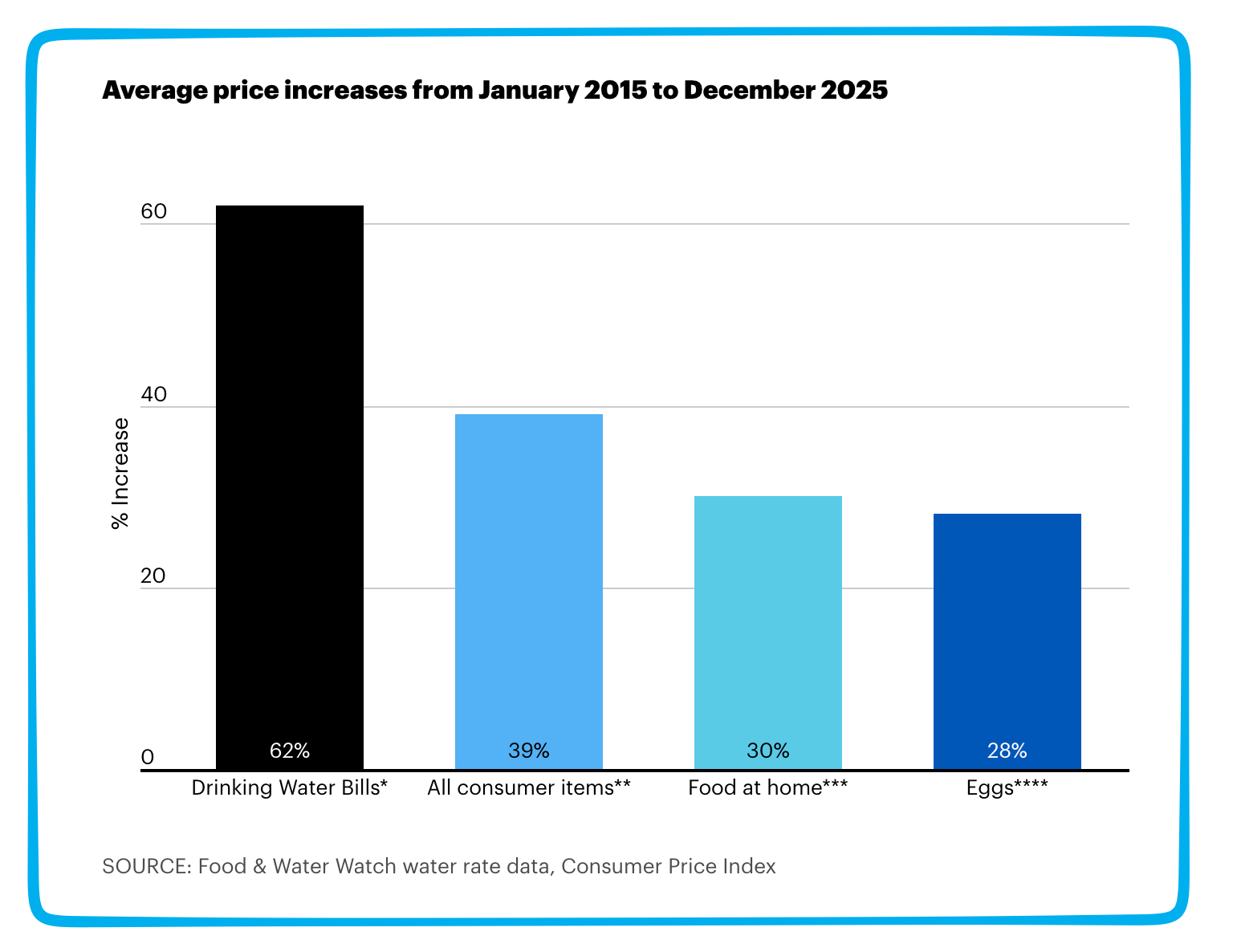
In the U.S., water has become increasingly expensive.
Between 2015 and 2025, U.S. drinking water bills were up 62% (double the 30% rise in grocery prices).
In many places, low-income households faced water shutoffs from unpaid bills. But still, it depends on where you live.
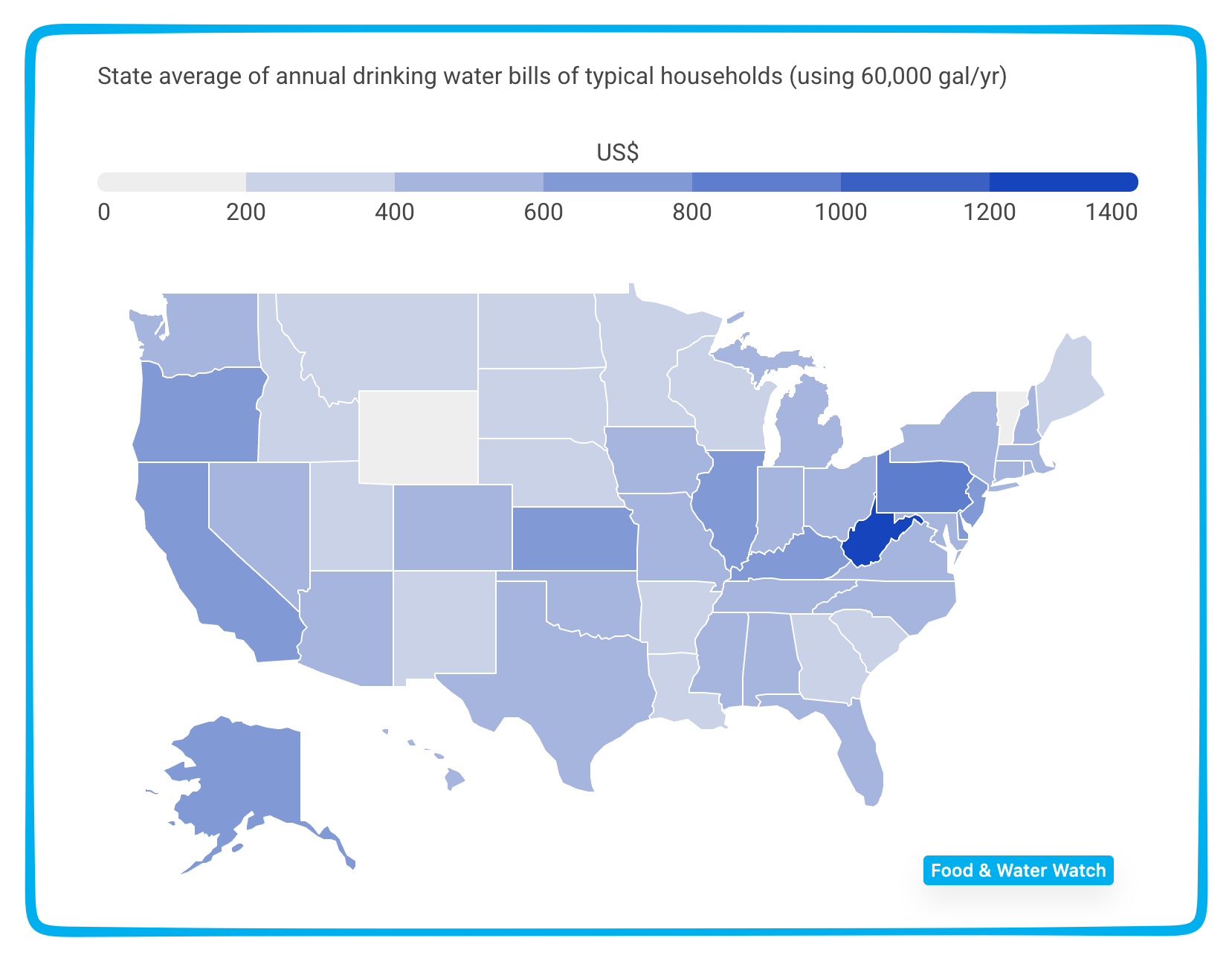
With Idaho the lowest, at an annual average of $286 and West Virginia’s $1383, among the highest, water rates vary:
Similar to Johannesburg, soaring costs have been fed by ageing infrastructure, inadequate investment, industrial pollution, climate change, and now AI data centers.
Our Bottom Line: The Diamond Water Paradox
Adam Smith wondered why water costs much less than diamonds. After all, we need water to survive while diamonds are merely an extravagant luxury. Years later, economists had the answer.
They just had to think at the margin, about the cost of the next extra unit.
With water, when there is a lot, the next extra glass, or flush, or shower costs little. Totally though, water is priceless. With diamonds, the opposite is true. We would rather have that one extra diamond and will pay a lot for it. But, the total usefulness of diamonds is small compared to water.
Economists here say that we are comparing marginal utility to total utility—the usefulness of the next extra unit that we consume differs from its total usefulness.
When the residents of Cape Town believed Day Zero was imminent, the marginal utility of water soared.
My sources and more: Thanks to Bloomberg (gated), here and here for inspiring us today. From there, Africa’s Mail & Guardian and Food & Water Watch had much more detail. Meanwhile, if you want more on water, diamonds, and the paradox of value, econlib is always a handy destination. (Please note that some of Our Bottom Line was in a previously published econlife post.)