When a Hot Chili Pepper Is Like a Roller Coaster Ride
November 22, 2026
Soon, on December 11th, the September CR (Continuing Resolution) will expire.
Not wanting to stop discretionary spending on items like judges’ salaries and highway maintenance, on September 2, 2026, the U.S. Congress passed the CR. Mostly, it covered discretionary budget appropriations because almost all of entitlement spending is mandatory.
Now, since Congress has not approved the President’s budget, we need another CR. The downside is that it continues the spending that has fed a growing federal deficit.
Let’s look at it through 6 facts.
Growing Federal Deficits
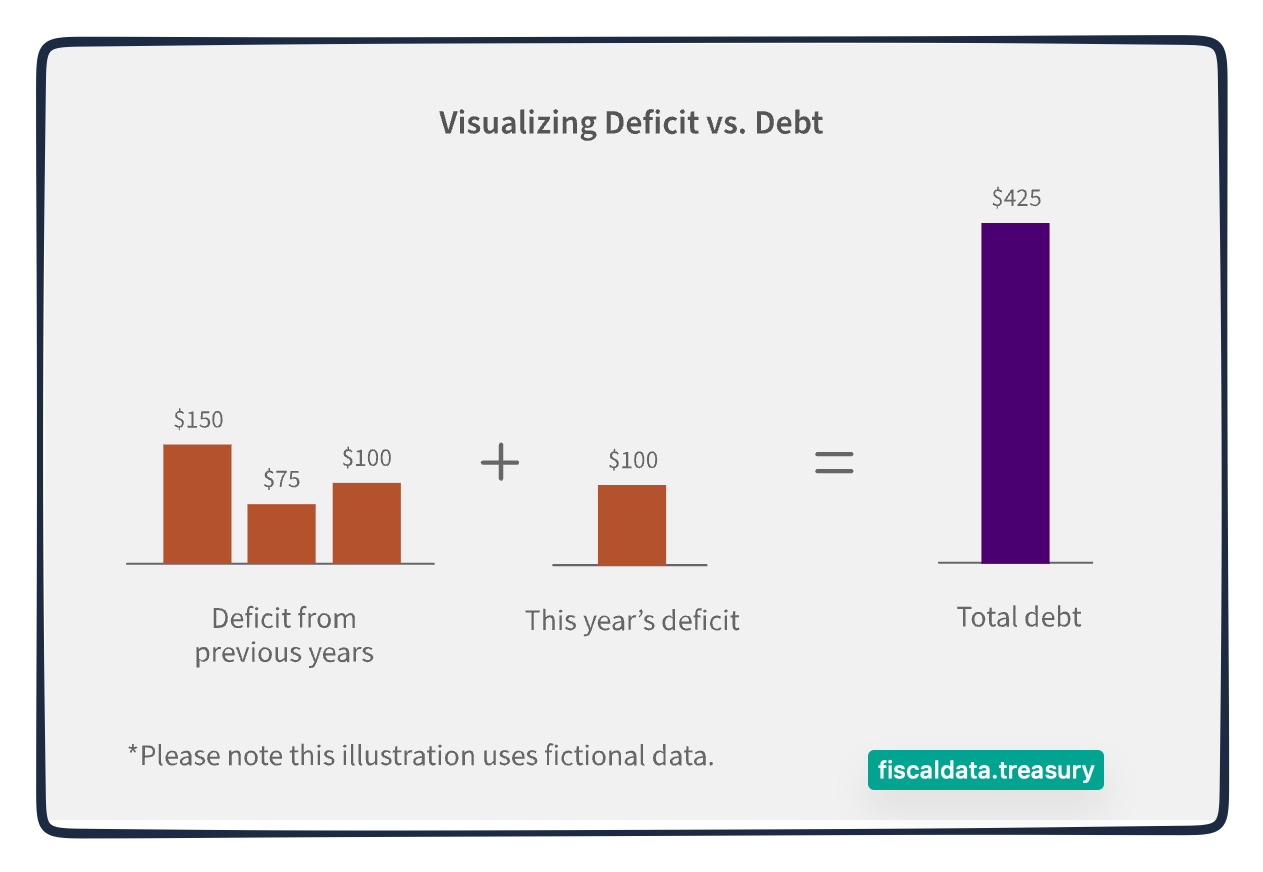
1. Together, annual deficits add to the debt:
2. The federal deficit has been trending upwards: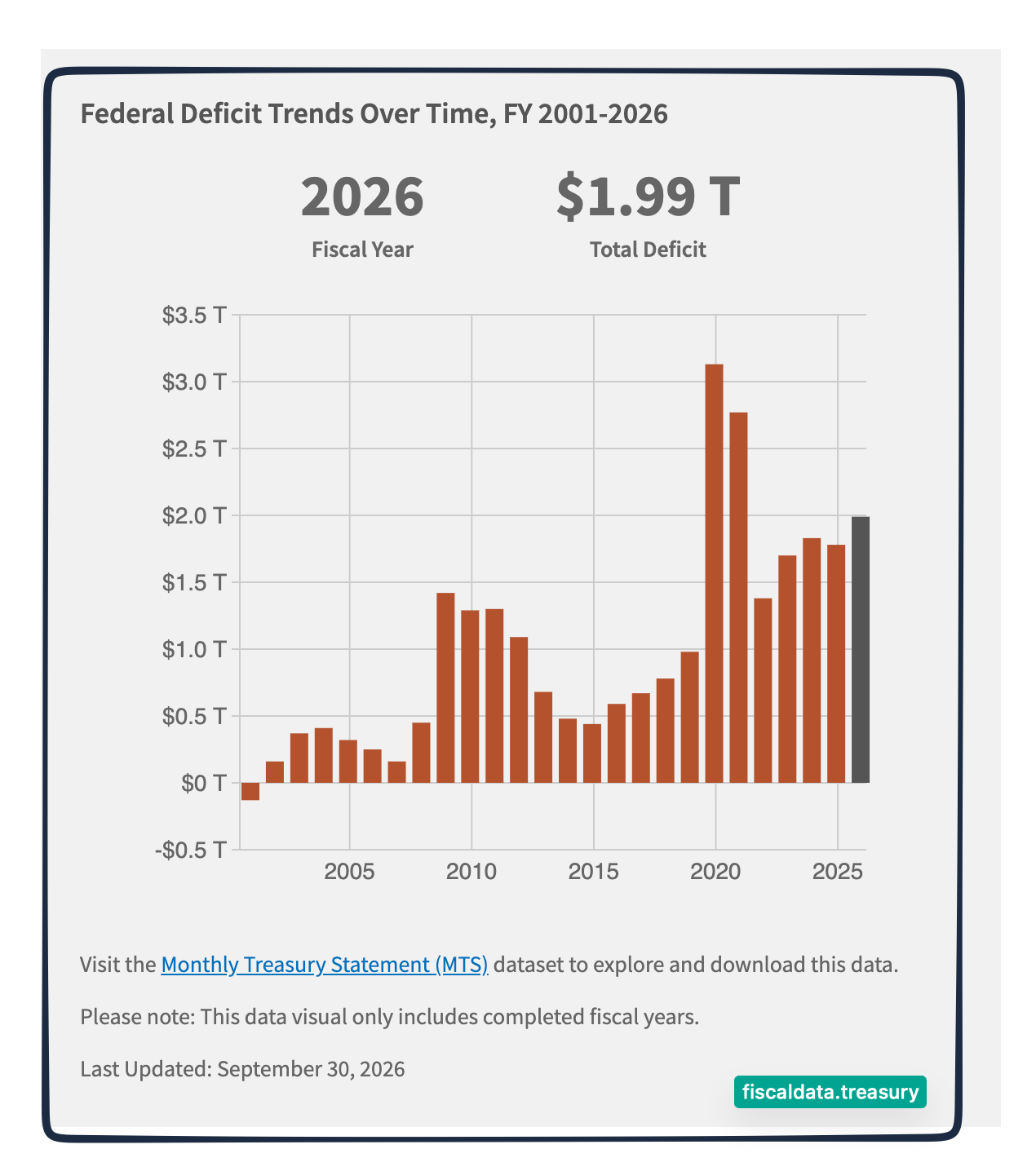
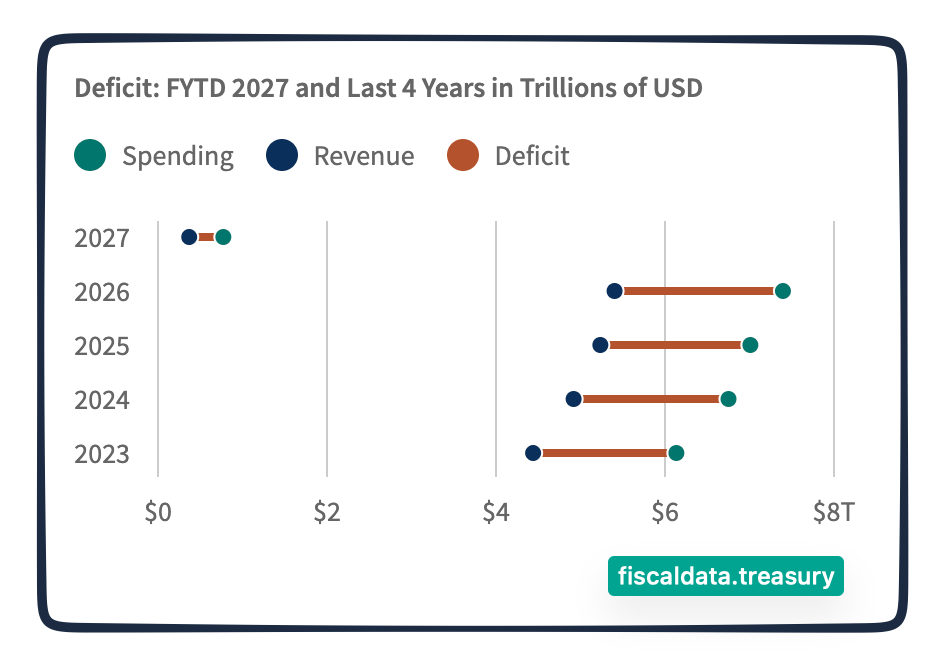
3. For every $5 collected by the government, we spend $7.
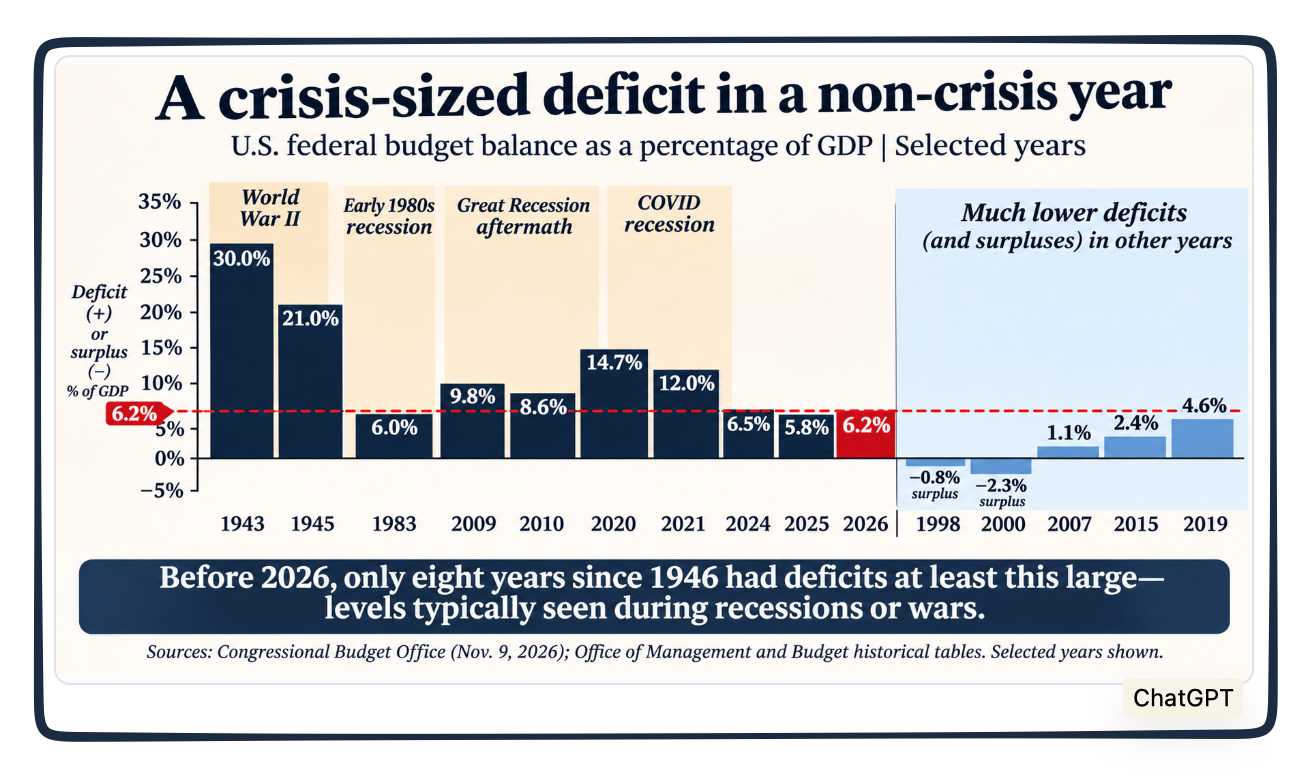
4. The deficit is 6.2% of GDP.
Comparing the size of the deficit to the GDP lets us decide if it is unacceptably high. The comparison is like judging a personal loan. If your annual salary is $1 million, then at 5%, borrowing $50,000 is okay. However, with yearly pay of $100,000, you should avoid a $50,000 obligation.
Similarly, we would like to avoid a deficit that is 6.2% of the GDP:
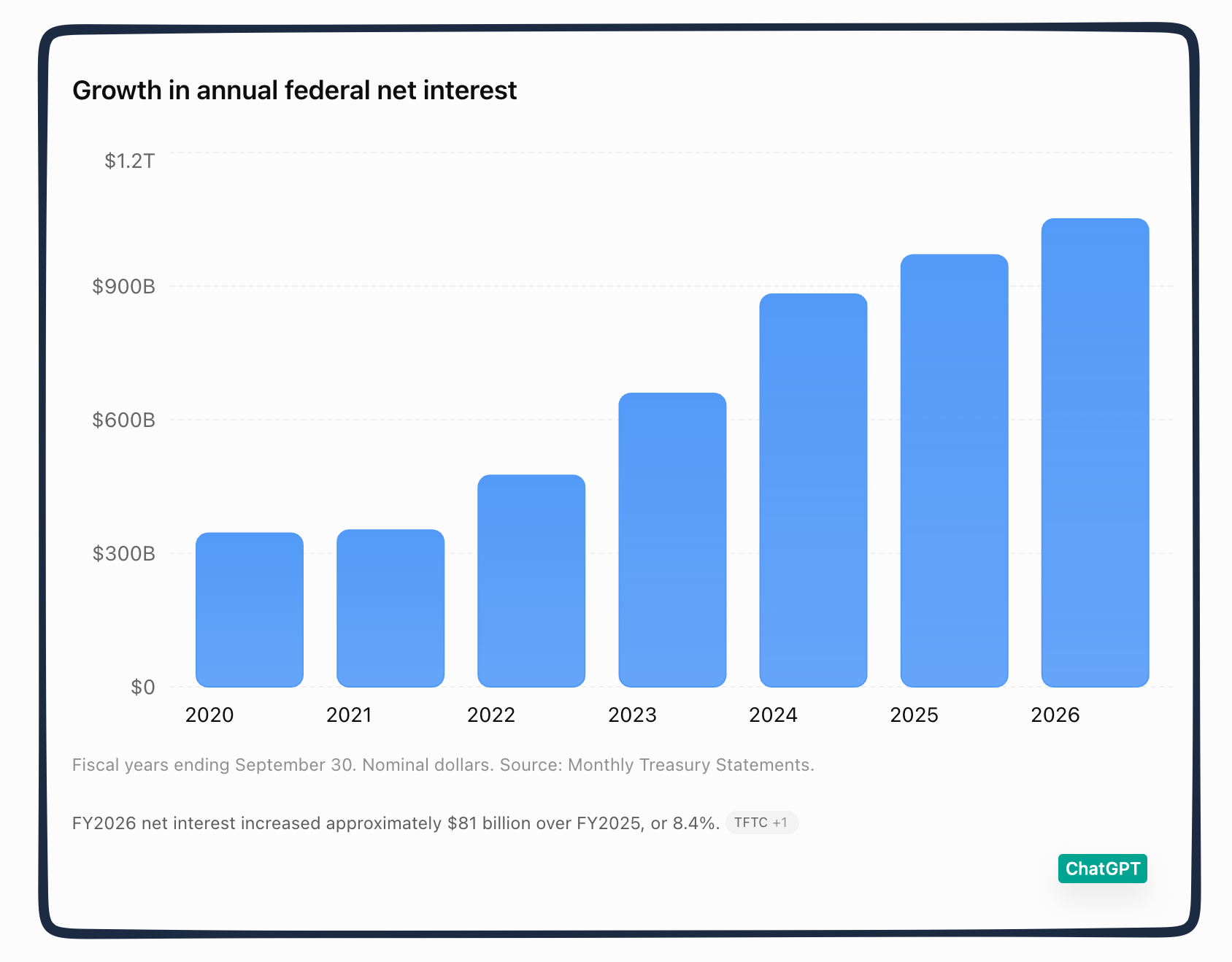
5. The result has been a ballooning interest expense:
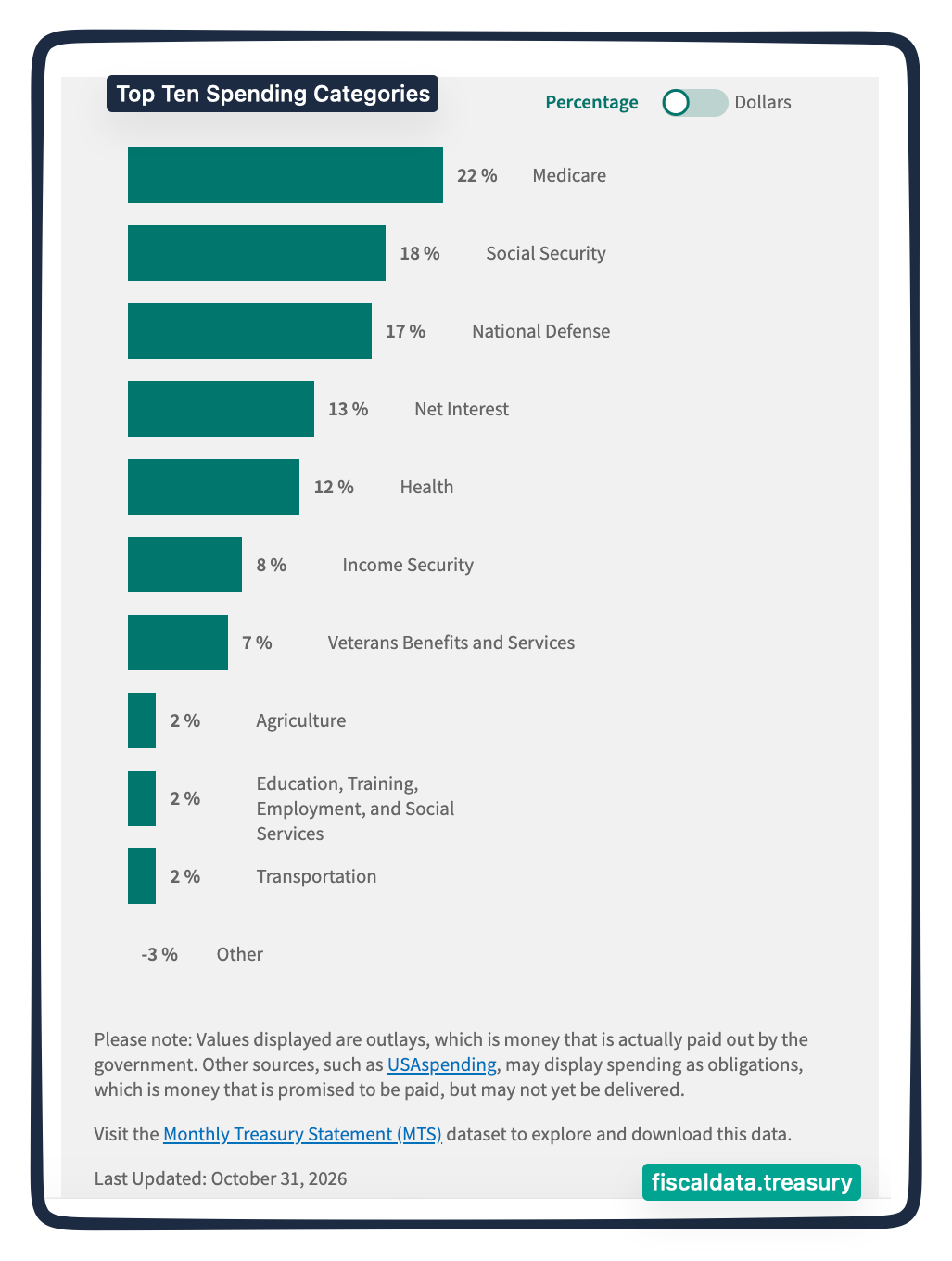
6. Correspondingly, interest is the fourth largest spending category.
Interest spending grew because rates have gone up for recent borrowing, and we owe more:
Our Bottom Line: A Virtuous Cycle
Lower interest rates depend on the virtuous cycle. Because the U.S. is a dependable borrower–not a chance for a default–we get the lower interest rates that signal less risk. Called a virtuous cycle, because we pay our debts, we can pay our debts.
But also as a second cycle, interest spending fuels the deficit. Necessitating more borrowing, it adds to the deficit…and then with more borrowing, again we have more interest that further adds to the deficit.
And finally, for more about why the deficit grows, I suggest this past post.
My sources and more: Having listened to a Platypus podcast on the debt during today’s walk, I was especially interested in the December 11th CR expiration. Then, we went to the U.S. Treasury, the Committee for a Responsible Budget, and the Bipartisan Policy Center for more detail. Also, I should note that University of Michigan economist Justin Wolfers expressed the $7, $5 comparison.