
Why the Employment Report Requires a Deep Dive
November 10, 2026
With COP31 having begun, we can first look back at COP29 and COP30.
Bloomberg summed up COP 29:

Then, unable to locate a Bloomberg COP 30 summary graphic, I asked ChatGPT to create one:
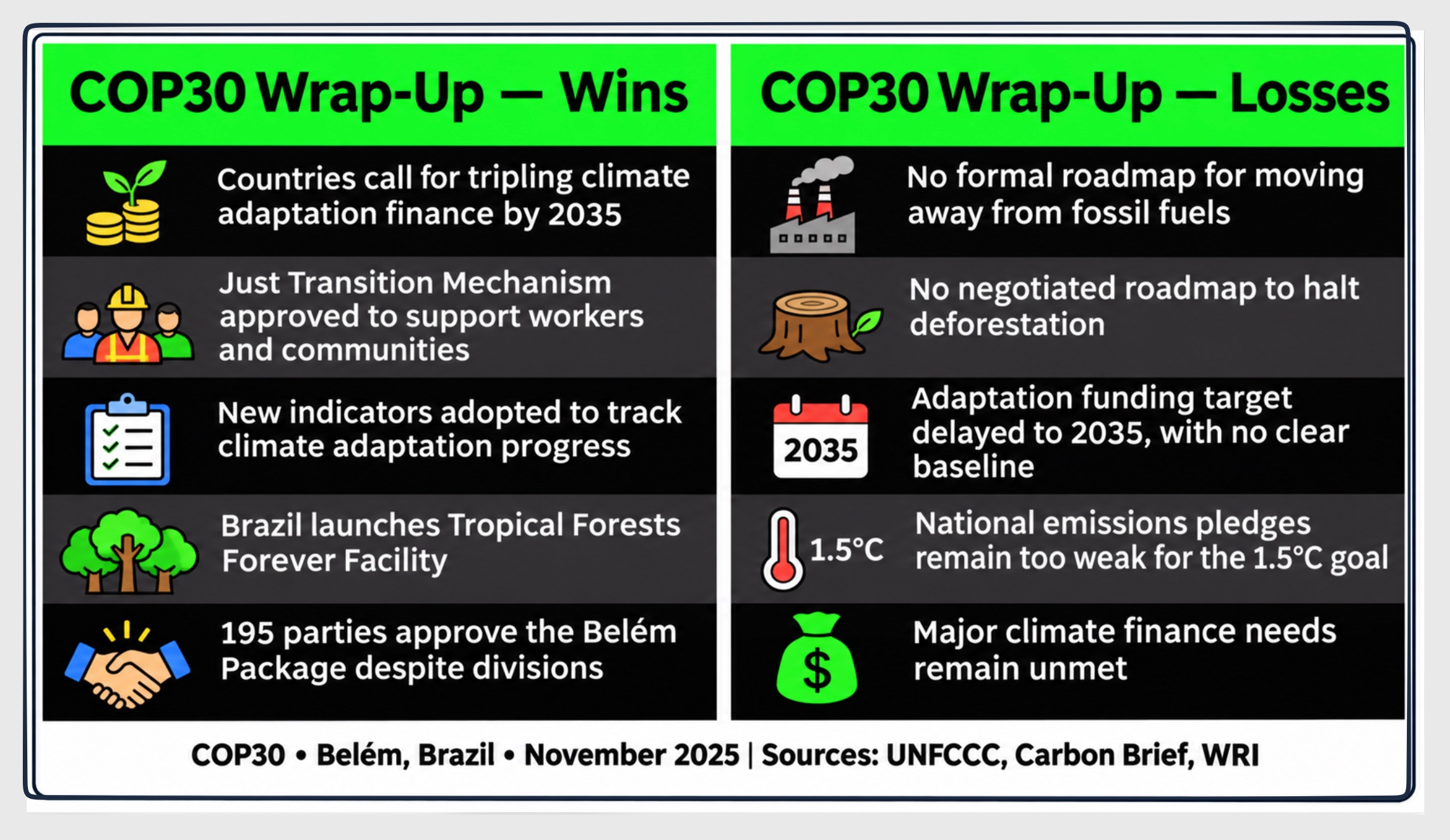
Two Battles
Electrification
Now, taking the next step, reports from the November 9-20 COP 31 conference in Antalya, Turkey, indicate one focus is electrification.
The goal is to have electricity as a 35% share of energy consumed by 2035. Calling it 35 by 35, we would reduce carbon emissions by powering the planet with electricity instead of the traditional menu of coal or gas or nuclear. Switching from a fossil fuel vehicle to an EV, we could reduce carbon emissions by 40% to 60%. Similarly, heat pumps halve the carbon emissions from natural gas boilers.
During the past quarter century, electricity increased its share of total energy consumption:
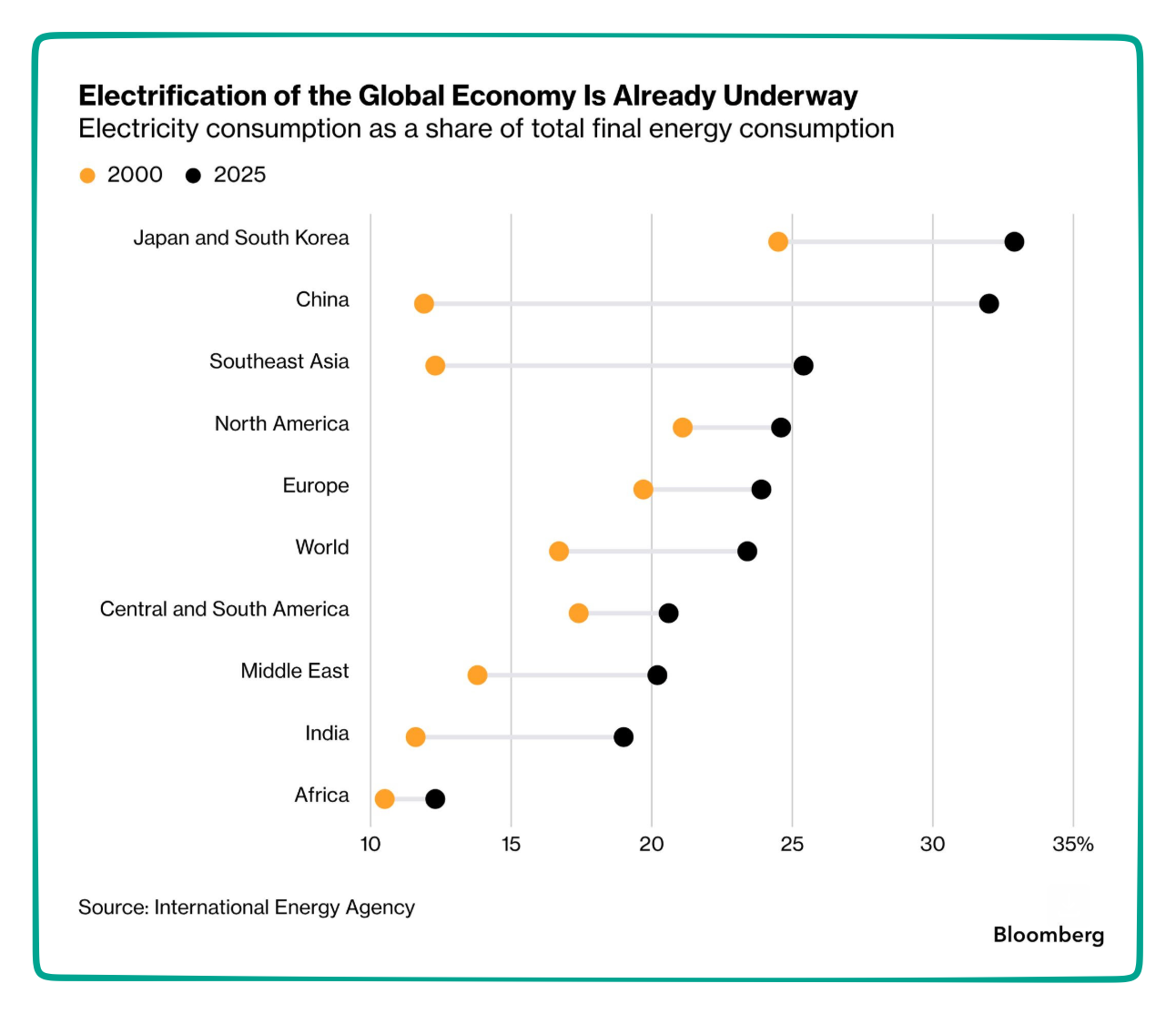
At this point, we can ask if we will wind up with an electricity battle between electricity-gobbling AI data centers and 35 by 35 advocates.
Climate Finance
Our second clash returns us to climate finance and an ever-present issue.
As in the past, during COP 31, we can assume that the politics of the wealthy world will continue to conflict with developing nations’ needs. The developed world’s voting constituencies are concerned with gas prices, inflation, and national budgets they want to deplete. Meanwhile, we have less affluent countries saying that because the rich nations created the carbon emissions, it is their job to pay for the clean-up.
The clean-up relates to the expense of replacing fossil fuels with cleaner energy (Mitigation). But also, someone needs to pay for the protections we need from global warming’s impact on droughts, floods, and extreme heat (Adaptation). And then finally, we can ask if the wealthy should pay the less affluent for climate-related damage (Loss and Damage).
Our Bloomberg COP 29 wrap-up reminded us of the $300 billion a year pledge to developing nations. Unmet, the promise will again be a source of tension this week.
Our Bottom Line: Tradeoffs
I wonder if our lack of sufficient COP progress returns us to the perpetual economic tradeoff between short-term pain, long-term gain, and the difficulty of delaying gratification.
My sources and more: Thanks to my Bloomberg Green email (otherwise gated) for inspiring today’s post. From there, we found a good Reuters summary of COP 31 issues. We also took a look at the UNEP Emissions Gap Report 2026, and Reuters’ summary of the climate finance battle.