![econlifelogotrademarkedwebsitelogo[1]](/wp-content/uploads/2024/05/econlifelogotrademarkedwebsitelogo1.png#100878)


Our Weekly Economic News Roundup: From Cookout Costs to American-Made Cars
August 22, 2026
How Lights Have Begun to Change Lives
August 24, 2026
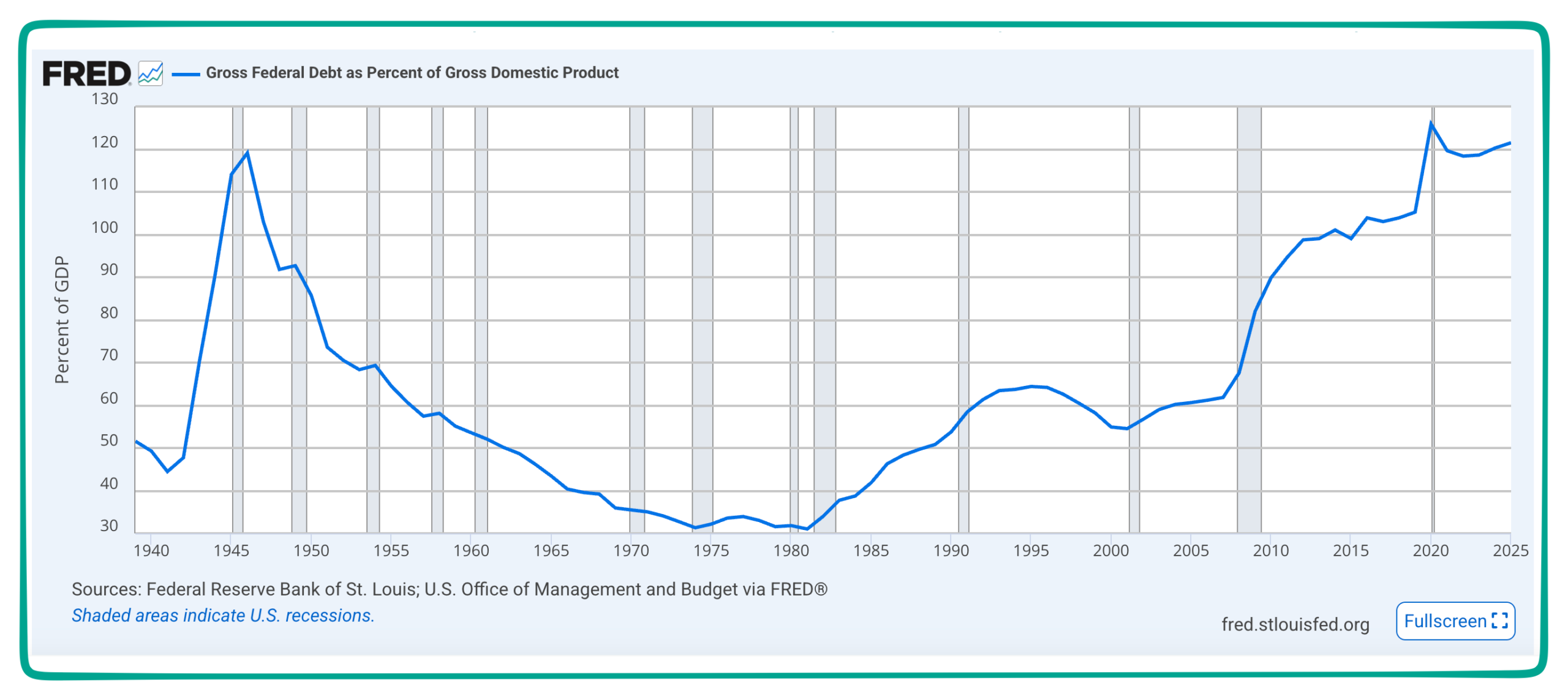
Instead of just hearing that federal spending surpassed $40 trillion, we can also decide whether it is affordable. As a result, it’s helpful to know the debt-to-GDP ratio. Rather like we know that a $2 million loan is massive for most of us, it is minimal for a billionaire. Similarly, $40 trillion is a lot for a smaller economy.
However, it could even be too much for the United States.
Beyond 120% and World War II highs, the federal debt-to-GDP ratio is in record-setting territory:
One reason for the country’s $40 trillion debt is its spending.
So, as a teacher, I created a quiz.
The following graphic displays these 11 budget categories::
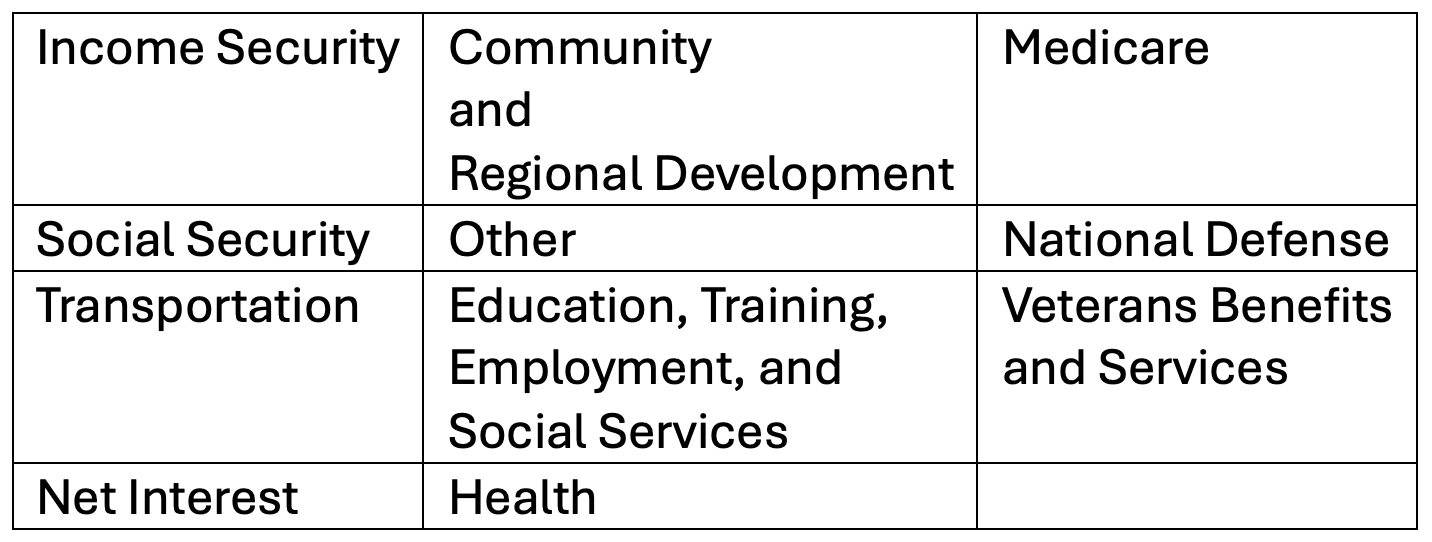
Please select the “bar” that represents each category. The answers follow “Our Bottom Line”:
And, where are we going?
To why it’s tough to cut spending.
Federal Spending
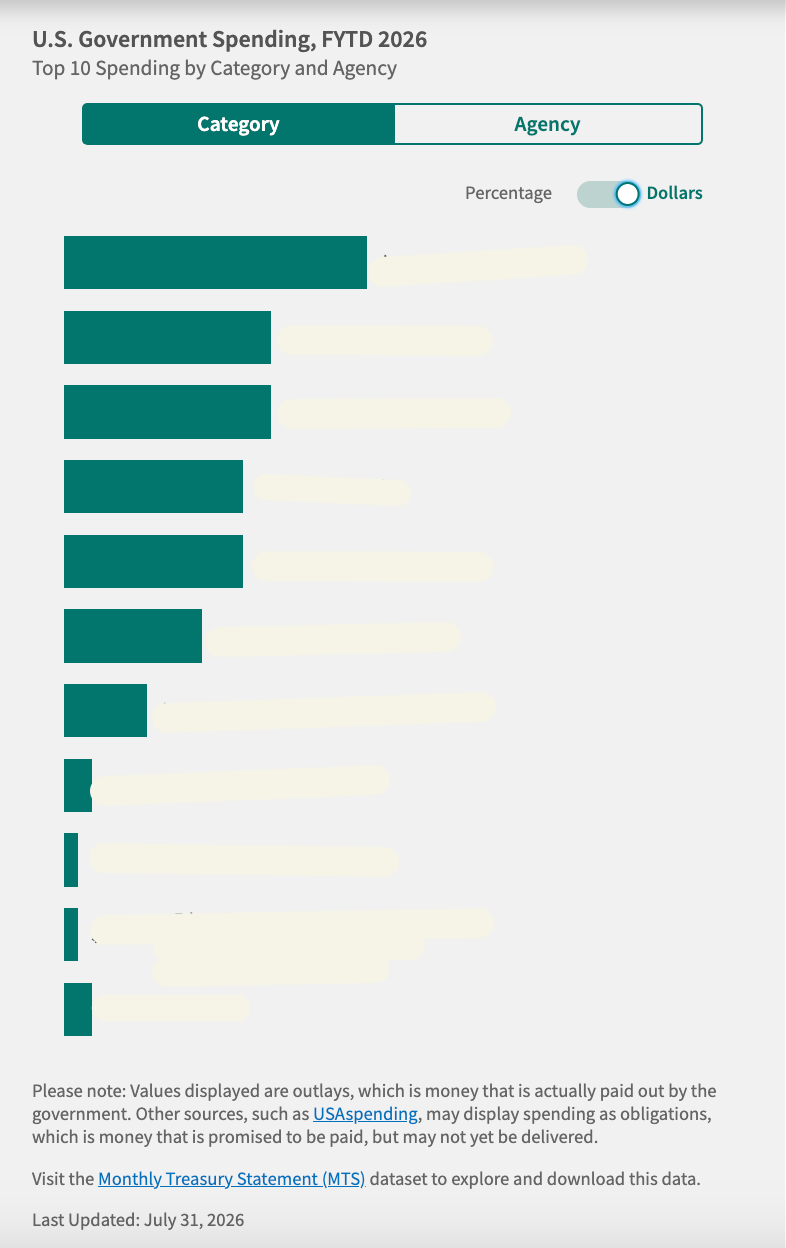
The big problem is the mandatory slice of the federal budget. Above, among the five longest bars–Social Security, Health, Net interest, Medicare, and National Defense–only National Defense is discretionary. The other four are mandatory expenditures. At a whopping 65%, those mandatory categories cannot be touched unless the laws change. And, making it even worse, Social Security and Medicare will be unable to cover all of their obligations during the next decade. So they will need more money.
That means we are left with a relatively small portion of the budget that can be cut. Called discretionary spending, that includes the smaller bars on our graphic. It takes us to our highways, education programs, the court system. Even when we cut the “waste,” it is a tiny part of what we spend.
Our Bottom Line: Fiscal Policy
Spending, taxes, and borrowing compose our government’s fiscal policy. The graphic that we began with covers spending through its categories. But also we have the net interest that we owe to everyone that loaned us money because our spending exceeds our revenue. Through the bills, bonds, and notes sold by the federal government, we borrow money. In return for those loans, we have to pay “net interest.” And, as we borrow more, almost in second place, our net interest expense soars.
The answers:
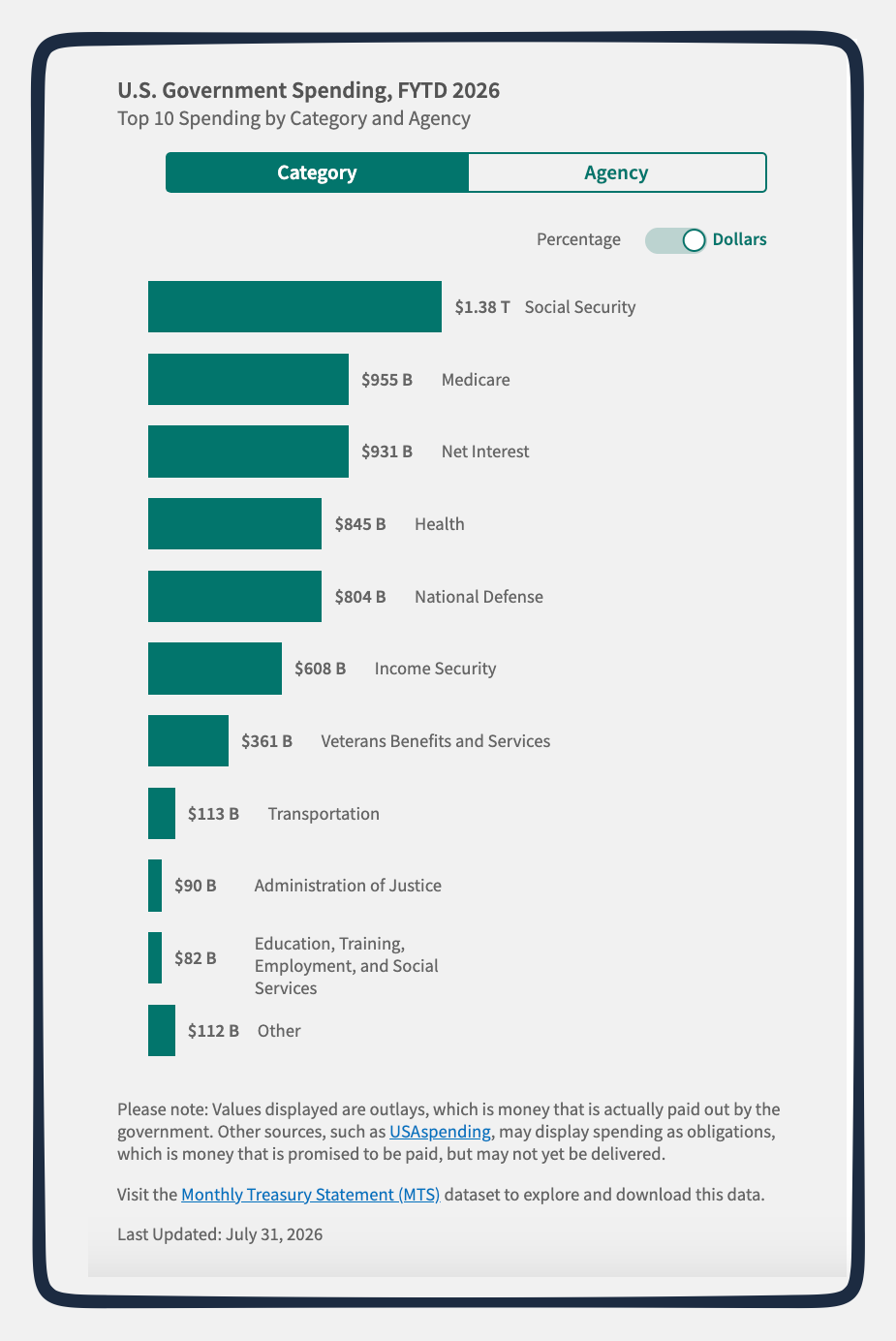
My sources and more: As a source of data for government spending, this U.S. Treasury site is ideal.
Please note that several of today’s sentences were in a past econlife post.