![econlifelogotrademarkedwebsitelogo[1]](/wp-content/uploads/2024/05/econlifelogotrademarkedwebsitelogo1.png#100878)


Why Measuring Oil Takes Us To Mount Everest
October 1, 2026
October 2026 Friday’s e-links: From Dolly Parton to Gloria Steinem
October 2, 2026
Before China gets more babies, it needs more weddings. As a result, the government gave couples more romance. Adding pink balloons, love poems, and ornate chandeliers to a sprinkling of locations, they hoped to create “wedding meccas.” Nanjing’s wedding registration office even sits on a heart-shaped island, while other incentives include vouchers for honeymoons and cash for babies.
You can see the trend:
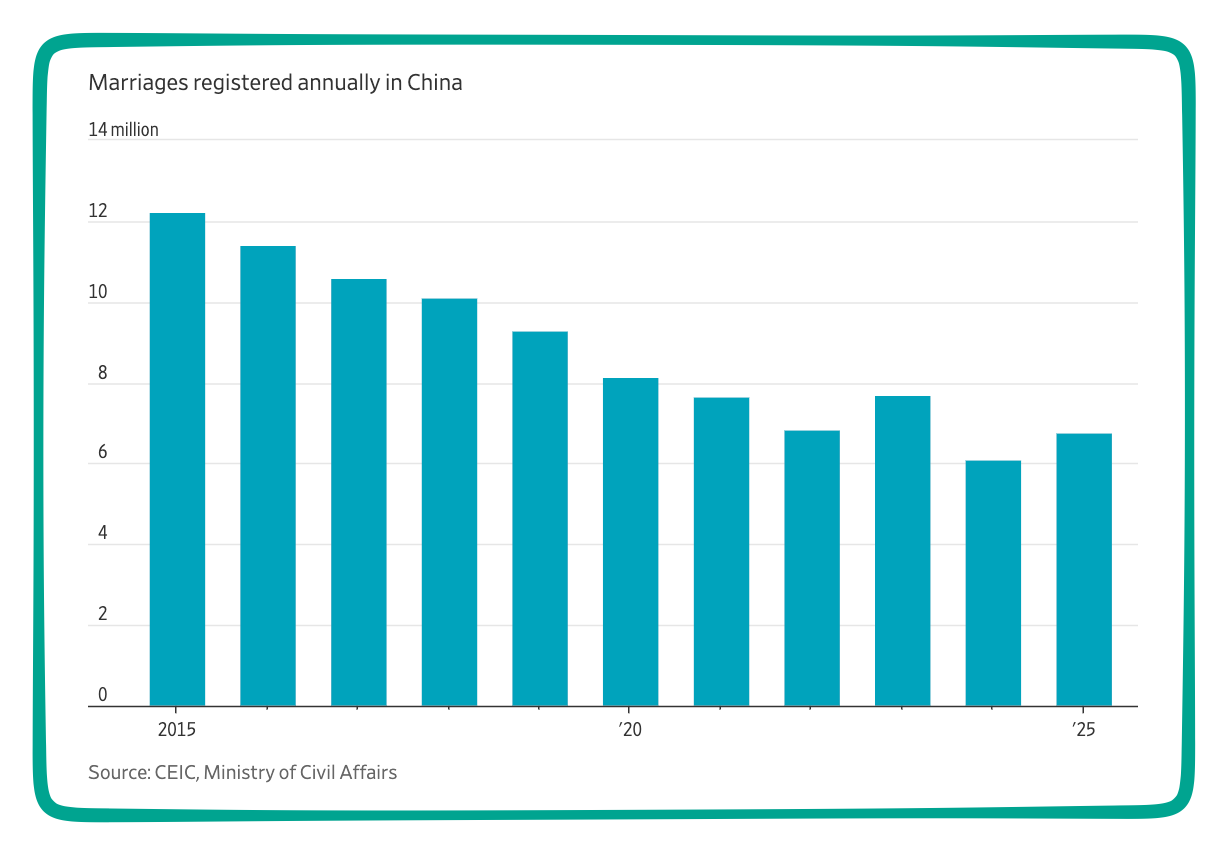
Adding a new 13% contraceptive tax, they still had not created a “birth-friendly” country.
China’s Decreasing Population
One-Child History
During the 1970s, China moved from a “late marriage, longer spacing, and fewer children” campaign to a one-child policy. Implemented locally, the law, community institutions, sterilization, abortion, and infanticide fueled one-child. So too did penalties that included lost jobs and lower pay.
It took more than three decades for China’s leadership to change its mind.
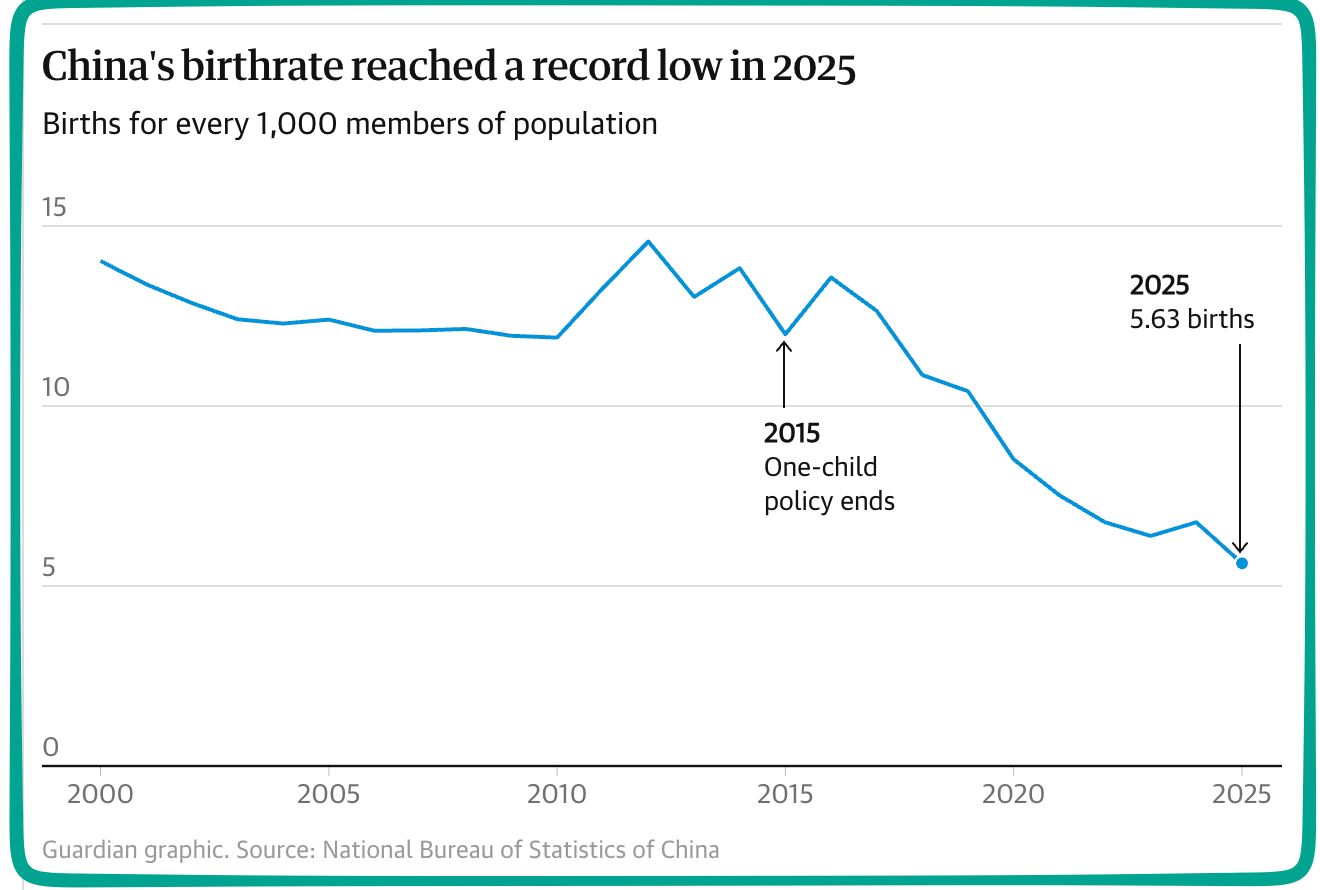
The plunging birthrate influenced their decision:
One-Child Reversal
In 2013, the government said two children were permitted if one parent was an only child. Then, two years later, all couples were allowed to have two children. By 2023, they said three (and more) were okay.
Not quite working, the replacement rate currently is an inadequate 1.0 rather than an ideal 2.1. Also, most age cohorts have a skewed boy-to-girl ratio, and they wound up with too few adult kids caring for grandma.
As economists, we can conclude with dependency ratios.
Our Bottom Line: Old-Age Dependency Ratios
Whereas China was worried about too many children, now the concern is too many old people. Supporting old-age pensions and elder care, the working population will have less for itself.
Expressed mathematically, we have a ballooning numerator of the aged and a (relatively smaller) denominator of the population ages 15 to 64 that is called an old age dependency ratio:

When we combine too few babies, too many boys, and no one for grandma, swoon wedding destinations might not help.
Please note that in several of today’s sentences, we’ve quoted a past econlife post.
My sources and more: For its update on China’s decreasing population, we thank WSJ. As the ideal complement, this BBC article had the statistics.