![econlifelogotrademarkedwebsitelogo[1]](/wp-content/uploads/2024/05/econlifelogotrademarkedwebsitelogo1.png#100878)


Why Spider-Man is Cool
August 4, 2026
Why Hungary Worries About Water
August 6, 2026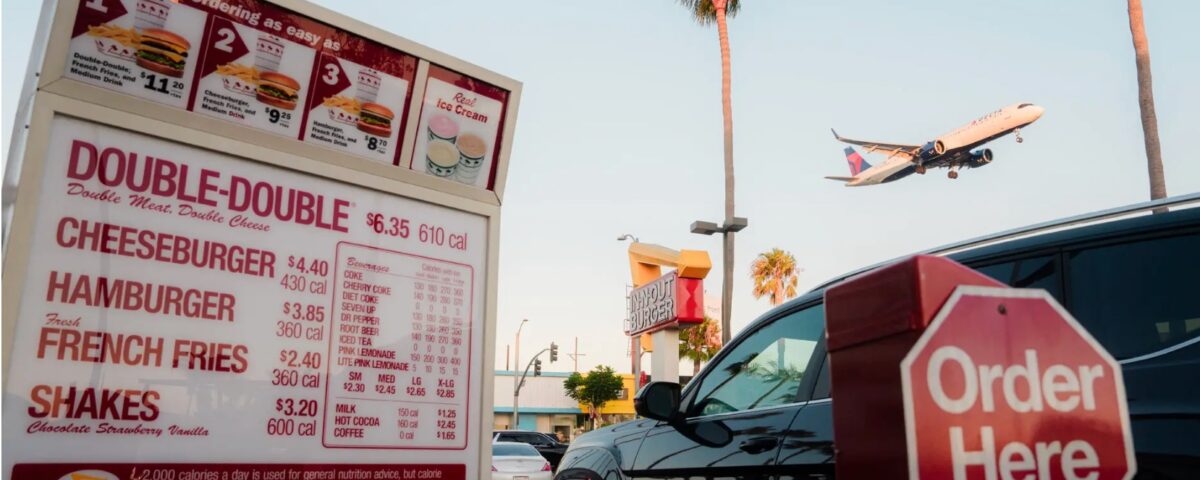
Concerned with 26-car lineups clogging residential streets, the city council in Culver City, California proposed a drive-through ban. They wanted to prevent In-N-Out Burger from opening a new location. Culver City is not the first California community to consider the ban. Santa Monica and Santa Barbara have one as does Napa for its fast food, and dry cleaners and car washes.
Some said it was a “war on fast food” and “anti-family.” At the same time, others believed the ban would make their streets safer and less polluted.
Fast Food Drive-Through Facts
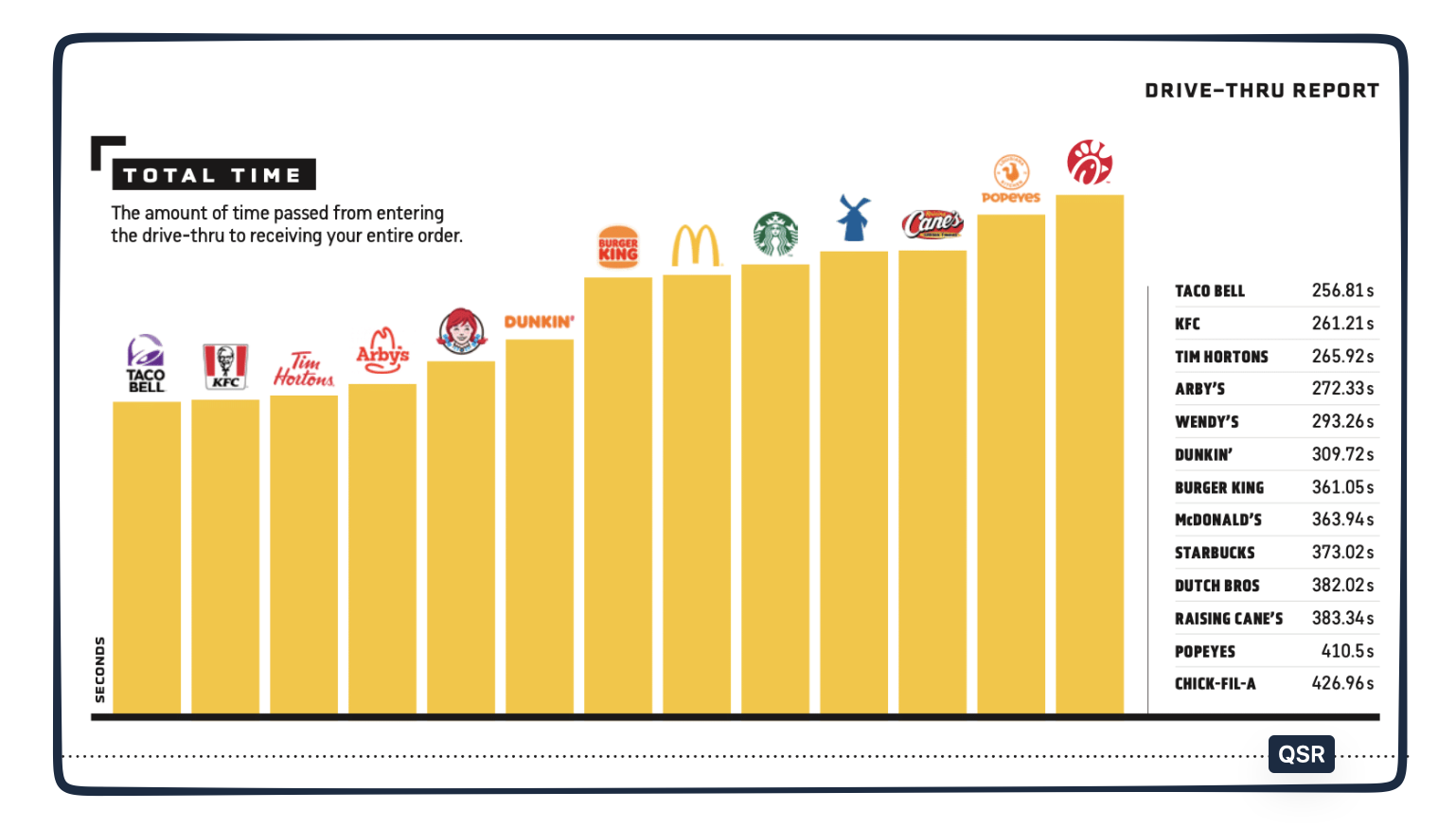
According to Food & Wine, the most recent QSR Drive-Through report had three major conclusions:
- At 257 seconds, Taco Bell had the speediest drive-through service.
- However, at a slow 427 seconds, it was Chick-fil-A that reported the most customer satisfaction.
- As for AI, while its use spread, so too did the inaccuracies that it tended to generate.
Total Time
Taco Bell took the least time between entering the line and leaving with your food:
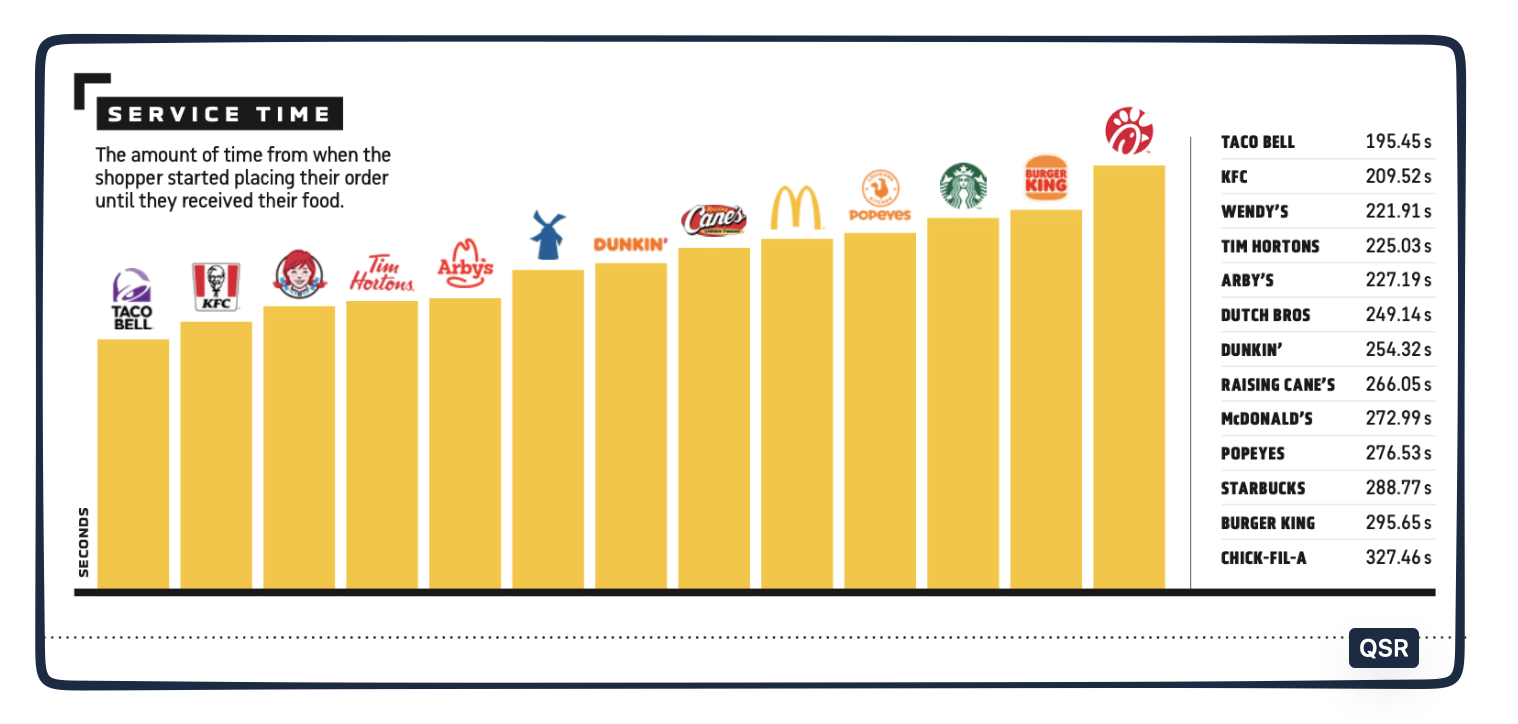
Service Time
Again, Taco Bell was speedy after receiving the order:
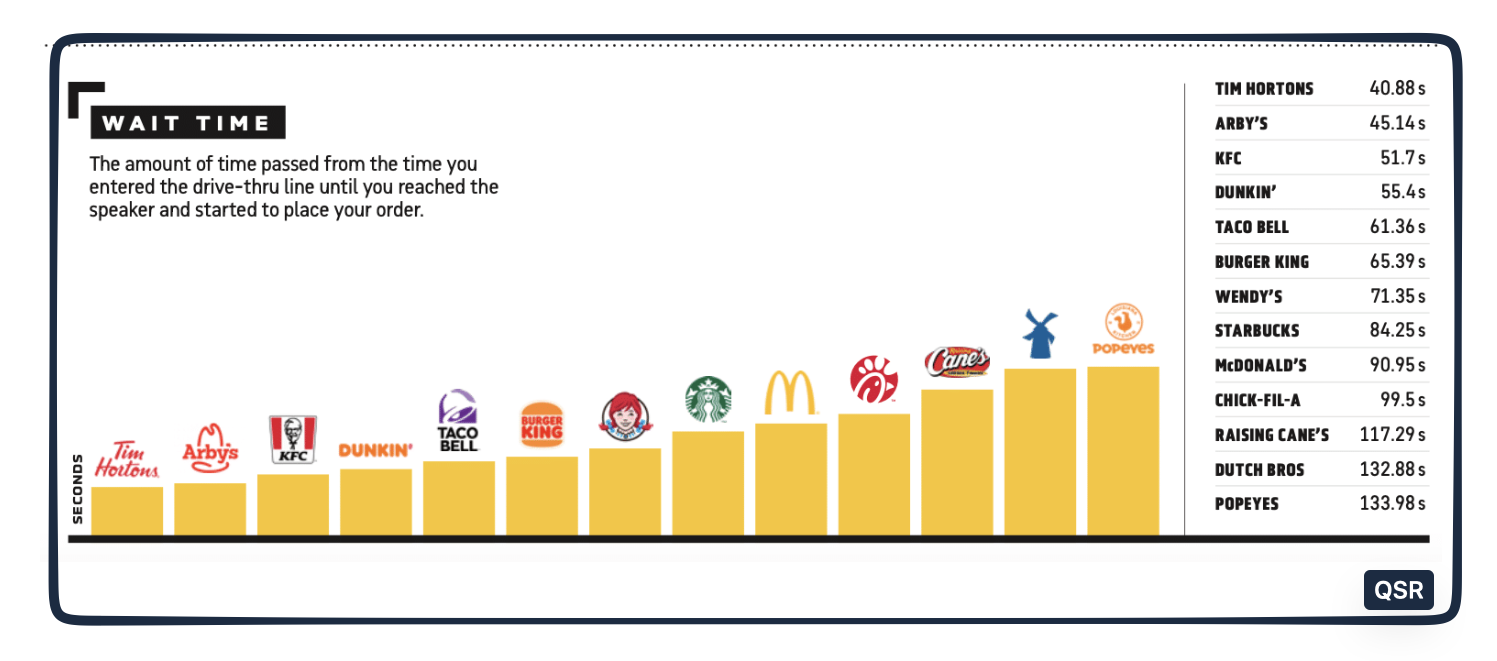
Wait Time
But Tim Hortons moved to #1 when it came to the wait time to place your order:
Our Bottom Line: Externalities
Defined as the impact of a decision or event or contract on an uninvolved third party, externalities can be positive or negative. The classic example of a positive externality is a vaccine that prevents others that have not received it from getting ill. Meanwhile, air pollution from factories creates negative externalities for its neighbors.
With drive-throughs, the positive side could be the jobs they create and the cheap meals that let their customers have extra money to spend elsewhere. In addition, stockholders could cite the 70 percent of fast food restaurant revenue that they get from the drive-through. However, on the negative side, cited by communities with drive-through bans, we have the neighborhood disruptions that diminish safety and increase pollution.
As economists, as always, the externalities leave us to ponder the tradeoffs.
My sources and more: Thanks to the NY Times for inspiring today’s post. From there, we always take a look at QSR for our drive-through facts and Food & Wine for our summary.
Please note that our featured image is from the NY Times.