![econlifelogotrademarkedwebsitelogo[1]](/wp-content/uploads/2024/05/econlifelogotrademarkedwebsitelogo1.png#100878)


Why a Popcorn Bucket Can Cost $80
August 11, 2026
Why Heat Waves Need a Name
August 13, 2026
Post tells us that 15 one-cup bowls of cereal are in its 19.5-ounce Fruity Pebbles box.
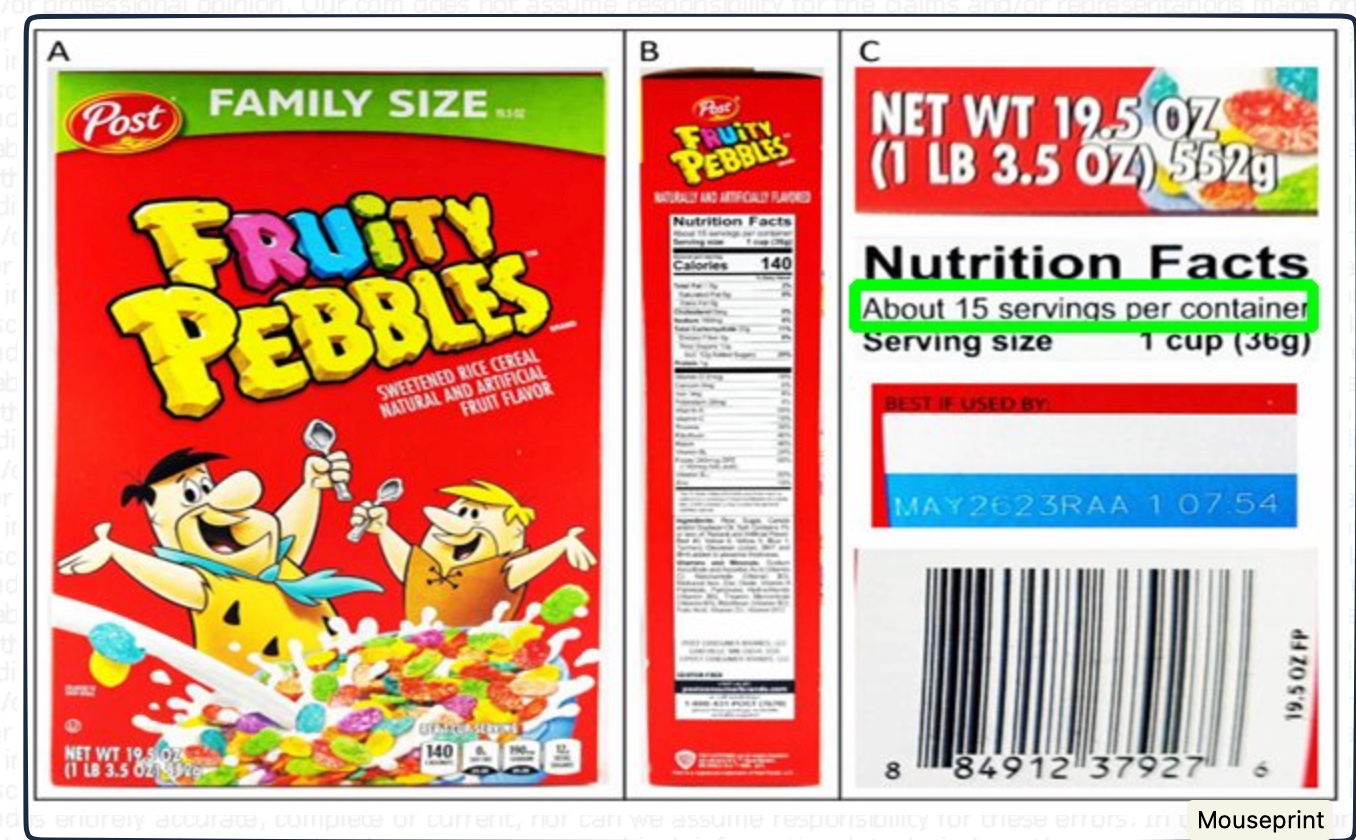
A cereal eater disagrees.
The Fruity Pebbles Lawsuit
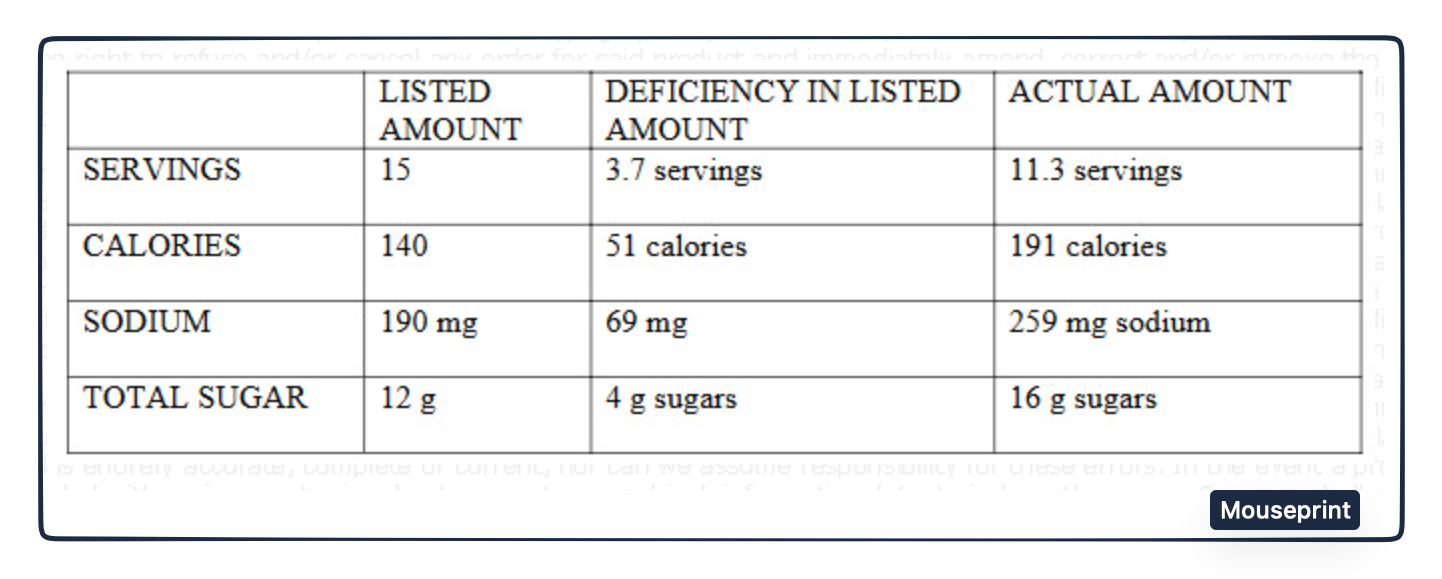
In their lawsuit, the plaintiff says that rather than 19.5, there are just 11.3 one-cup servings. As a result, the math changes. Calories climb from 140 per serving to a whopping 190. For the same reason, sugar and sodium rise. And, having paid perhaps $6.00 for 15 servings, the slide to 11.3 means “the consumer was deprived of $1.12.
Below, you can see the actual numbers:
Other Miscalculations
The Footlong
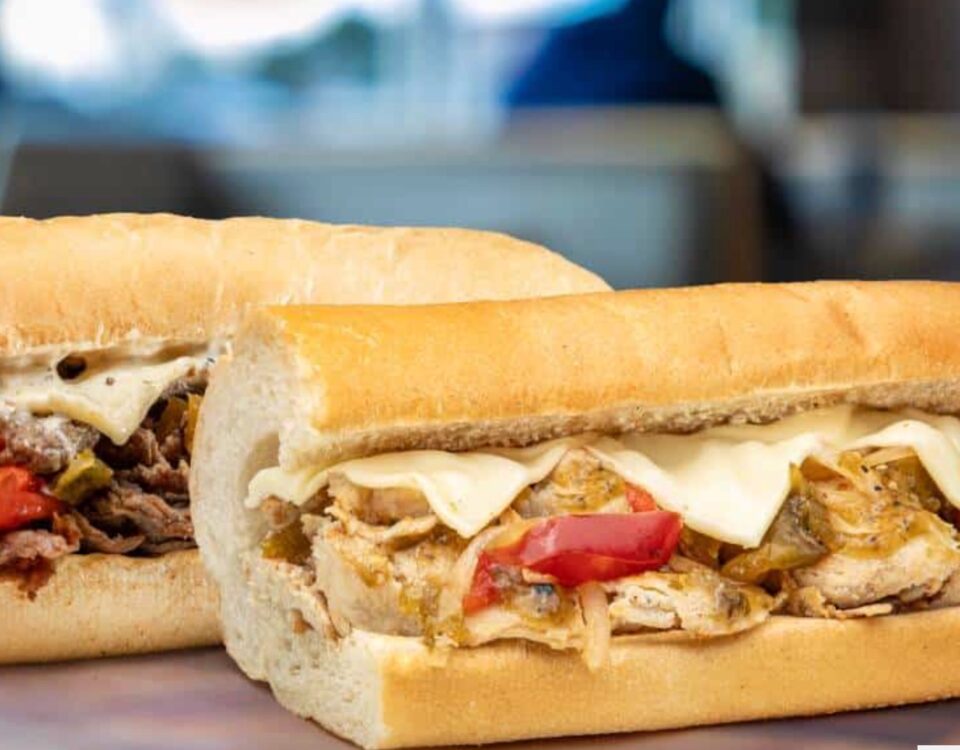
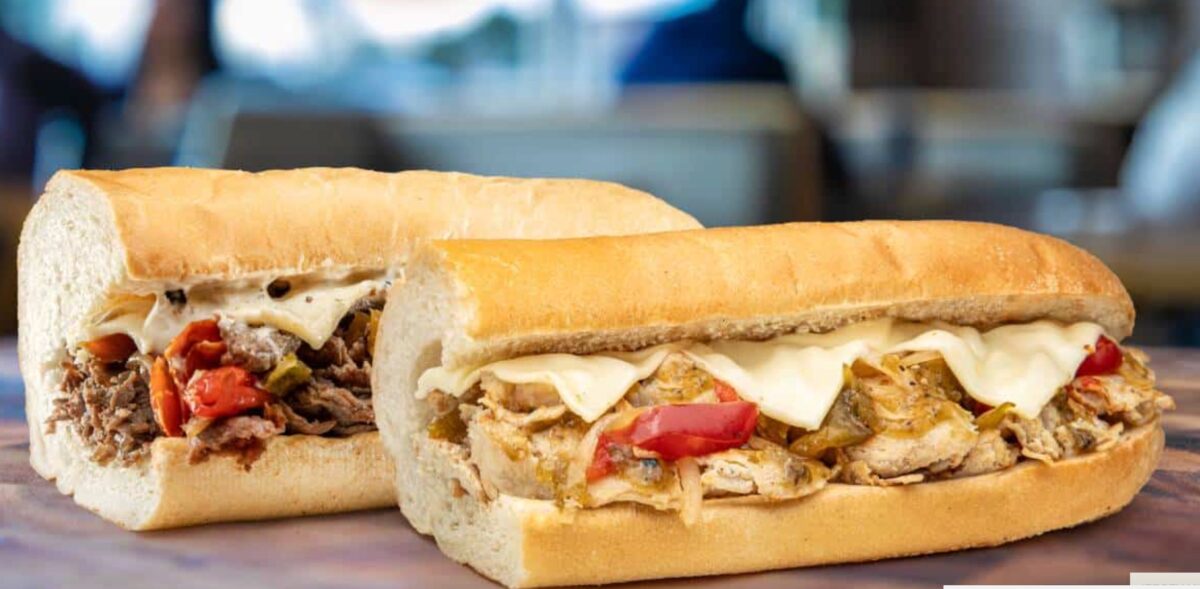
In 2013, an Australian teenager posted on Facebook a picture of his 11-inch Subway Footlong. Feeling cheated (I guess), two New Jersey guys sued, others followed, and we wound up with a class action suit. Subway indicated the problem was frozen bread that had to be consistently stretched.
In their settlement, Subway promised that they would have a measuring device that guaranteed accuracy. They also paid a $520,000 legal tab and $500 to each of the ten people leading the suit. Explaining the small settlement the attorney said, “It was difficult to prove monetary damages, because everybody ate the evidence.”
Post and Subway are not alone.
Hershey
In addition, Hershey has been accused of under-filling its Whoppers and Reese’s Pieces packages. Expecting many more Whoppers, the lead person in the suit said the box was 49% empty. For Reese’s Pieces, the slack was 29%.
In their papers, the court seemed to agree. They said consumers depended on box size because it took just 13 seconds to make a buying decision.
Hershey responded with what I would call a “rattle” defense. They said, “a reasonable consumer, upon picking up the Reese’s Pieces or Whoppers container, would instantly realize that it is not filled to the brim… because its contents noticeably and audibly rattle.”
Our Bottom Line: Thinking at the Margin
As most economists will tell us, everything happens at the margin. Defined as where we decide to do extra after weighing cost and benefit, the margin is a dividing “line” between where we are and where we might be. I think at the margin when I decide to use the snooze alarm for an extra 10 minutes of sleep. Similarly, when Congress cuts taxes or a driver accelerates beyond the speed limit, the decision to do less or more is at the margin.
Similarly, Post, Subway, and Hershey have been moving their margins.
My sources and more: Thanks to my go-to website for shrinkflation for inspiring today’s post, providing most facts, and linking us to the complaint. After that, I returned to econlife’s Subway and Hershey examples.
Please note that several of today’s sentences were in a past econlife post.