![econlifelogotrademarkedwebsitelogo[1]](/wp-content/uploads/2024/05/econlifelogotrademarkedwebsitelogo1.png#100878)


Why Heat Waves Need a Name
August 13, 2026
August 2026 Friday’s e-links: A Great Movie
August 14, 2026
These August 2025 tariff rates affected us: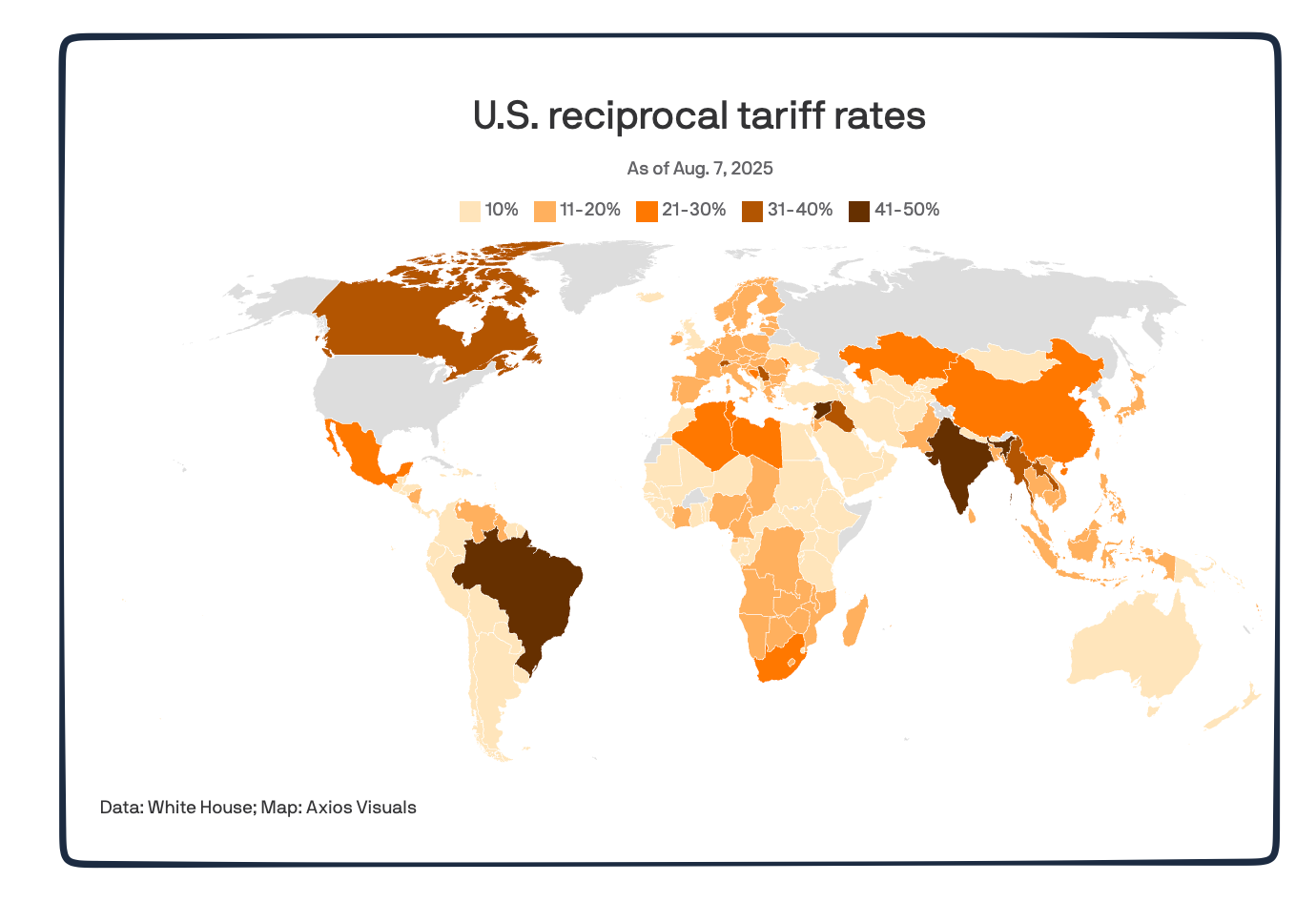
Let’s take a look.
Six Facts: Trump Tariff Impact
1. Households pay higher prices because of tariffs.
The Tax Foundation estimates that during 2025, the Trump tariffs created an average tax increase of $1,000 for every U.S. household.
2. Tariff rates are the highest since 1969.
During 1969, tariffs averaged 7.1 percent. Now they are at 6.6 percent:
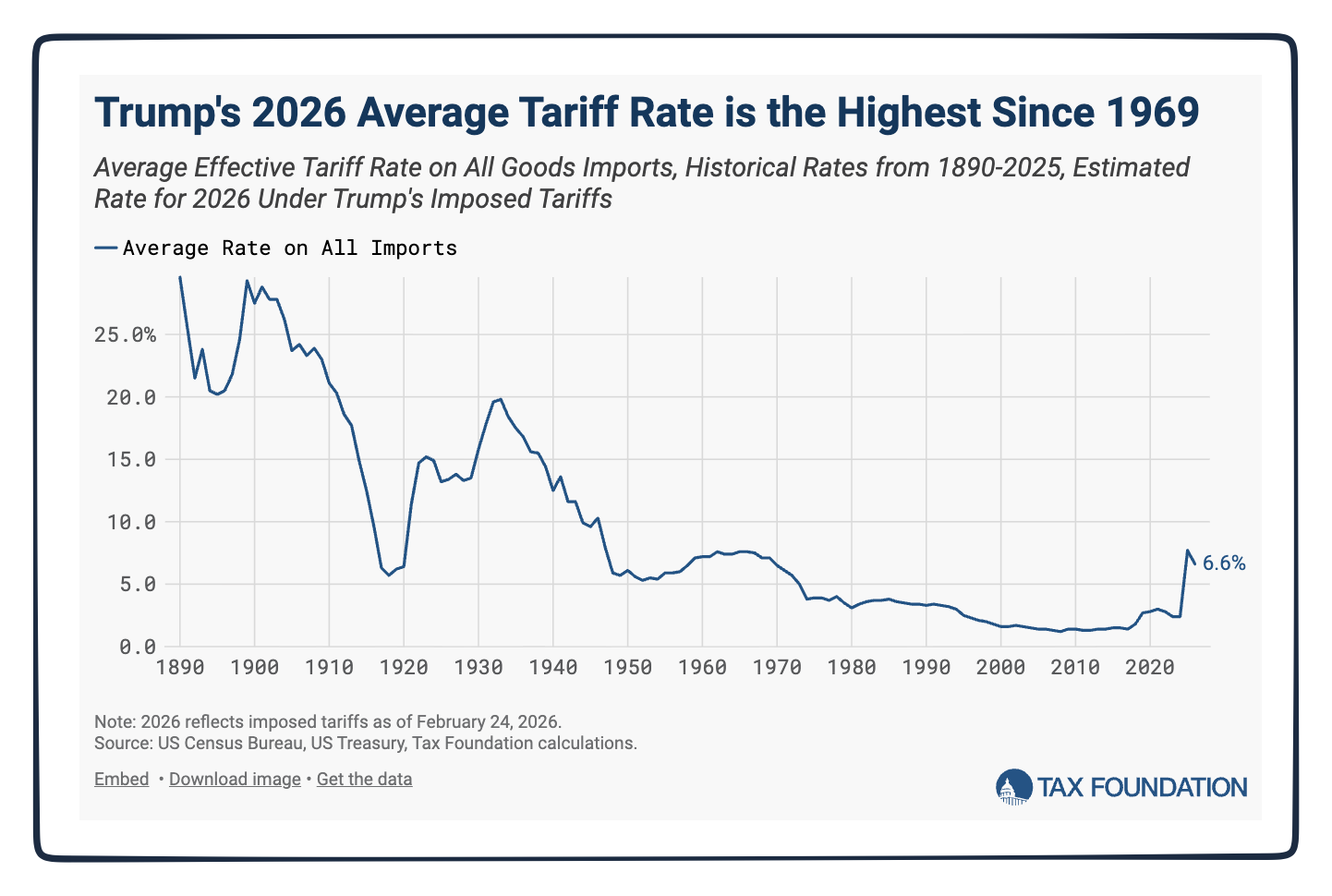
We should add that the Yale Budget Lab estimates average tariff rates are closer to 11 percent.
3. Tariff refunds are offsetting tariff revenue.
Approximately $166 billion in tariff tax revenue will have to be refunded because IEEPA was declared illegal: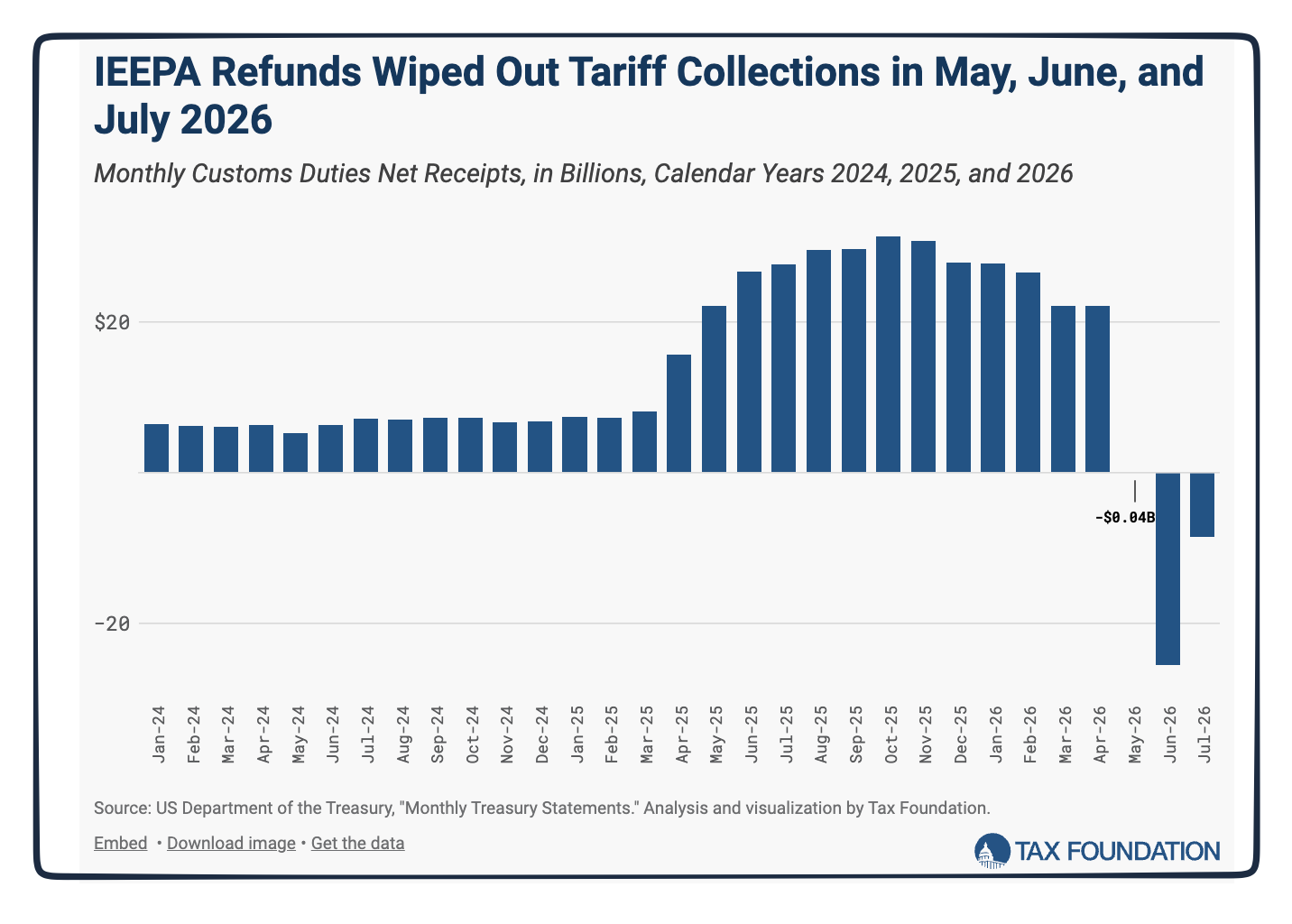
4. Tariffs will negatively impact GDP in the long run.
While the Yale Budget Lab estimates a negative impact on GDP in 2025 and in the long run, the opposite could be true for 2026: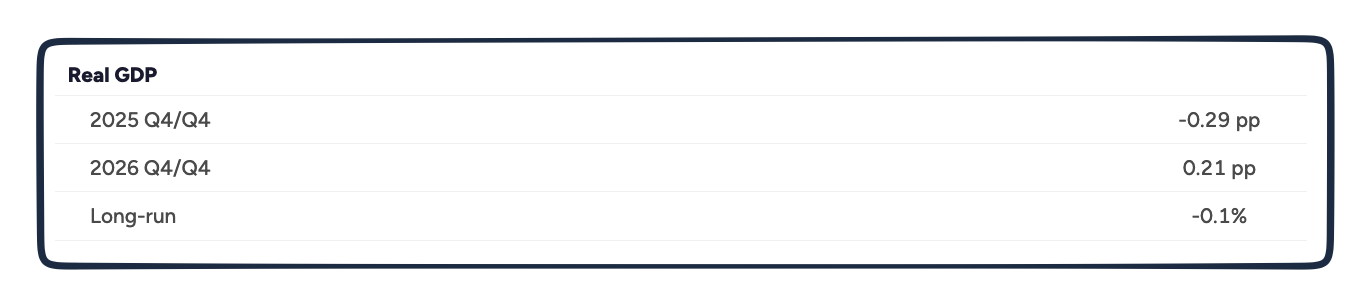
Comparing the Tax Foundation and Yale Budget Lab, the former expects a long-run GDP hit of negative .4 percent while Yale estimates less.
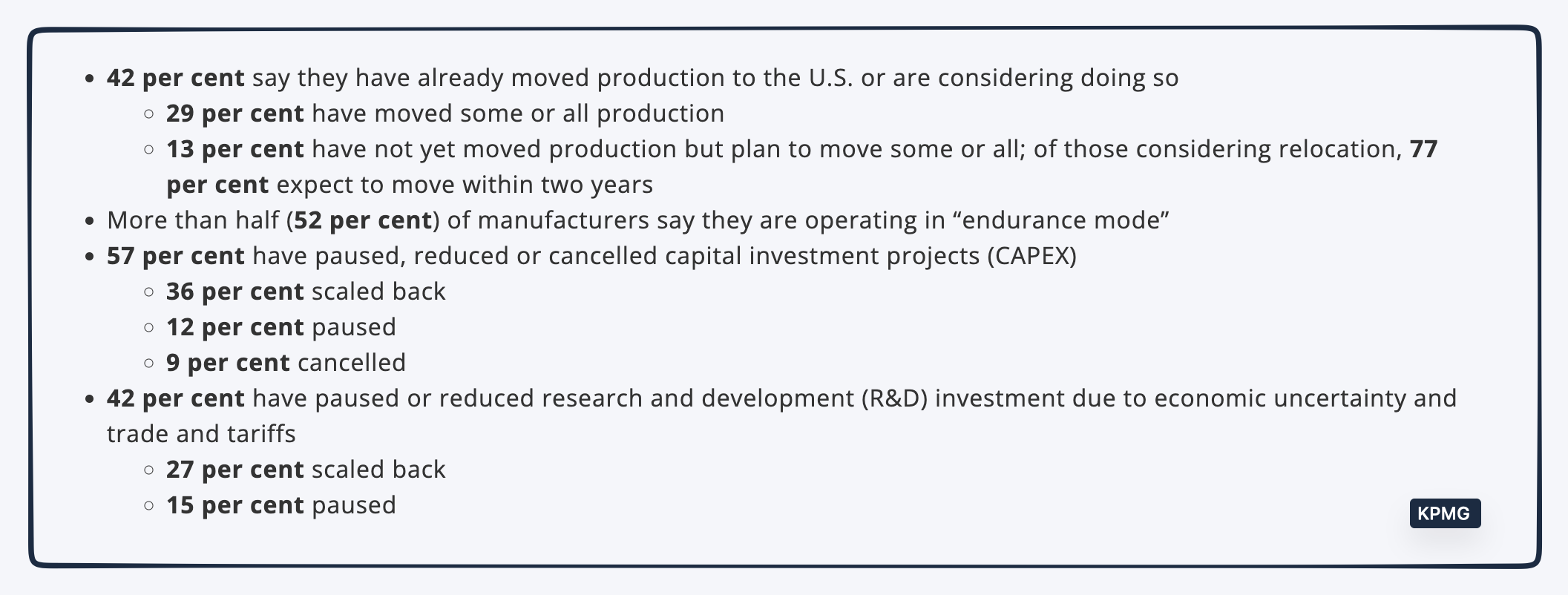
5. Canadian businesses express considerable alarm with an August 19 date for new U.S. 50 percent tariffs.
These were the results of a KPMG survey of 275 Canadian manufacturers:
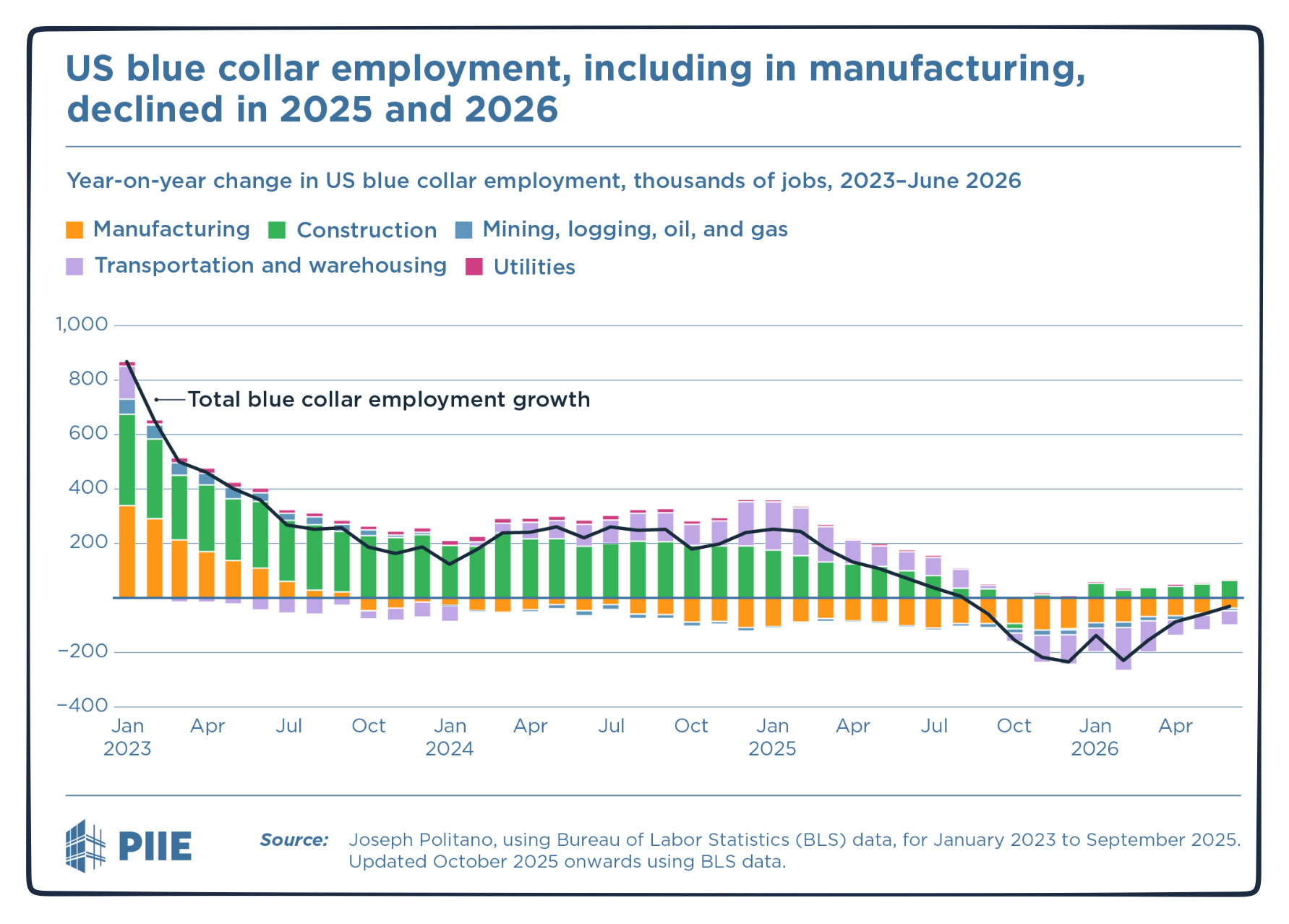
6. Mid-size U.S. firms have suffered from tariffs.
The Peterson Institute for International Economics (PIIE) concluded that increased costs from tariffs have negatively impacted mid-size U.S. firms. They report that the higher costs on intermediate inputs like steel and aluminum reduced the number of manufacturing jobs:
Our Bottom Line: Anchors
Anchors influence our opinions. Assume, for example, that we are told a jar has 500 jellybeans, and then are asked to guess the number of candy bars in another container. Based on Nobel laureate Daniel Kahneman’s experiments (described in Thinking Fast and Slow), people who are told the first jar has 200 beans instead of 500 answer the second question with a lower number. The reason? The first jar became an anchor that biased the second answer.
With tariffs, we’ve been barraged with slew of high numbers that could become our anchors. They ignore the real one percent rates that used to prevail:

Rather than getting used to the gob smackingly high tariff numbers that President Trump names, we should let the Bruegel numbers be our anchors.
My sources and more: Many of today’s tariff facts came from the Tax Foundation. Meanwhile, the reaction to next week’s possible Canadian tariff hike came from the NY Times and a KPMG survey. In addition, always handy, PIIE is our go-to for trade facts and Bruegel had the graph for Our Bottom Line. Then finally, in previous 6 fact posts, econlife looked at tariffs here and here.
Please note that several of today’s sentences were in a past econlife post.