
The Surprising Changes in Family Size Among the Top 1%
November 4, 2026
During October, Social Security announced a 3.6% COLA (cost-of-living adjustment) for 2027. Based on recent inflation data, the COLA was higher than last year’s 2.8% and more than the Trustees’ 2.7% projection. Consequently, we could be expediting Social Security’s 2032 trust fund depletion.
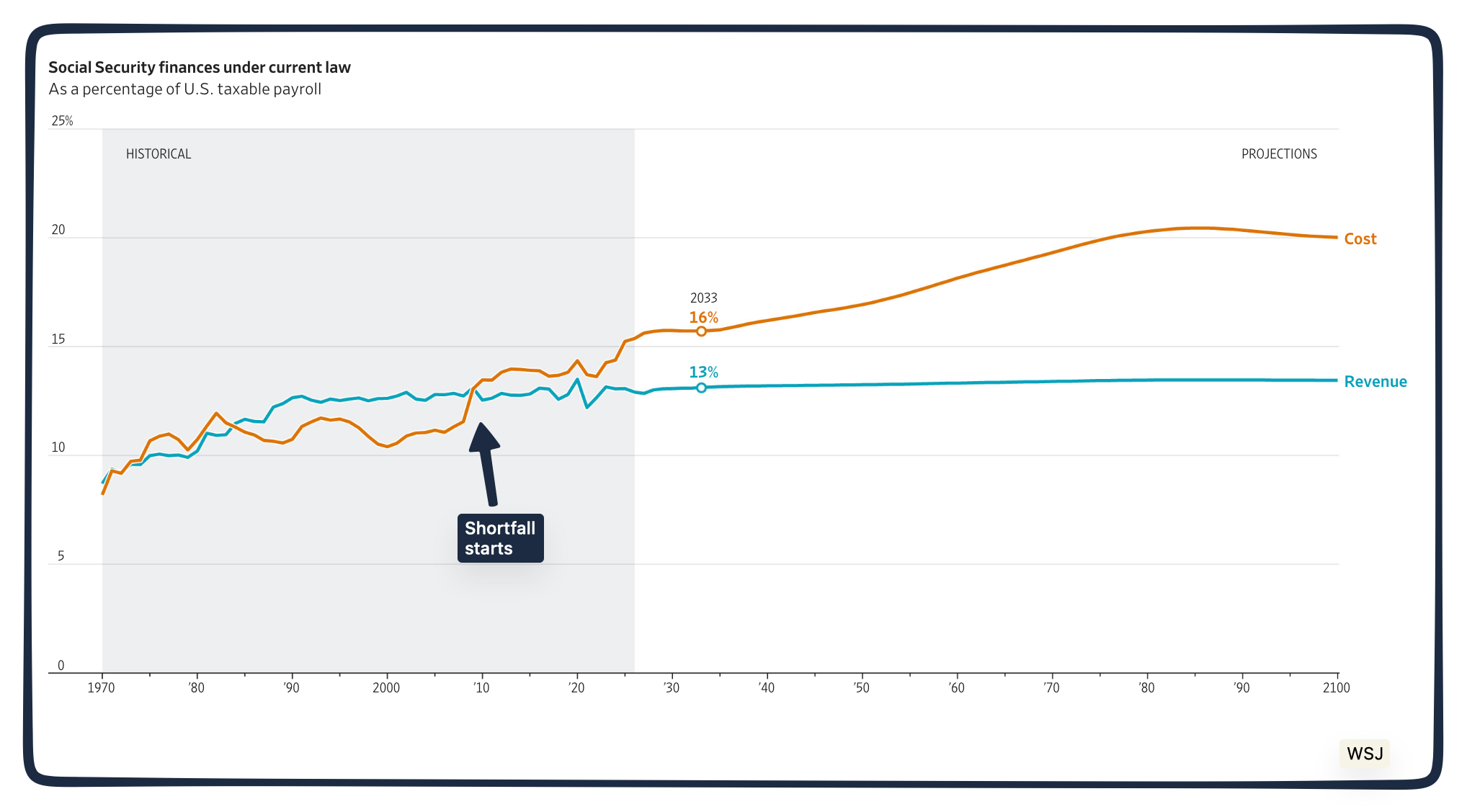
As a pay-as-you-go program, in 2033, Social Security’s $2 trillion in revenue won’t cover its $2.4 trillion in spending:
Our new Congress has a menu of solutions they can consider. Let’s take a look:
Social Security Solutions
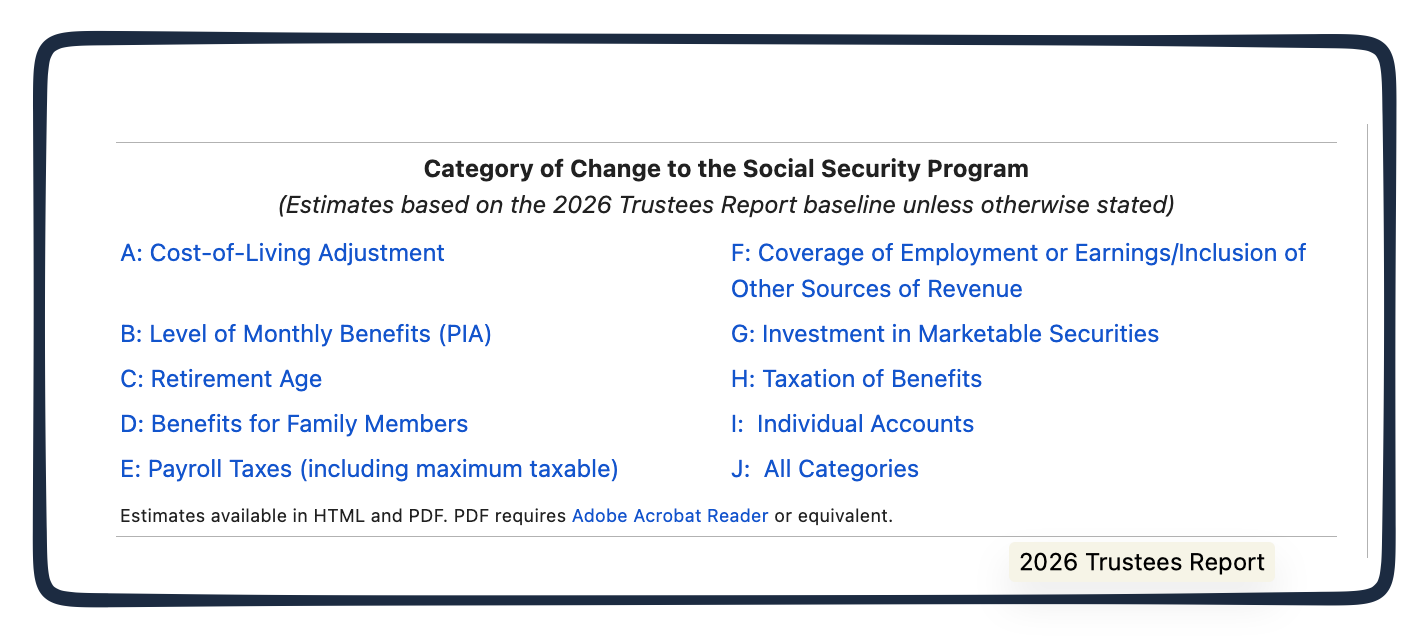
If Congress does not act, 22% benefit cuts are a possibility. While they could just borrow more and send the debt further into the stratosphere, there are alternatives. In their 2026 Report, the Trustees presented the categories. (The real links with lots of detail for each one are here.):
I’ve selected two proposals:
Revenue
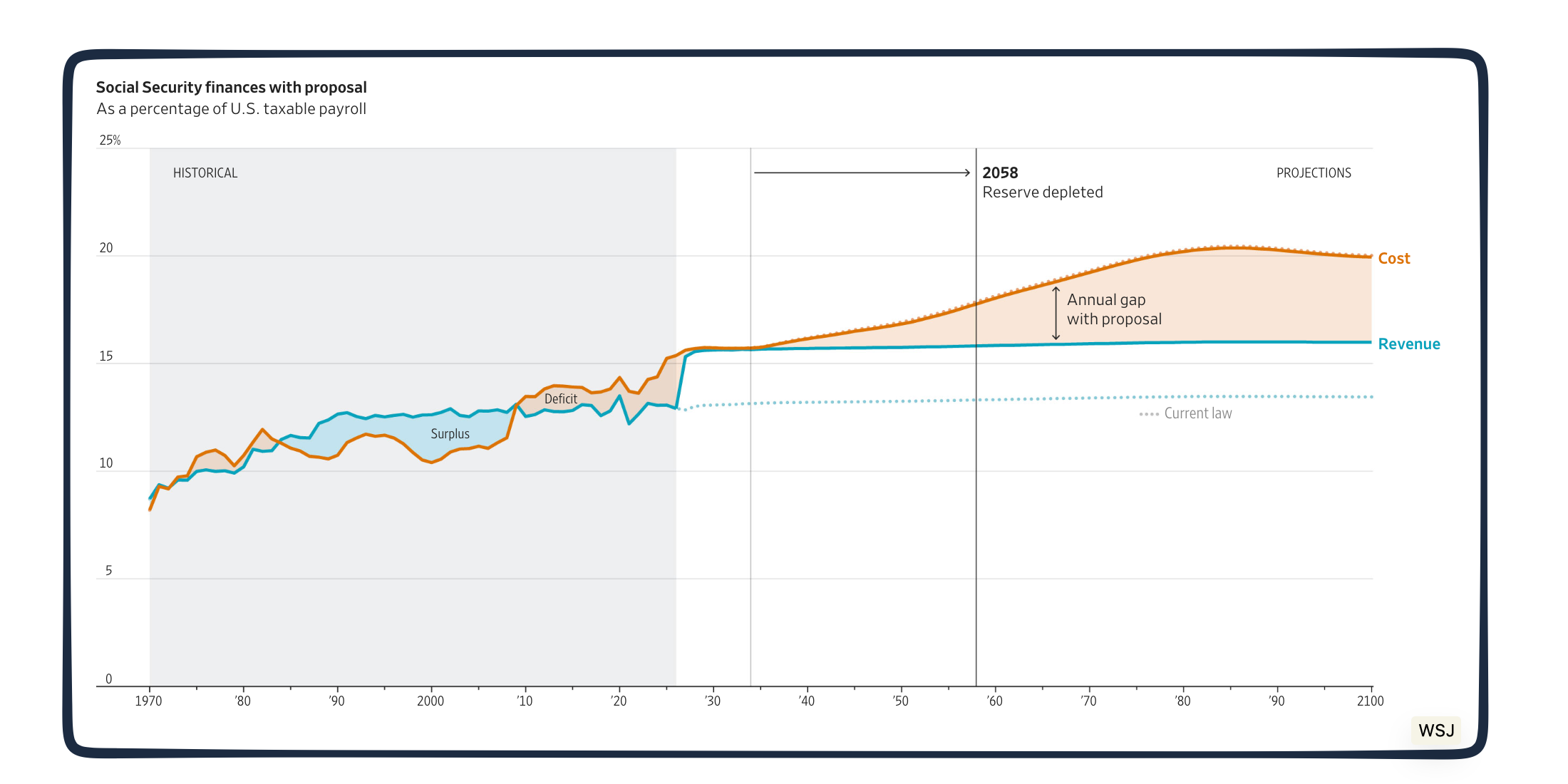
Currently, our payroll tax has an income cap. For 2027, you will pay (or split with your employer) 12.4 percent on no more than $192,300. While the cap usually increases yearly, instead, the fix could be no cap.
According to WSJ calculations, ending the tax cap would postpone insolvency by 24 years:
Benefits
COLA cap
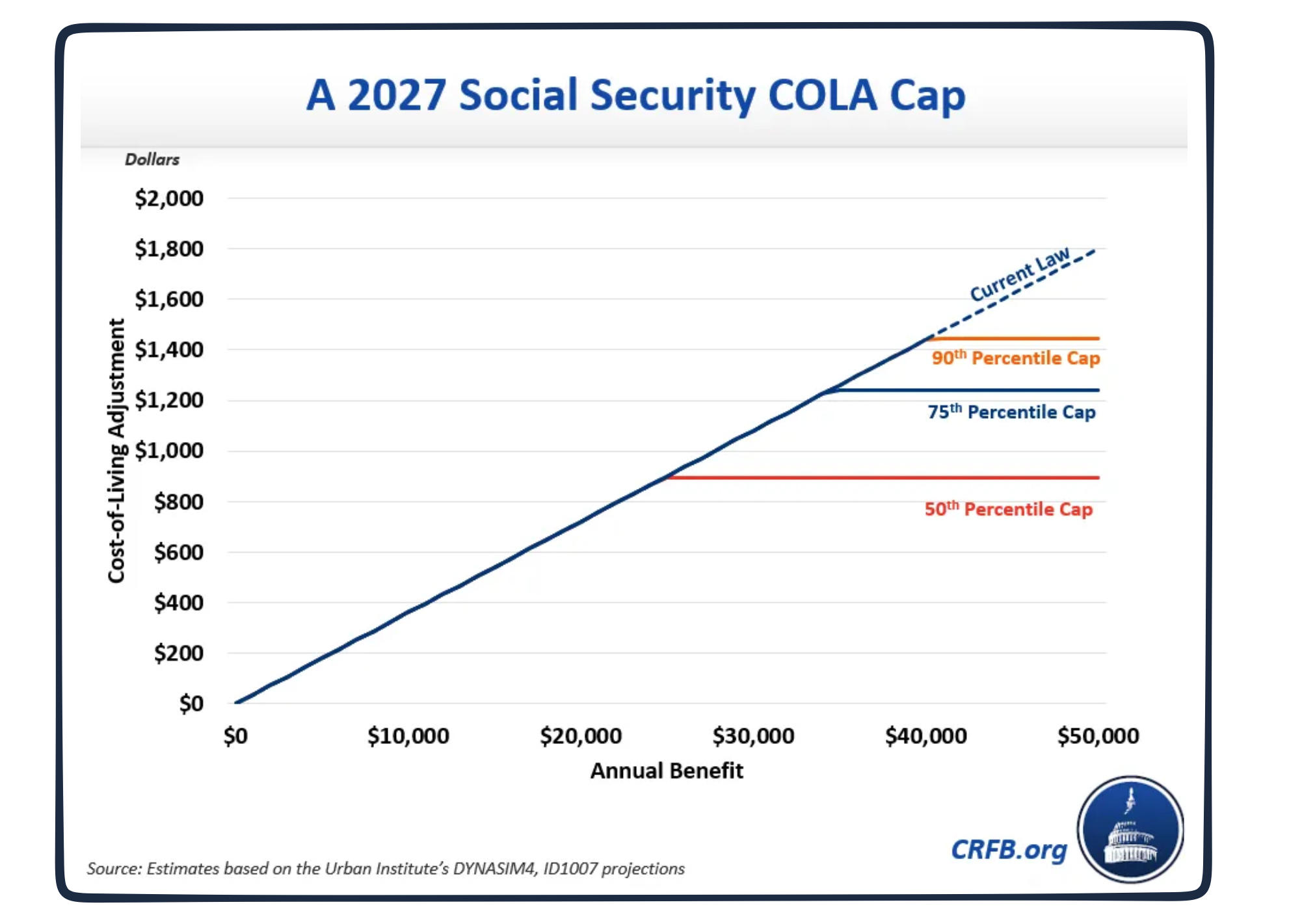
The CRFB (Committee for a Responsible Federal Budget) suggests limiting the COLA cap for high-income individuals:
Age
From the Trustees’ report, I copied the following as examples of their approach: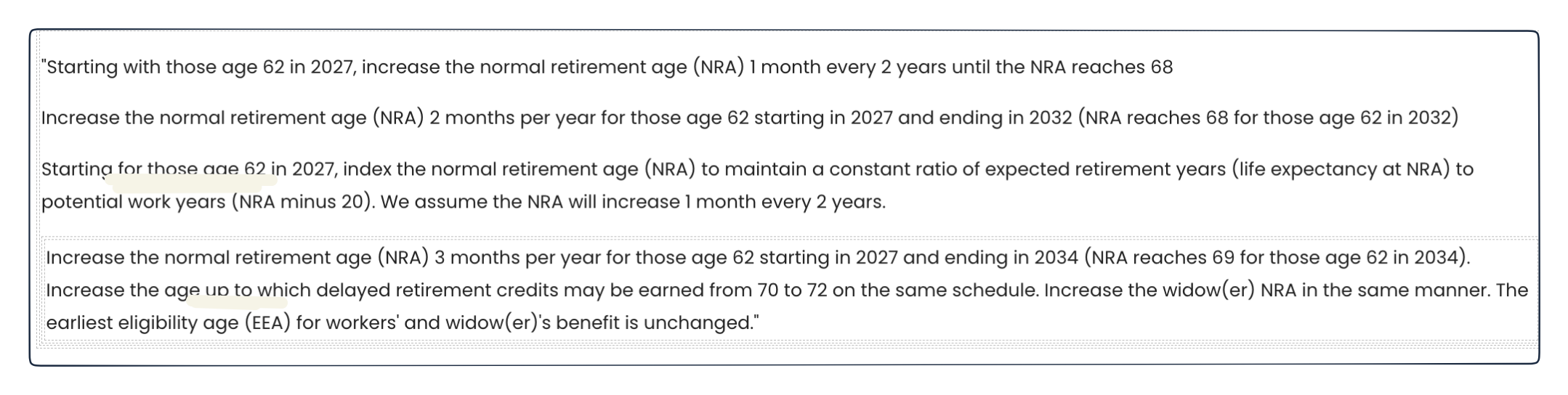
Our Bottom Line: Public Choice Theory
Asking why the Congress and the President have been unwilling to target our looming Social Security shortfall, I thought of public choice theory. First developed by Nobel economics laureate James M. Buchanan, public choice theory explains the negative externalities of a politician’s self-interest. Because politicians engage in utility maximization, they tend to cater to voters who ignore national well-being.
As a result, Social Security has been called “the third rail of American politics.”
My solutions and more: Thanks to this WSJ article and the Committee for a Responsible Budget for today’s details. You might also want to return to the Trustees Report summary and the Econlib summary of Public Choice Theory. And finally, this week’s WSJ explained the crisis and its solutions.
Please note that several of today’s sentences were in a past econlife post.