![econlifelogotrademarkedwebsitelogo[1]](/wp-content/uploads/2024/05/econlifelogotrademarkedwebsitelogo1.png#100878)


6 Facts: What It’s Nice To Know About the 10-Year Treasury
September 24, 2026
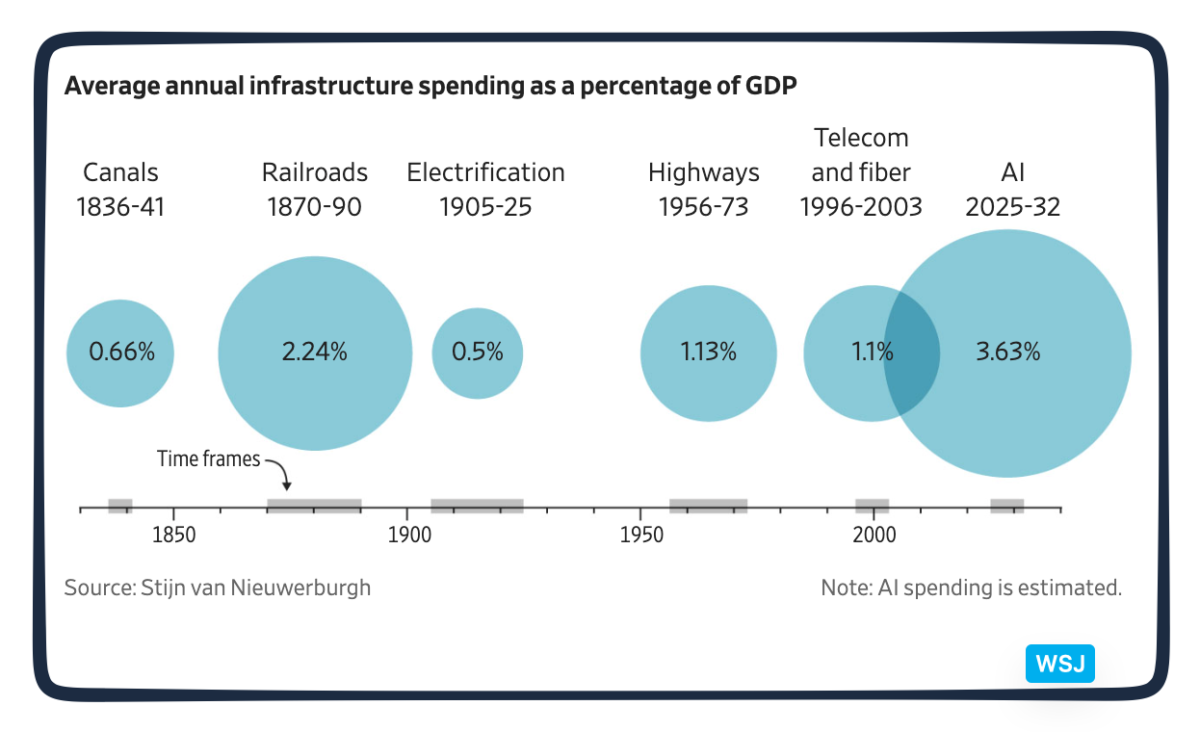
Comparing AI to past infrastructure spending, we can see that it is an immense undertaking:
It could also be called creative destruction.
Infrastructures
Infrastructure History
An infrastructure is a network of connections. If it’s transport, then those connections include roads and bridges and whatever takes us to the moon. Our information infrastructure began with Benjamin Franklin’s 18th century postal service. And, during the 19th century, a financial infrastructure composed of banks first connected savers and borrowers.
Canals and railroads were the earliest links in our transportation infrastructure. Connecting the East and West coasts of the United States, they enabled the development of a national market. As a result, we wound up with the regional specialization that optimized what each part of the country produced. After that, with the onset of the auto and trucking industries, our highway system extended our transportation infrastructure.
Somewhat similarly, we also saw the spread of an information infrastructure. Facilitated by electrification and accelerated by the internet’s telecom and fiber, now AI has already revolutionized how information travels.
Our Bottom Line: AI Job Creation and Destruction
Creative Destruction
Named creative destruction by economist Joseph Schumpeter (1883-1950), new infrastructures create jobs and also eliminate them. When old industries become obsolete, they are nudged aside by new businesses and the entrepreneurs that start them. Painful for the people that lose their jobs, others thrive.
Job Creation
We could say that these new AI jobs reflect the onset of creative destruction: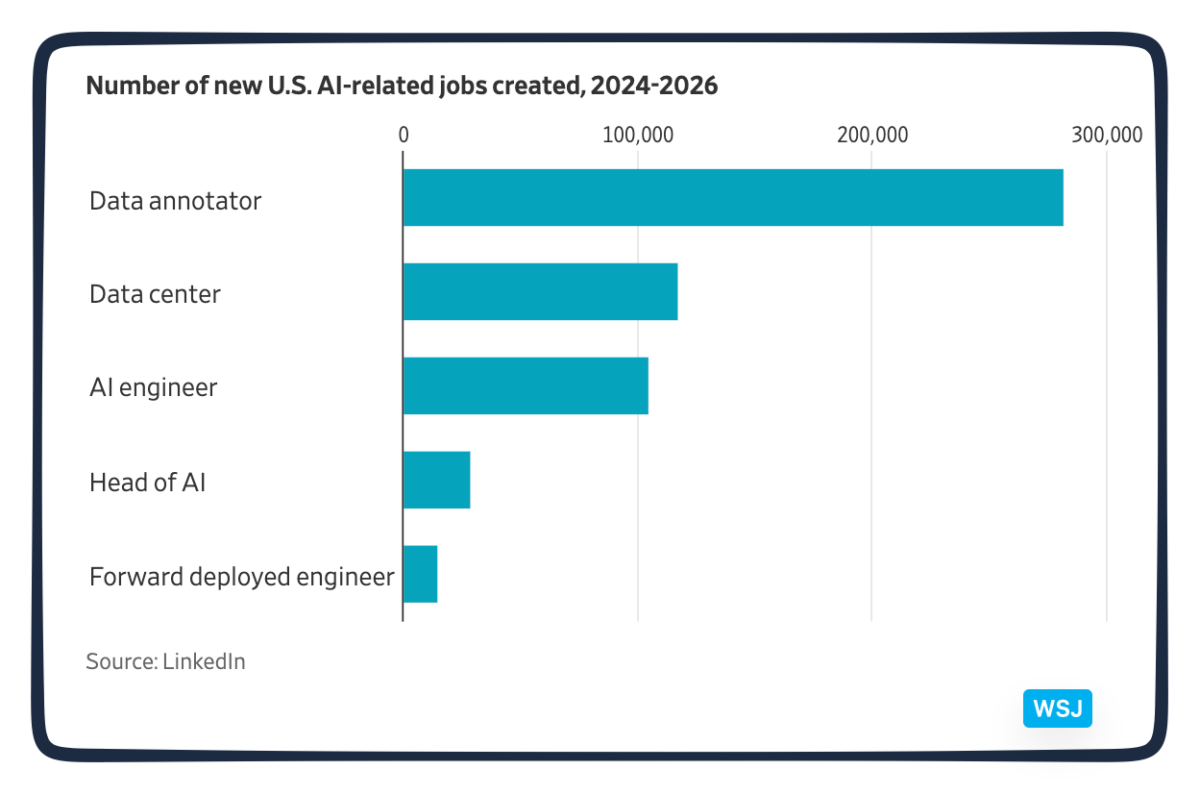
Job Destruction
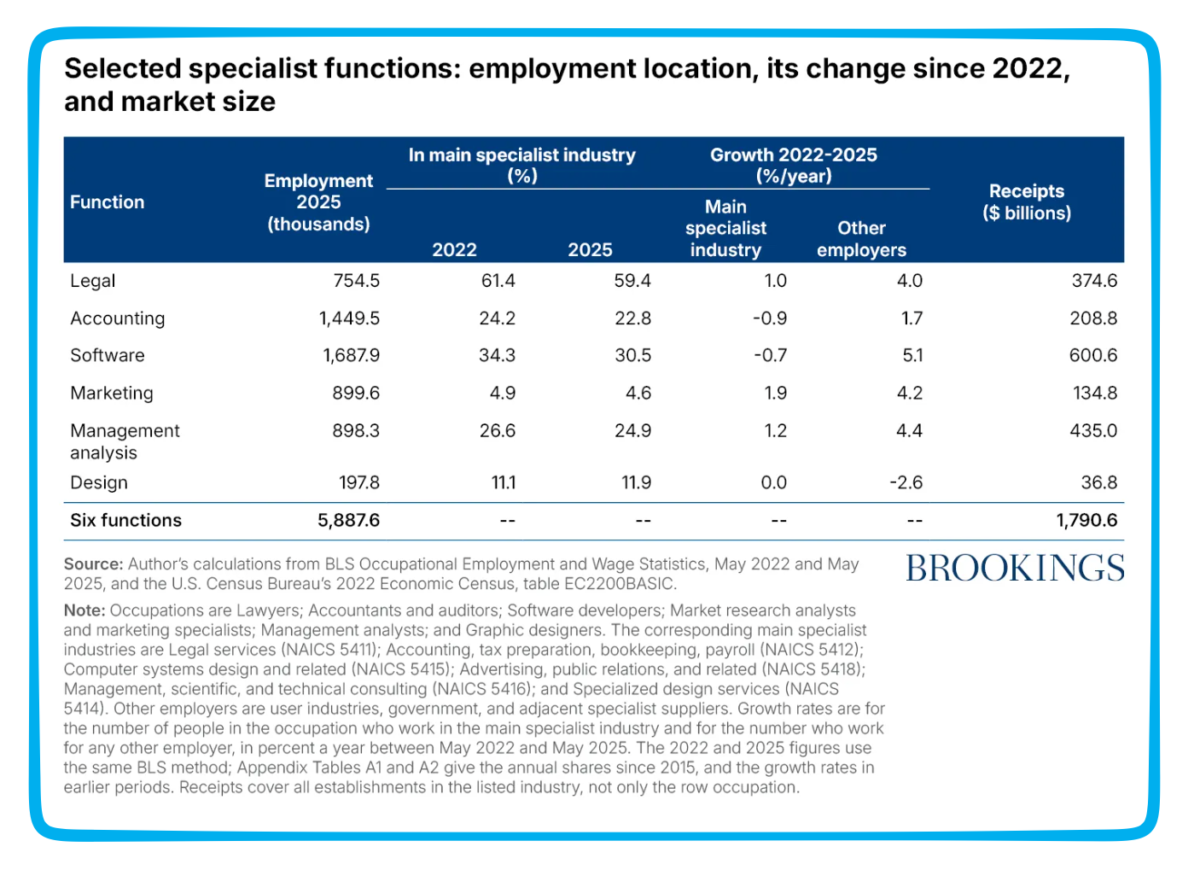
But also, a new Brookings paper suggests that AI will enable firms to rely less on outside experts. Instead, because AI provided the knowledge for doing the job in-house, those lawyers, accounting firms, software developers, and management analysts were less necessary.
Shown below, the descending job numbers in these fields document AI’s creative destruction:
My sources and more: Thanks to WSJ for inspiring today’s post. Next, the ideal complements, these new Brookings papers, here and here, convey financial and jobs insight about AI.