![econlifelogotrademarkedwebsitelogo[1]](/wp-content/uploads/2024/05/econlifelogotrademarkedwebsitelogo1.png#100878)


Our Weekly Economic News Roundup: From Strawberries to Dinosaurs
July 18, 2026
When We Drift to the Left
July 20, 2026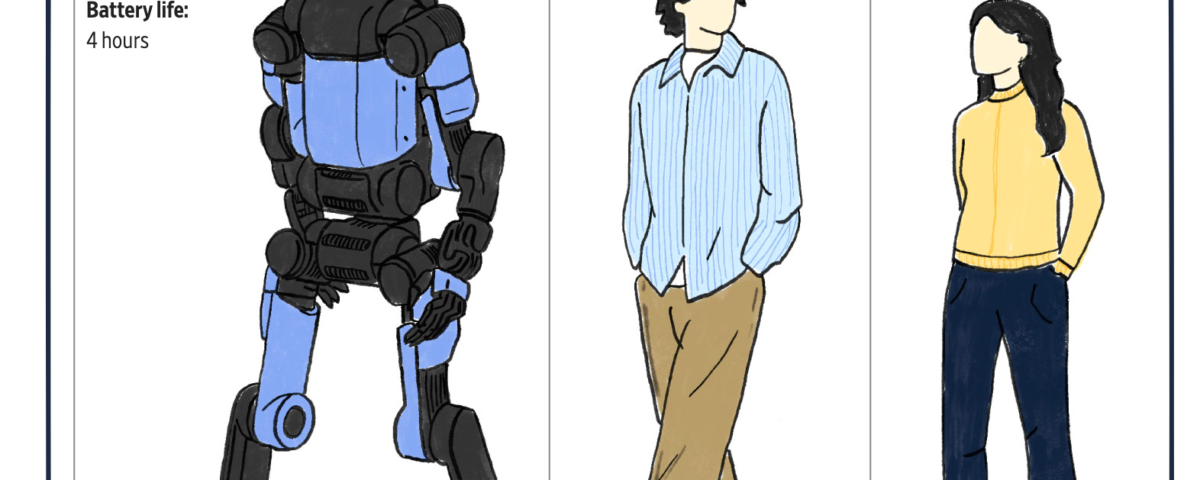
At the World Cup’s Brazil Norway match on July 5, 2026, we met Atlas when they (he? she?) brought out the ball at halftime:
Developed by Hyundai subsidiary Boston Dynamics, Atlas, a humanoid robot, can do far more than perform at a World Cup match.
Humanoid Robots and Labor Markets
Told that Atlas could join their production lines, South Korean auto workers said, “No, not until we say yes.” In addition, concerned that Atlas would affect their wages and hours, they presented Hyundai with several requests:
- Replace hourly pay with a fixed salary (because Atlas could reduce wages.)
- Elevate the retirement age to 65 from 60.
- Receive bigger bonuses (because Atlas could boost profits).
When talks with Hyundai broke down, workers went on a partial strike.
In the United States, Atlas will arrive at Hyundai’s Georgia plant during 2028.
Labor Markets
Affecting labor markets, Atlas becomes a part of a process through which supply and demand determine price and quantity. On a circular flow model, and at Hyundai, we can “find” labor markets whenever businesses interact with employees.
In the lower loop, you can imagine workers leaving households for their jobs. Meanwhile, employers “meet” them halfway to negotiate wages and salaries. The “place” is a factor market:

As a participant in auto labor markets, the price of one Atlas, at $130,000 (a “wage”), can be recouped in about two years of factory work through its savings.
Our Bottom Line: Creative Destruction
Then, taking the next step, we could see how Atlas’s creative destruction impacts labor markets.
First explained by economist Joseph Schumpeter (b. 1883; d.1950), creative destruction is the painful but productive process through which new products and processes replace the old ones. As a result, when outdated factories close and workers need new skills, labor markets undergo a structural shift. While some workers benefit when new jobs are created, others experience unemployment. Most crucially though, creative destruction fuels economic growth.
We can hypothesize that the nations with the most industrial robots like South Korea and Singapore will experience creative destruction: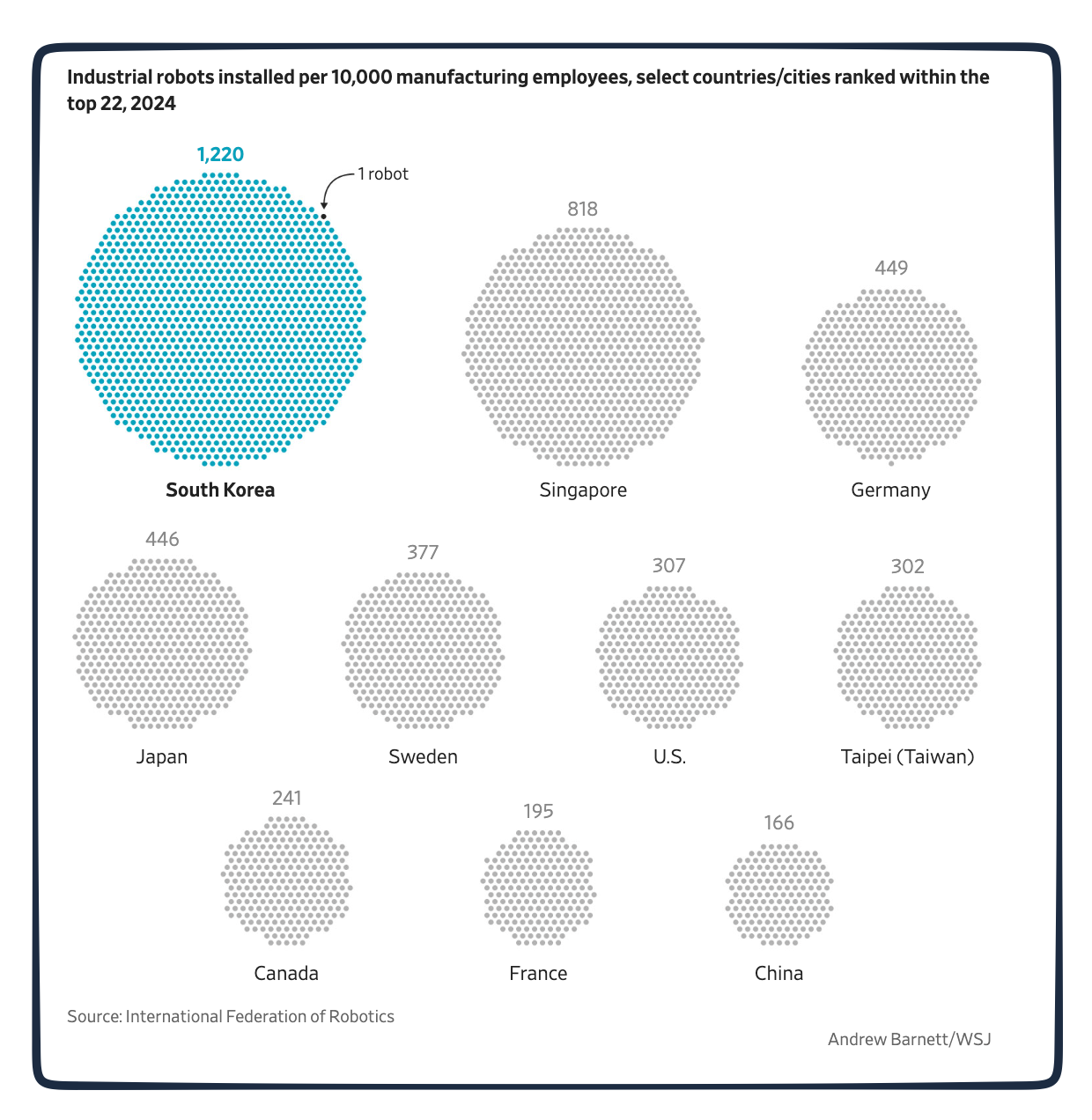
Returning to our title, and how Atlas affects labor markets, we can keep an eye on the results of the South Korean partial strike.
My sources and more: Thanks to WSJ for nudging me toward a robot update. From there we started with the World Cup and then returned to this paper, and analyses that were here and here. In addition, although perhaps dated, this paper from 2020 was helpful. And finally, econlib always is a handy resource for economists’ bios.