![econlifelogotrademarkedwebsitelogo[1]](/wp-content/uploads/2024/05/econlifelogotrademarkedwebsitelogo1.png#100878)


The Real Reason for Higher Egg Prices
July 8, 2026
How Cans Help Breweries Compete
July 10, 2026
In a World Cup penalty shootout on July 7, Switzerland defeated Colombia 4-3:
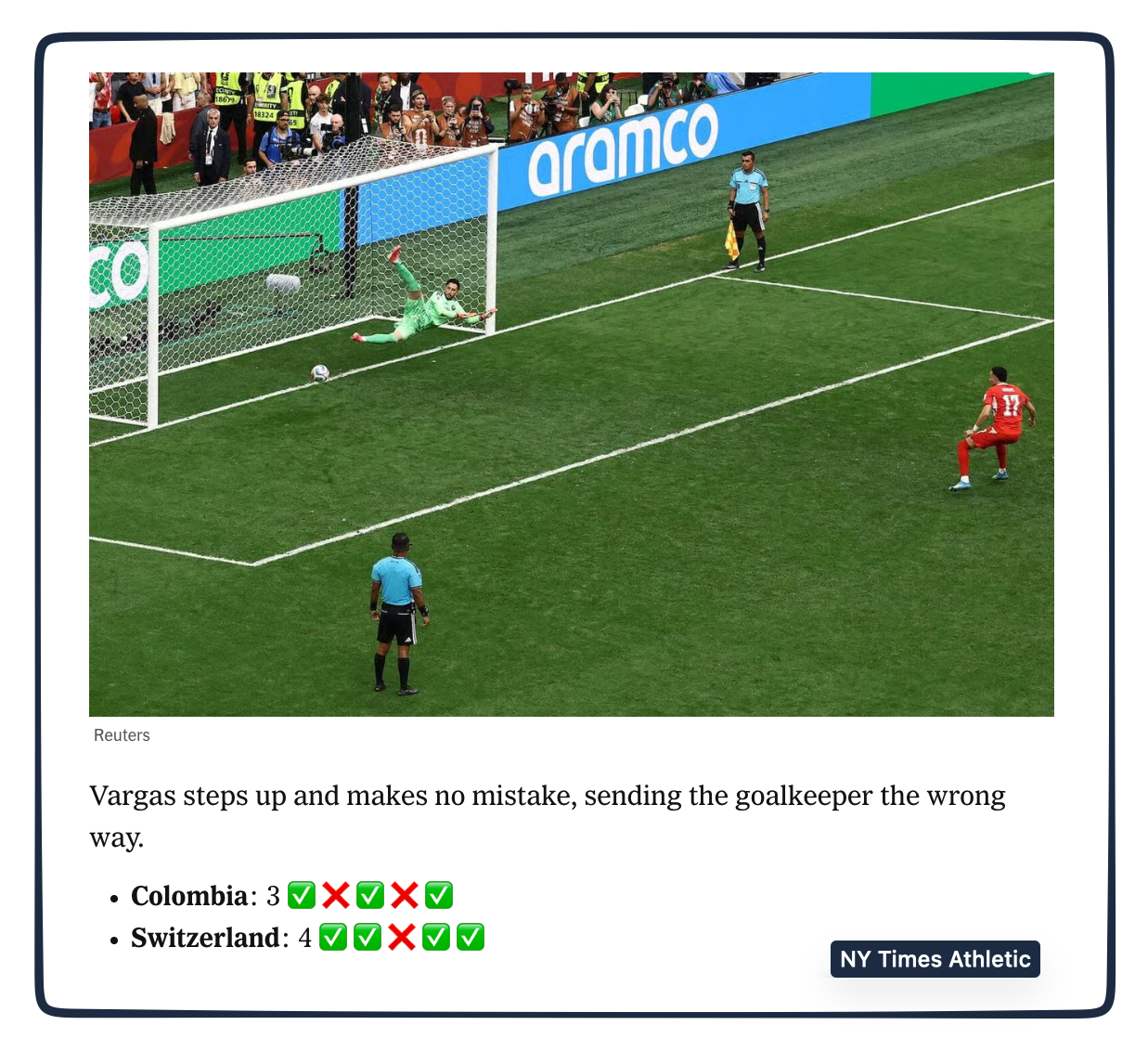
The Penalty Shootout
When the score is tied after playing time has expired, the penalty shootout determines the winner. It involves just two players, the kicker and the goalkeeper. Alternating five kicks apiece, each team’s objective is more goals than the opposition. Essentially, we have a goalkeeper trying to block a kick and the player trying to get the ball past him into the net.
Looking at shootout history since it began during 1982, you can see that Argentina tops the list:
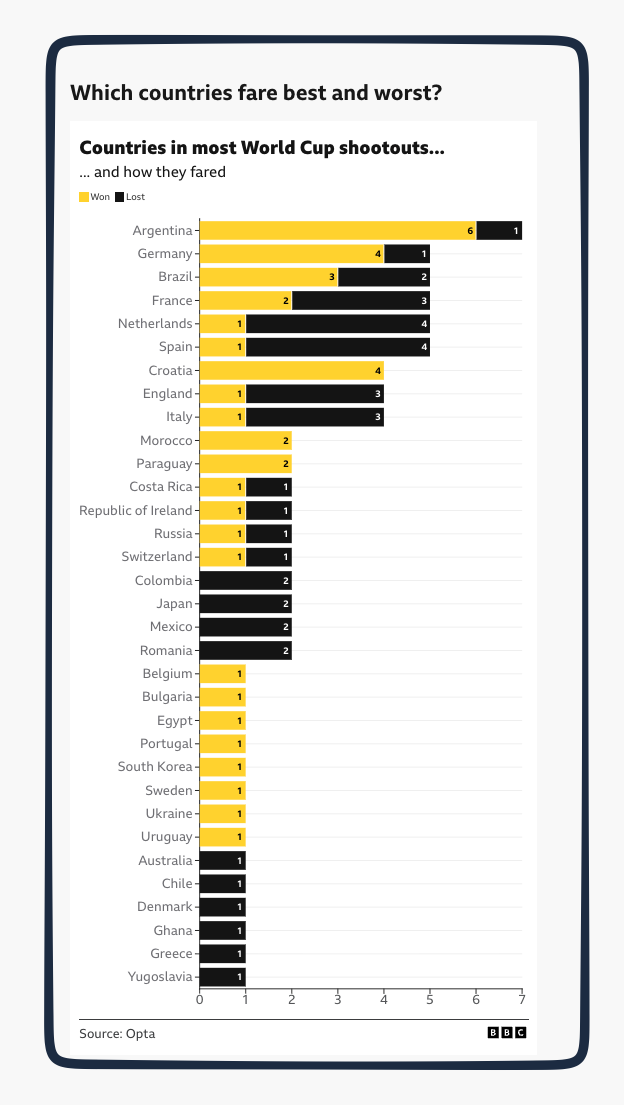
The shootout is where economics enters the game.
Game Theory
Game theory can help the goalkeeper predict the kicker’s decision.
In a penalty shootout, the goalkeeper has to decide whether to lunge to the left, the right, or remain in the middle. At the same moment, the kicker knows if he will aim for the left, the right, or the middle. With no time to react to the other’s decision, they each need to figure it out beforehand. Called a zero-sum game, there can be only one winner. At stake are huge amounts of money, of ego, and perhaps a championship.
The dilemma: Select the right, the left, or the middle?
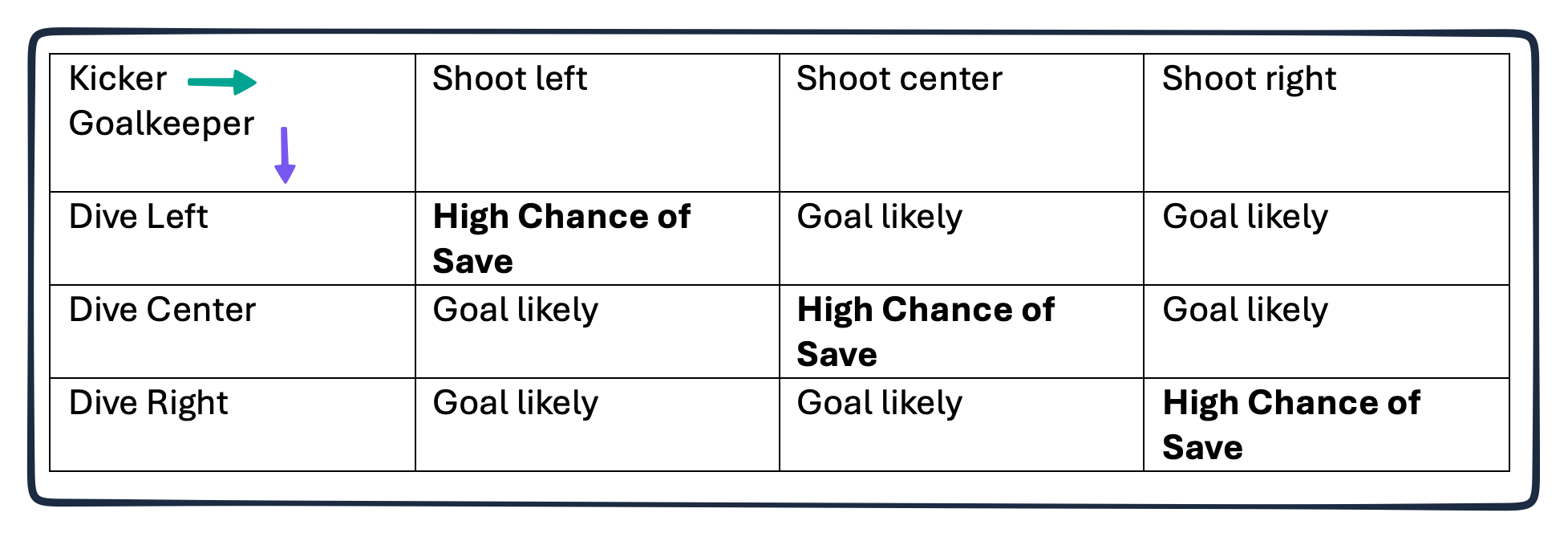
And that is the essence of game theory. Making the right decision depends on what someone else decides.
Strategy
According to economists who have researched World Cup game theory, the best strategy appears to be no strategy (aka a mixed strategy). The reason? If a kicker has a strong side, the goalkeeper could expect the ball to go there. But on the other hand, the kicker would know that and use his weaker side…Or not.
Referring to the Switzerland/Colombia shootout decisions, an economist would say that the players’ choices were “serially independent.”
Our Bottom Line: The Prisoners’ Dilemma
For the classic example of game theory, we can look at two prisoners. Because they are questioned separately, no one knows what the other has said. But the results depend on how much the other person admitted:
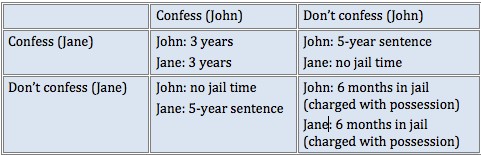
Extending far beyond a jail, the prisoners’ dilemma affects World Cup scores and also how businesses behave.
My sources and more: Thanks to ESPN for insight on The Switzerland Colombia shootout. From there, the NY Times Athletic and the BBC provided more detail. In addition, a Quartz focus on soccer game theory came in handy as did this 2002 paper from Brown and this one from economists at the University of Chicago. And finally, this obituary introduces you to its originator, John Nash, and A Beautiful Mind.
Please note that several of today’s sentences were in a past econlife post and ChatGPT created my World Cup table.