![econlifelogotrademarkedwebsitelogo[1]](/wp-content/uploads/2024/05/econlifelogotrademarkedwebsitelogo1.png#100878)


Why Game Theory Explains World Cup Penalty Shootouts
July 9, 2026
July 2026 Friday’s e-links: The Psychological Side of Money
July 10, 2026
Small cans have become a big hit.
Appreciating the opportunity to drink and spend less, consumers are buying 8-pack cans of ponies.
With beer, the container has made a difference.
Beer Cans and Bottles
During the late 19th century, a half barrel of beer was a keg while the quarter barrel was called the pony. Meaning small, the first aluminum can pony was introduced by Coors on January 22, 1959.
However, pony bottles had been available since the 1940s: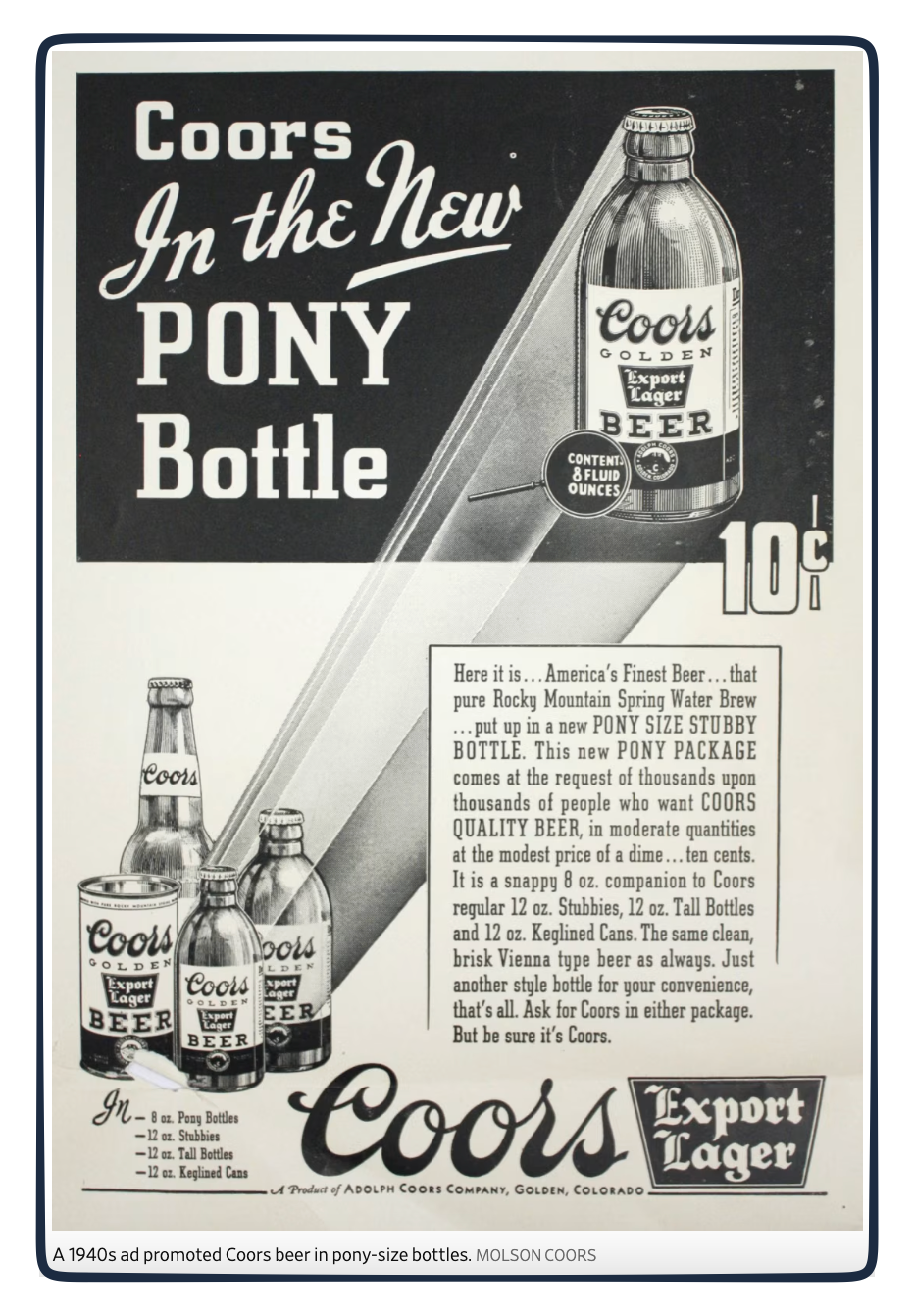
Sometimes 7 ounces, the Stubby is also a pony:
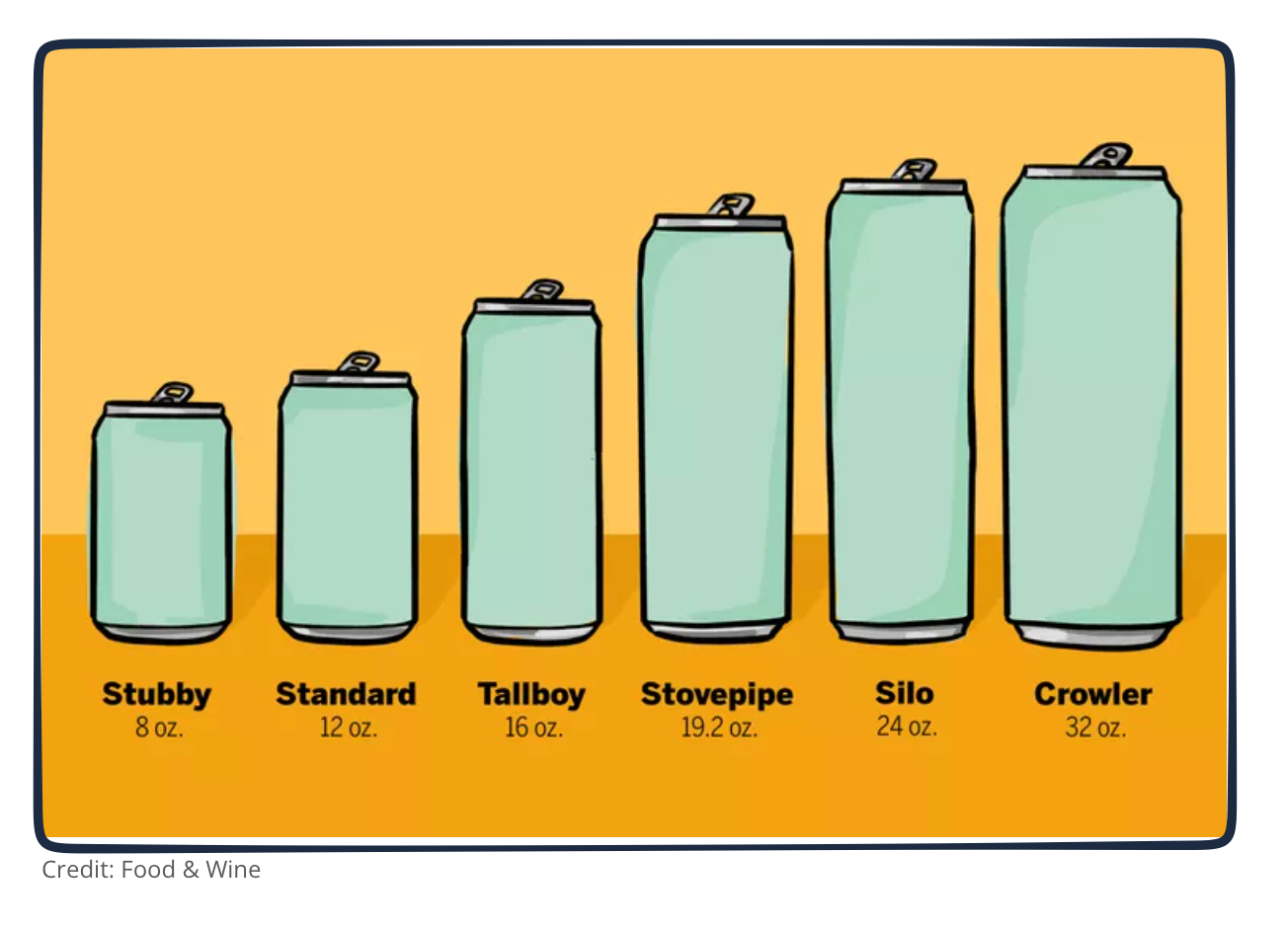
For beer can and bottle history, we can start just after World War II. The 6-pack reputedly originated then because it was a transportable size–easy for women to take home from the store. Fitting into the seller’s refrigeration units, the package also made sense for display and storage. But it took until the 1960s for us to get a more contemporary 12-pack.
On the supply side, when weight became a concern during the 1970s, brewers switched to aluminum. More recently, larger brewers can afford to imprint cans with their name. By contrast, because of the expense, smaller firms have to attach their own labels onto the can.
As for demand, the containers we choose depends on a bunch of variables. We could care about how heavy it is. Our refrigerator’s size might make a difference. It also matters if we are buying our beer for a social occasion. And now, our preferences reflect a tilt toward moderation and the popularity of GLP-1 weight loss drugs.
Our Bottom Line: Competition
Asked about beer competition, we would say it has many of the characteristics of an oligopoly. Dominated by a small number of large firms with pricing power, beer depends on mass production, economies of scale, and demand from millions of consumers. While entry and exit at the top is tough to achieve, we do have many smaller firms that have entered a niche section of the industry through craft brewing.
On a competitive market scale, the largest brewers are located closer to monopoly:
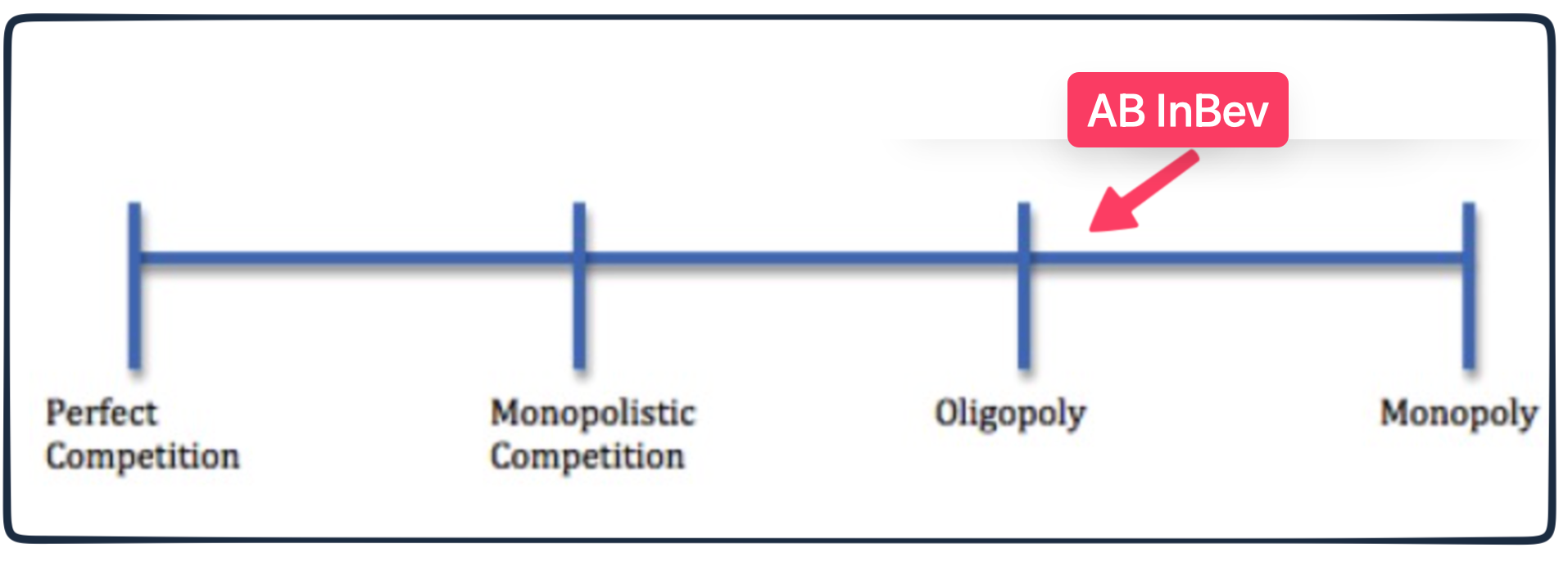
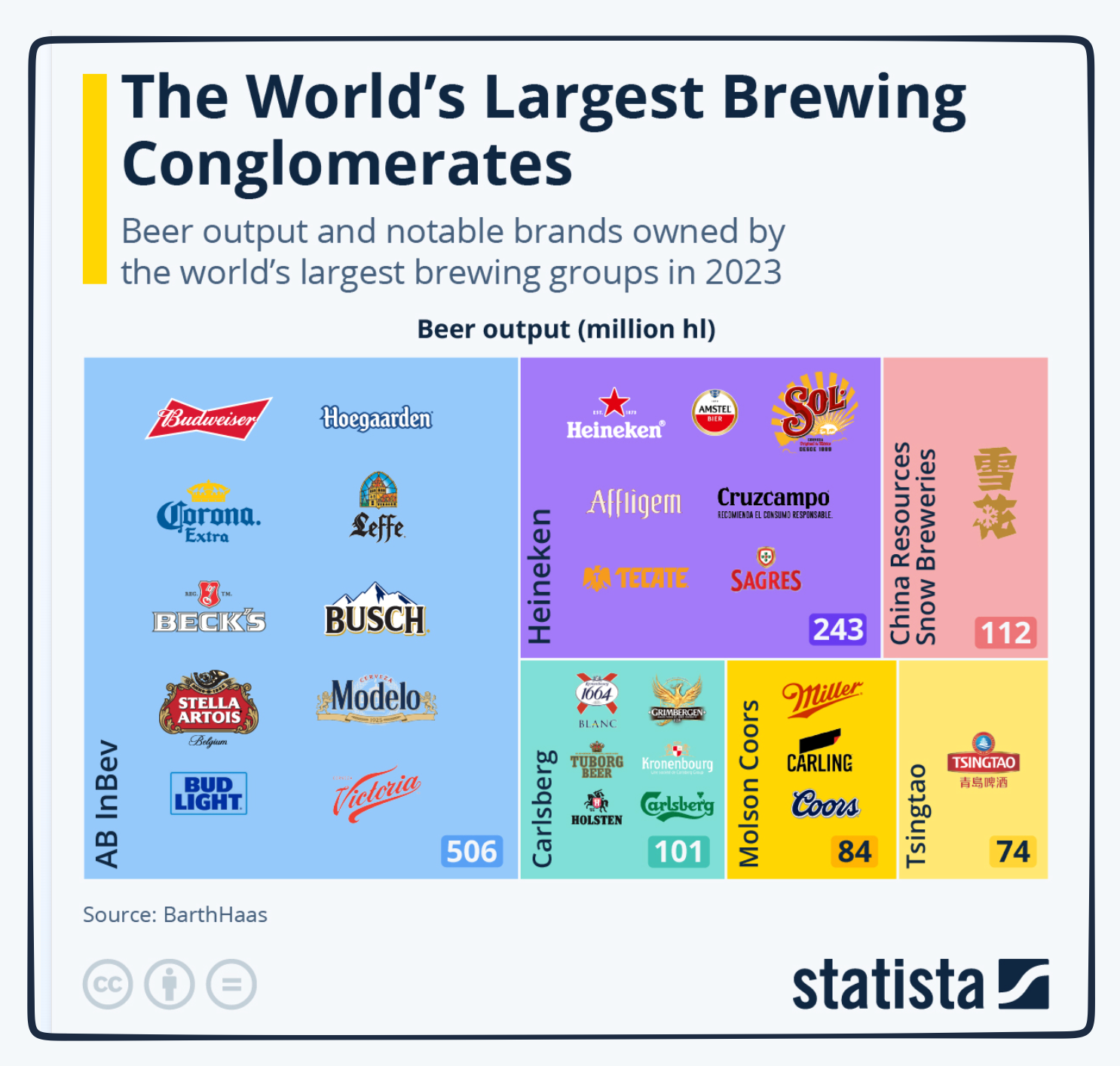
AB InBev is by far the largest in the industry:
These are the top 11:
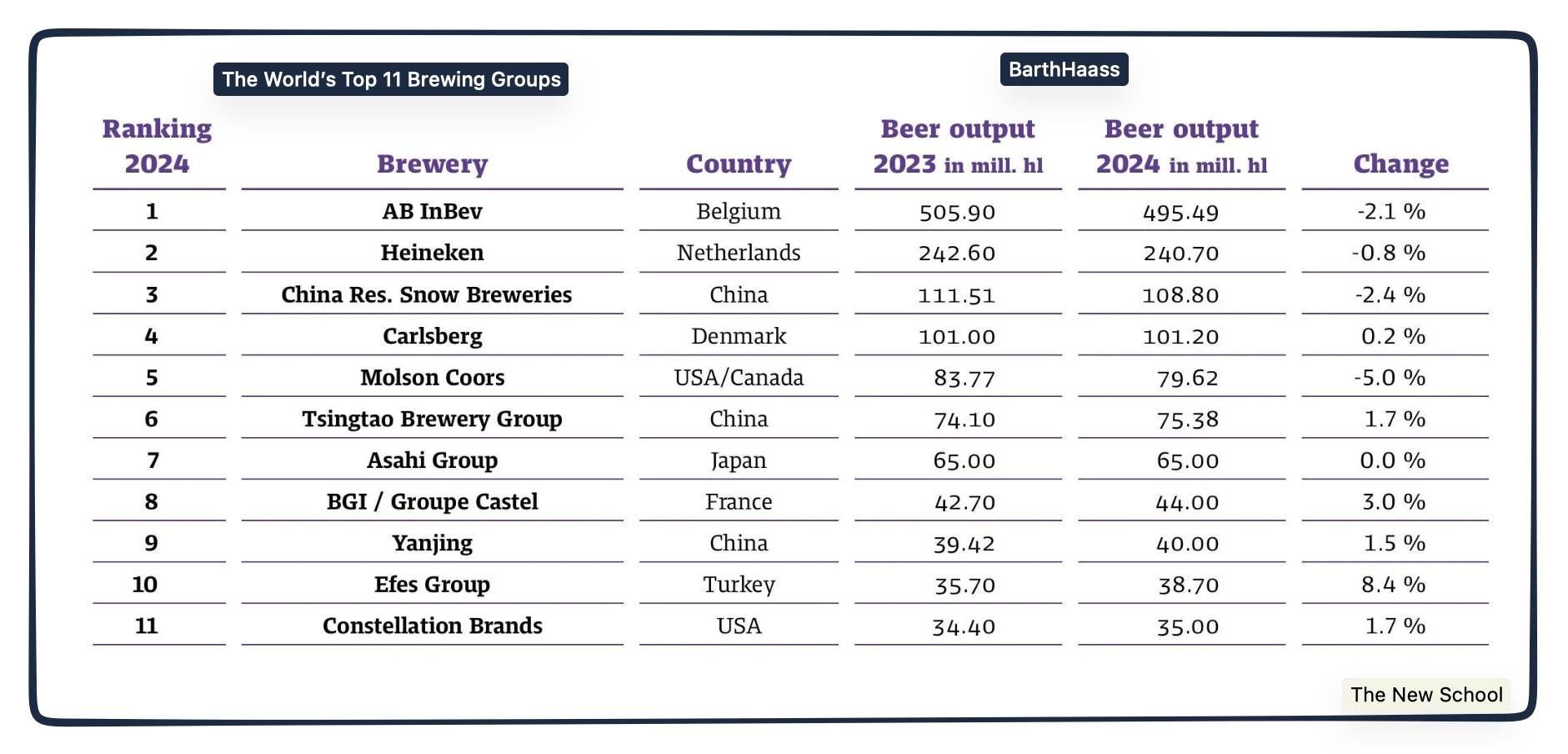
As oligopolies, they compete through product differentiation. And that returns us to their cans and bottles.
My sources and more: While we began with WSJ and small beer can consumption, happily, we wound up with Food & Wine’s can discussion and the history of beer cans. And finally, it all took us to details about beer competition from the New School.