![econlifelogotrademarkedwebsitelogo[1]](/wp-content/uploads/2024/05/econlifelogotrademarkedwebsitelogo1.png#100878)


Our Weekly Economic News Roundup: From Diet Coke to Campbell’s Soup
May 16, 2026
When a Watch Is About More Than Time
May 18, 2026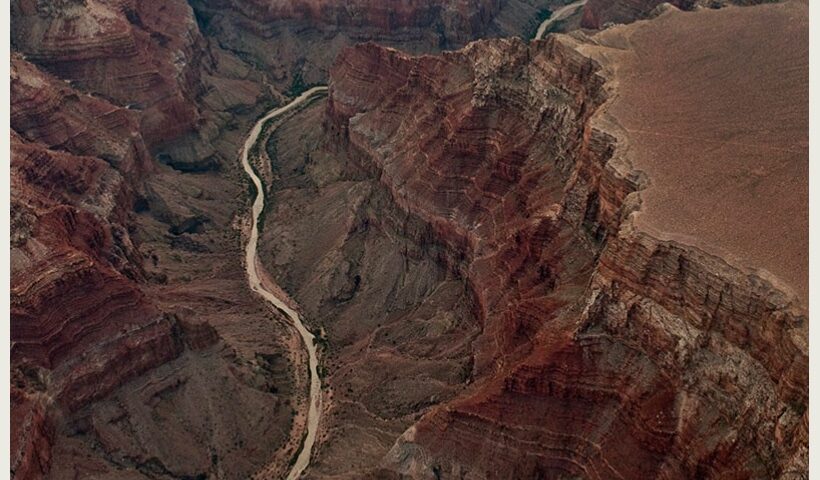
A climate researcher at Colorado State University explained why his state had a water crisis.
“We had a crummy snowpack that went from crummy to god-awful in three weeks.”
Colorado River Tradeoffs
Location
The users of the Colorado River Basin include seven states, 22 Native American tribes, parts of Mexico, and nine national parks.
Below, the conservation group, American Rivers, showed us the vast reach of the Colorado River:
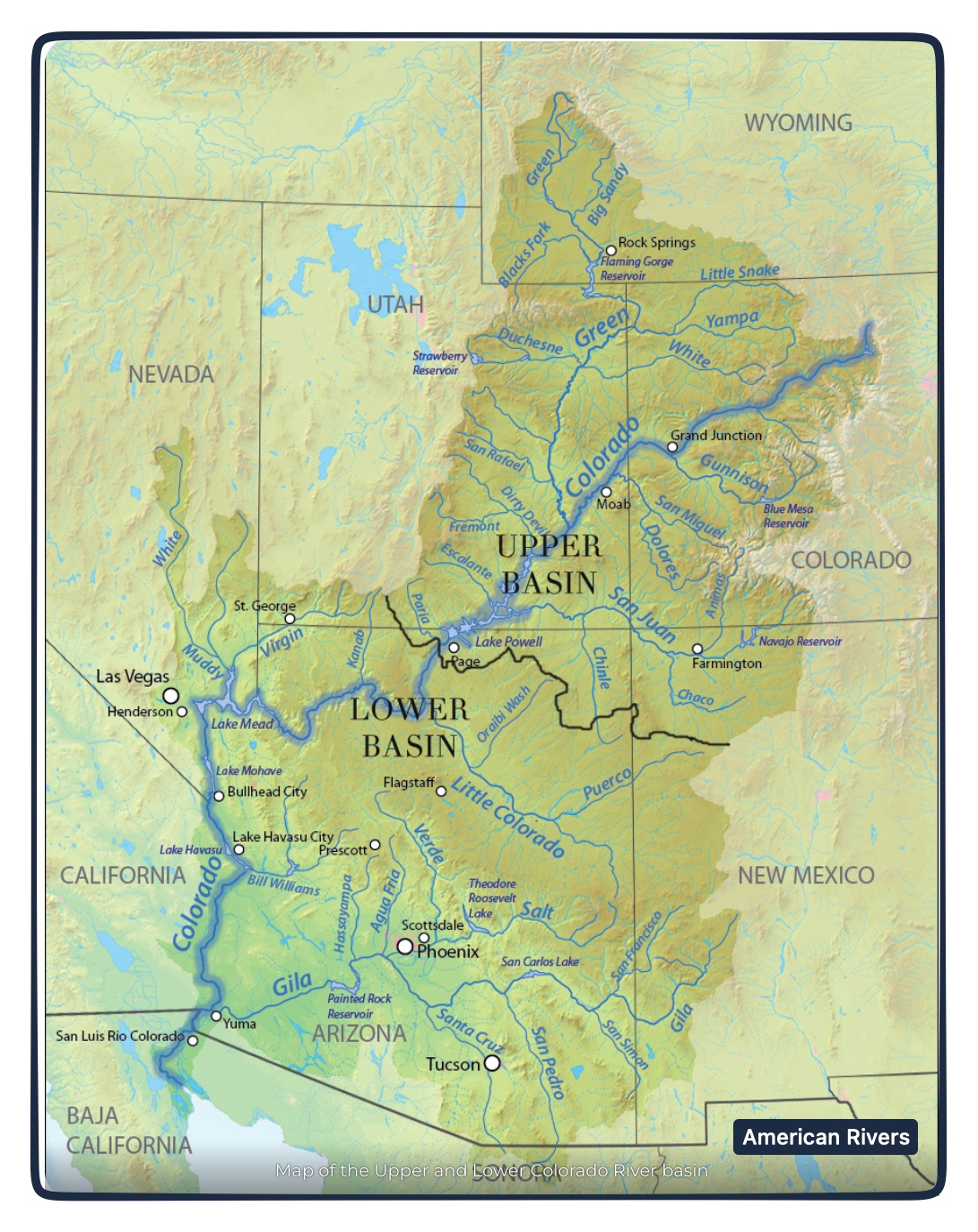
Approximately 40 million people need the river for their water, its wildlife, and electric power. With the Lake Mead reservoir close to record low levels and the river down to a trickle in some areas, it was especially crucial for the states to have renegotiated the River Compact of 1922.
But they did not.
Tradeoffs
As you might expect, the water allocation negotiations had tough urban or rural choices. Also, we can ask if the most water should continue going to the alfalfa that cattle consume. In addition, we have a tradeoff between the upper basin and lower basin. And beyond that, for the distribution to the states–equal or some other criteria? Similarly, more hydropower for Lake Powell could reduce the supply from Lake Mead.
Solutions
In a 2023 econlife post, we noted that the U.S. Department of the Interior asked the states to detail how they want to solve these Colorado River dilemmas. As a result, California called for a 400,000 acre foot reduction (one acre foot is 326,000 gallons) that would increase as water levels dropped.
Now, Politico tells us that California, Nevada, and Arizona expect the federal government to cut their Colorado River water supply by a whopping one-third. Prioritizing the oldest users, the cuts would equal 3 million acre-feet per year.
Our Bottom Line: Tragedy of the Commons
We have a tragedy of the commons when a public resource is overused or abused. Because the land and water have no private owner to oversee their care, individuals harm it. With the Colorado River subject to persistent drought, climate change, and population growth, it indeed has suffered from the tragedy of the commons.
Political scientist Elinor Ostrom (1933-2012) won the economics Nobel Prize for her approach to the tragedy of the commons. Calling it the problem of the commons, she said communities do voluntarily get together when they share the same goals. Her examples ranged from not overgrazing a pasture in Switzerland to maintaining a neat refrigerator at work.
Elinor Ostrom:
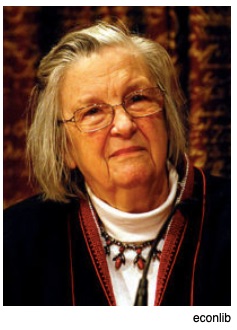
Dr. Ostrom was a wise, “no-nonsense” scholar. I wonder how she would have perceived the need for a federal mandate.
My sources and more: Thanks to WSJ for reminding me it was time to return to the Colorado River. From there, Wired , American Rivers and Politico provided more detail while National Geographic focused on the wildlife connectiion and I used the Gila River Indian Community newspaper for my water calculations.
From National Geographic, our featured image shows the Colorado River “snaking through” the Grand Canyon.