![econlifelogotrademarkedwebsitelogo[1]](/wp-content/uploads/2024/05/econlifelogotrademarkedwebsitelogo1.png#100878)


Why the Urea to Corn Ratio Matters to Each of Us
March 16, 2026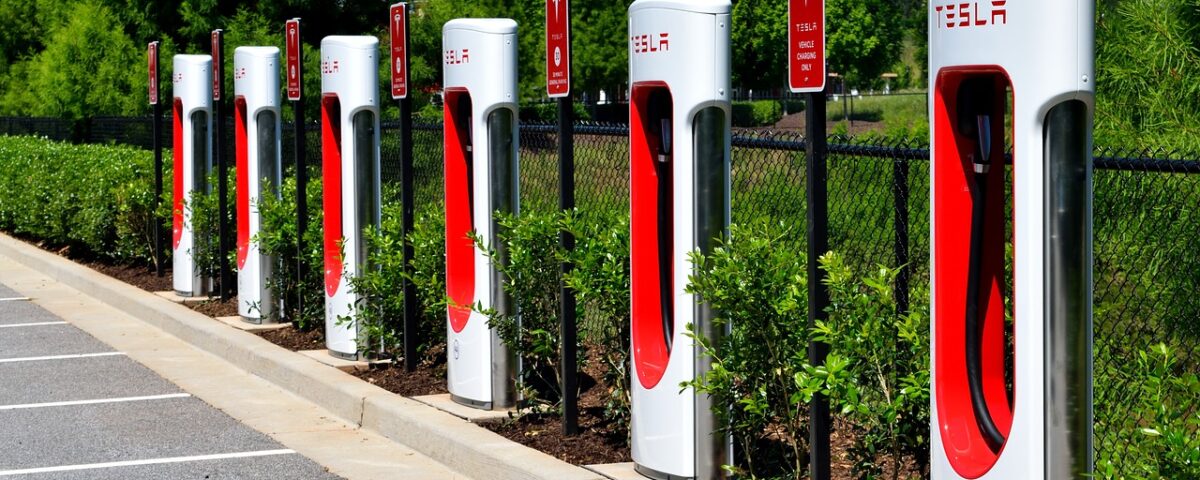
We’ve seen how a car affects family size. But what determines the car?
Let’s take a look.
Gasoline Prices and Car Purchases
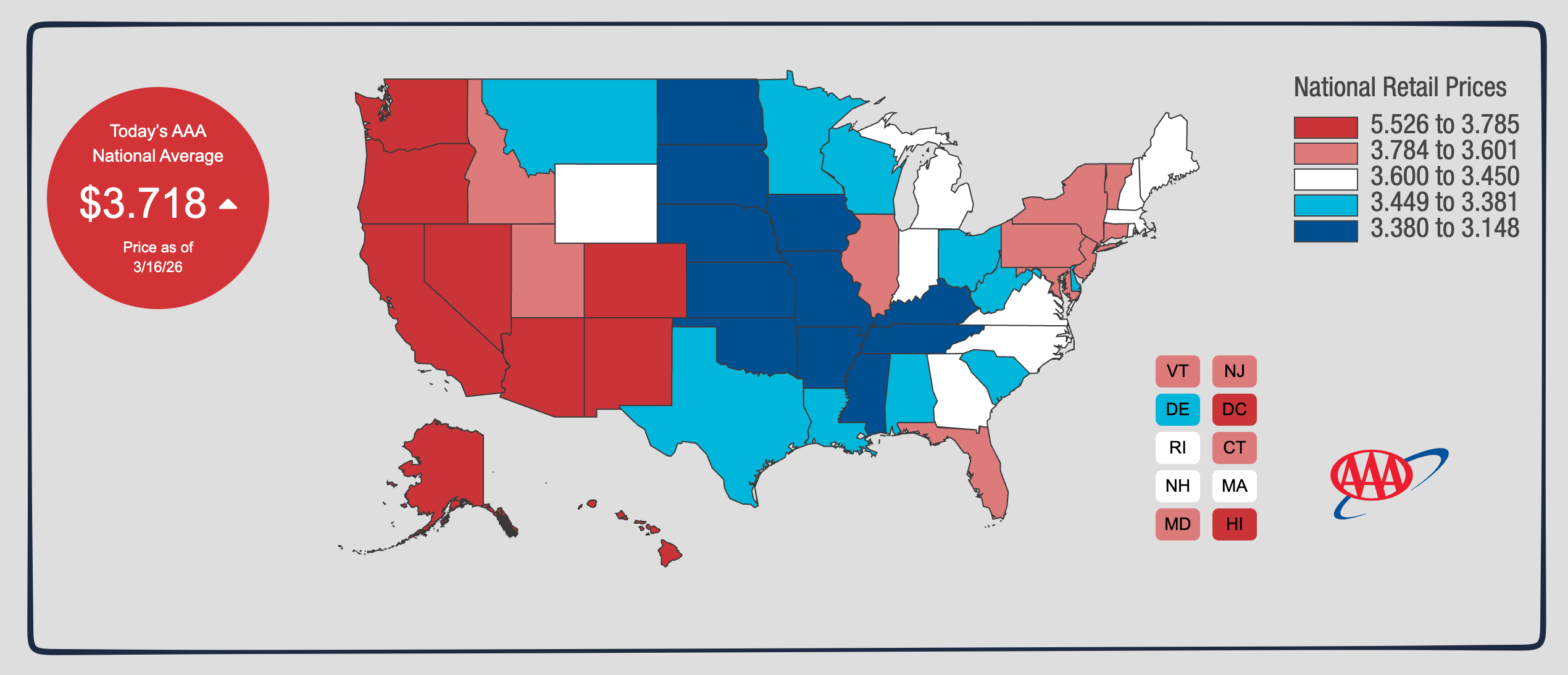
On February 27, the day before the Iran War began, the average price of gas was $2.98. Yesterday’s average gas price was $3.718. As a result, just during the past week, we wound up spending an extra $1.65 billion (or so) at the pump.
At a per gallon price of $5.526, California has the nation’s most expensive gasoline. Among the high-priced states shaded red, Colorado ($3.815) and New Mexico ($3.785) are the only ones with an average petrol price below $5.00:
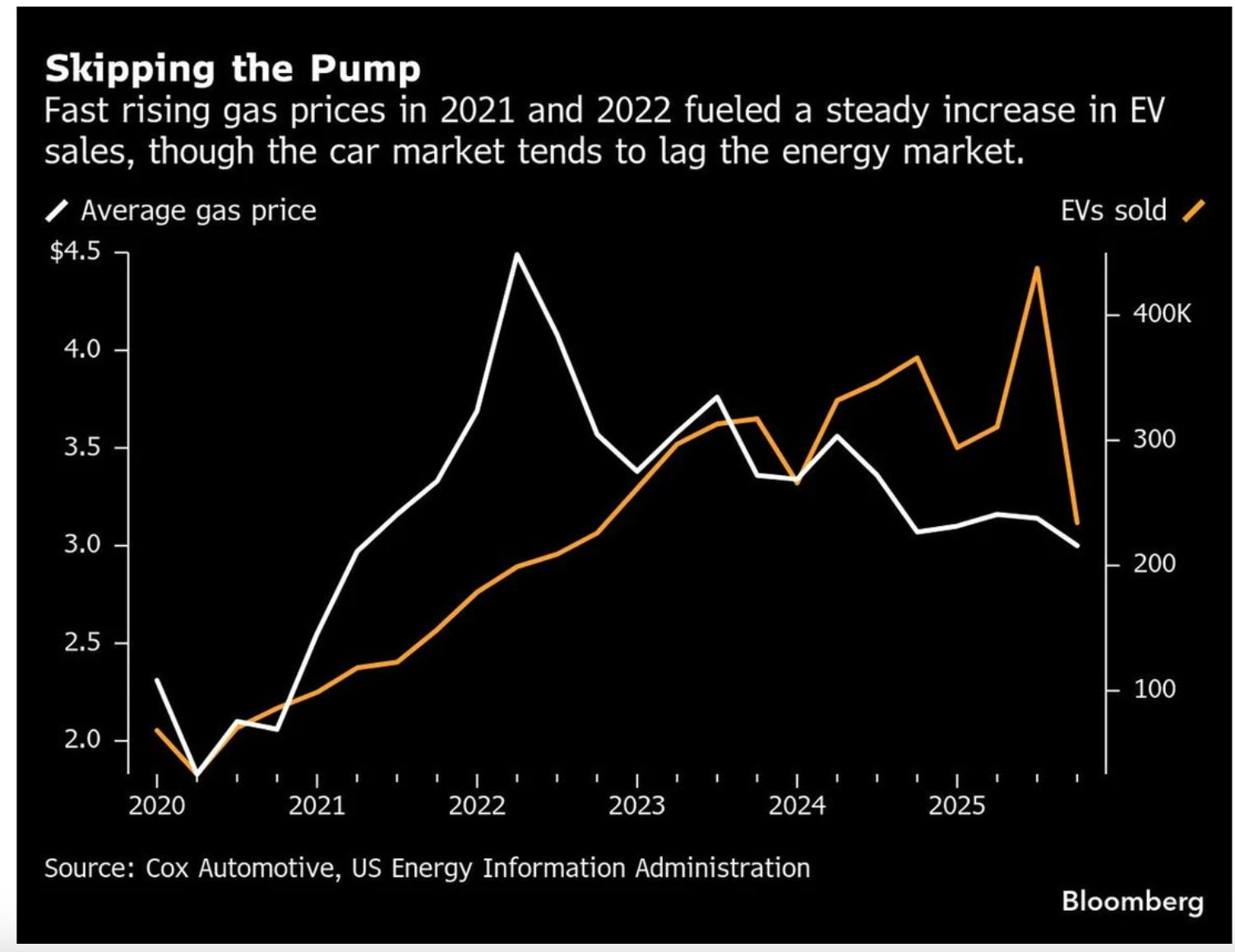
As we might expect, Bloomberg tells us that search traffic for EVs was up 20% during the days after the Iran War began. For the most popular models– the Tesla Model Y and the Chevrolet Equinox–search almost doubled. The one similar time was the oil price spike when Russia invaded Ukraine and the average gas price rose to $5.36. Otherwise, we’ve enjoyed a low petrol price plateau.
If the past predicts the present, we can expect ballooning interest in cars that use less gasoline. There is a time factor though. According to a Harvard scholar, initially, only the people currently in the market for an auto will be nudged toward electric. However, if gas prices remain high for more than three months, then others could decide they need to replace their SUV:
An economist would say we are talking about our elasticity.
Our Bottom Line: Elasticity
Our elasticity reflects how much the quantity we demand responds to a price change. Some economists (there is considerable debate) tell us that we are somewhat inelastic below $4 with rising prices from $2 and $3 affecting our driving behavior minimally. However, we have a tipping point when inelasticity becomes elastic–where price affects us.
Thinking quantitatively, elasticity is a fraction comparing the percent change in quantity to the percent change in price. If quantity as our numerator, is a bigger percent, then we are elastic. However, a larger denominator signifies inelasticity.
Returning to our car purchases, we can ask when our gas price elasticity will nudge us toward EVs.
My sources and more: Bloomberg was our starting point with this article in the Financial Post, Then, the Dallas Fed, Marketplace, and the AAA, provided the academic lens on elasticity studies.