![econlifelogotrademarkedwebsitelogo[1]](/wp-content/uploads/2024/05/econlifelogotrademarkedwebsitelogo1.png#100878)


How Does Mac and Cheese Compete?
January 4, 2026
What We Need to Know About Oil
January 6, 2026
Rewinding to the late 19th century, we would have seen a problem with corporate cooperation. To minimize the competition that elevated prices, together, large businesses firms decided what to charge us. Then though, the Sherman Antitrust Act proclaimed in 1890 that it was illegal to act “in restraint of trade.” Preserving competition, the Sherman Act prevented corporate collusion.
But is collusion always bad?
Toothpaste Tube Cooperation
For decades, empty toothpaste tubes have created a disproportionate amount of unrecyclable waste. According to Bloomberg, approximately 38,000 wind up in the trash every minute. (sounds high and impossible to verify but still, it is a a lot). Because traditional tubes, made of aluminum and a bunch of plastics, could not be affordably recycled, Colgate designed a new tube. Made from high density polyethylene, and similar (in content) to a milk container, it could be recycled. Then rather like a good Samaritan, they shared the new tube recipe with their competitors.
My green arrow points to the recycle logo on the Colgate box:
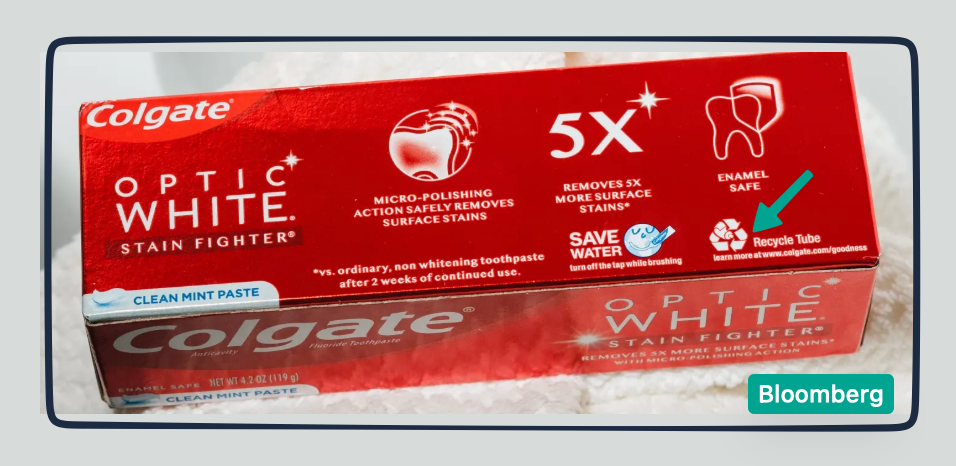
This is where the Sherman Act enters the picture.
Is it okay to collude on something that is good for society–like a recyclable toothpaste tube?
Our Bottom Line: Updating the Sherman Act
When a law is more than 100 years old, we can ask if it remains relevant. Many say yes for the Sherman Act although there are exceptions. Certainly its creators never thought of the need for cooperation to protect the environment. Also, litigation brought by the Biden administration’s FTC chair Lina Kkan (now gone with the Trump presidency) suggested that price collusion was not the only way to harm consumers. Also, discussed in a landmark law review paper by Ms. Khan when she was in law school, she said we are harmed by the information amassed by big tech firms like Amazon and Google.
According to Lina Khan’, more recent definitions of anti-competitive behavior need updating. Although Amazon, for example, ostensibly augments consumer welfare, its behavior could be considered anti-competitive. Her concern focuses on its conflicts of interest. She cites the power that interconnected distinct lines of business create. And finally, she asks if the “structure of the market incentivizes and permits predatory conduct.” She might also have been referring most big tech firms.
And to toothpaste tubes?
My sources and more: Thanks to Bloomberg for many of today’s facts. From there, we checked on the Sherman Antitrust Act and vastly oversimplified its content. But if you would like to read more about the contemporary relevance of the Sherman Act, do take a look at these past econlife posts, here and here.