An Aviation Report Card
November 16, 2026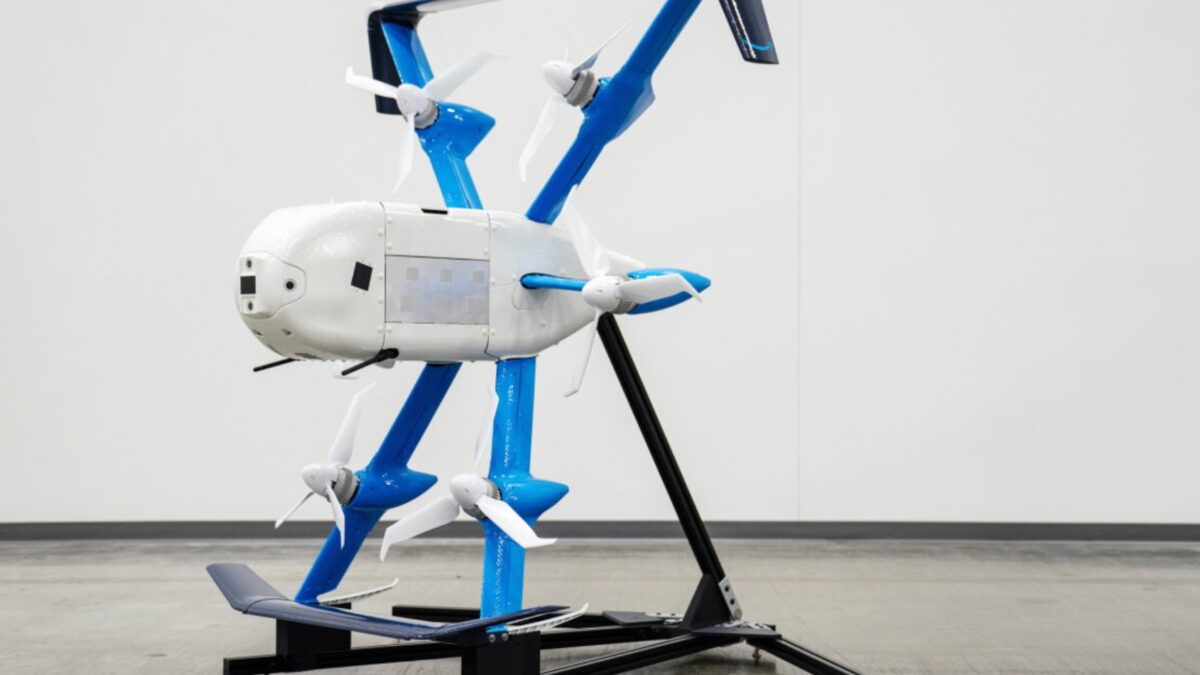
Amazon said dropping packages from its 80-pound drones was all about fast delivery to suburban and semirural areas.
Some residents disagreed.
Amazon Drone Deliveries
Currently occupying 18 sites in 10 states, each Amazon Prime Air drone delivery hub has a reach of 175 miles. Asked about activity, they said approximately 30 times an hour, drones leave their Baton Rouge facility with packages weighing up to five pounds that could travel 7.5 miles.
Do take a look at a drone delivery. It is rather amazing:
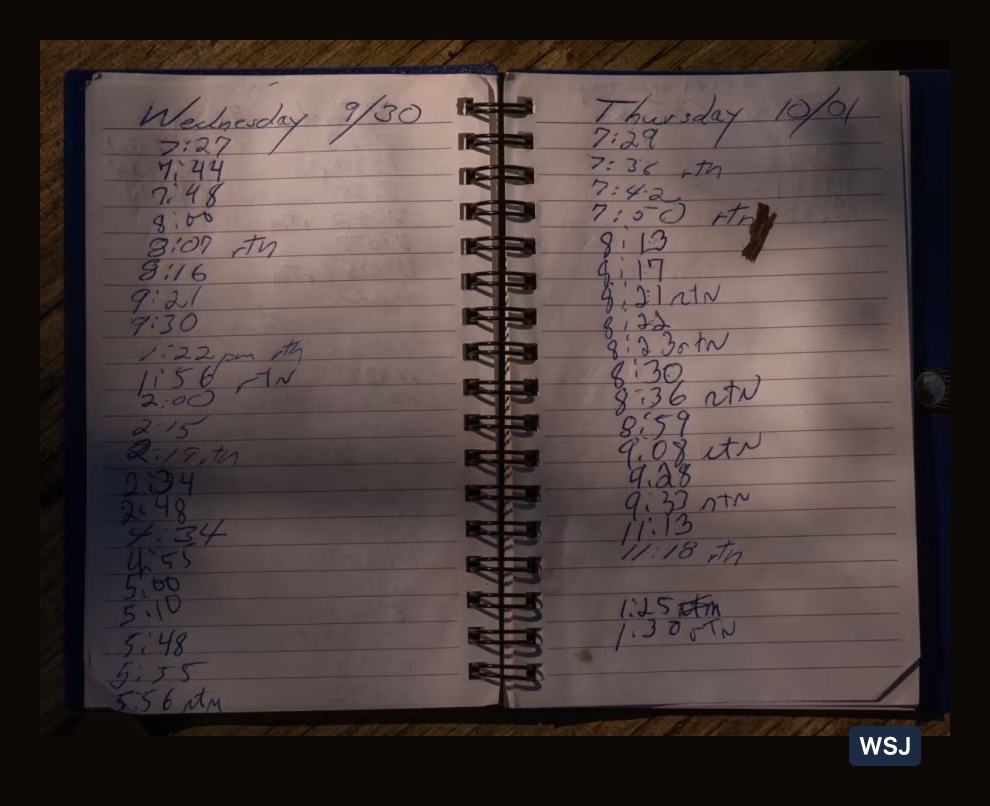
However, demonstrating the intrusion, one Baton Rouge area resident documented the flyovers:
Drones and Chickens
Our story could have started in 1946 on a North Carolina farm. At the time, Thomas Causby’s land was located near an airport used by the U.S. military. With planes constantly taking off and landing, the problem was the noise and the landing lights that lit up the farm at night. At 83 feet above the respondents’ property, 67 feet above the house, 63 feet above the barn, and 18 feet above the highest tree, the planes would “swoop down so close to the house that it seemed they were taking the roof off.” Reacting to the tumult, the chickens jumped against the side of the chicken house, and “burst themselves open.” Close to 150 died while the family emphasized its loss of sleep, nervousness, and fright.
Citing a Fifth Amendment violation, the Causbys said the United States had “taken” their property.
In a lower court decision, they were told that, “to whomsoever the soil belongs, he owns also to the sky.” So yes, in addition to the land, the air belonged to the Causbys. However, the Supreme Court partially reversed the lower court’s decision by saying that, in a modern world, no one can own the air. Or, as Justice Douglas explained, “The air is a modern highway.” But the Causbys were owed some compensation that they eventually received because of the diminished value of their farm ($1060) and the dead chickens ($375).
Drone Regulations
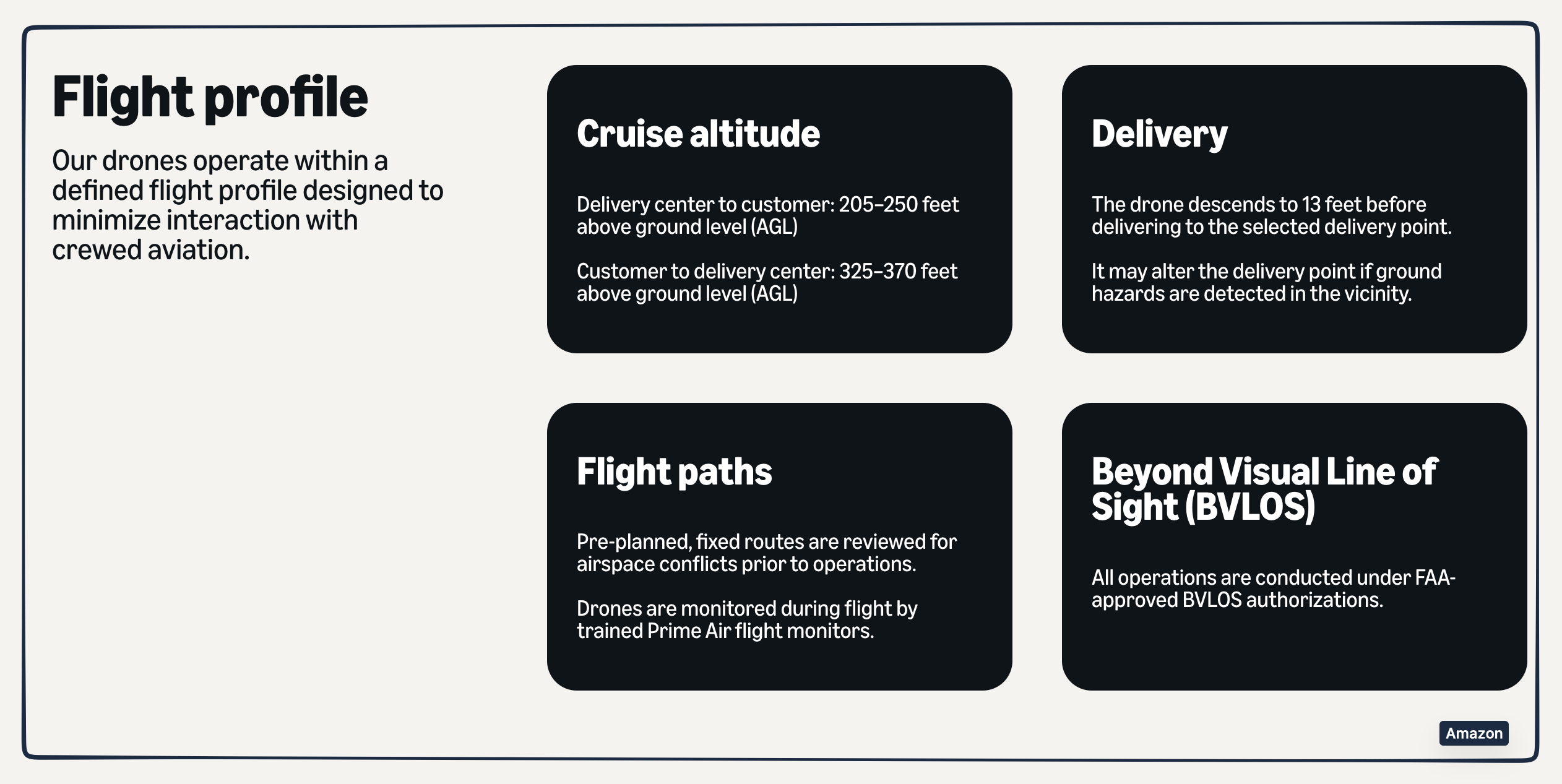
Reflecting some of the FAA regulations that it observes, Amazon gave a positive spin to its flight profile:
Our Bottom Line: Property Rights
Baton Rouge complaints about delivery drones have focused on noise, privacy, and birds. Saying the drones over his home were louder than a vacuum cleaner, a designer of sound equipment measured decibel levels. Meanwhile, another resident, noting 18 flyovers in less than an hour, said that he used to enjoy coffee in his backyard. And, we can ask if our birds will defer to drones when contemplating our feeders.
At this point, I thought of the tragedy of the commons. Referring to how we abuse commonly owned resources, the tragedy of the commons signals the damage that drones are doing to Baton Rouge residents. Explaining the tragedy of the commons, I like to remind us that we never wash a rental car. Because property rights matter, we tend to bespoil what no one owns.
Alexander Hamilton knew that property rights need to be dependable, predictable and preservable. The “ancient lights” doctrine, from English common law, said that a property owner could prevent a neighbor from erecting a structure that blocked the sunlight they had been enjoying. Proclaiming that development superseded such broad property rights, U.S. courts ignored the “ancient lights.” Still though, a group of New Yorkers was able to limit the shadow that the (then) new Time Warner Center would have cast across Central Park each day.
Although we know that property rights need to be dependable, predictable, and preservable, again with drones, we can debate their reach.
My sources and more: Inspired by yesterday’s Wall Street Journal, I visited Amazon’s drone deliveries. That returned us to this econlife post and to the Causby case,, and a never-ending property rights debate.
Please note that today’s featured image was from a WSJ video and several of today’s sentences are from a past econlife post.