![econlifelogotrademarkedwebsitelogo[1]](/wp-content/uploads/2024/05/econlifelogotrademarkedwebsitelogo1.png#100878)


Supply, Demand, and the IMAX
July 26, 2026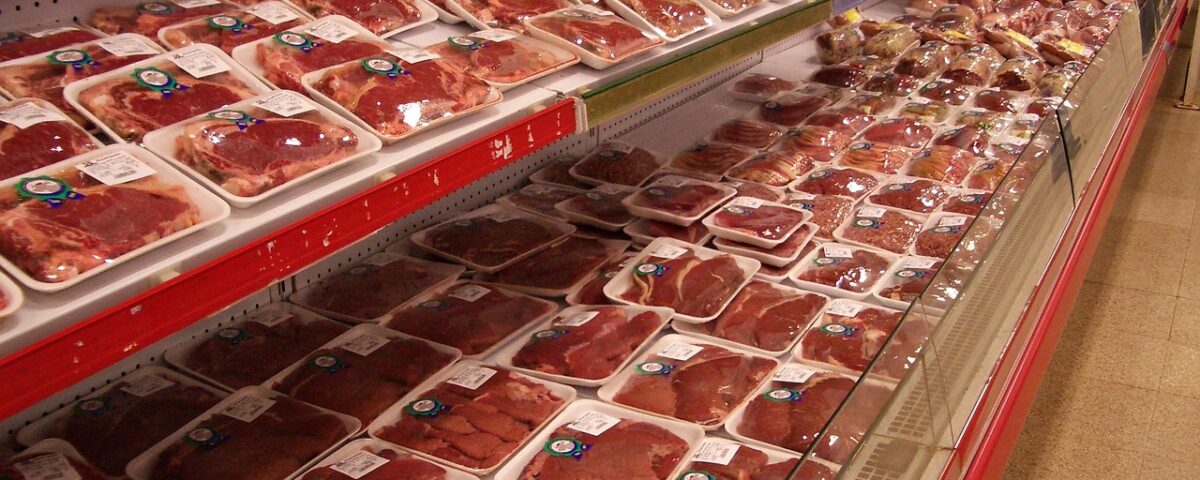
Last week, New Jersey Governor Mikie Sherrill signed the Fair Price Protection Act. Targeting grocery stores, the Act prohibited retailers from personalizing prices. As the governor explained, she wanted to be sure that stores cannot use our shopping history, online activity, or location to decide they will charge you more than me for the same product.
While Maryland has similar legislation, Connecticut’s is broader as is New York’s, if passed.
All remind us of dynamic pricing.
Dynamic Pricing History
One Price
In London during the early 19th century, store clerks haggled with customers. Time consuming, the process meant every customer could have a different price.
But then we had the invention of the 19th century department store. Think New York’s Macy’s. It would have been impossible and impractical to train hundreds of employees to negotiate a price for thousands of items. The result? By 1890, one price for each item had become the norm.
With single prices, customer service could blossom as would customer loyalty. We could also have price wars, money-back guarantees, loss leaders, and promotional pricing, Auto dealers tell us that fixed prices for cars cuts buying time from more than four hours to 45 minutes.
Many prices
Leaping ahead to 1978, we have the Airline Deregulation Act. Because the 1978 Act meant government could no longer mandate fares, the airlines developed their own pricing strategies. One story from Delta tells of an executive that was horrified when his reservations staff lowered fares for the Atlanta/Washington D.C. route as the departure date approached.
I suspect I would have lowered those fares also. After all, if you have empty seats, it makes sense to attract more fliers by lowering the price. The right approach though was precisely the opposite. Because last minute fliers are willing to pay more, airlines should boost their fares.
And thus, we had the beginning of a dynamic pricing model that sets fares based on whether the flier was discretionary or business, if the flight was departing in days or months, and how many seats remained. Copying, businesses that ranged from hotels to Uber to Amazon, also began using dynamic pricing.
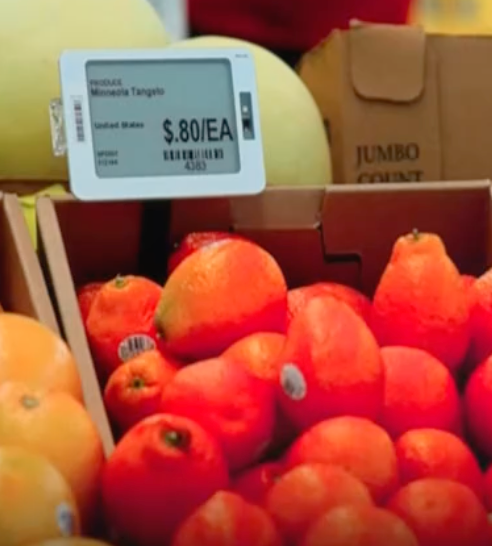
Now though as supermarkets try to enter the dynamic pricing arena, legislation is nudging them out of it. In addition, the New Jersey law temporarily prohibits digital displays that let stores instantaneously change prices:
Our Bottom Line: Supermarket Pricing Power
As economists, we can contemplate pricing power.
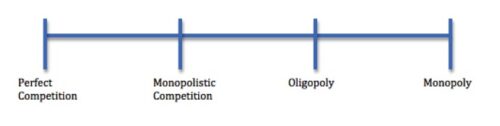
Traditional economic texts tell us that pricing power increases as we move to the right along a competitive market structures continuum. Theoretically, businesses that are larger have more control over what they charge instead of the market’s supply and demand.
Moving from perfect competition to monopolistic competition, to oligopoly and monopoly, we have increasingly powerful firms:
But, as always, it is not quite that simple. Whereas traditional textbooks teach us supply and demand graphs, they should add the pricing power that apps and digital menus give them. Depending perhaps on AI, an equilibrium price could perpetually shift in every market structure.
As a result, asking about prices, our answers are increasingly messy. All though return us to supply and demand, and wondering how New Jersey’s new law affects competitive markets.
My sources and more: Thanks to the Financial Times for inspiring today’s post. From there, we found more detail about New Jersey’s surveillance law at The Guardian. and a dynamic pricing update at The Washington Post. We also returned to past econlife posts like this one.