![econlifelogotrademarkedwebsitelogo[1]](/wp-content/uploads/2024/05/econlifelogotrademarkedwebsitelogo1.png#100878)


Our Weekly Economic News Roundup: From Traffic Signs to Long Lines
September 5, 2026
How Does the Harry Styles Effect Impact Our Spending?
September 7, 2026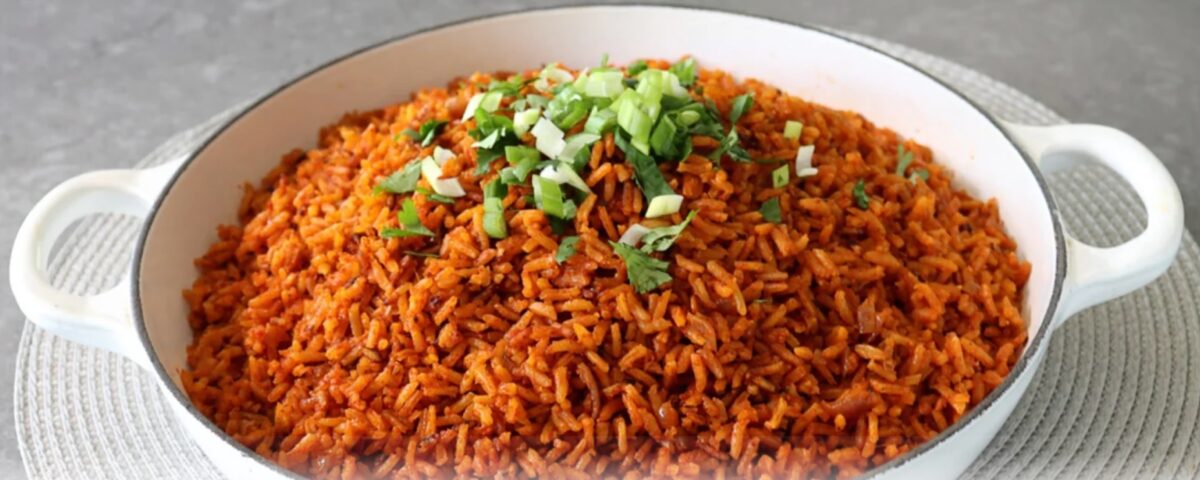
Last May, Nigeria reported that since December, the cost of feeding five people with a pot of jollof rice was up a whopping 19.4 percent.
The UN’s FAO tells us that global food prices continue to rise.
World Food Prices
In an August release, the FAO reported a 1.9 percent increase in its Food Price Index (FFP). Last year, the hike was 2.5 percent.
My white arrow points to a steeply ascending line (so far) for 2026: 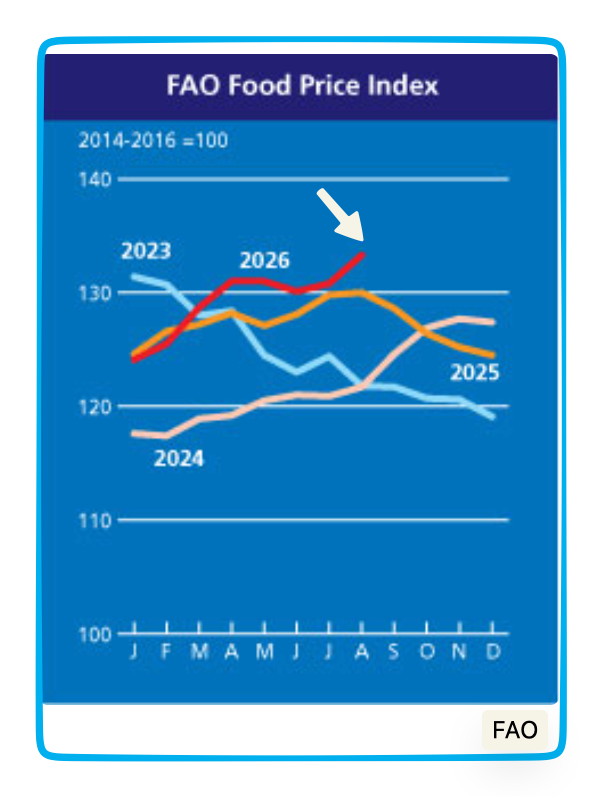
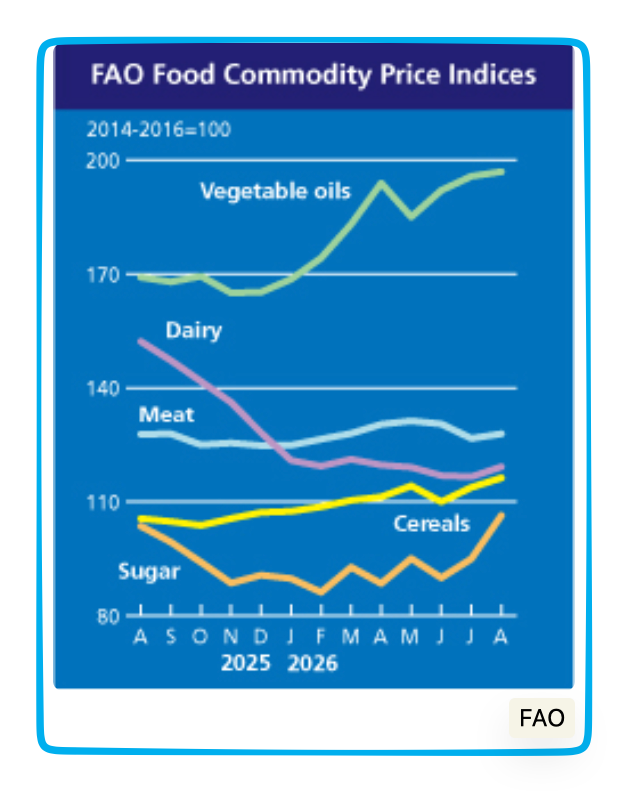
Led by sugar, each of the five commodities that compose the FFP was up during the past month:
Supply
Focusing mostly on the supply side, the FAO explained why prices increased.
Defined as the quantities producers are willing and able to provide goods and services at different prices, supply is an entire schedule. At the moment we are facing what might be called the “perfect storm” with a slew of problematic supply side events. The list includes the hot and dry European weather that econlife recently looked at. In addition, Russia’s War against Ukraine affected Ukraine’s wheat exports and elevated Black Sea uncertainty. Then, we also have the Iran War disrupting the world’s oil supply and its urea. And, adding to all of this, we already have what will probably be a record-setting El Niño distorting production plans and yields.
Our Bottom Line: Inflation
We could say that it all takes us to inflation.
When economists discuss inflation, they say the cause could be “demand pull,” or “cost push, or a single commodity. On the demand side of markets, when too many of us have lots to spend, we bid prices higher. Somewhat similarly, cost push inflation takes us to the supply side’s more expensive land, labor, or capital. And, for that single commodity, the perfect example is the current surge in oil prices. In addition, we should note that a group of economists called the monetarists attribute inflation primarily to an excessive money supply.
My sources and more: Thanks to WSJ for inspiring today’s post. From there, we went straight to the FAO to see its report firsthand. Then, we checked food prices in the most recent global economic IMF report and also looked at The Guardian for the price of Nigerian rice.
From The Guardian, our featured image displays jollof rice, and please note that several of today’s sentences were in a past econlife post.