![econlifelogotrademarkedwebsitelogo[1]](/wp-content/uploads/2024/05/econlifelogotrademarkedwebsitelogo1.png#100878)


Looking at the Links in the Oil Supply Chain
June 17, 2026
A Surprising Way to Boost Economic Growth
June 19, 2026
The game Monopoly was created to send us a message.
That message is remarkably similar to what many of us are saying today.
Opinions of the Extremely Rich
Popularity
Monopoly is our most popular board game:

Its popularity is especially interesting when we look at the game’s history and public opinion.
History
Parker Brothers first sold the game Monopoly in 1935. However, it was not really new. As the Landlord’s Game, an original version let you experience the evils of monopoly or the benefits of sharing wealth. It conveyed the downside of the extreme wealth accumulated by people like John D. Rockefeller or Andrew Carnegie.
The game’s developer, Elizabeth Magie Philips–a court stenographer, an inventor with patents, a writer and poet–wanted players to realize the inequities of capitalism. She explained that, “In a short time, I hope a very short time, men and women will discover that they are poor because Carnegie and Rockefeller, maybe, have more than they know what to do with.”
During its first two years, consumers purchased 278,000 copies of Monopoly, and then 1,750,000. But sadly, a gentleman named Darrow had sold a purloined version of the game to Parker Brothers. Ms. Philips never was paid for the game’s sales.
Contemporary Opinions
Like Monopoly’s original message, Pew Research and YouGov report that today, many of us disapprove of massive wealth.
Pew:

Meanwhile, a YouGov survey reflected a similarly negative opinion of people with $100 billion or more:
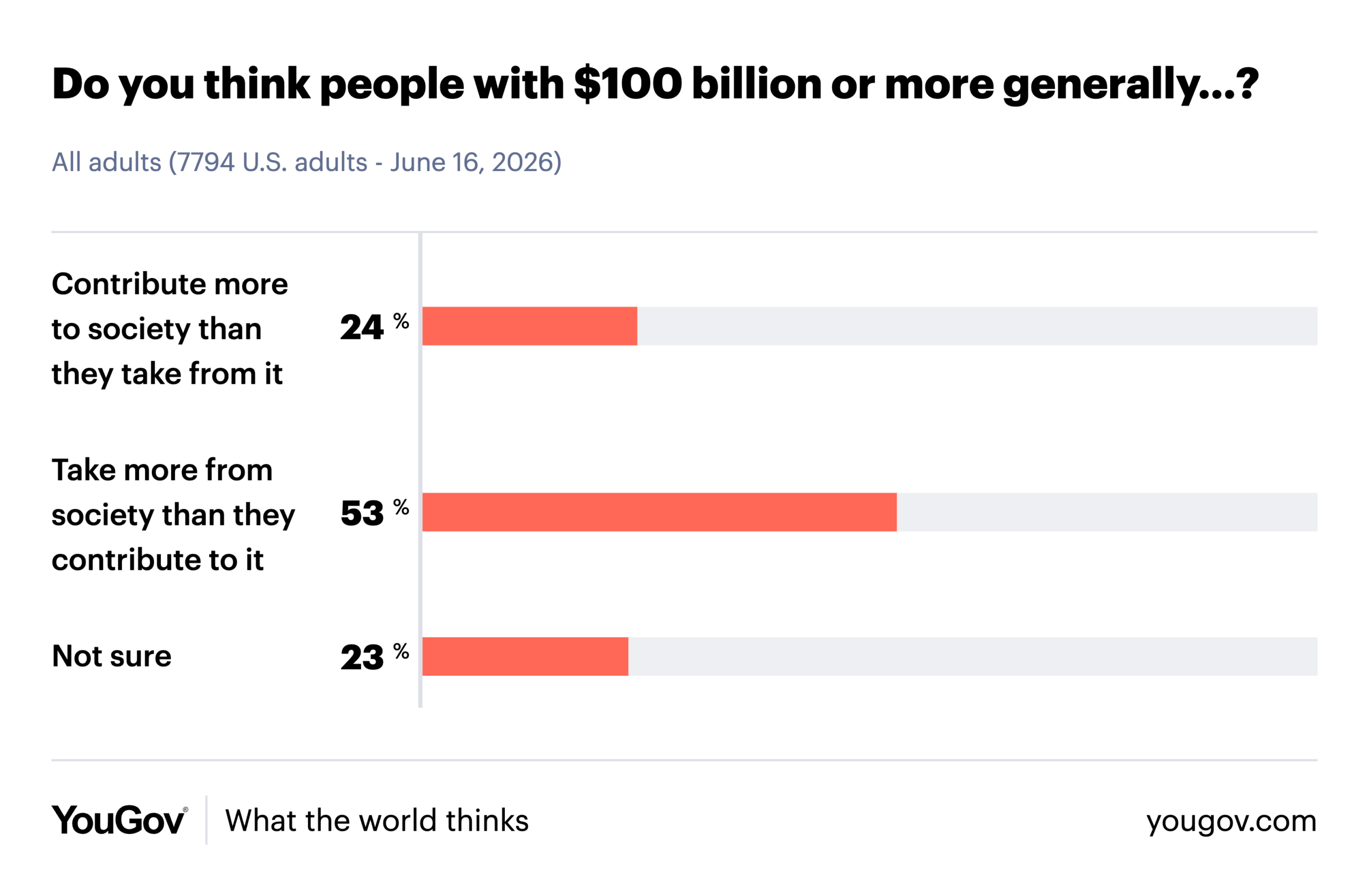
Our Bottom Line: Monopoly Tradeoffs
Knowing that the game of Monopoly is based on the evils of John D. Rockefeller, Andrew Carnegie, J.P. Morgan, and others like them, I wonder how much their accomplishments should influence our opinion of their wealth. Those gentlemen, developing an oil, steel, and financial infrastructure, fueled U.S. economic growth. Now, Musk and SpaceX, Bezos and Amazon, and Zuckerberg and Meta made a major contribution to the U.S. economy.
As economists, it returns us to a tradeoff that we can debate.
My sources and more: Thanks to my Chartr/Sherwood email newsletter for inspiring today’s post. From there, Smithsonian had more detail. And finally, the Pew and YouGov surveys came in handy.
Please note that several of today’s sentences were in a past econlife post.