![econlifelogotrademarkedwebsitelogo[1]](/wp-content/uploads/2024/05/econlifelogotrademarkedwebsitelogo1.png#100878)


How a Tin Can Changes Our Dinner Menu
May 14, 2026
May 2026 Friday’s e-links: The Best Podcast
May 15, 2026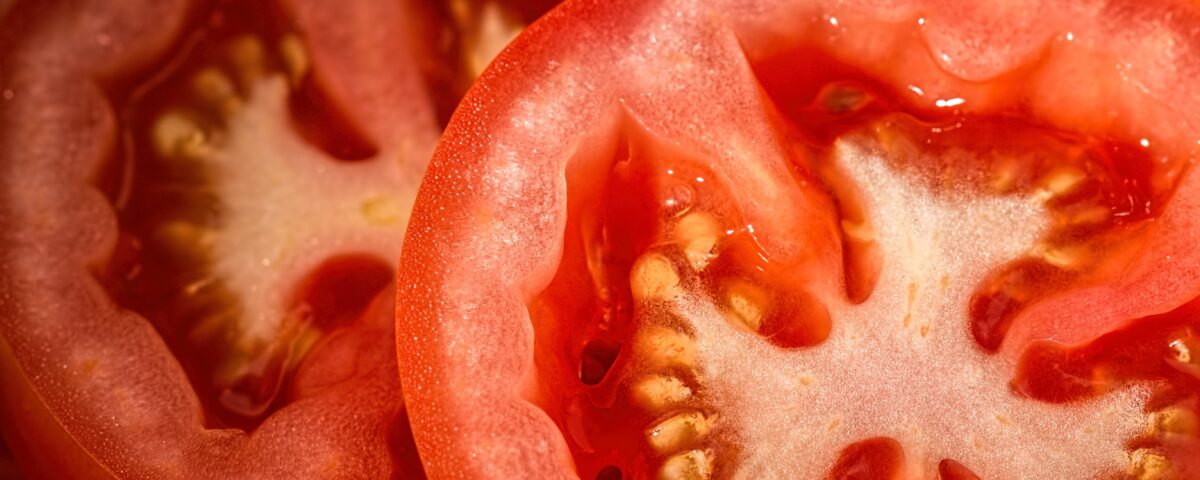
Very aware of its price tag, I enjoyed the tomato in my salad more than usual.
Since the end of last year, tomato prices popped a whopping 40%.
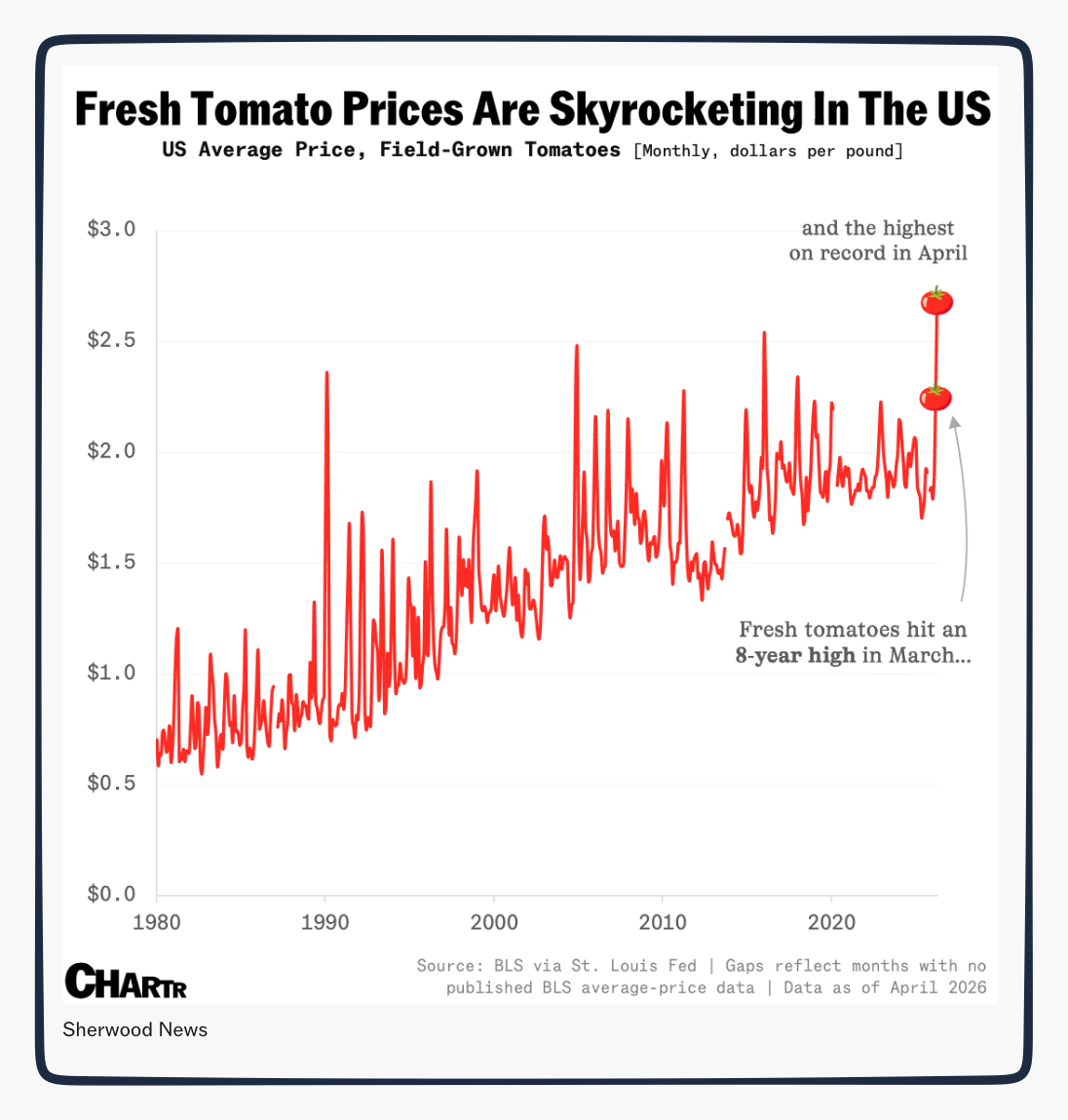
Tomato Prices
The tomato had the bad luck of being located where tariffs, the Iran War, and climate change met.
One of many Mexican tariffed fruits and vegetables, the tomato wound up with a 17% levy that could climb to 30% on August 1. During the beginning of July, when the tariff began, a Mexican grower explained to a reporter that he ate the expense. After that, his distributor shared some of the cost. Ultimately though they hoped to shift the tax burden to their retail customers.
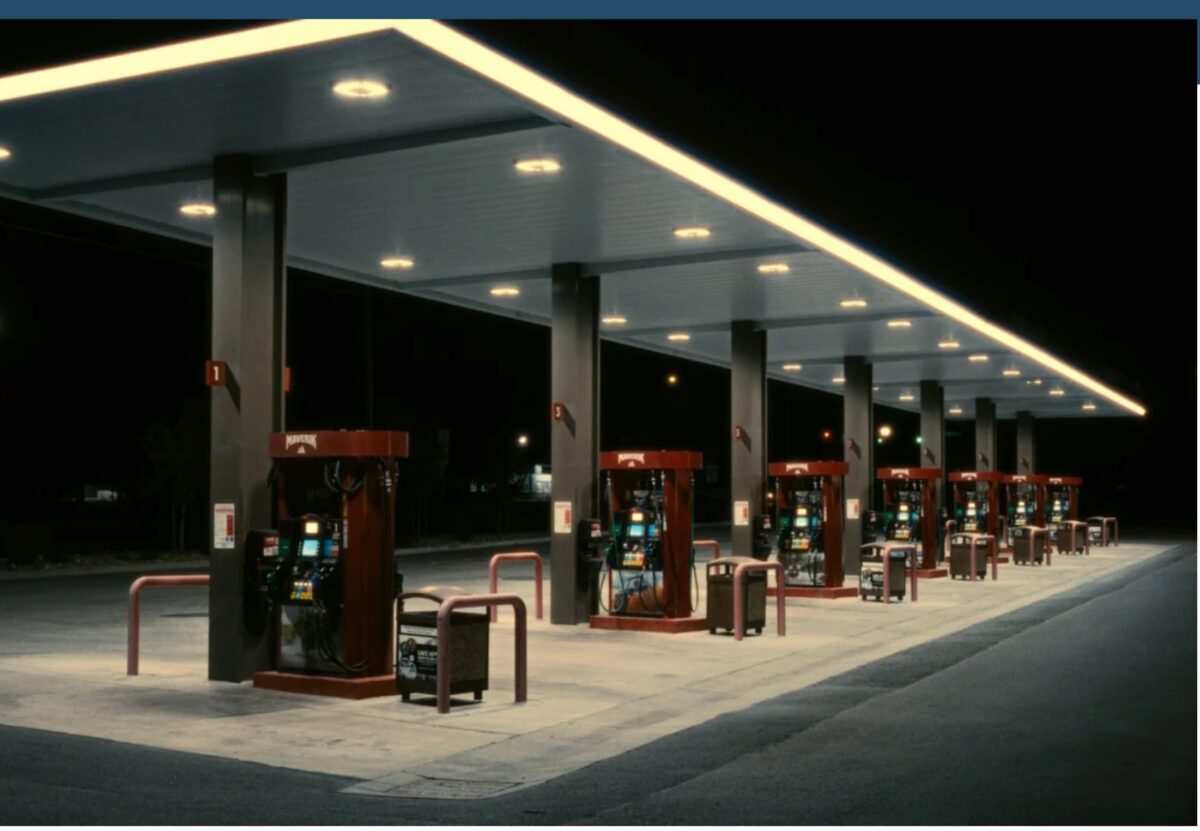
At the same time, tomatoes need to move from the border to the grocery store in refrigerated trucks that gobble diesel. Because of the Hormuz Strait shipping blockade, a recent high for diesel was $5.816 a gallon (AAA). To fill the tank of a semi with a tank that holds between 120 and 150 gallons, truckers need close to an unfathomable $800. One fuel provider said that a 95% full tank getting 6.5 miles a gallon, can travel 900 miles. Each extra $1 a gallon becomes a $100 uptick.
As for climate, in Mexico there was too much rain while Florida had a freeze. Both diminished yields. As we know, less supply nudges prices upward. In Mexico though climate has less of an impact on tomatoes because more than half of their exports are grown in greenhouses or other protected enclosures.
Our Bottom Line: The Triple Whammy
Tomatoes are not alone.
Citing the impact of tariffs, in a long list of everyday groceries that include the foods in the following graphic, the U.S. Chamber of Commerce says tariffs totaled $4,241,839,086 between April and July 2025. Looking more closely, at econlife, with coffee a typical example, we added the impact of a drought. And now, for all items, diesel is an extra cost.
While each item has its own story, they all share the triple whammy: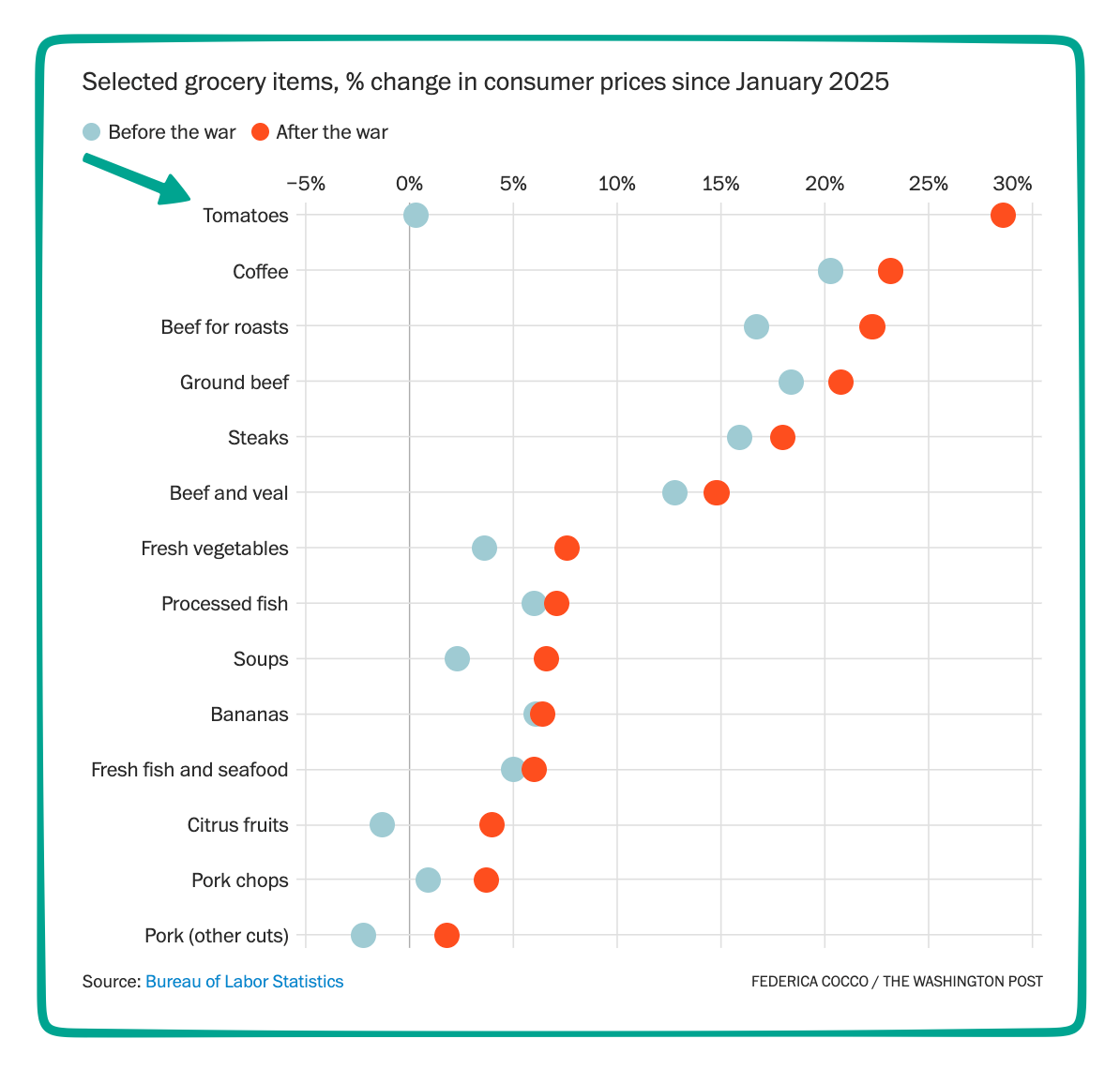
My sources and more: This Washington Post article was the perfect springboard for today’s post. From there we found out more about tomato tariffs here and here, and also about diesel. Then (happily) the Chamber of Commerce’s statistics confirmed our conclusions.