![econlifelogotrademarkedwebsitelogo[1]](/wp-content/uploads/2024/05/econlifelogotrademarkedwebsitelogo1.png#100878)


When a Chair Is More Than a Place to Sit
April 27, 2026
Where Everyone Honks Their Horn
April 29, 2026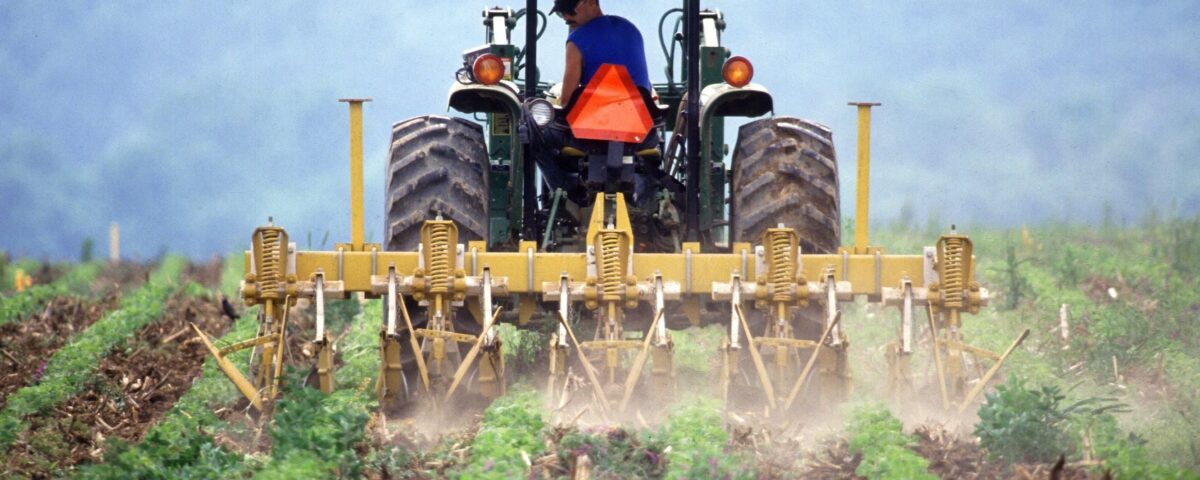
The American Soybean Association says the U.S. farmer is in a “cost-price squeeze.”
Let’s take a look.
Farmers’ Cost Price Squeeze
According to The Economist, farmers were coping with high costs even before Donald Trump was first elected. Between 2012 and 2017, they had seen seed costs rise by close to 18%, land prices were up 6%, and for labor, the hike was 50%.
Then tariffs hit: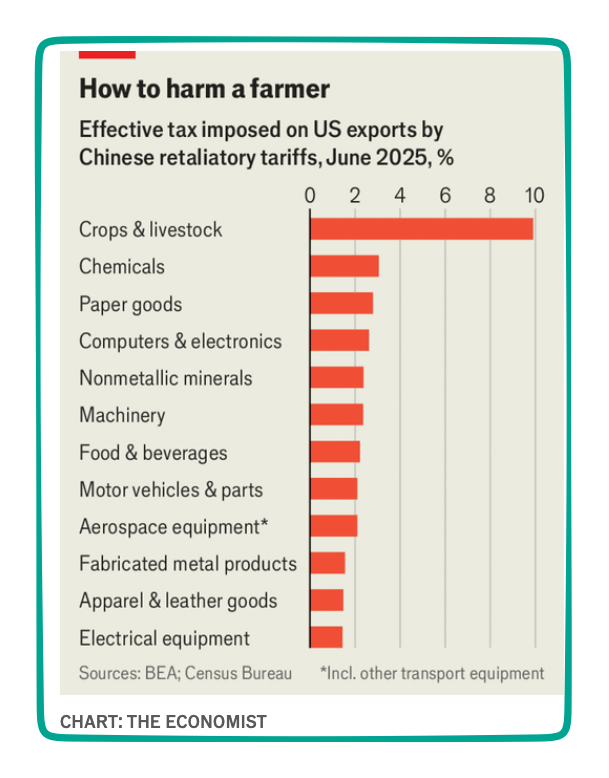
Farmers’ Costs
Shown above as between 2% and 3% on machinery, Chinese retaliatory tariffs rose beyond 80% during 2025. Meanwhile U.S. tariffs on imported steel were close to 25%. As a result, with farm equipment makers like John Deere paying more for its inputs, researchers at Mississippi State University calculated that the cost of a 200–249 horsepower tractor was up a whopping 71%, increasing from $191,000 to $327,000. That meant, per acre, the cost moved from $27.24 to $41.11, based on 2,000 acres of use.
From there, we can look back at manufacturing and forward at financing. Thinking of pricier imported steel as one reason, John Deere said it absorbed tariff costs of $600 million during 2025. Meanwhile, farmers were paying more in interest to finance their equipment purchases.
Farmers’ Prices
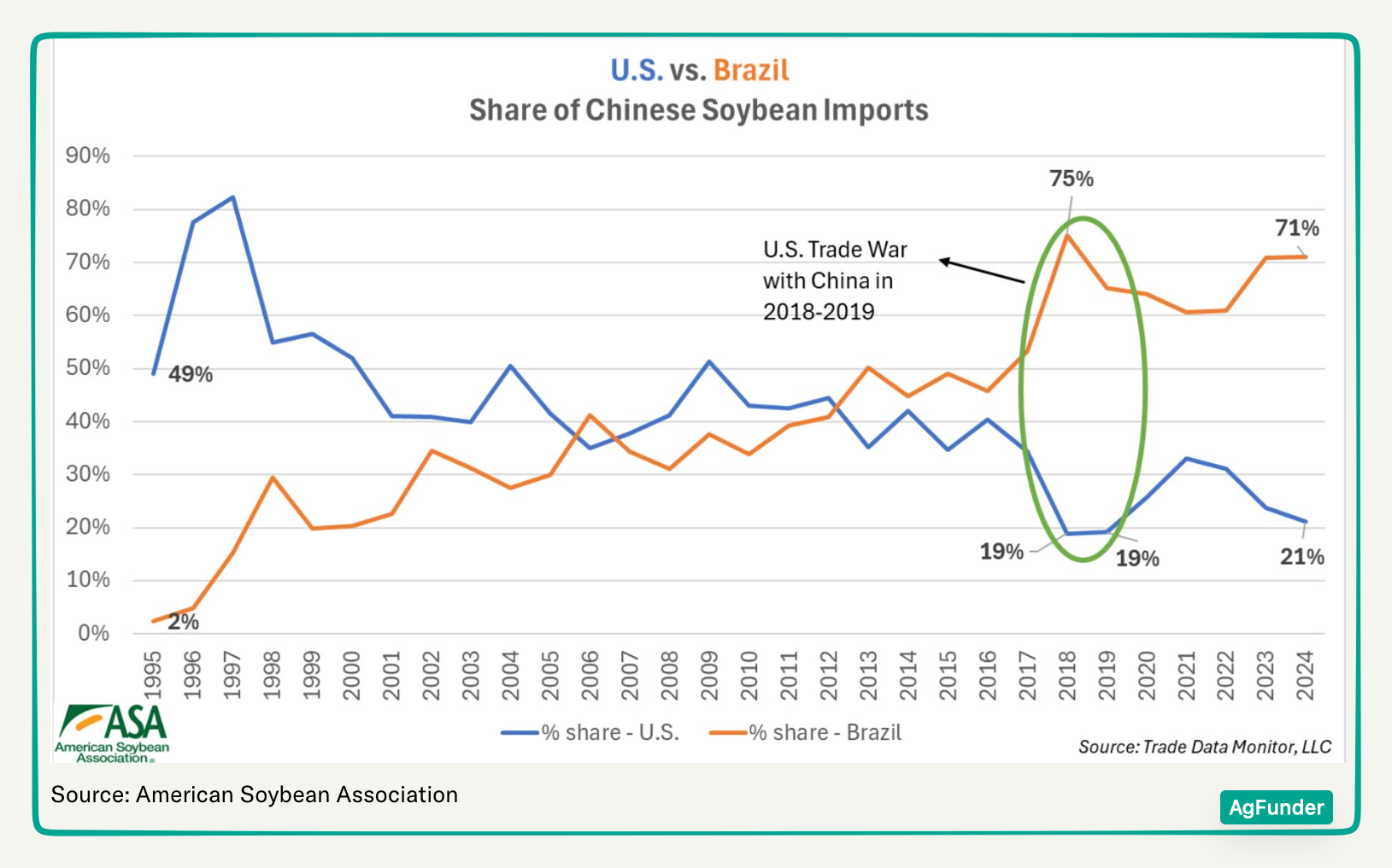
When China abandoned the U.S. soybean farmer, exports plunged from 5.9 million tons to zero until a new trade deal emerged in 2026. Usually, by September, China had purchased 40% of the US overseas sales but in 2025, instead, they were buying from Brazil and Argentina.
China’s retaliatory tariffs made U.S. soybeans prohibitively expensive in China, but it also diminished the price elsewhere:
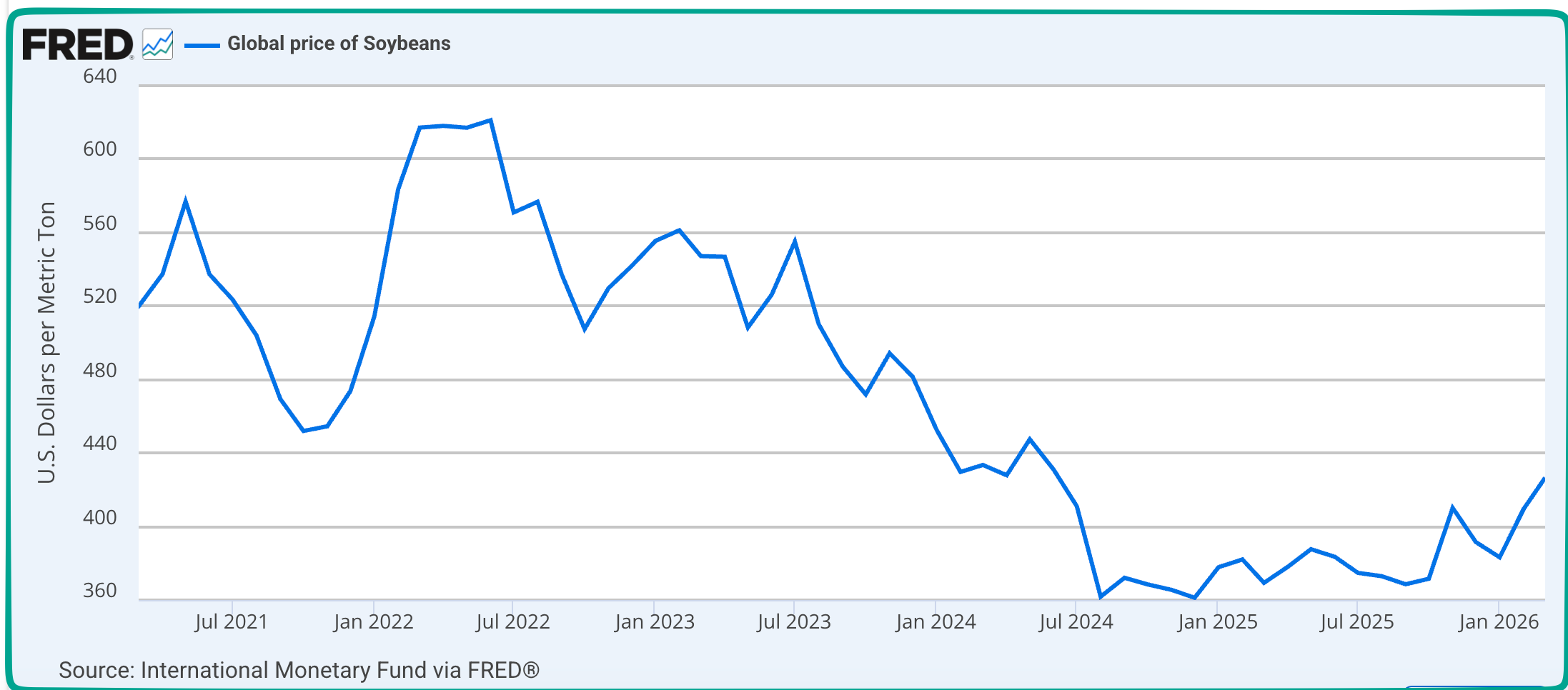
With Chinese demand down, price also cascaded:
Our Bottom Line: Factors of Production
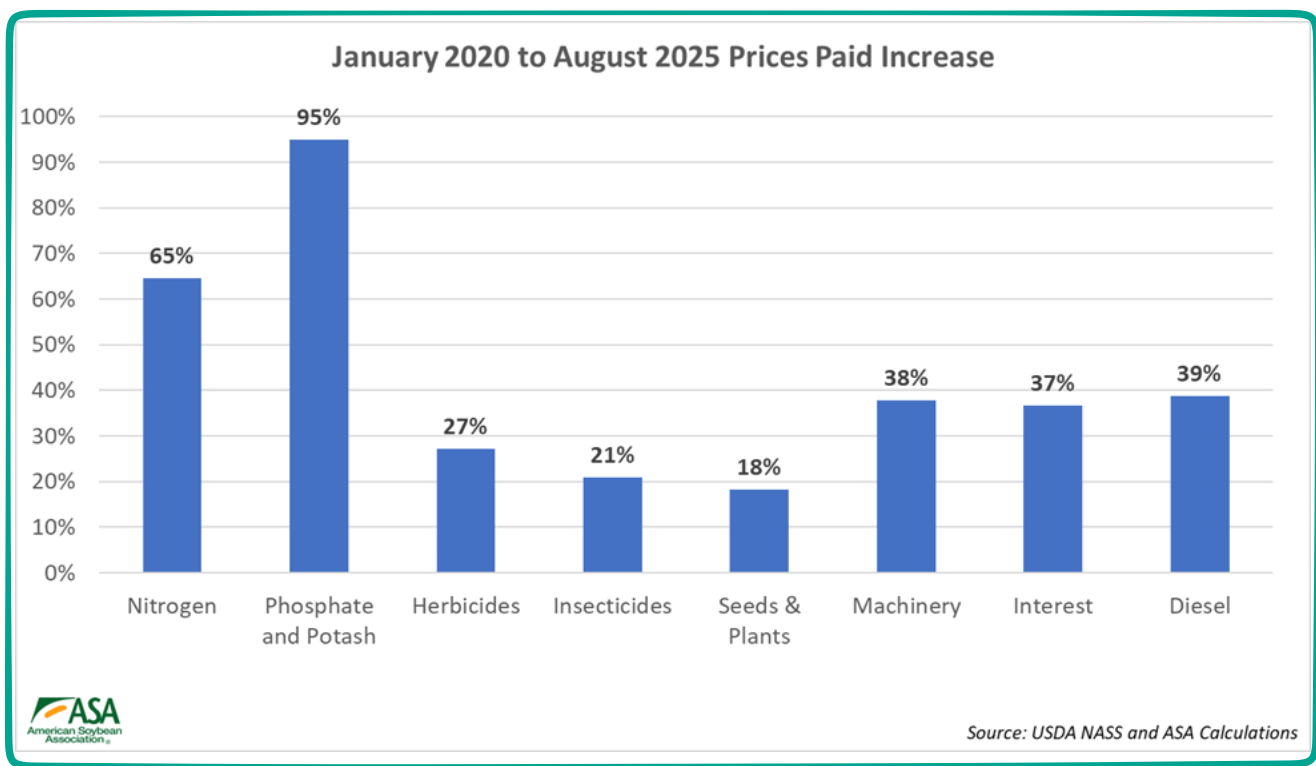
Summarizing the U.S. farmers’ catastrophic squeeze, we can look at land, labor, and capital:
Then, to all of this we can add econlife’s description of the Iran War’s impact on the urea farmers use for fertilizers and the diesel that fuels their equipment.
Please note that I am concerned with The Economist’s and my own tariff numbers because they have fluctuated so much. What is true for a day could be inaccurate after that.
But we can be sure of the cost price squeeze that is crushing U.S. farmers.
My sources and more: Thanks to The Economist for inspiring today’s post. From there, U.S. soybean and farmers’ associations, here and here, and this TV report had more detail.