
A Tale of Two IPOs
November 26, 2026
According to the Taco Bell DC 50K registration page, so far 1,590 people have signed up for today’s 32.3-mile ultramarathon. We can assume that they know the 9-stop mandate during which, each time, they have to eat a Taco Bell menu item. (And no, Taco Bell is not a sponsor.)
The Ultramarathon Rules
Race rules include visiting the Taco Bells in the prescribed order. In addition, while “vomiting is allowed but discouraged,” on-course Pepto, Alka Seltzer, Pepcid A/C, and Mylanta are prohibited. As for consumption, by the fourth stop, runners had to have downed a Chalupa Supreme or a Crunch Wrap Supreme, and, by the eighth, a Burrito Supreme or Nachos Bell Grande (a whopping 740 calories!). After finishing, as proof, they have to submit their wrappers.
Taco Bell runners in Denver could also have opted for the Diablo Challenge. Then, during the race, they had to dab Diablo sauce on every food item and, at the end, conclude with a Diablo shooter.
As you might expect, when asked how they felt, most participants said, “pretty bad.”
Our Bottom Line: Reference Point Dependency
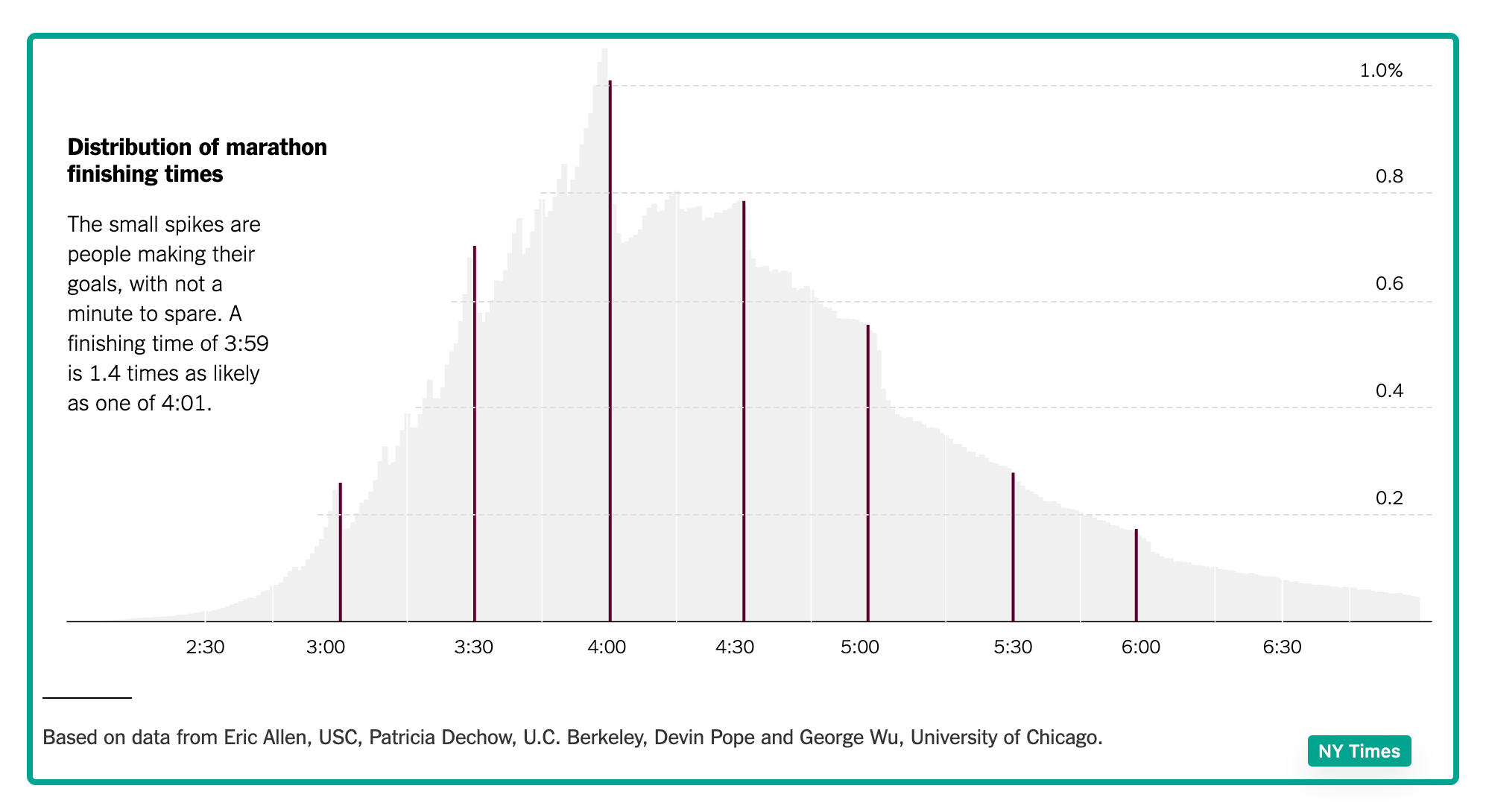
University of Michigan economist Justin Wolfers explained the economics of marathons in a NY Times Upshot column. After saying the experience is torture (like the benign masochism of a Thanksgiving meal), he focused on reference point tradeoffs. Dr. Wolfers points out that precise reference point goals, signaling success or failure, determine marginal cost and benefit. As a result, shown below, running times cluster.
Marathoners know the finish time reference points that become their goals:
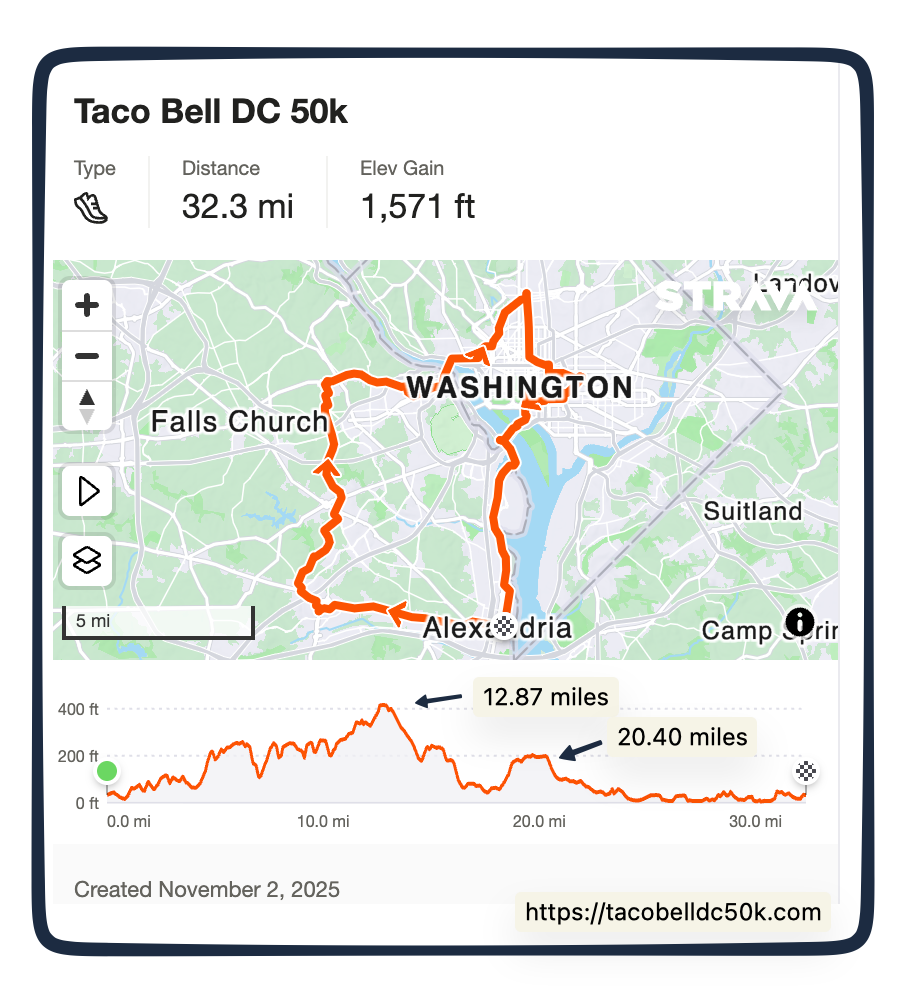
Similarly, the Taco Bell ultramarathon provided reference points:
Elsewhere too, we establish the markers that signal our successes or failures. Moving beyond marathons, for Dr. Wolfers, “elsewhere” involved a selling price for our house or a stock.
However, for Taco Bell ultramarathoners, a reference point is a Crunch Wrap Supreme.
My sources and more: Together, the registration form and a Washington Times article had all we needed to know. Then, for the economics, we returned to this Justin Wolfers column and this NBER paper.