Why Diners’ Dilemmas Are About More Than Food
October 28, 2026
Our story starts with a college student purchasing a pricey new purse. At first assuming she could not afford it, then buy now, pay later (BNPL) popped up on her screen. Delighted, she soon had her purse and several months to pay for it.
Buy Now, Pay Later
In an August 2026 paper, the Federal Reserve described the “pay in four ” product. With pay in four, for a $100 purchase, the buyer pays $25 at checkout and then three additional $25 biweekly payments. The lenders’ approach is typically “low and slow.” They start with a small amount that increases when successfully repaid. BNPL firms say most loans are repaid.
A closer look reveals that higher-income households used BNPL for travel, while those with income below $50,000 used it for groceries, food delivery, clothing or accessories. Meanwhile, men were more likely to use BNPL for electronics and women, clothing or groceries:
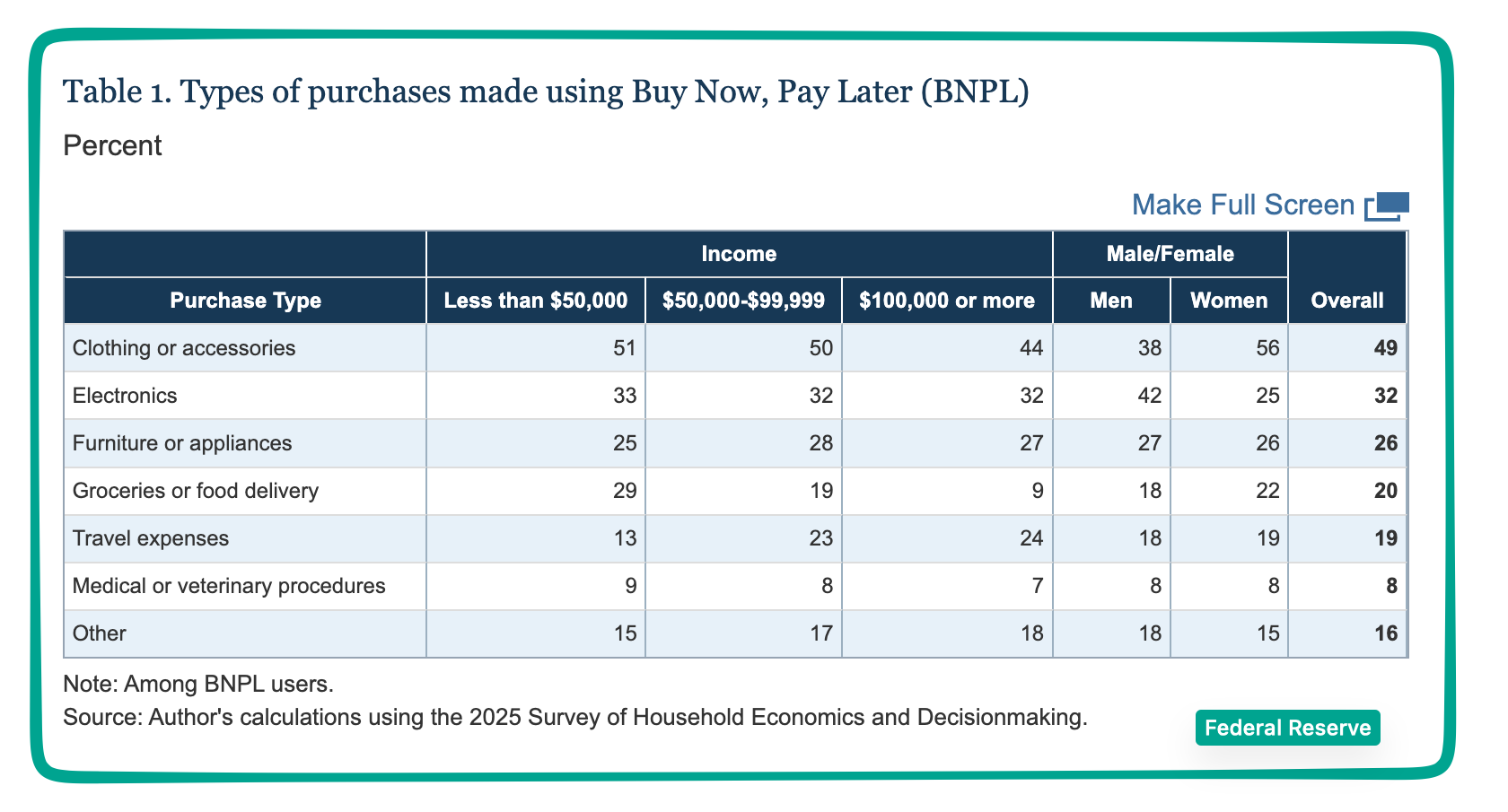
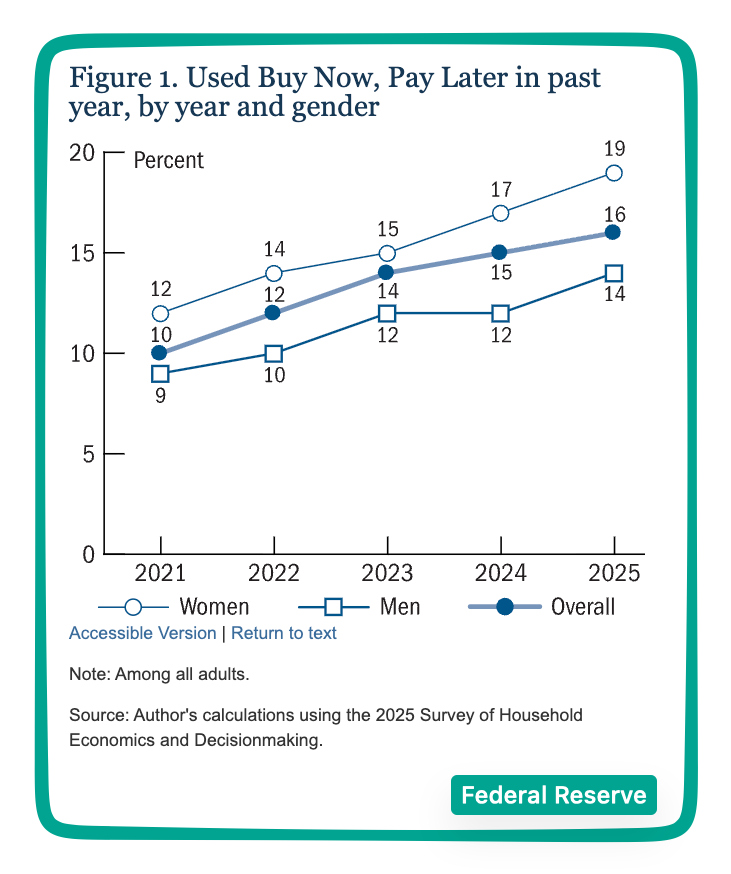
The Federal Reserve says BNPL began to grow in 2019. Describing the concept, they say it lets consumers spread out the cost of a good or a service that they can immediately acquire with no interest or fees. Although the Fed article focused on the “pay-in-four product,” it is also possible to shift the cost into future months. Through a survey with 13,000 respondents, the Fed tells us that 16% of all adults used BNPL during 2025, with 49% using it for clothing or accessories. Users tended to be more women than men and individuals with fewer financial resources. Subsequently, at least once, 26% paid late.
You can see women top the graph:
Our Bottom Line: Behavioral Economics
Summing up BNPL with the two following graphs, a behavioral economist could have said the story was about the temporal reframing we also might experience when deciding whether to go to the gym or consume a caloric treat:
Below, you can see that an enjoyable activity initially has a bump in utility but then a long-term cost:
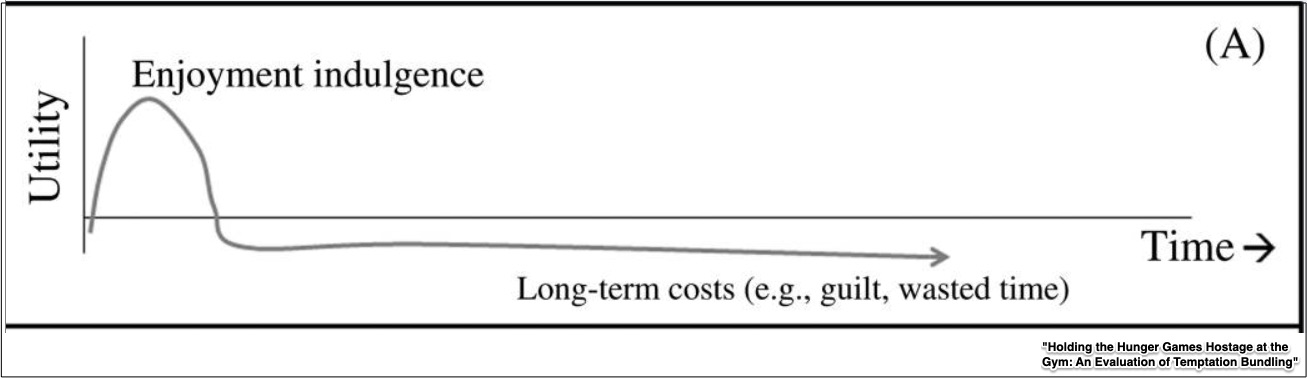
By contrast, for a beneficial activity (like paying upfront or running daily), quite the opposite happens. First, we have the pain, and then the benefits:
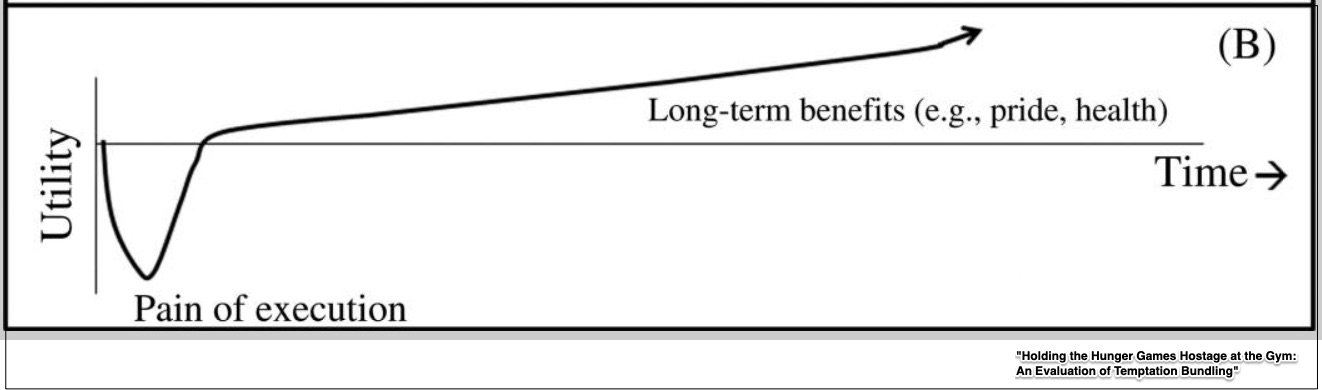
According to a Harvard Business Review article, installments make consumers feel their finances are more manageable. They also “perceive costs as more trivial.” More manageable and more trivial means the benefits of a BNPL decision are much more appealing than the benefits of the opportunity cost–paying fully upfront.
So yes, for us as economists, every story–even about pricey purses– winds up with a tradeoff.
My sources and more: Thanks to a WSJ article about 5-year-olds’ $7 plush toys for reminding me of the Marshmallow experiment. From there, I realized that BNPL connected and happily found this Fed article. From there, these WSJ articles, here and here, had more BNPL details.