![econlifelogotrademarkedwebsitelogo[1]](/wp-content/uploads/2024/05/econlifelogotrademarkedwebsitelogo1.png#100878)


Why We Should Worry About Jet Fuel
April 20, 2026
Where Endless Shrimp Stops
April 22, 2026
For many of us, $6 was too much to pay for a bag of chips.
PepsiCo responded.
Cheaper Chips
Concerned about affordability PepsiCo cut some prices by as much as 15%. As a result, a $6.29 bag of Doritos went down to $5.49 and the price of Lay’s potato chips touched 2014 prices by falling from $4.79 to $4.29. In addition, Doritos were “upsized” temporarily in several markets with a bonus bag that had 20% more chips.
Also trying to boost sales (and shelf space), PepsiCo did some “up-branding.” In their top Gatorade flavors, they will remove artificial flavors, and, hoping to broaden the Gatorade market beyond athletes, they will emphasize that it can hydrate all of us. Somewhat similarly, now we are told that Lay’s is made from real potatoes with some versions using olive or avocado oil. And, like a jumbo shrimp is an oxymoron, so too is a healthy Dorito when it is “protein enhanced.” But still we bought more.
Our Bottom Line: Supply and Demand
I wonder whether PepsiCo’s CEO referred to his Econ 101 textbook when lowering prices and adding healthier ingredients. Having shifted quantity demanded and demand for elastic snack eaters, he did indeed increase first quarter revenue by 8.5%.
On a graph, we might draw it like this:
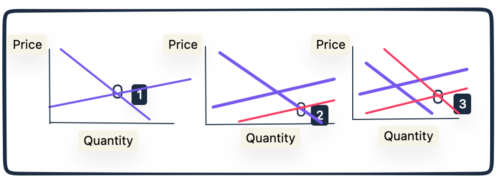
First, our increase in supply (red) created an increase in quantity demanded and a lower equilibrium price (#2). Then, an increase in demand (red) from healthier ingredients kept prices low while increasing quantity even more (#3). Please do let me know if you disagree with my graphs.
We should note, though, that in 2020, PepsiCo shrunk the large size bag without reducing the price. Like then, PepsiCo has many pricing options:
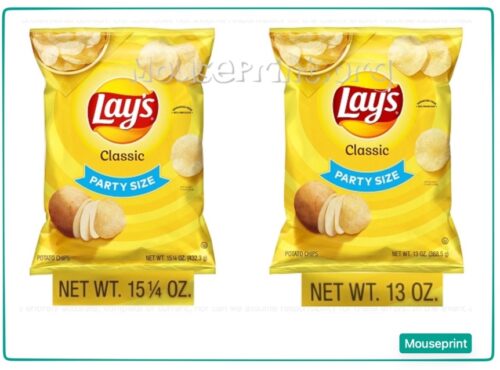
My sources and more: A slew of articles here, here, here, and here, told about PepsiCo’s revenue boosting policies. From there, it’s always fun to go to Mouseprint to check on current “shrinkflation.”