![econlifelogotrademarkedwebsitelogo[1]](/wp-content/uploads/2024/05/econlifelogotrademarkedwebsitelogo1.png#100878)

The “Traffic Jam” at the Strait of Hormuz
March 4, 2026
What We Need to Know About Crude Oil Prices
March 6, 2026
A baker from Vienna created the texture of the French baguette in 1839. Then, approximately 80 years later, a government regulation said bakers could not work before 4 a.m. As a result, needing some way to bake their bread before morning, someone thought of the long thin shape.
The rest of the story is history.
Now the French consume record setting numbers of baguettes. Estimated at 320 every second, France’s 68 million people down one half a baguette a day (13 inches of a 26-inch loaf). According to France’s Bread Observatory, the country devours a whopping 10 billion baguettes a year. (Others, though, say it’s 6 billion).
Now they will decide which one is best.
French Baguette Competition
Between 10 a.m. and 1 p.m., on February 26th, this year’s “baguette Grand Prix” began when participants dropped off two baguettes each at the Greater Paris bakers union. Next, checked for compliance with competition rules, each was tagged with a number, measured, and weighed. After, 113 baguettes remained.
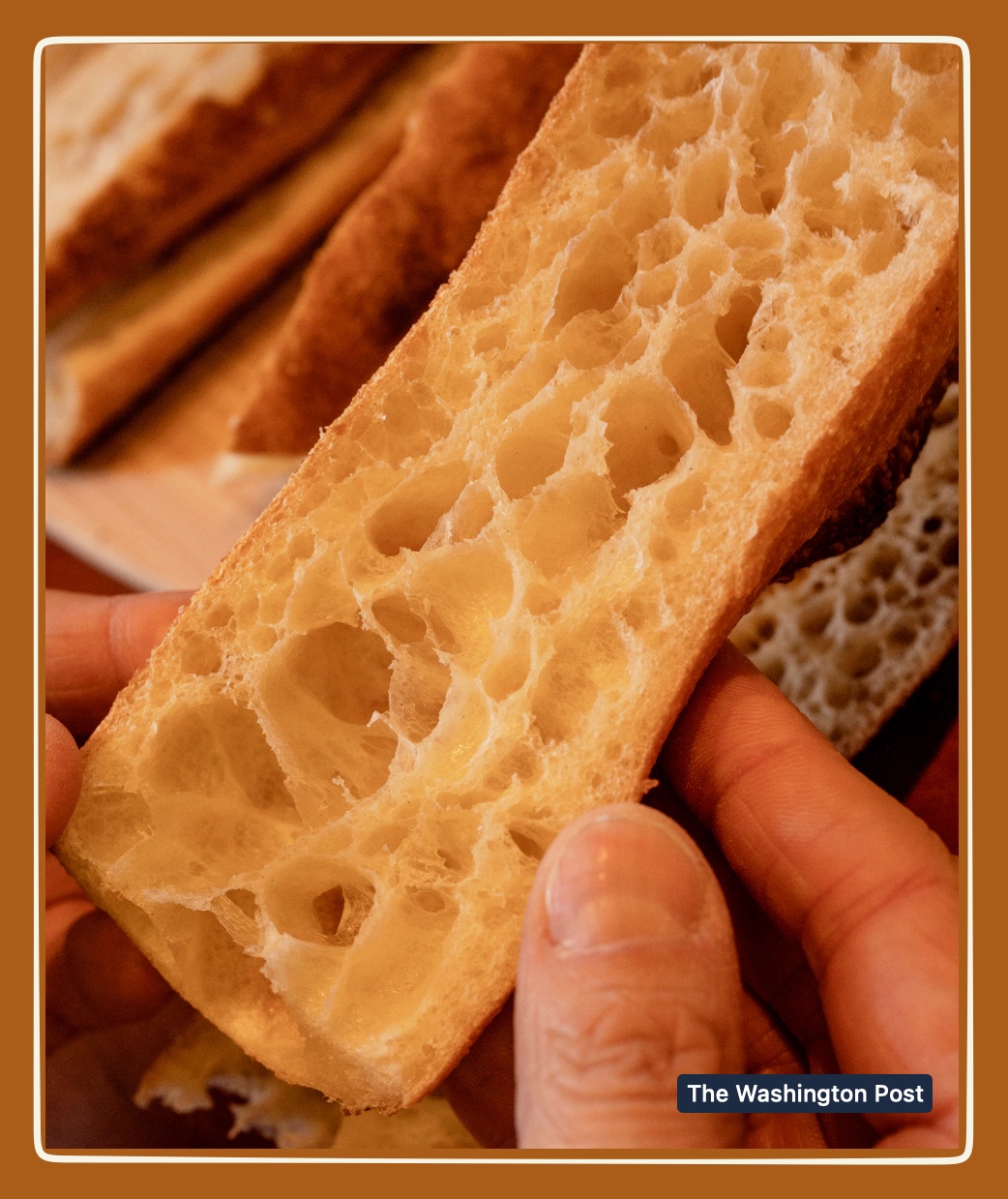
During that afternoon, having been divided into groups to taste an assigned lot of five baguettes, judges selected the best for the next round. As “baguettes de tradition,” the entries had to be handmade from flour, water, salt and yeast. In addition to details like the crunch of the outer shell and the uniformity of the air pockets inside, the judges had five criteria for the blind tasting:
- appearance
- cooking
- inner texture
- smell
- taste
The top ten were announced at 5:30. The winner– Le Fournil Didot bakery— received four thousand euros in prize money and the honor of supplying baguettes to the Élysée Palace for a year.
This is what a good air pocket should look like:
Our Bottom Line: Cultural Heritage
According to its website, UNESCO classifies items on its cultural heritage list as “elements.” Currently, there are 849 elements that correspond to five regions and 157 countries. The baguette entered the list in 2022 with “Ukrainian borscht cooking” and bear “festivities in the Pyrenees.” As UNESCO explained, “…the baguette is a daily ritual, a structuring element of the meal, synonymous with sharing and conviviality.”
I concluded with UNESCO’s recognition of the baguette because it returns us to the basics of economics. In their own unique way, each nation uses its land, labor, and capital. Consequently, multinational corporations need to blend their own identity with local traditions.
So yes, expanding beyond home country borders, businesses need to know local tastes. When Mondelēz started selling Oreos in China, they soon discovered the taste was too sweet and no one had heard of “twist, lick, dunk.” After tweaking the recipe, they boosted sales. By contrast, in India they needed to make the filling sweeter.
With baguettes, it would be wonderful if all were made the French way. Sadly, they are not.
My sources and more: The Washington Post had our newest baguette article. The ideal complements, UNESCO, Smithsonian and the World Economic Forum had more about the Cultural Heritage designation.