
How the U.S. Economy Is Creeping Toward Command
October 19, 2026
Brazil’s workweek just went down from 44 hours to 40 hours. Guaranteed by a constitutional amendment, their workdays will decrease but not their wages. Supporters say that rested workers, having two days off, will be more productive. Others, though, suggest that prices will rise because businesses have to pay more for fewer hours.
Workweek Length
History
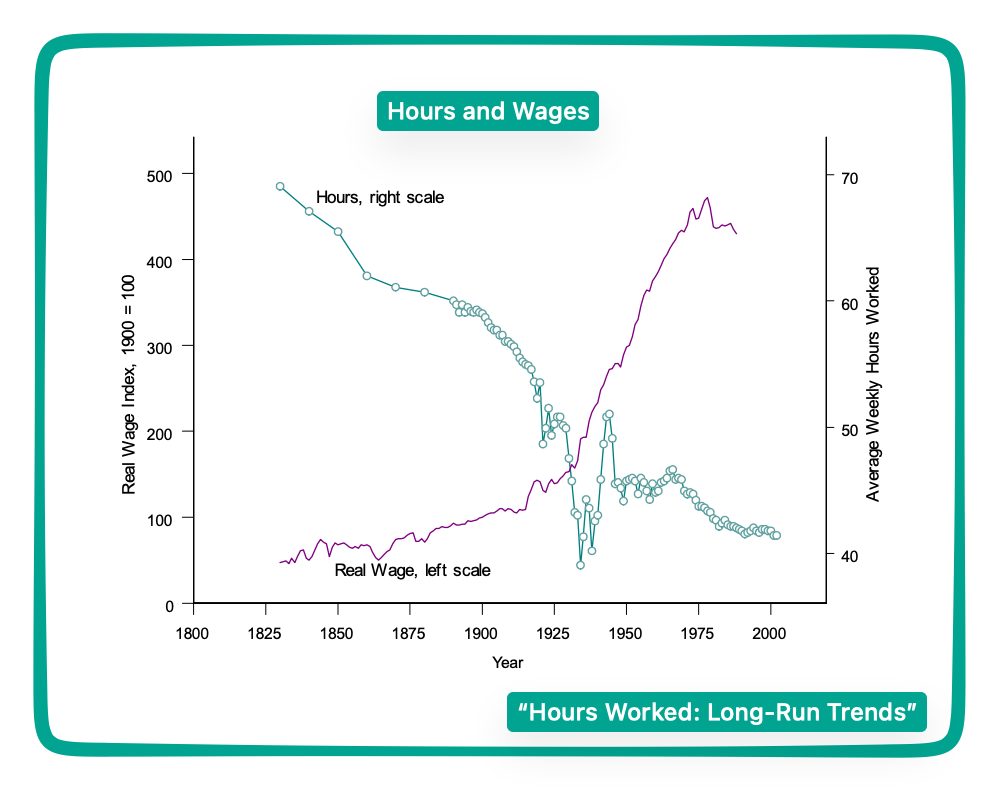
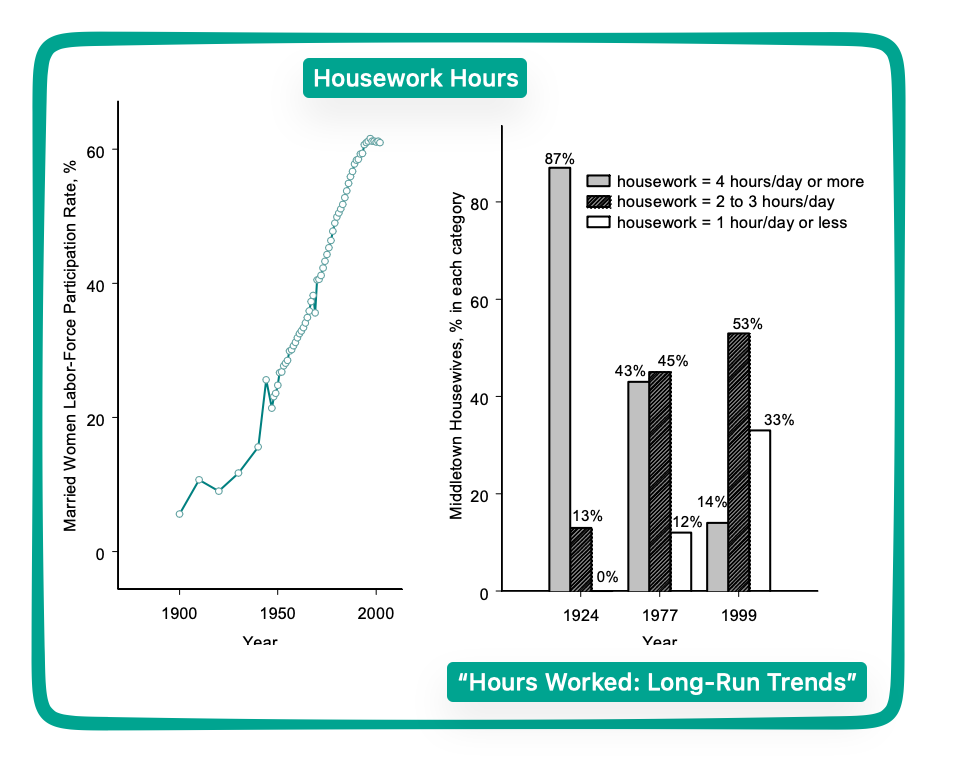
During a typical week in 1830, it is likely that we worked an average of 70 hours. But then, fast-forwarding to 2002, our workweek plunged to 41 hours while we took home nine times more in wages. Correspondingly, at home, the time spent each day on housework decreased from four hours in 1924 to less than one hour in 1999.
As the workweek went down, wages went up:
As women’s labor force participation rate ascended, the hours spent on housework plunged:
Global Comparisons
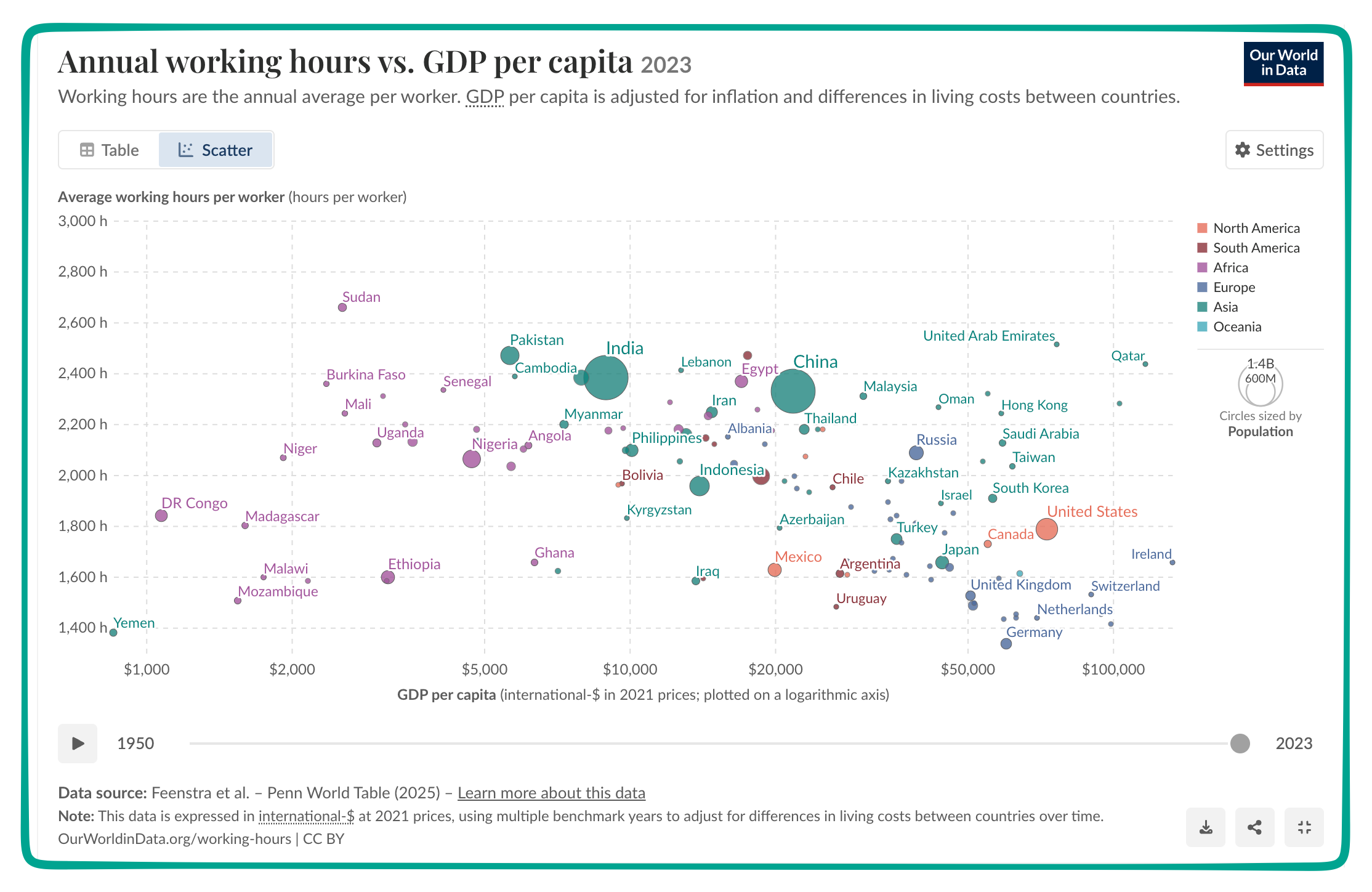
Positioned in the bottom right quadrant, the length of the workweek in the world’s richest nations is the shortest:
Our Bottom Line: Workweek Decisions
Defining our workweek, we have more to consider than length and pay. Also, we have to decide which days.
Talking with economist Tyler Cowen, 1929 author Andrew Ross Sorkin said that General Motors magnate John Raskob (1879-1950) wanted his workers to have a 5-day workweek with Saturdays off. More practical than benevolent, he explained that with a day of leisure, more workers would need cars.
So yes, most Western countries take Saturday and Sunday off. Meanwhile, Jordan used to call Thursday and Friday its weekend until, during 2000, they switched. Now, like Egypt, they observe Friday and Saturday. For Christians, Sunday is significant, to Jews, it is Saturday, and with Muslims, the day is Friday. From a religious perspective, that means the weekend could be one of 4 2-day pairs. (Thursday/Friday; Friday/Saturday; Saturday/Sunday; Sunday/Monday) However, in addition to religion, financial considerations, government, and international relationships could also affect when we have our time off.
My sources and more: Today, we began our search for facts with this BBC article on Brazil’s workweek. We also discovered this NBER paper on the length of the workweek in the past, and Andrew Sorkin’s comments. And, of course, Our World in Data always comes in handy.