![econlifelogotrademarkedwebsitelogo[1]](/wp-content/uploads/2024/05/econlifelogotrademarkedwebsitelogo1.png#100878)


The Three Reasons That Halloween Will Cost Us More
October 11, 2026
Worrying about the French debt, we can ponder three “spans” that escalated pension and healthcare spending.
At 82.5 years, the average French lifespan far exceeds an average health span that is approximately 65 years. And, as for the work span, the French can retire 9 months beyond their 62nd birthday.
In addition, because of a €42 billion stimulus, COVID-19 was expensive. Then, further fueling spending, the Russian Ukraine invasion not only boosted France’s defense outlays but also necessitated subsidies that offset higher energy costs.
French Debt Alarm Bells
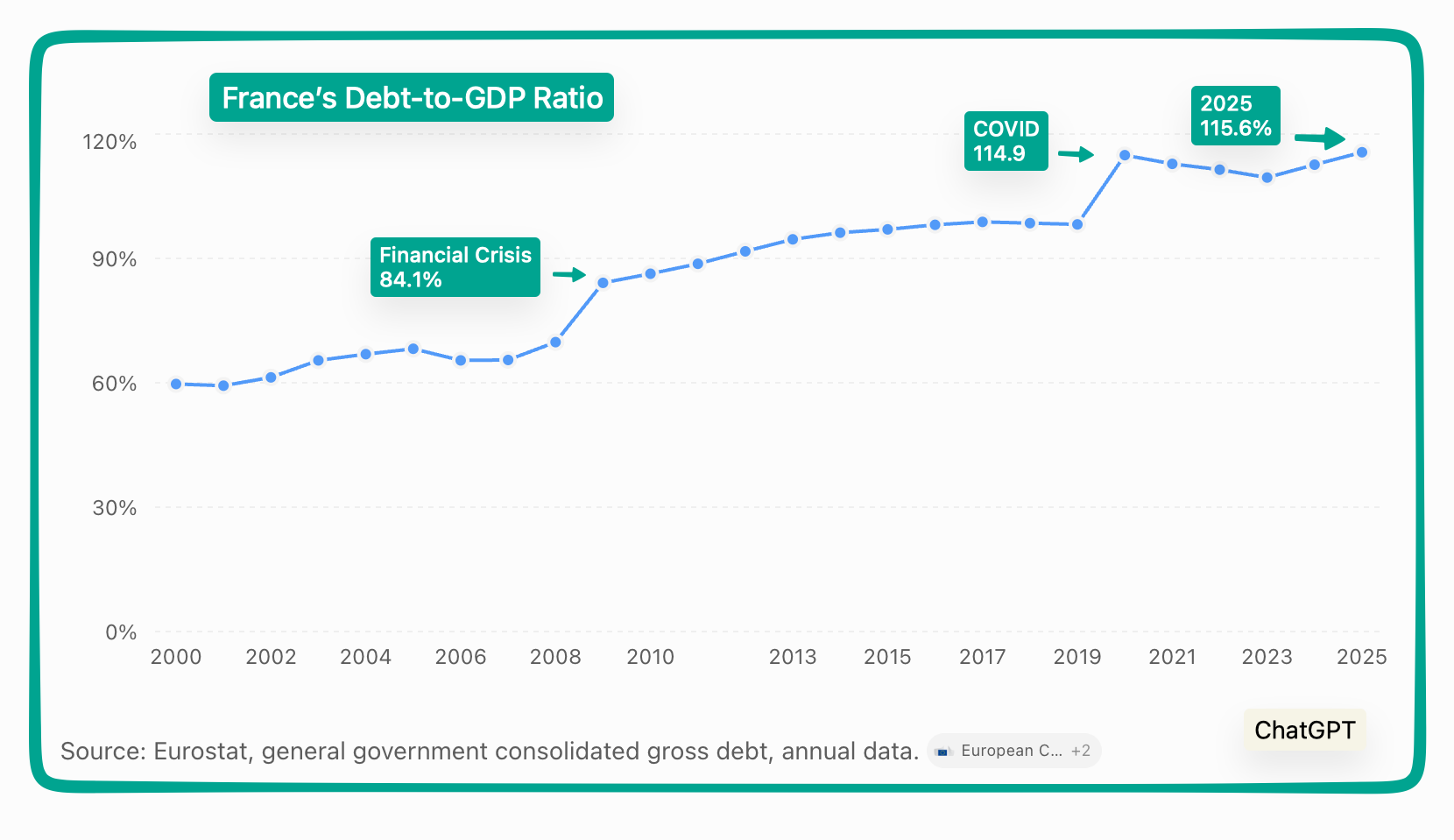
Together, it all adds up to France moving beyond its 2025 115.6% debt-to-GDP ratio:
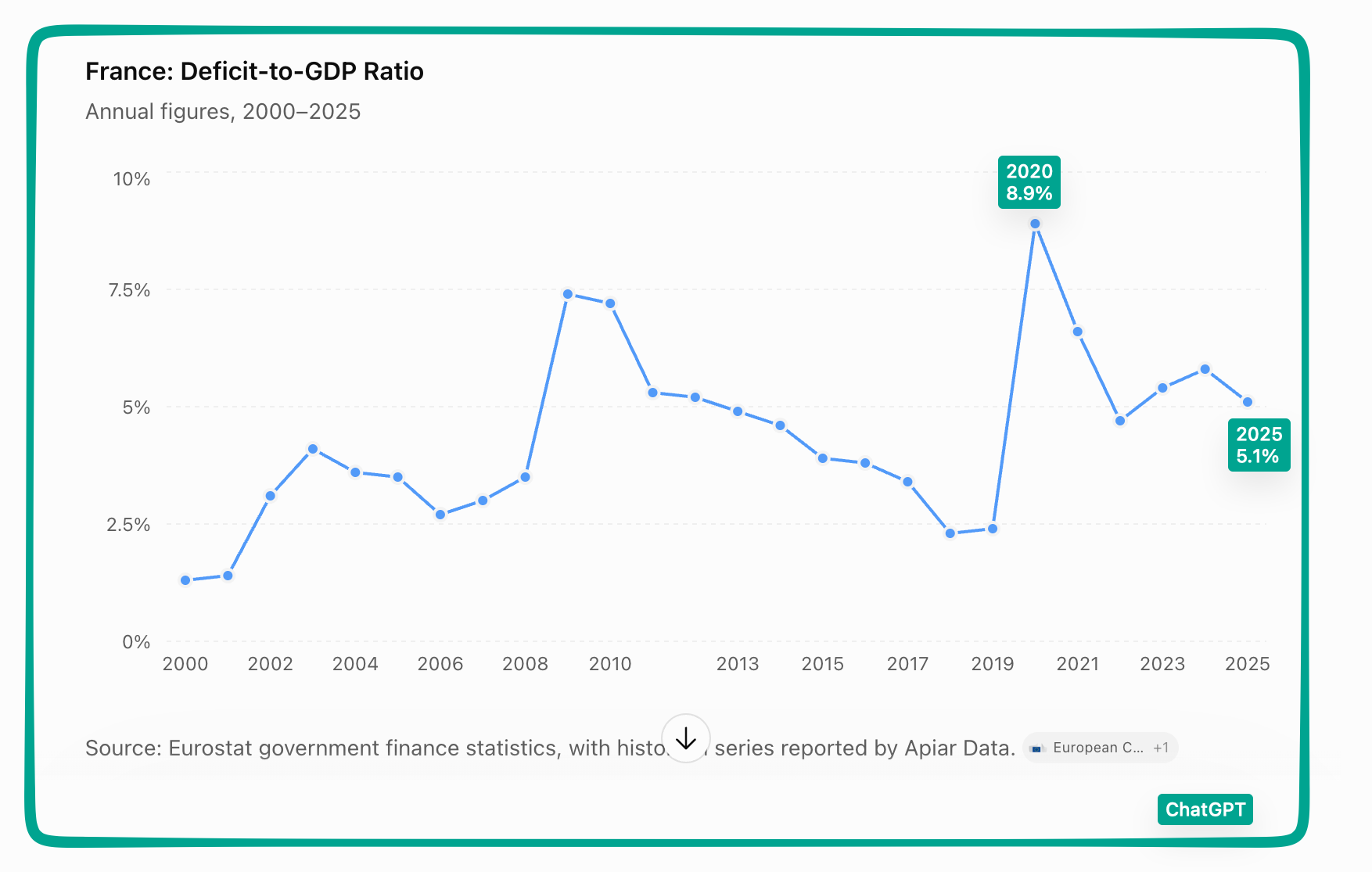
Correspondingly high, France’s deficit- (annual spending minus annual revenue) to-GDP ratio is close to 5.1%:
We care about debt and deficit ratios because they let us judge when borrowing has become too high. Sort of like a home mortgage, if we decided to borrow $2 million for a house, most of us would say the amount is huge. However, if your wealth is $50 million, then it is a relatively small debt to repay. Similarly, to decide if a nation’s loans are risky, we can compare the money they borrow to their GDP.
Moving us closer to our alarm bells, France has topped the EU’s 3% deficit-to-GDP maximum and, projected at close to 119% for 2026, France’s debt-to-GDP ratio far exceeds the EU’s 60% cap.
Our Bottom Line: A Doom Loop
Some economists worry that France could enter a “doom loop.” You can see that, compared to Germany, France pays a relatively high interest rate:
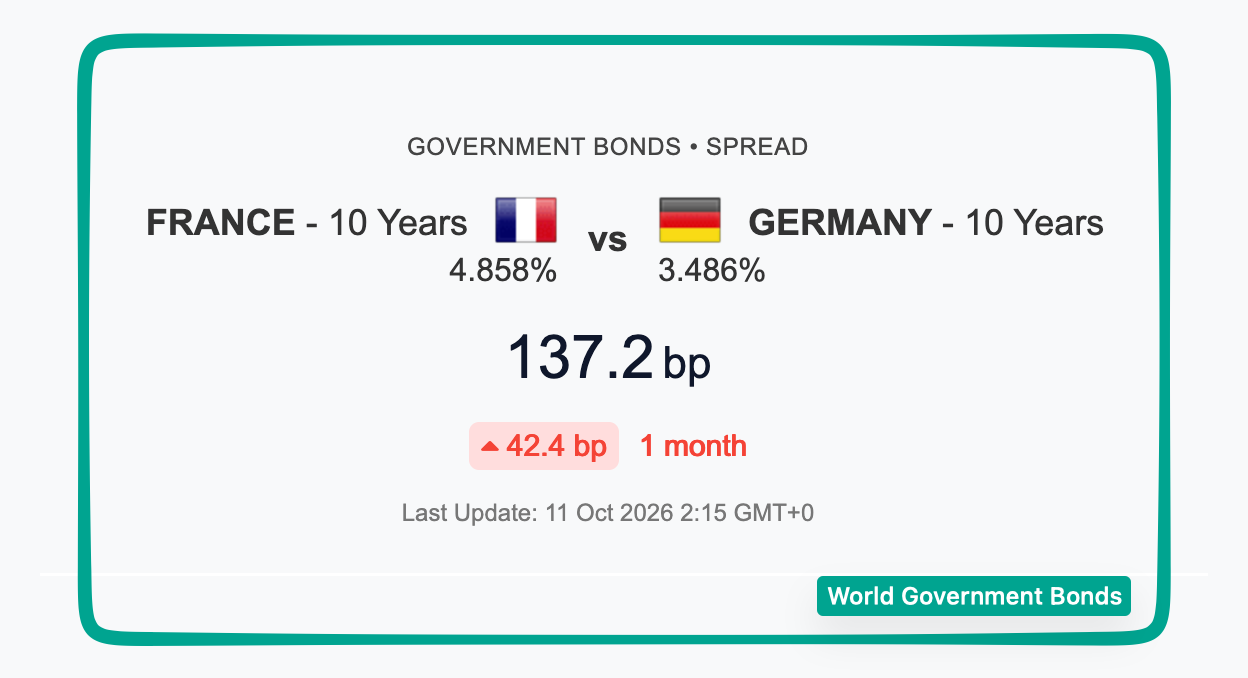
Climbing interest rates mean that France pays more to borrow. As a result, France’s debt climbs, and she has to increase borrowing. More borrowing elevates the debt further. Then, because France’s debt rises, lenders, perceiving more risk, ask for higher interest rates…and the “loop” continues.
In our 2024 post on the French debt, we cited these lenders. While I assume that the percentages have changed, the names remain the same:

My sources and more: With concern growing, it was time for us to return to the French debt. We began with an Atlantic Council overview (less than I expected) and then some history. From there, Emory Economics had more, as did Project Syndicate.