![econlifelogotrademarkedwebsitelogo[1]](/wp-content/uploads/2024/05/econlifelogotrademarkedwebsitelogo1.png#100878)


Why the Dow Is More Than an Average
June 24, 2026
How Two Economists Assess Jerome Powell’s Legacy
June 26, 2026
R&D (research and development) brings us new drugs. It’s taken us to the moon and created AI. But also, Procter & Gamble (P&G) spends $2 billion on R&D. One goal is a better laundry detergent.
Laundry Detergent Innovation
The people that make Tide have always known they need to innovate. Although Tide’s share of laundry detergent sales is nearly 40%, they agree with a marketing executive that said “…somebody will come along and eat its lunch” if they stand still.
From the beginning, Tide was a disrupter. As far back as 1946, when P&G dominated the market with Duz and Oxydol, it introduced Tide. Although Tide eroded their existing market share, it was a better product that eventually tripled their earnings. Continuing to innovate, P&G gave us liquid Tide and most recently, in 2012, Tide pods. Because the pods had no room for additional improved ingredients, again the quest began for something new.
This time, they wanted a product that would function best in cold water, have extra cleaning power for larger loads, and weigh much less. It also had to have the traditional Tide smell and consumer friendly packaging. (They rejected a Pringles-style container because the last tile would be tough to access.)
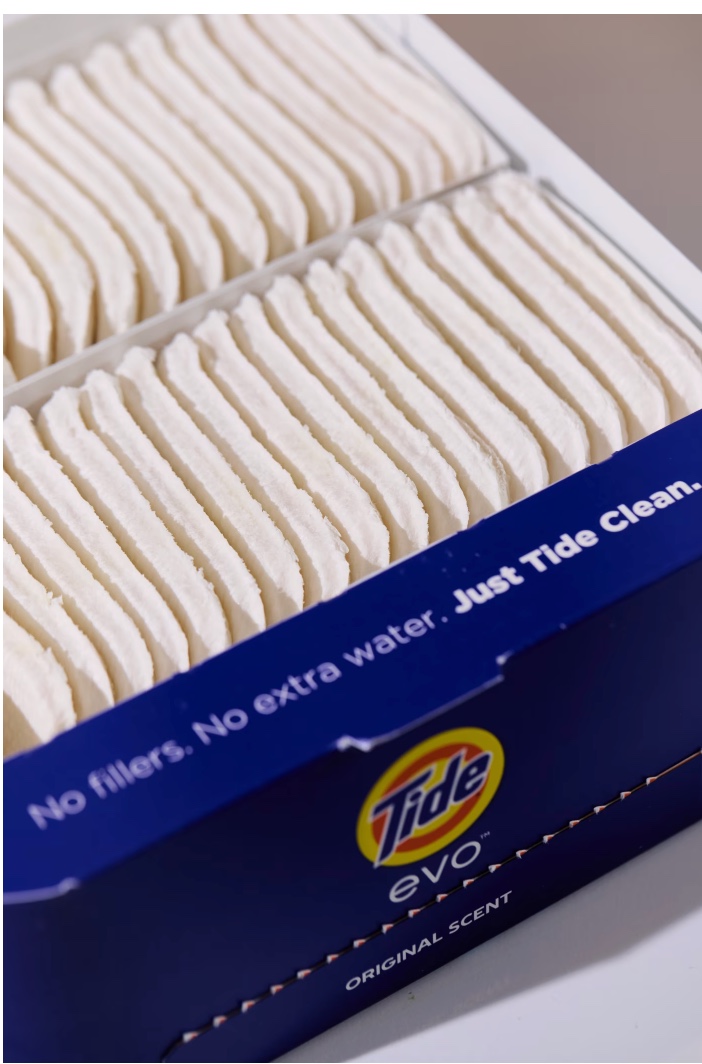
After years of testing, they wound up with a “tile” that they called Tide evo:
Our Bottom Line: Oligopoly
As an oligopoly, Tide is in rarified territory with other massive corporations. Typically, as few as four or eight companies mass produce for a large number of customers. Because of their size, market entry and exit are difficult. As for strategy, product differentiation rather than price is a preferred approach. Our examples include cola companies, auto makers, cereal producers, pharmaceutical firms.
In a continuum displaying competitive markets, we have perfect competition, monopolistic competition, oligopoly, and then monopoly. As we move rightward toward monopoly, the pricing power of the firm increases:
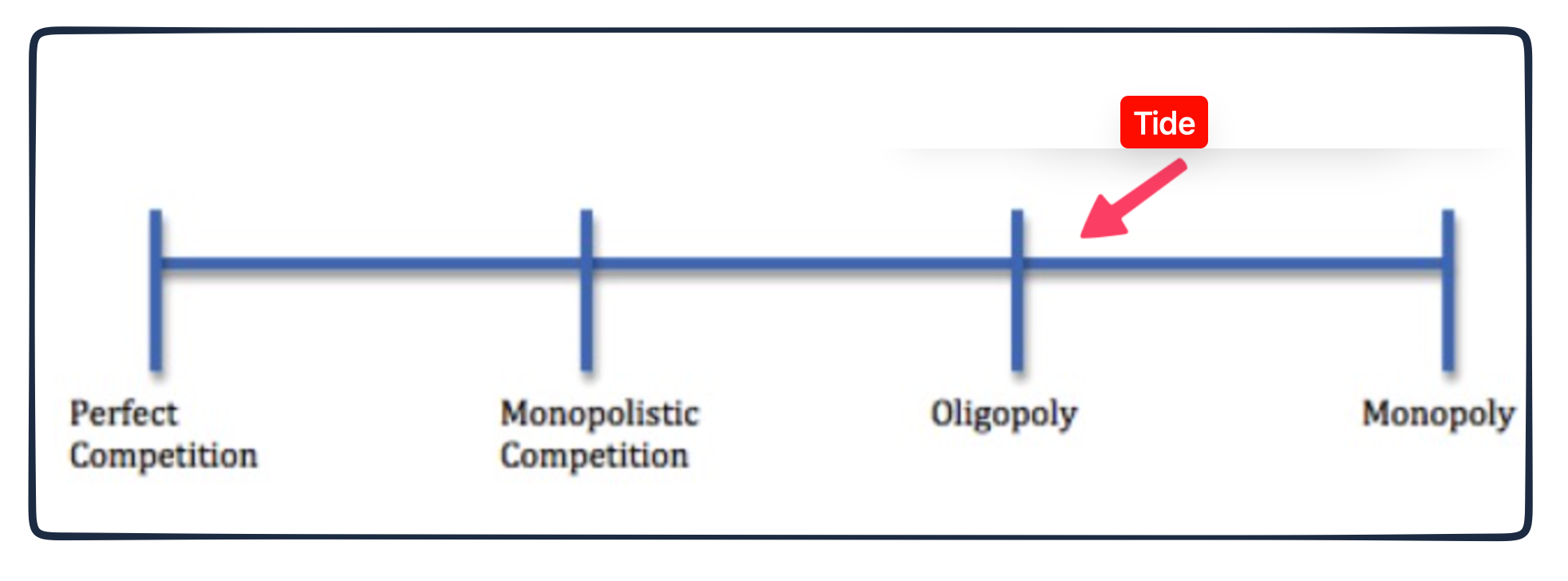
Tide’s market share confirms its position along the above scale:
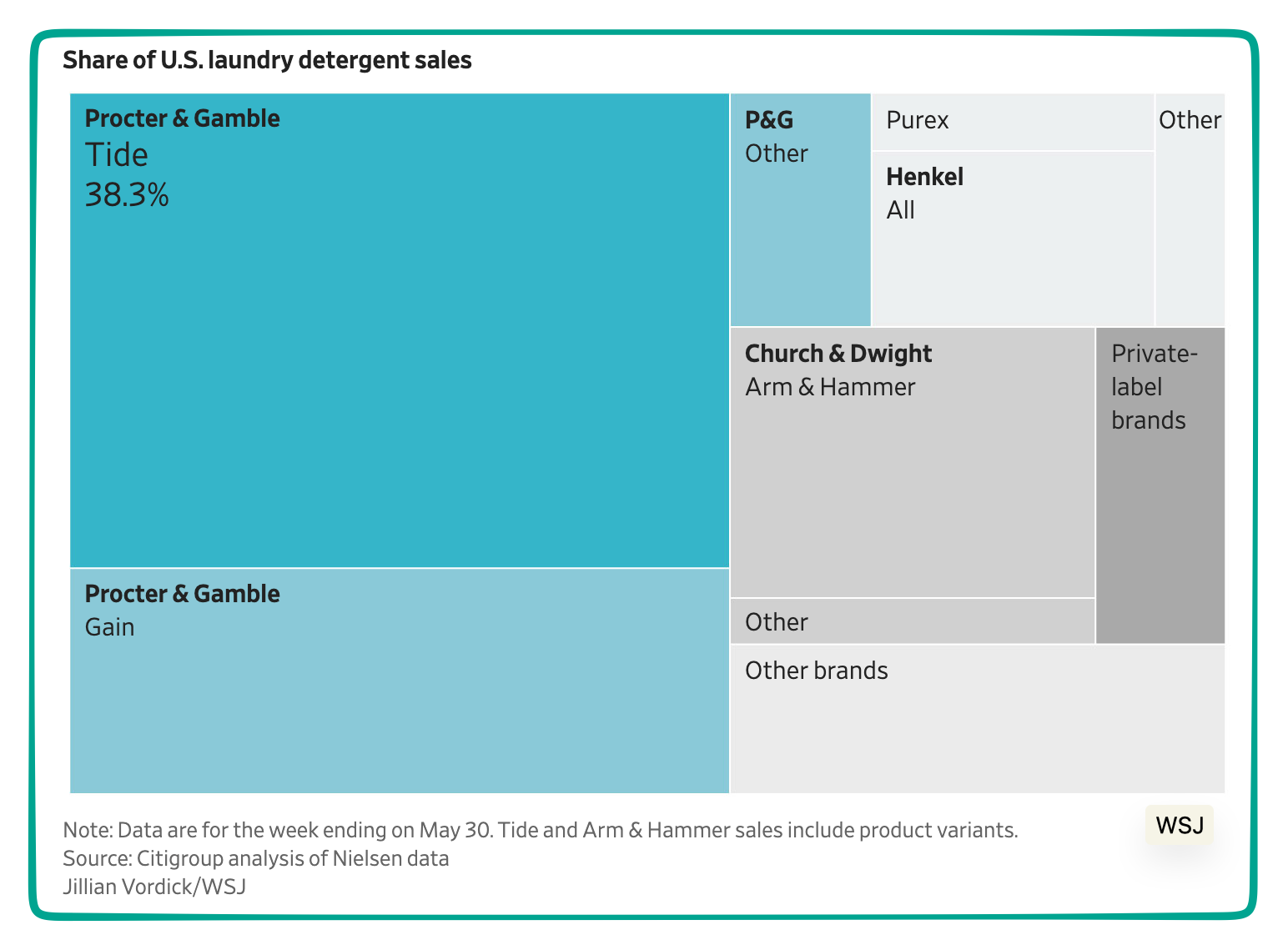
So yes, through its “tile,” Tide is our example of an oligopoly’s product differentiation. It even signaled its pricing power through a $19.99 box of 42 tiles–much more than its $12.99 tub of 42 pods.
My sources and more: Today’s ideas came from yesterday’s WSJ article on Tide. Please note that several of today’s sentences were in a past econlife post.