![econlifelogotrademarkedwebsitelogo[1]](/wp-content/uploads/2024/05/econlifelogotrademarkedwebsitelogo1.png#100878)


When a Watch Is About More Than Time
May 18, 2026
Why Parking Is Never Free
May 20, 2026
Today, the Harvard Faculty of Arts and Sciences will start to make some grade inflation decisions. In a vote that begins now and ends May 20, they will respond to three questions.
Harvard’s Grade Inflation
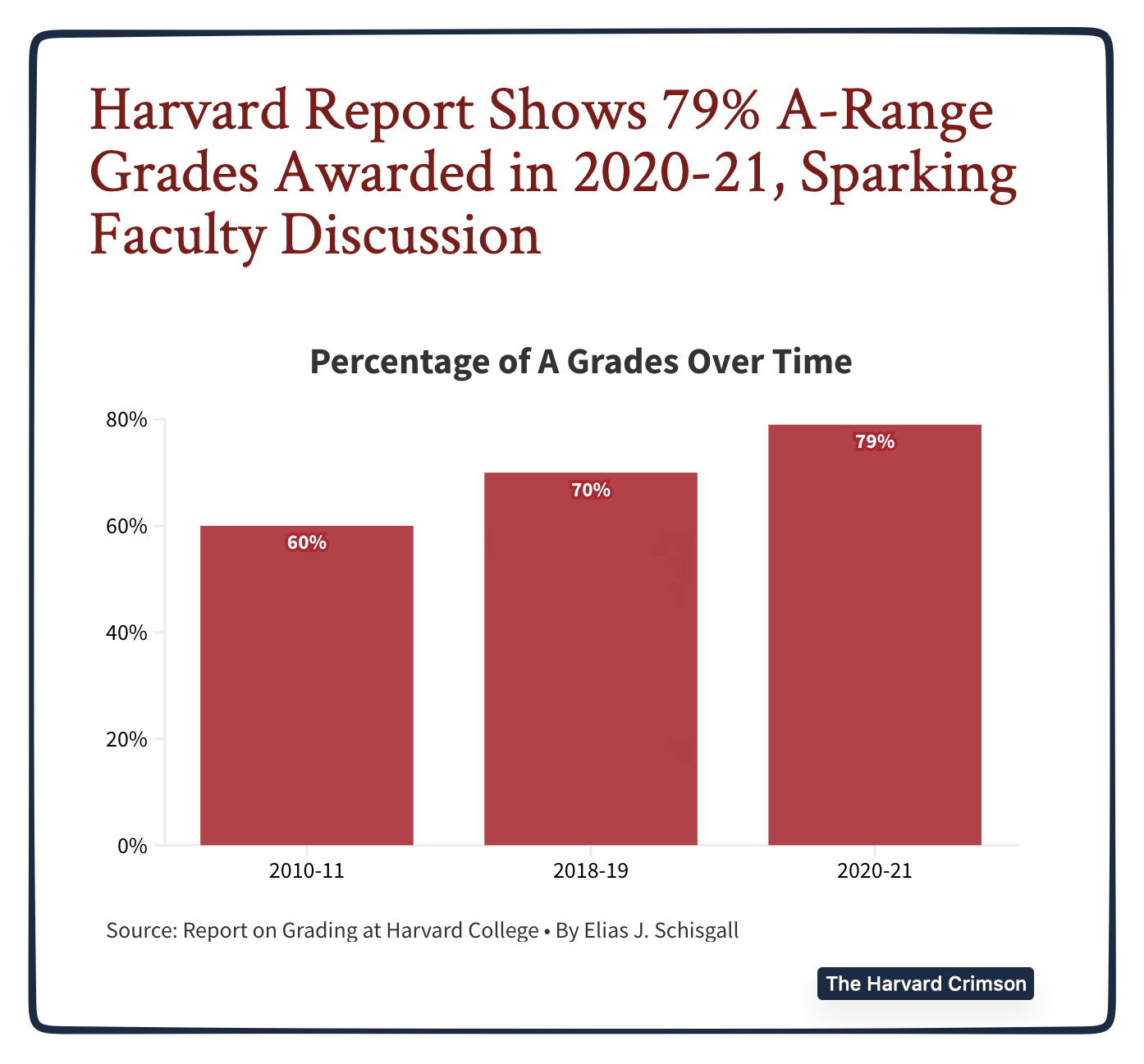
In 1950 a typical Harvard student’s grade was lower than a B+. By 2010, almost two-thirds of Harvard’s grades were in the A range. Then, last year, they still exceeded 60%:
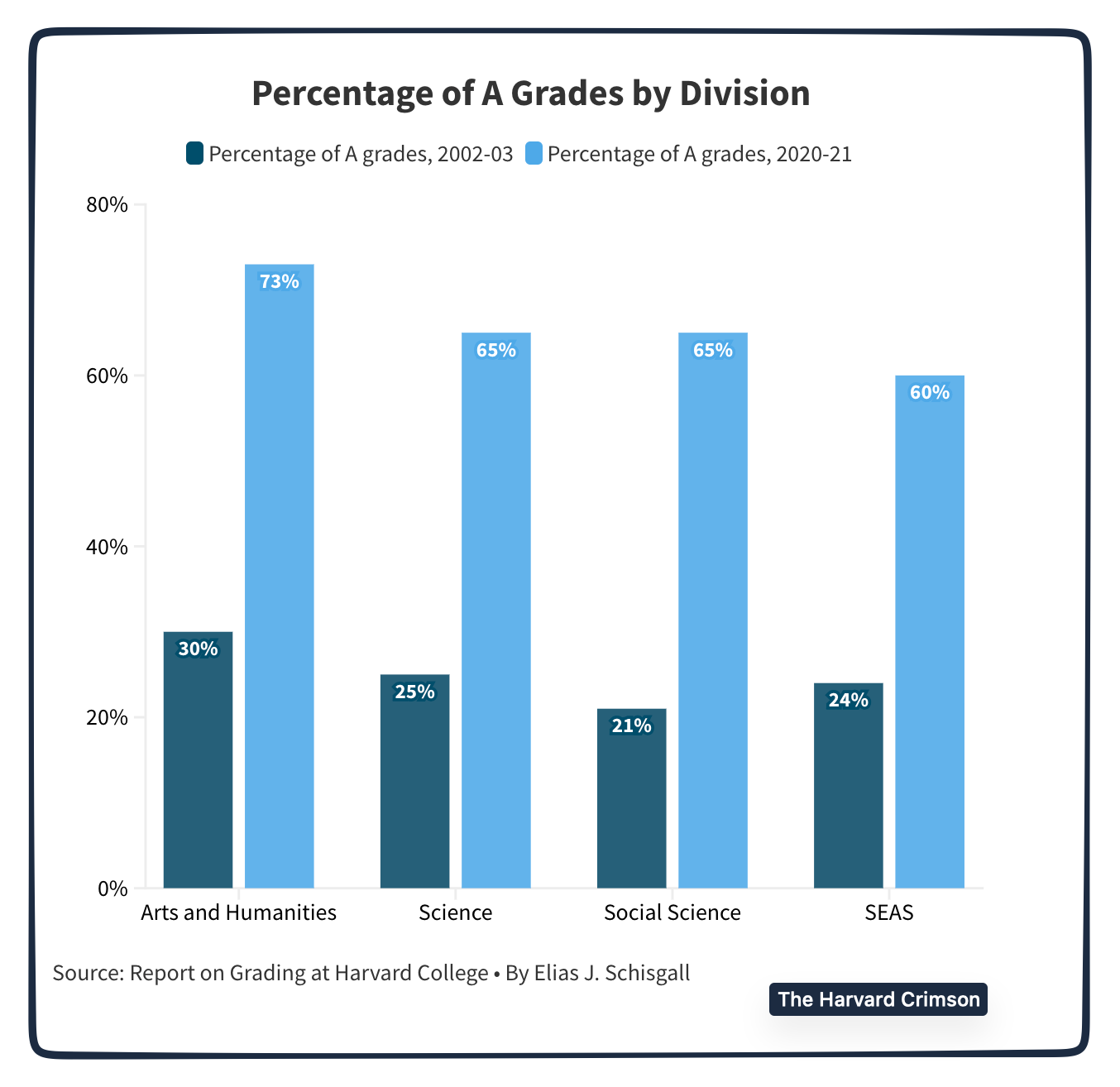
It did not vary very much by division:
Explaining the A’s, one faculty member blamed “external market forces.” She just meant that students sign up for courses and give glowing evaluations for courses that give good grades. Faculty members need the positive feedback to boost their own careers.
Furthermore, the Cornell and Princeton attempt to control grade inflation flopped. Cornell experimented with recording a course’s median grade on students’ transcripts. More directly, Princeton limited A’s to 35% in each class. Both attempts had a limited life.
Through a majority vote, the Harvard faculty will decide yes or no for each of the following:
- “A” grades would be capped at 20% of the enrolled students in a class with the option of adding four more A’s.
- Instead of a grade point average, internal honors would be based on an average percentile rank.
- Add “satisfactory-plus” to courses that offer “satisfactory” or unsatisfactory grades.
Our Bottom Line: Explaining Inflation
Beyond the classroom, we rate our products, activities, and experiences with high grades. Called expectation inflation by behavioral economist Katy Milkman, the result is 5 stars. Like professors feel the pressure to give A’s, consumers perceive 3 stars as a slam. We give 5 stars for a good restaurant meal, satisfactory Uber driver, or medical exam.
As a result, the information an evaluation could convey evaporates. Creating a bubble, the higher price or grade is filled with air rather than substance.
And with both, that bubble is really tough to pop because expectation inflation is a self-fulfilling prophecy.
My sources and more: Thanks to Axios for inspiring today’s post. From there, our first stop was the Harvard Crimson. In this past post, we explain the Princeton and Cornell grade inflation initiatives.
Please note that several of today’s sentences were in a past econlife post.