![econlifelogotrademarkedwebsitelogo[1]](/wp-content/uploads/2024/05/econlifelogotrademarkedwebsitelogo1.png#100878)


Comparing Apple Bytes to Apple Bites
April 7, 2026
Just Ask Jenna Looks at Salaries
April 9, 2026
NASA occupies a teeny proportion of the U.S. budget:
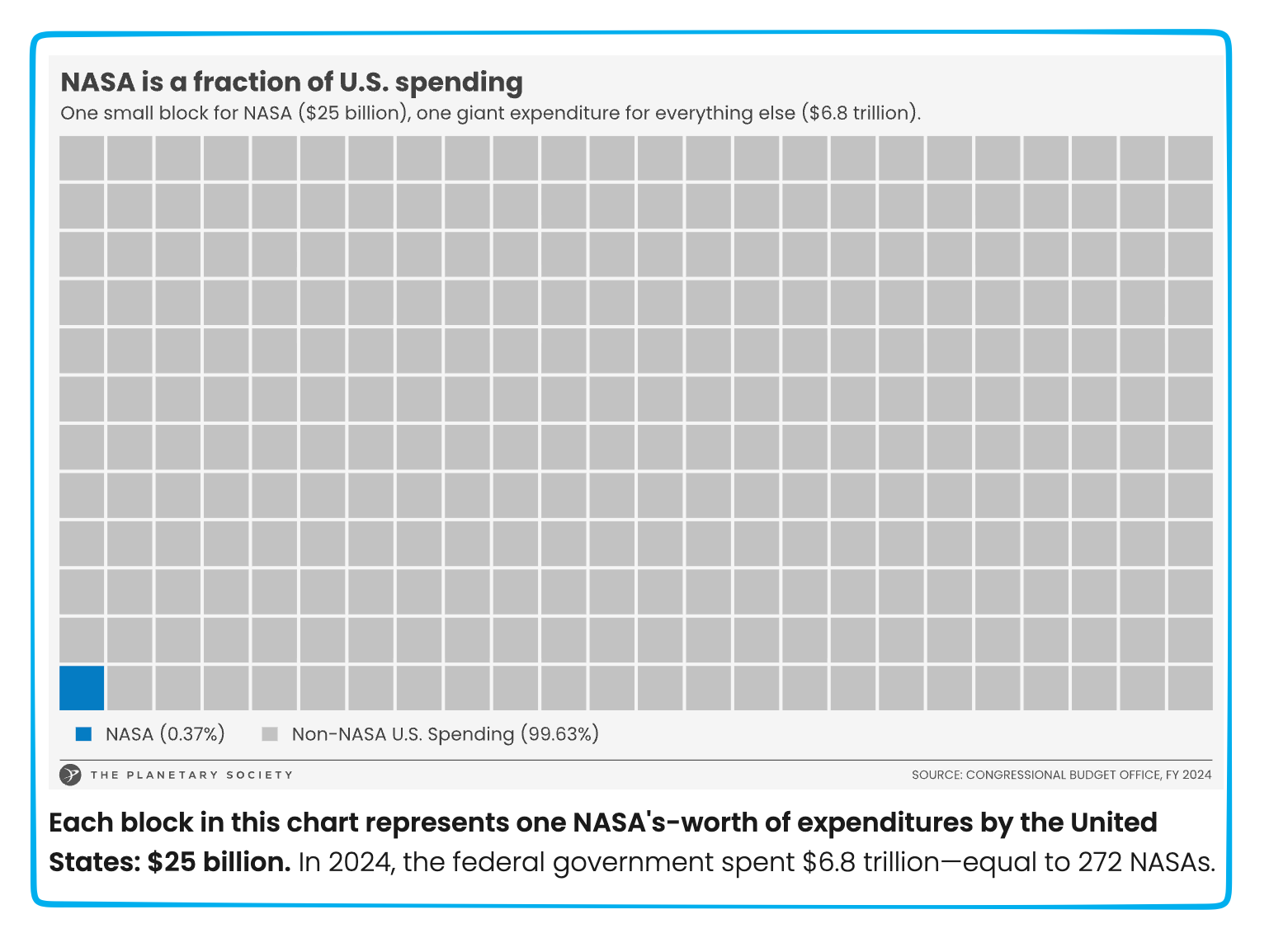
And yet still, it was cut by 23% in President Trump’s FY2027 budget proposal.
NASA’s Budget
With NASA helping to propel the GDP, and its small budget imprint, we can wonder about the cuts.
Below, you can see the plunge:
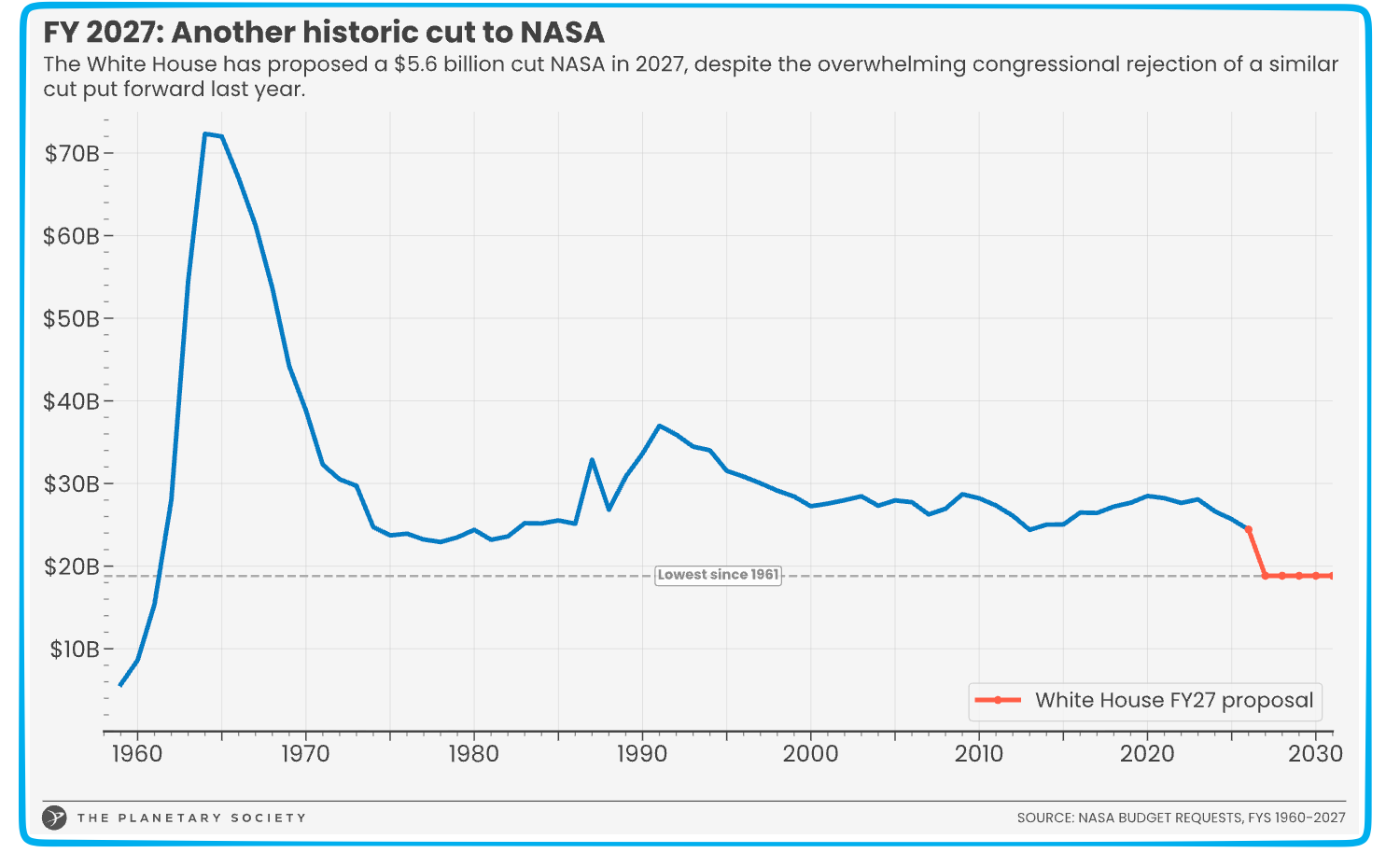
If Congress agrees (it might not), then NASA science funding shrinks from $7.25 billion to $3.9 billion.
These are the cuts:
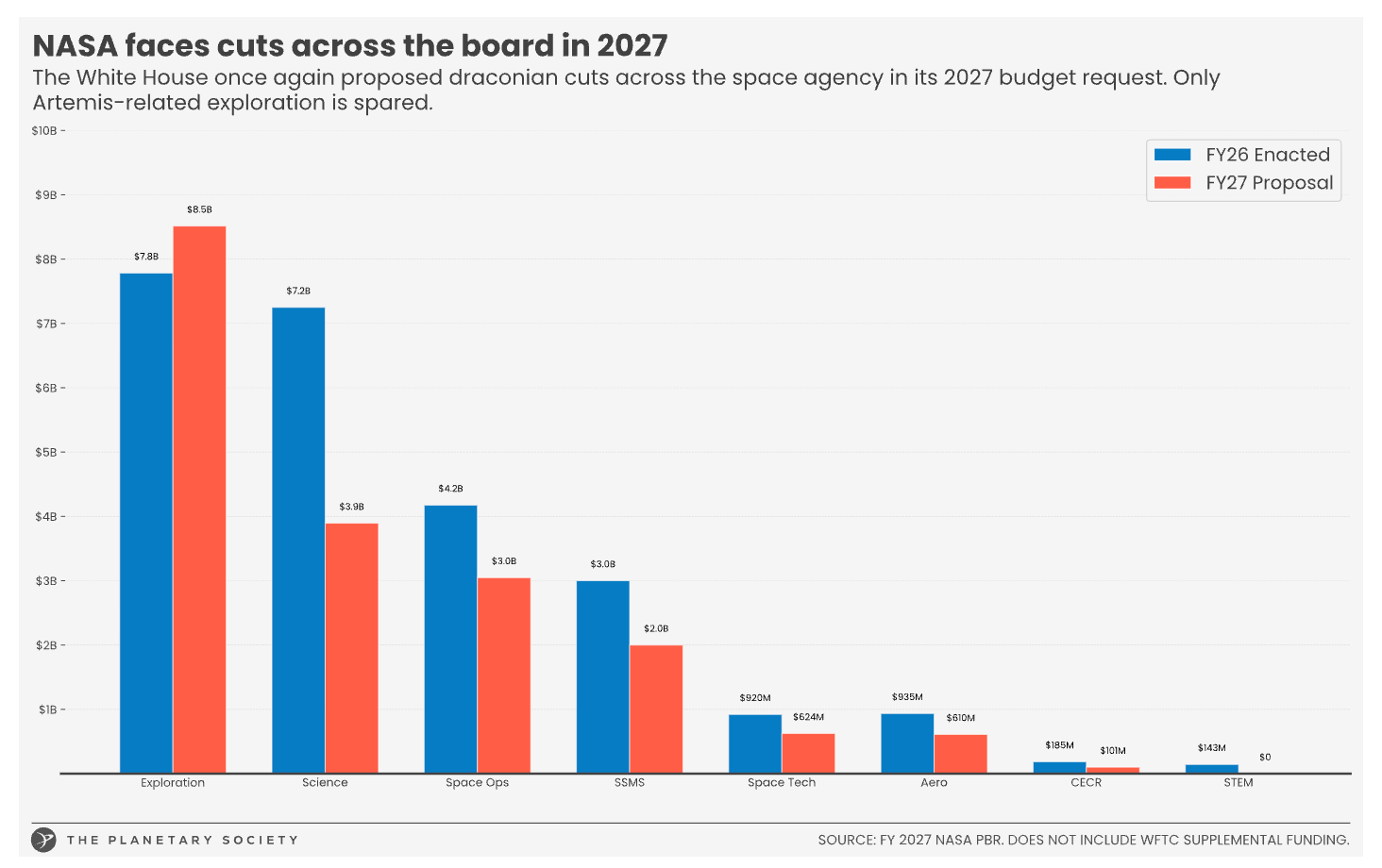
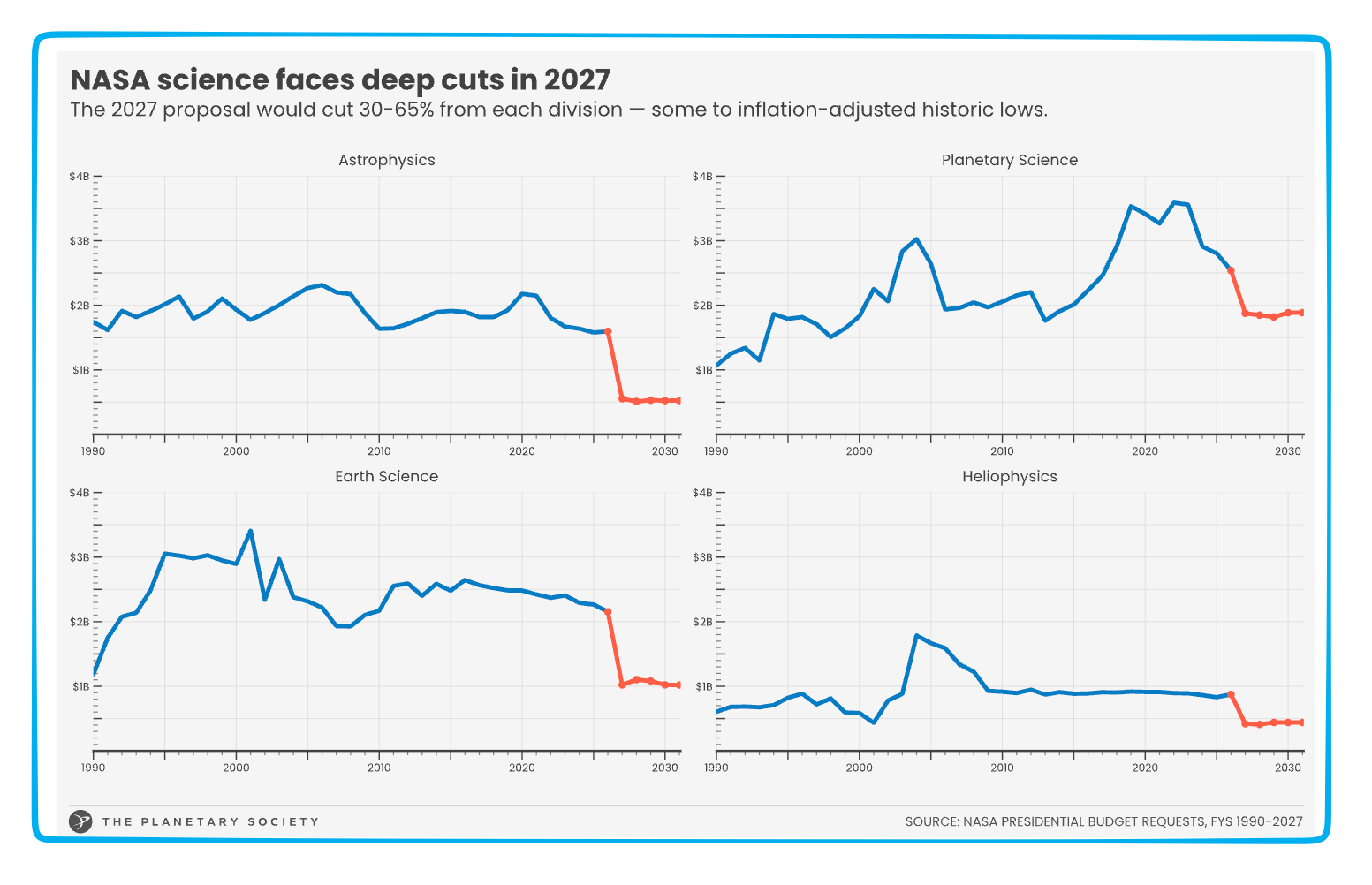
More precisely, the slash includes astrophysics, planetary science, earth science, and heliophysics:
The Toilet
But let’s look even more precisely at their spending and research.
A 2020 Wired article detailed some fascinating toilet history.
Called the Universal Waste Management System, the toilet on Artemis II cost more than $23 million. Its design includes a funnel that suctions pee, a removable waste compactor (for delayed disposal on earth), and a seat that has a protruding lid. After pre-treatment, the urine is recycled for onboard water. The big change though was adjusting the seat and urine funnel for the female anatomy.
The earliest spacecrafts had no bathroom. Astronauts had a sleeve that collected urine and a bag for feces. After that, equipped with the first space toilet, Skylab just had a “hole in the wall that sucked in urine and poop.” Finally, the space shuttle took a huge leap for mankind with a metal bowl that had feces pulled away by a fan and a suction hose that removed the urine.
This brief look at the toilet is really about all of NASA’s research. Shown by the challenge of microgravity pooping, their achievements are daunting. And, ranging from firefighters’ protective gear to dust busters and speedo racing swimsuits, the externalities touch our daily lives.
Our Bottom Line: Tradeoffs
Of course, as economists pondering budget cuts, we have to consider the tradeoffs. Affecting science spending and meteor deflection, the sacrifices are worth consideration. In addition, as a relatively small discretionary budget item, the cuts have little impact on the entire budget. However, some of my students have preferred spending the money on programs that affect us here and now.
My sources and more: For facts on NASA’s budget cuts, space.com was a good place to start. Our main stop, though, was the Planetary Society with much more about the NASA budget. From there, for details on the toilet, Wired and CNN had the facts. Then finally, Yahoo Finance and How Stuff Works listed some of NASA’s innovations.