![econlifelogotrademarkedwebsitelogo[1]](/wp-content/uploads/2024/05/econlifelogotrademarkedwebsitelogo1.png#100878)


How to Sell a Tariff Refund
March 3, 2026
Why a Baguette Is More Than Bread
March 5, 2026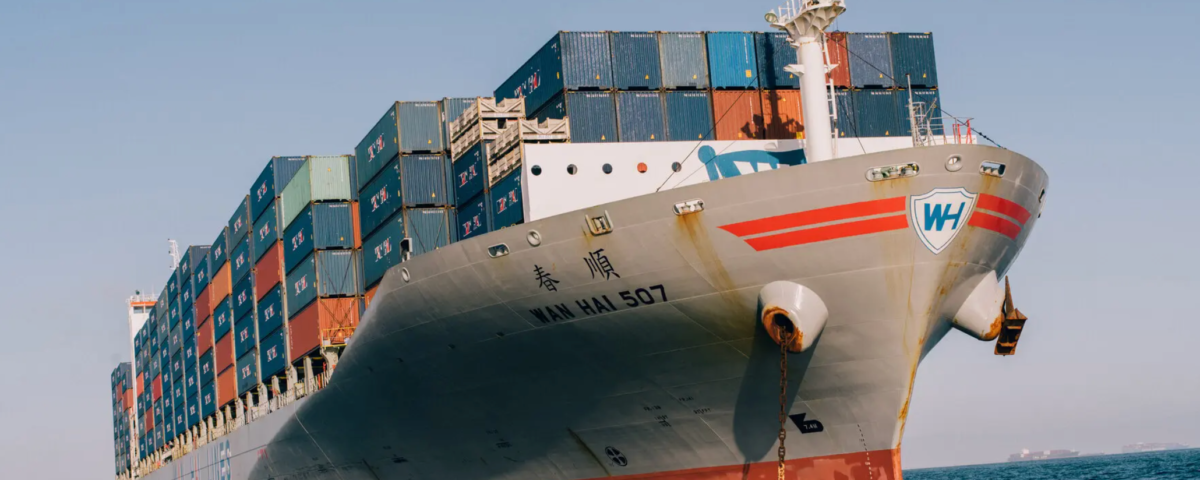
At the Strait of Hormuz, we have a “traffic jam of magnificent proportions.” Two days ago, observers estimated that 100 vessels were waiting outside the Strait while 100 were stuck inside. Meanwhile, yesterday, approximately 3,000 vessels were in Persian Gulf ports, hoping to hear that travel is once again safe.
Expressed by WSJ, the list of stranded shippers included the following:
- 241 bulk carriers
- 195 product tankers
- 114 container ships
- 112 crude tankers
- 6 cruise ships
As the narrow entry to the Persian Gulf (and a connection to the rest of the world), the Strait of Hormuz is a major link in the global supply chain:
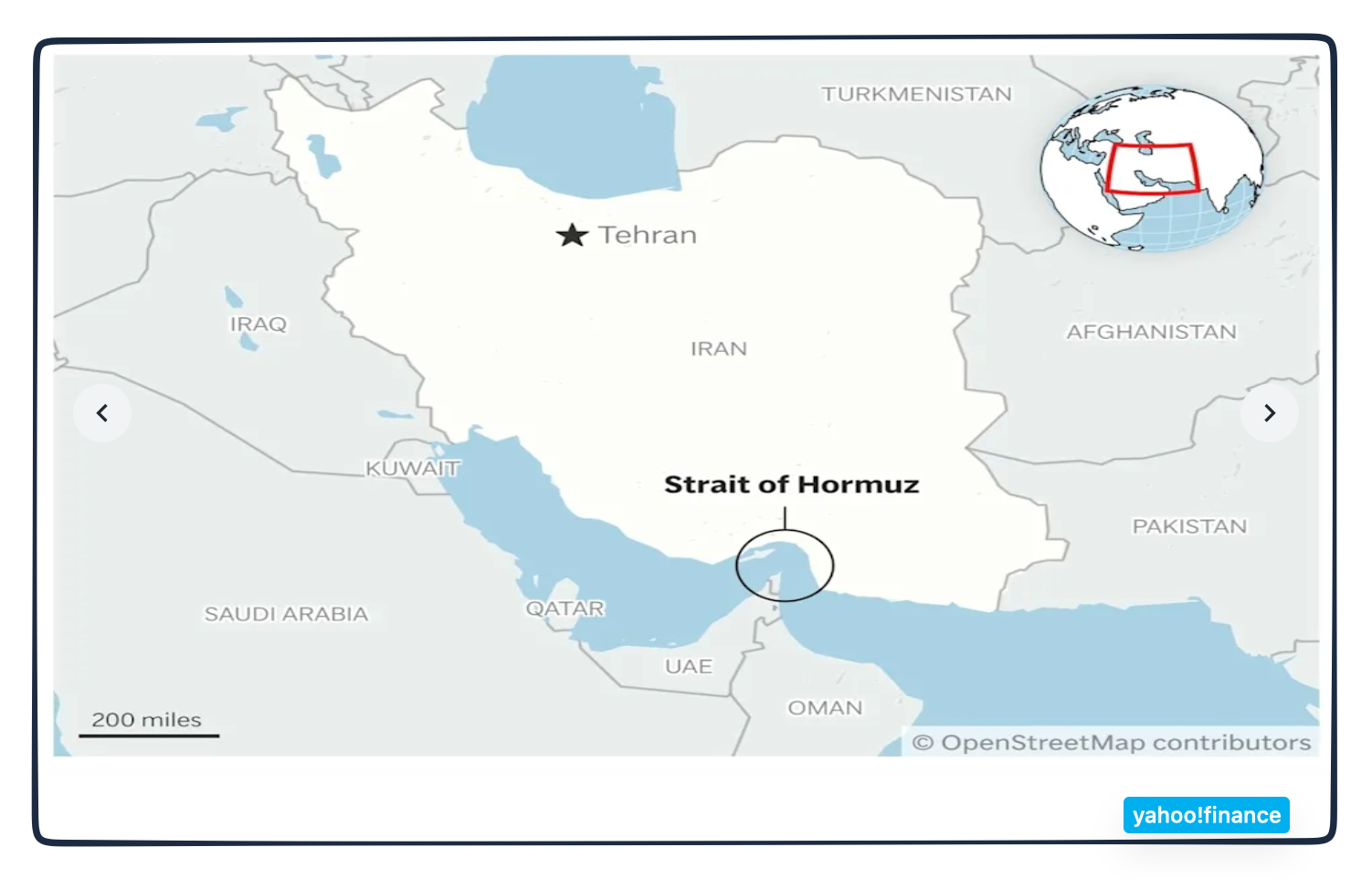
The Strait of Hormuz
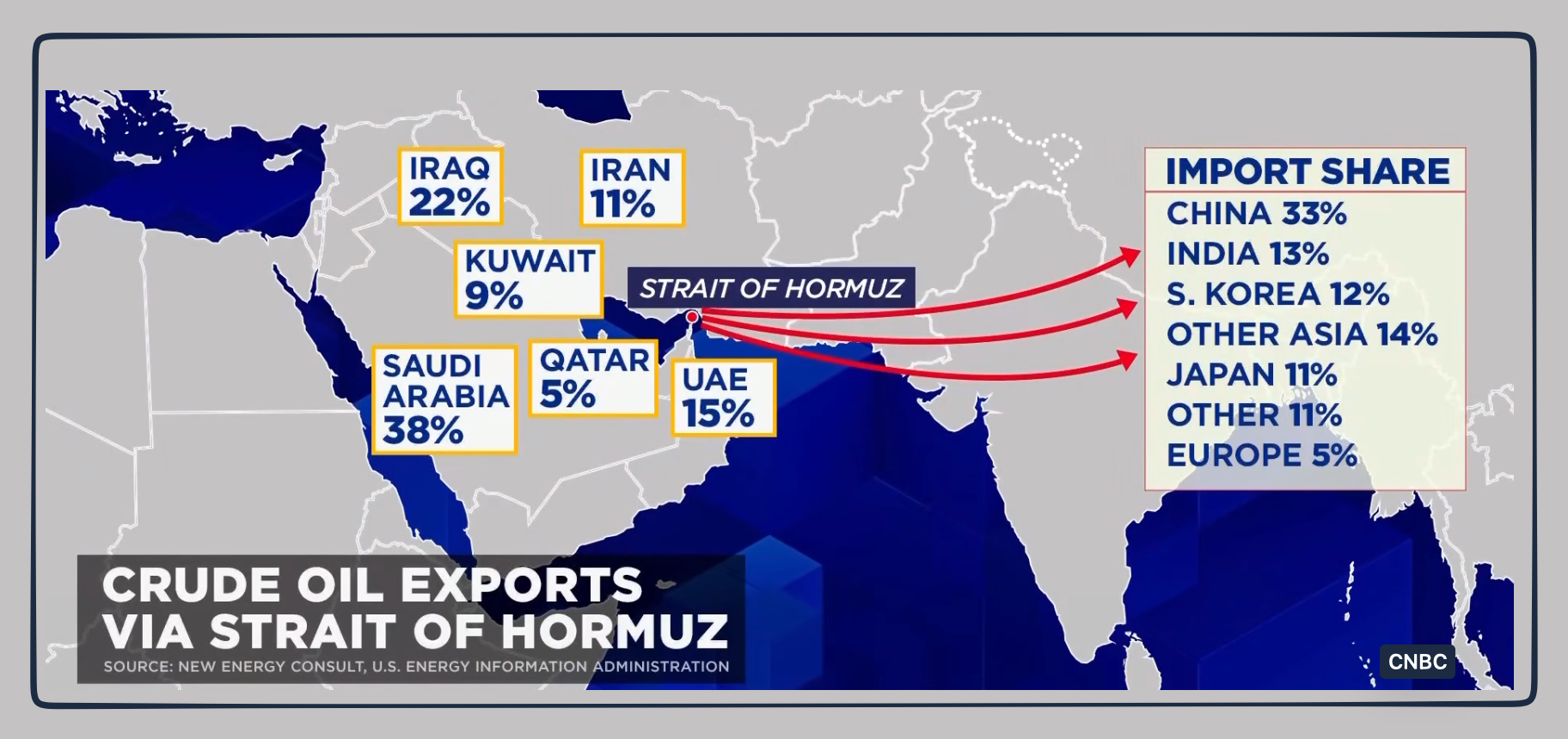
Equal to 20% of the global oil trade, 20 million barrels of oil and petroleum products pass through the Strait of Hormuz each day.
CNBC had some of the statistics:
Also crucial for energy, 20% of the liquefied natural gas (LNG) trade –100 billion cubic meters a year–travels through the Strait.
And, there is much more.
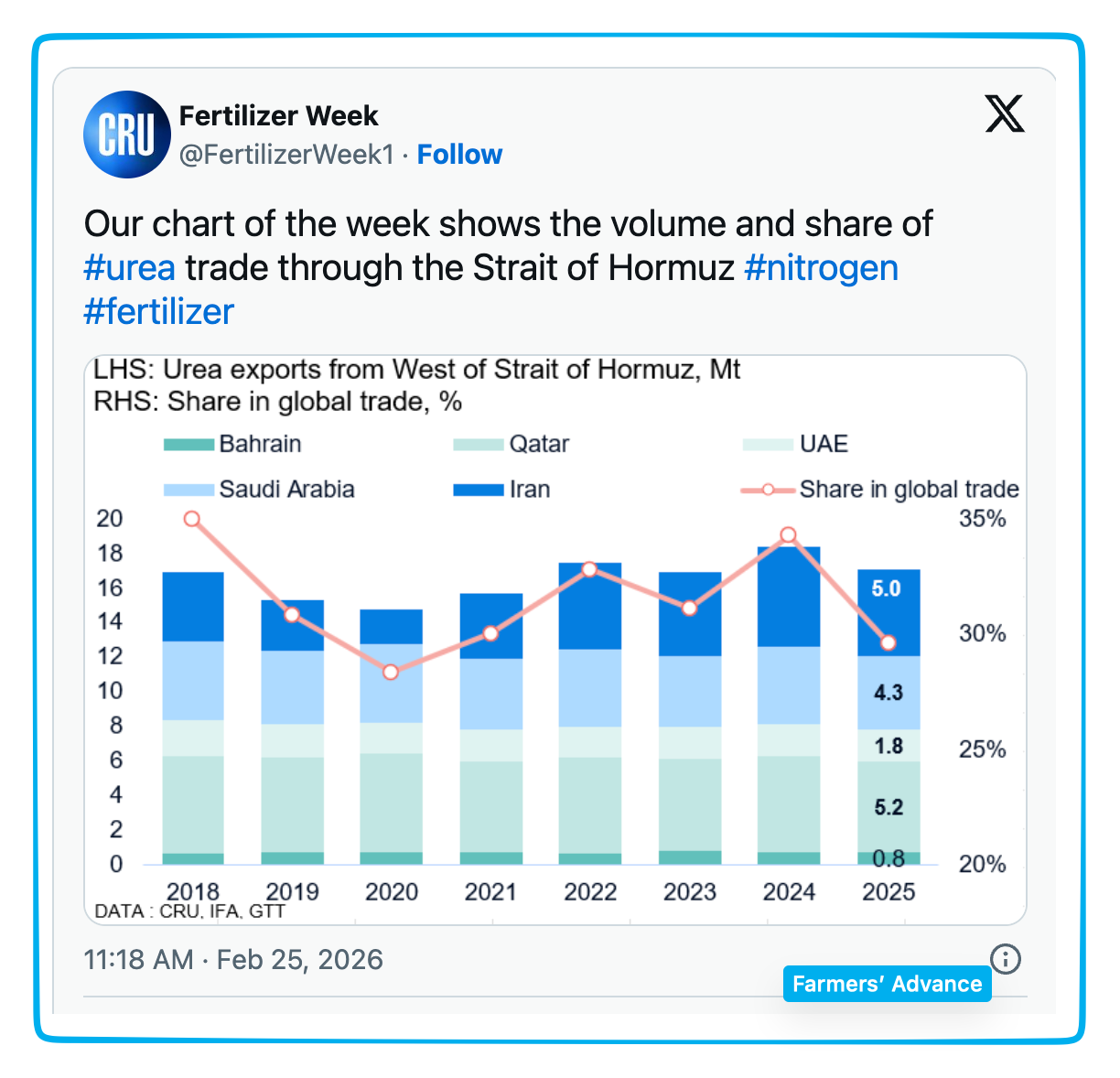
While Dubai’s refined sugar and the Gulf’s aluminum smelters need the Strait, fertilizer best tells a lesser known but crucial story. Known as a nitrogen-based fertilizer, vast amounts of the world’s urea- maybe 40 percent–travel through the Strait. With any delays affecting commodities including wheat, rice, and corn, farmers everywhere could be hit with higher prices or shortages.
Below, you can start to see the urea trade:
Compounding their plight, fertilizer makers also need natural gas.
Our Bottom Line: Transportation Infrastructure
During the 19th century, the U.S. transportation infrastructure was composed of roads, canals, and railroads. However, we needed a canal to complete our march toward a national market. Completed in 1825, and only 363 miles long, the Erie Canal linked Albany NY to Buffalo NY. Encouraging a slew of canal copycats, the Erie jumpstarted a transportation infrastructure that soon made it possible for Eastern manufactured items and Western farm goods to move across the United States cheaply and quickly.
Today, as a key part of today’s global transportation infrastructure, the Strait of Hormuz is a crucial link in the world’s supply chains.
My sources and more: The World Business Report podcast and WSJ focused on the shipping situation at the Strait of Hormuz while this CNBC interview provided insight. Then, for the specific look at fertilizer, Farmers’ Advance had the details.