![econlifelogotrademarkedwebsitelogo[1]](/wp-content/uploads/2024/05/econlifelogotrademarkedwebsitelogo1.png#100878)


Our Weekly Economic News Roundup: From Childcare to Healthcare
May 2, 2026
Why the World Might See a Condom Shortage
May 4, 2026
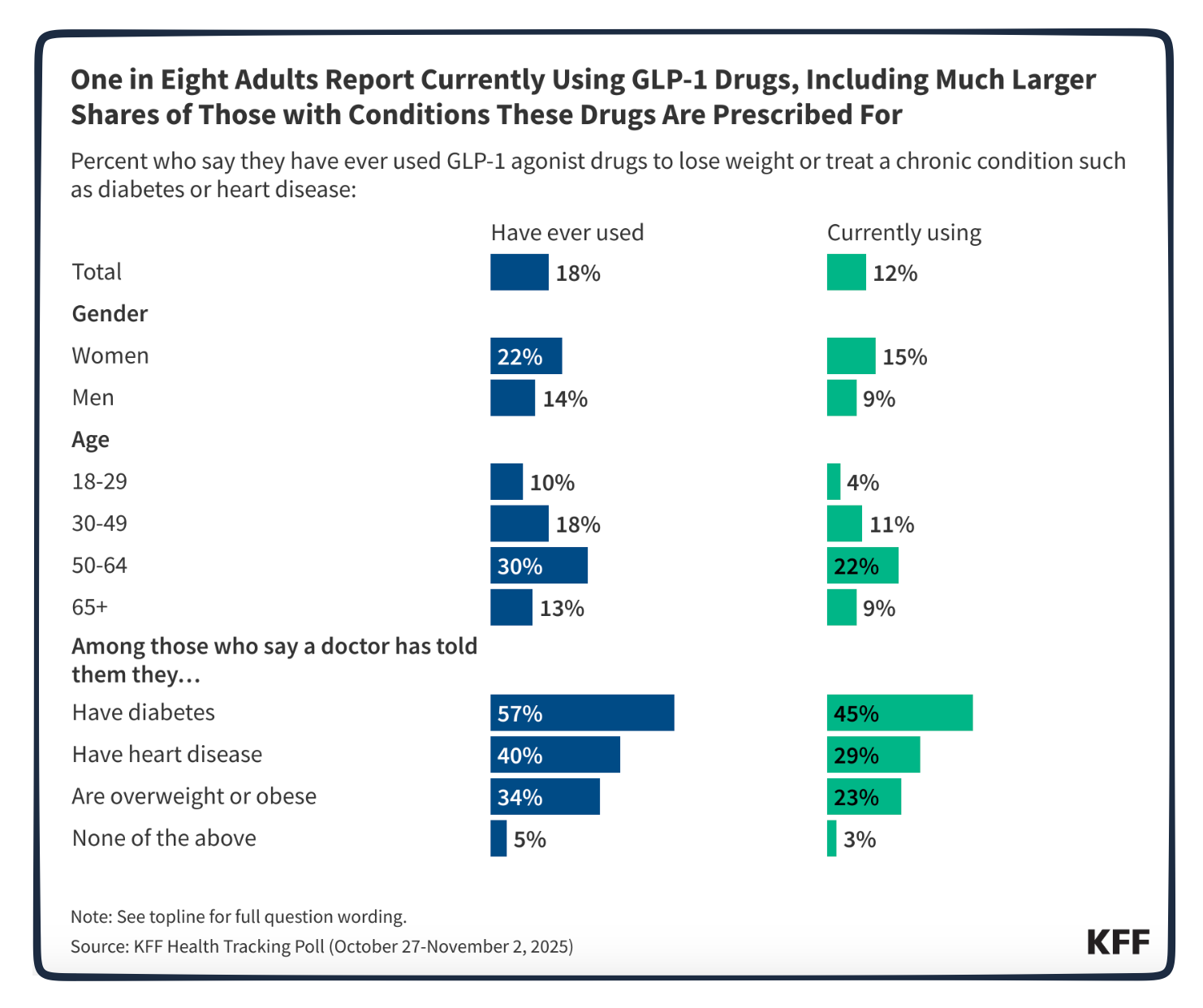
With KFF reporting that one in eight adults takes a weight loss drug like Ozempic, Wegovy, or Zepbound, we can expect changes in household food spending.
More women than men take the medication with the percents rising for 50-64-year-olds:
At home, within six months, households using a weight loss medication reduced grocery spending by 5.3% while high income households spent a whopping 8% less. The items that disappeared from the pantry included snacks, baked goods, and even (counterintuitively) we ate fewer eggs, and less bread and meat. By contrast, yogurt sales rose the most. But then, after a year, spending starts to rise again.
Weight Loss Drugs’ Impact
Far beyond grocery stores, weight loss drugs have had a less obvious impact.
Brides
Closer to their wedding date, brides are losing a lot of weight. In a pre-weight loss drug world, dress shopping started 5 to 6 months before the wedding. Now, that timing has shrunk to 45 days. As a result, bridal dress stores need more last-minute gown fittings, more inventory, more overtime work, and extra rush orders. Some have also asked customers to sign legal waivers saying their dress did not fit when first ordered.
Fashion Inventory
Seeing an uptick in demand for smaller size clothing, retailers say that planning future inventory has become tougher. But they are enjoying new sales from the consumers that are replacing their wardrobes more frequently.
Airlines
According to a recent study from Jefferies, the four major airlines–Southwest, American, United, Delta–together could save $580 million annually on fuel because of lighter loads. With fuel 20% of their annual expenses, we are looking at 1.5% of the total. Not as small as it seems, the savings could be $577 million. Especially now, with airlines’ fuel costs soaring, an offset would be meaningful.
Our Bottom Line: Externalities
Defined as the impact of an activity or contract on a third unrelated party, an externality can be positive or negative. The perfect example of a positive externality is the ripple impact of vaccines. When one person gets vaccinated, she prevents many she does not even know from getting sick. As for the negatives, air pollution has the opposite spillover when the byproduct of a factory is the dirty air that activates a distant person’s asthma.
For weight loss drugs, the list of externalities is unending. They take us to how we feel, what we eat, what we wear, the furniture we buy, the stocks we own.
My sources and more: Thanks to WSJ for inspiring today’s post and the NY Times for its airline example. From there, we returned to our 2023 econlife post. Meanwhile CNBC, the Retail Insight Network, and the Cornell Chronicle described how spending changed. And the KFF study documented usage.
Please note that several of today’s sentences were in a past econlife post.