![econlifelogotrademarkedwebsitelogo[1]](/wp-content/uploads/2024/05/econlifelogotrademarkedwebsitelogo1.png#100878)


Just Ask Jenna Looks At the Unintended Consequences of Safer Behavior
February 12, 2026
February 2026 Friday’s e-links: Understanding Affordability
February 13, 2026
Our newest jobs report confirmed we have had a low hire, low fire economic landscape.
Let’s take a look.
Low Hire, Low Fire
In a delayed January report, the numbers were mixed. Looking back, they reflected unexpectedly weak job growth for the past 2 years. Subtracting close to 600,000 million more jobs than we thought we had lost, the report confirmed a low hire, low fire scenario. Looking ahead though, the January jobs added number, at 130,000, was higher than expected. Although those jobs were concentrated in the healthcare sector, they could signal a step away from stagnation. In addition, we have ascending average wages while the length of unemployment is shrinking.
Still we can ask if an unusually unpredictable economy encourages sitting tight.
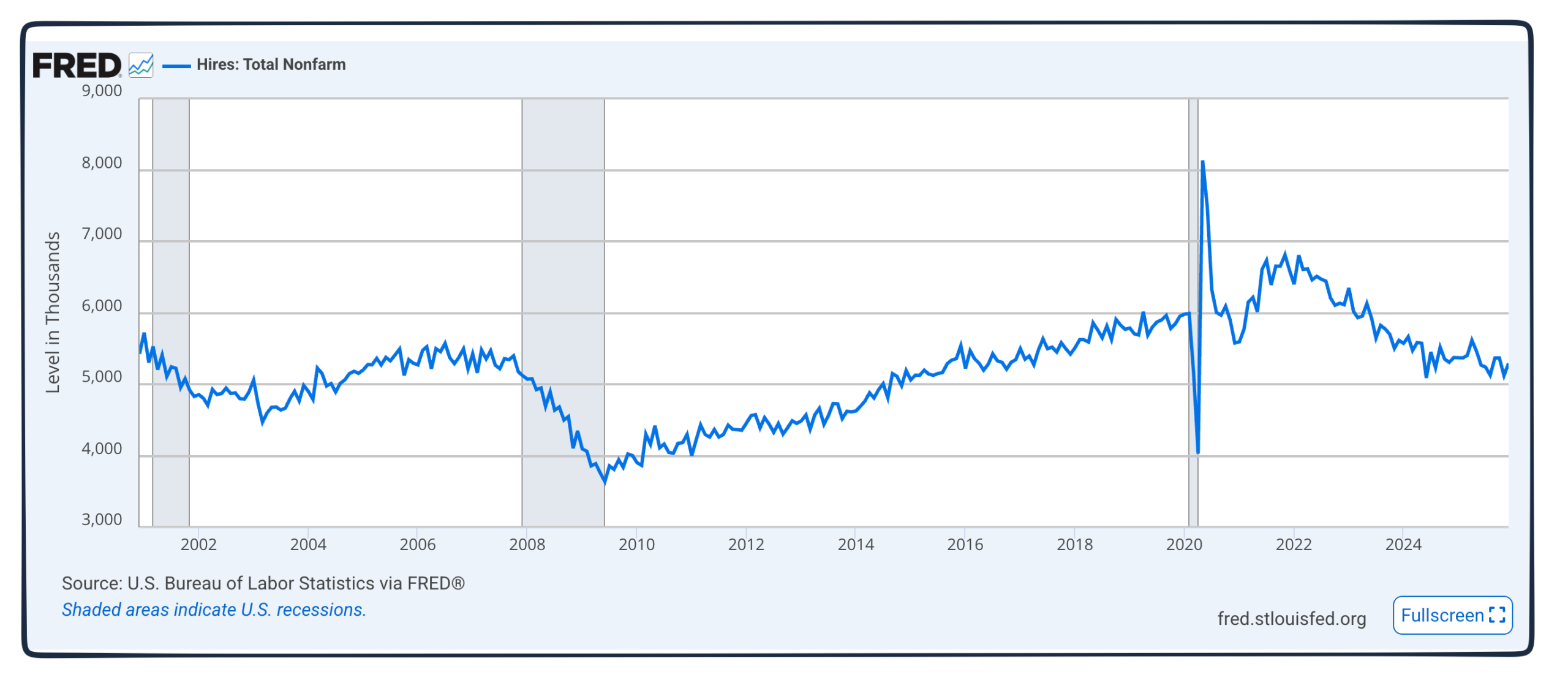
The most up-to-date FRED data through December 2025 show hiring sinking:
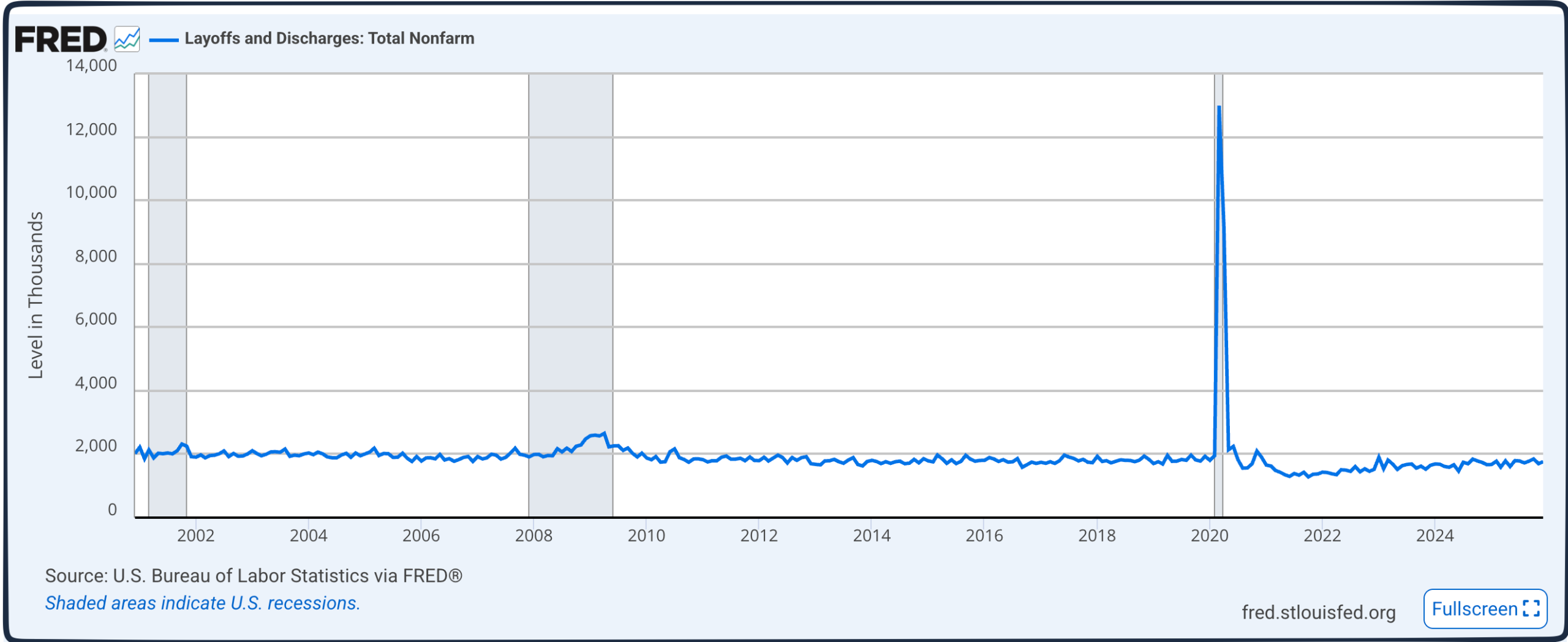
Also through December, the “firing” rate remains relatively low:
And, nudged by lower hires and fires, our FRED quits graph is indeed trending downwards:
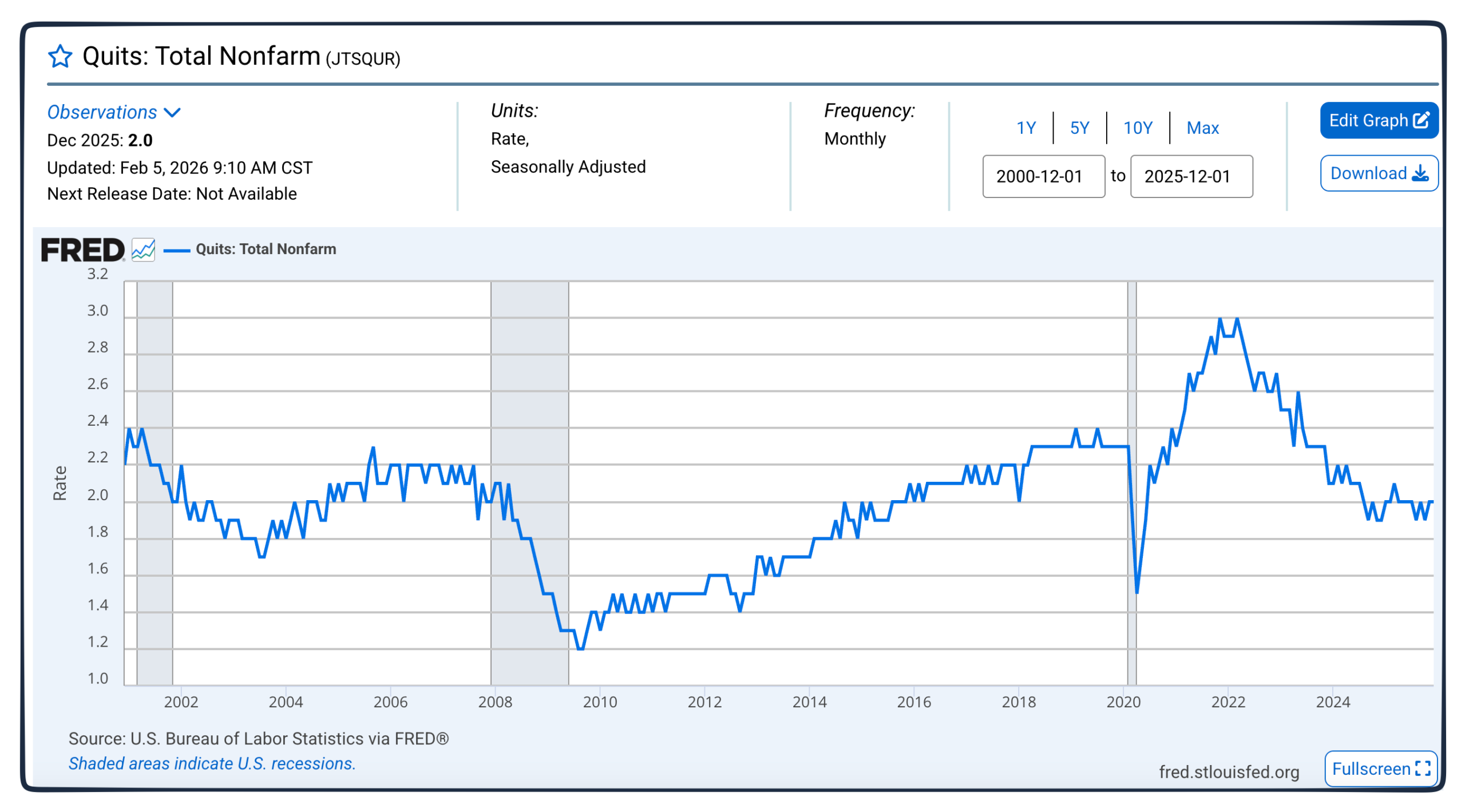
Indeed, it does appear that low hire, low fire prevailed through December.
Our Bottom Line: Tragedy of the Commons
It all reminds me of the tragedy of the commons.
First described in 1968 by Garrett Hardin, a resource owned by no one is abused by everyone. We overfish the ocean, pollute the air, and we overgraze a common pasture. With everyone acting in their own self-interest, we create the tragedy of the commons.
It is also possible that low hire, low fire is an example of the tragedy of the commons. After all, by firing no one, individual employers are helping their own businesses. Similarly, not quitting, workers’ behavior is self-interested. Similar to overfishing, polluting, and over grazing, individuals are acting in their own self-interest. Combined, their behavior constrains the economy.
I know it is not precisely like a steel factory generating pollution as it boosts profits. Nor does it exactly resemble our tilt toward overfishing to bring home that bigger catch or letting our sheep freely graze in everyone’s pasture.
However, can we say that low hire, low fire does reflect a jobs market “owned by no one” that winds up “abused.”
My sources and more: Thanks to Bloomberg radio’s clever spin on the jobs report. From there, amidst a slew of relevant articles, WSJ, the NY Times, and Fast Company stood out for their data and analysis.