![econlifelogotrademarkedwebsitelogo[1]](/wp-content/uploads/2024/05/econlifelogotrademarkedwebsitelogo1.png#100878)


Why Colleges Are Closing
October 5, 2026
The Land, Labor, and Capital That Make a Giant Vegetable
October 7, 2026
Today I will share some fertility studies that could have a causal connection. Then, though, our “Bottom Line” wonderfully displays why we need to be careful with our stats.
Remote Work and Fertility
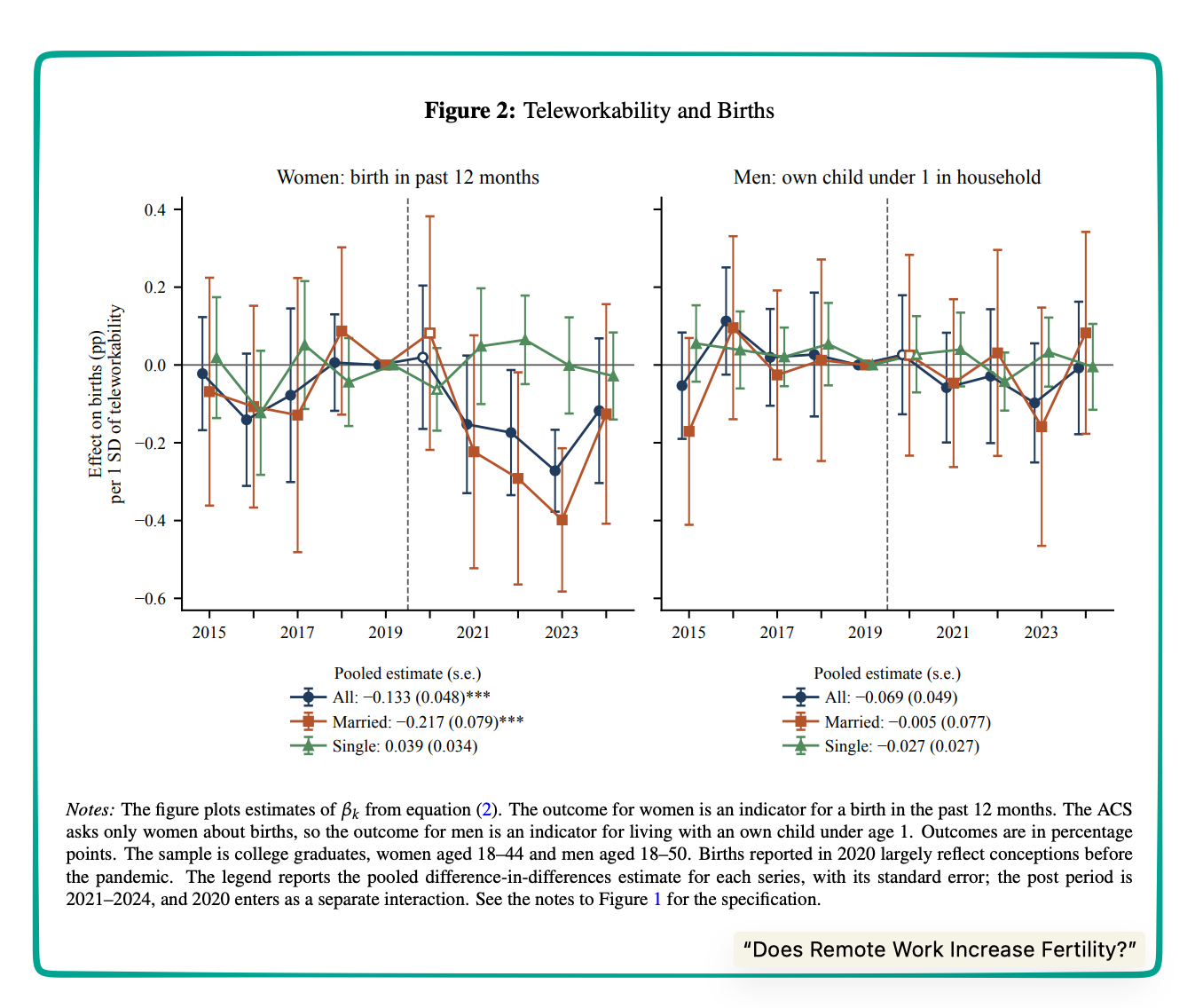
In a recent paper, University of Texas (Austin) economist Andrew C. Johnson asked how remote work affected changes in births among a specific group of college graduates. Recognizing that remote work increases flexibility while permitting families to live near relatives and secure cheaper housing, he said the cost (defined as sacrifice) of a baby decreased. So, it could make sense that birth rates ascended. And yes, surveys of adults, aged 20 to 45, in 38 countries do show a higher birth rate in households where both partners work from home at least one day a week.
However, Dr. Andrew’s U.S. survey was somewhat different. When he correlated the 2020 remote work surge to births, after 1.9 million observations from the American Community Survey, he wound up with a relatively stable birth rate that slid 0.13 percent. Below, you can see that while married women had the biggest birth dip, it too was relatively small:
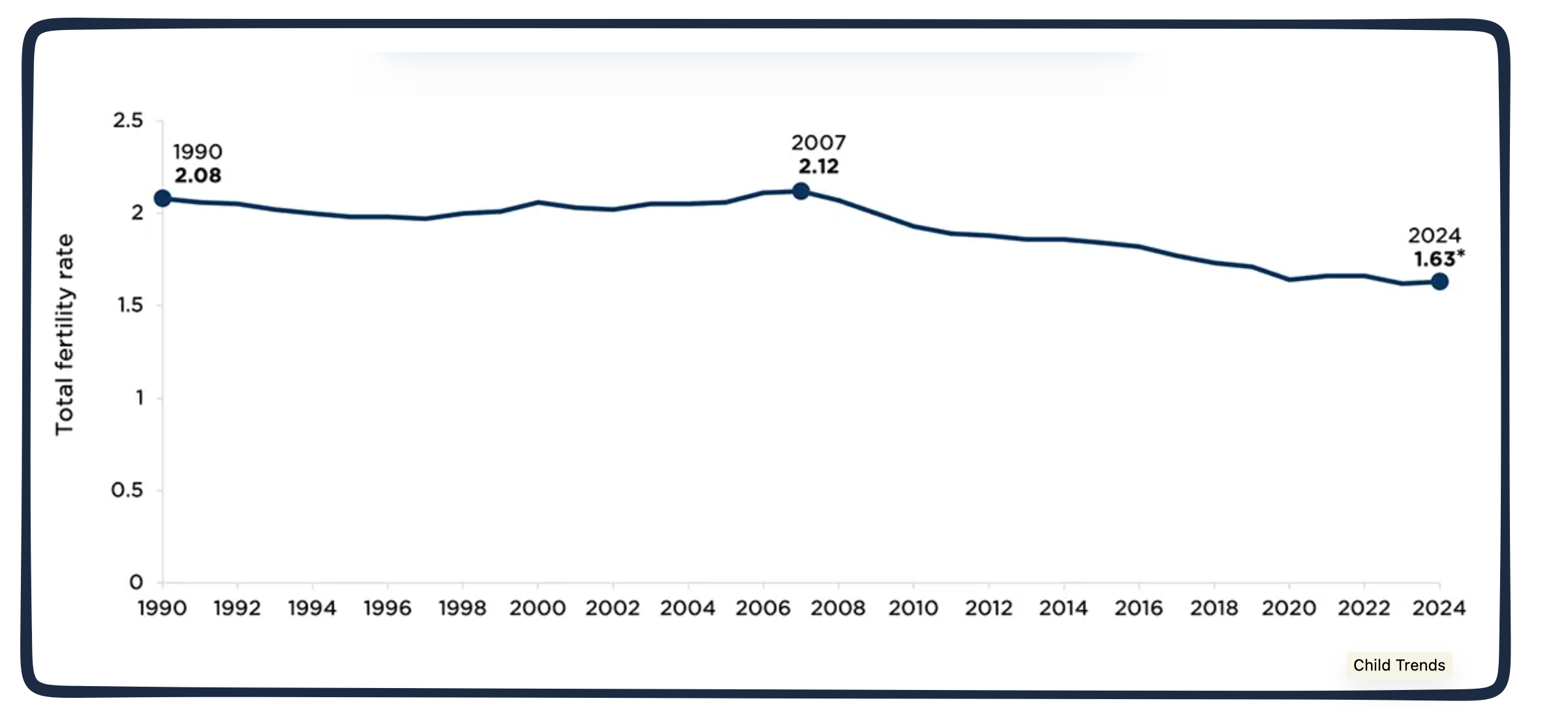
Next, we can leap to 2024 replacement rate data. Telling us how many babies per woman we need to maintain our population, the replacement rate is 2.1. However, the 2024 U.S. rate was 1.6:
In addition, for the large cities identified below, you can see that the child population went down from 2015 to 2024 in far more places than it rose: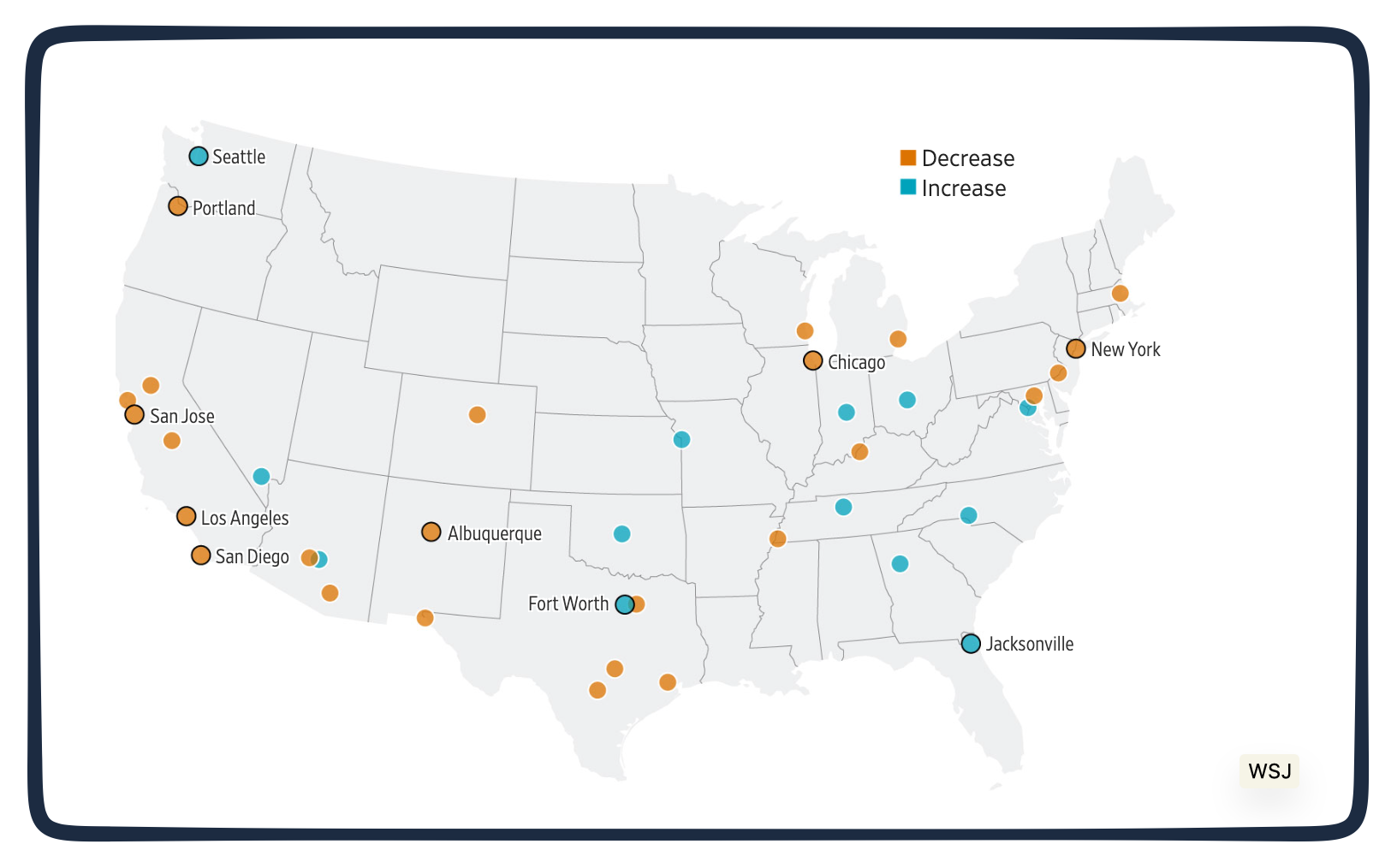
With many more orange dots, the map’s message is a plunge in the under-18 popula†ion of many cities. While the average baby decline in the U.S. is 1 percent, cities report an average of 6 percent. Even higher for children under five years old, the big city decrease is 15.4 percent.
Do we have sufficient data to conclude that remote work reduces the birthrate?
Our Bottom Line: Why We Need Skeptical Scholars
During December 2025, researchers from Harvard’s School of Public Health associated communities near nuclear power plants with higher cancer rates. Subsequently, though, energy scholar Adam Stein and economist Deric Tilson told us that the study’s methodology was fatally flawed. Instead of targeting the impact of nuclear plants, the Harvard study’s approach would have shown almost anything near a community caused cancer.
Applying the original study’s methodology, Stein and Tilson generated a list of ridiculous results:
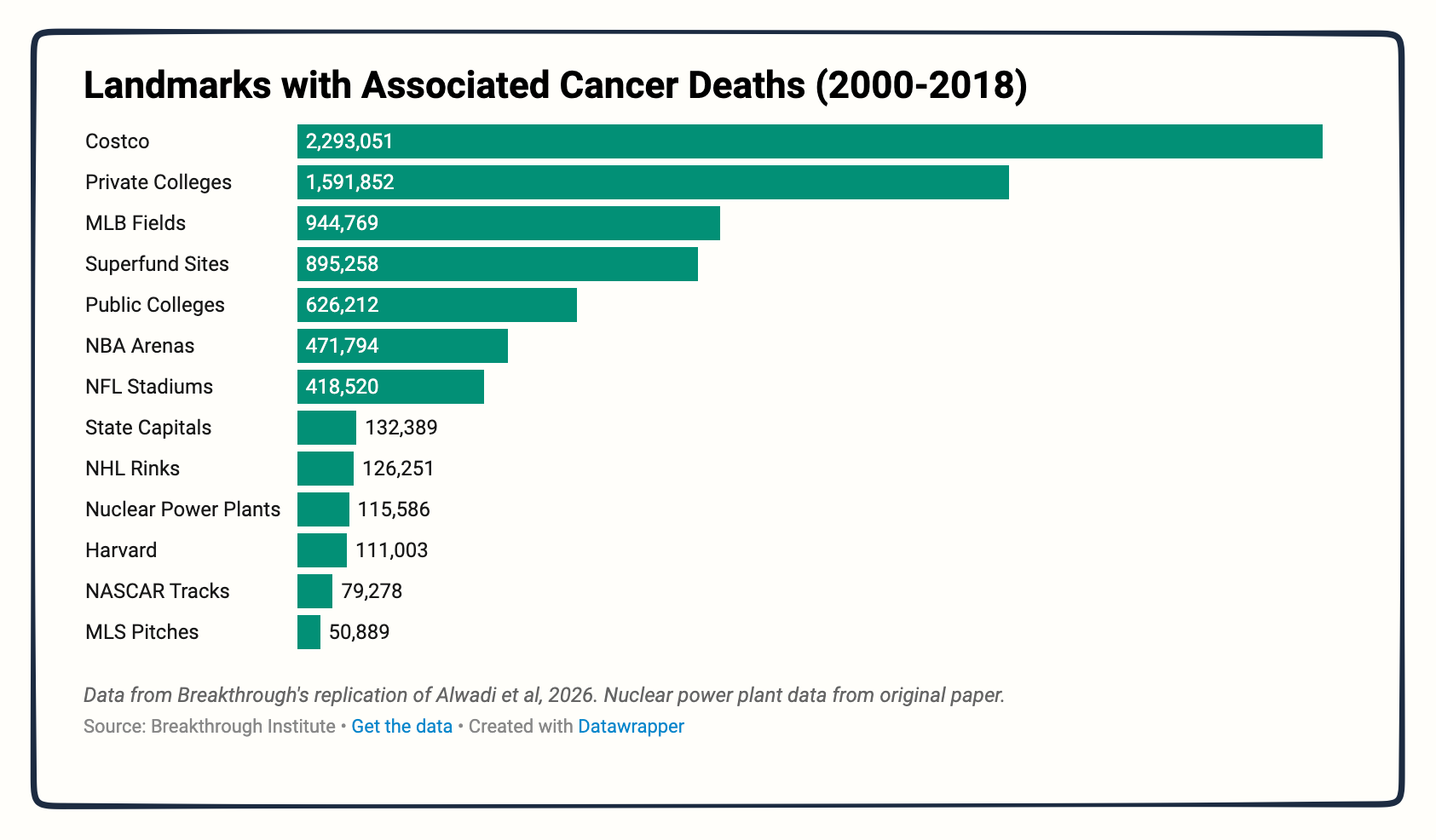
Indeed, whether looking at whether Costco causes cancer or remote work and fertility, we should always be skeptical.
My sources and more: Thanks to Marginal Revolution for alerting me to the paper on remote work and fertility and the Costco statistics story. Then, adding this econlife, all three came together.