![econlifelogotrademarkedwebsitelogo[1]](/wp-content/uploads/2024/05/econlifelogotrademarkedwebsitelogo1.png#100878)


Our Weekly Economic News Roundup: From Sharing a River to Shark Attacks
May 23, 2026
Why Isn’t Chocolate Cheaper?
May 25, 2026
Sometimes, the Federal Reserve should care about psychology.
They need to recognize how experiencing crashes, booms, and natural disasters affects our future behavior.
The Psychology of Money
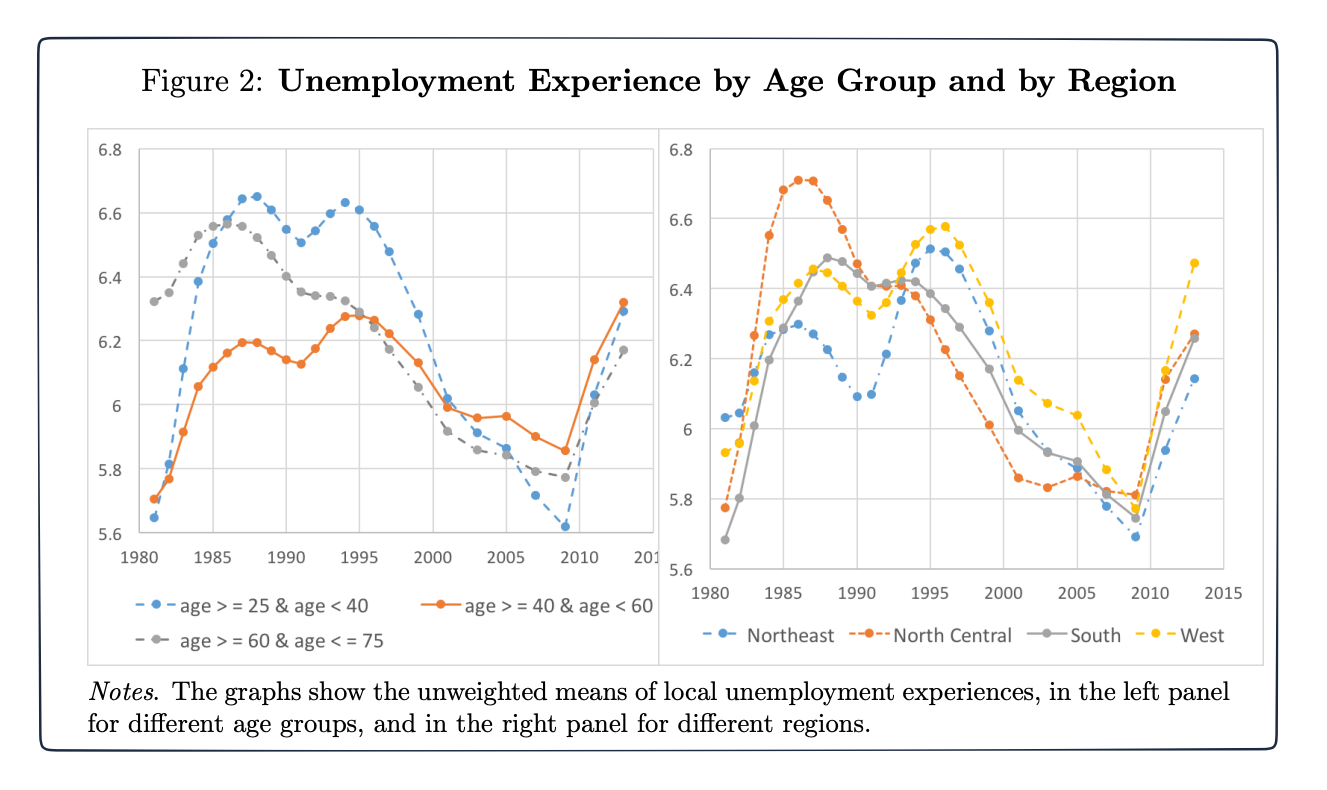
After a UC Berkeley economist began to wonder why Germans are so obsessed with inflation, she wound up understanding the psychology of money. Through her research, Ulrike Malmendier concluded that we respond to unemployment with many years of frugality. We use more discount coupons, buy lower quality items, and look for sales. Demonstrating our pessimistic outlook, we spend significantly less on food and question pricier purchases for furniture and new homes. By contrast, after living through prosperity we display more optimism and spending.
Varying by age group and geographic region, many of us experienced elevated unemployment after the 1980 and 1982 double dip recession, and the Great Recession (12/2007-6/2009):
But here’s where it gets interesting.
Our unemployment experience-based attitude makes us wealthier. Having buoyed our saving, we wind up with more.
Our Bottom Line: The Fed’s Dual Mandate
At this point, because past experience can shape future spending, we need to leap to the Fed’s dual mandate. Articulated by the Congress in 1977, the dual mandate requires that the Fed’s goals should be stable prices and high employment. Consequently, they monitor the consumption component of aggregate demand and also the residential housing section of investment. The dual mandate dictates that their policies appropriately shift aggregate demand to achieve stable prices and the employment that flows from GDP growth. As a result, it requires that they optimize their understanding of how contractionary and prosperous economic environments affect our psychology.
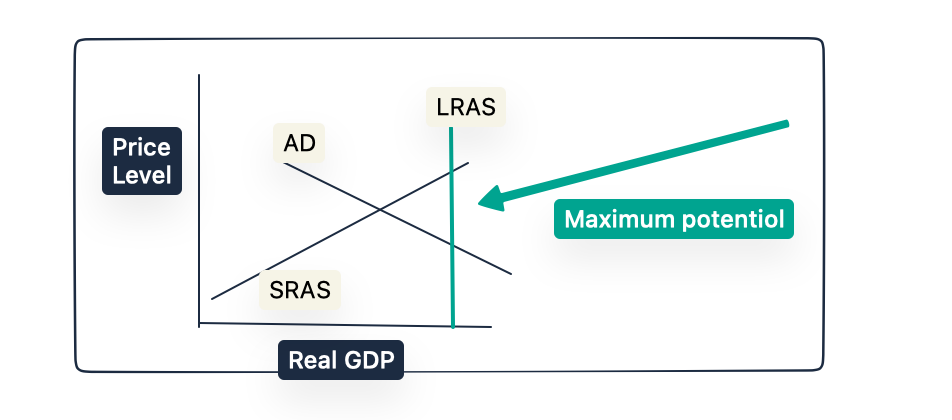
Below, we’ve graphed the state of the economy. Where AD (aggregate demand) crosses SRAS (short run aggregate supply), we have real GDP to the left of the economy’s potential (shown by long run aggregate supply). At that time, the dual mandate suggests moving closer to LRAS by shifting AD (consumption+investment+ government spending+exports minus imports):
So, if crashes and booms, inflations and natural disasters all affect our experience-based outlook and behaviors, the Fed needs to give extra weight to these behaviors when they select their policy initiatives. Or, as the Federal Reserve expressed in a 2019 paper, “Scarred Consumption,” past macro events and unemployment have predictive power.
My sources and more: Thanks to the Katy Milkman podcast Choiceology for explaining investor psychology. From there, we discovered a Federal Reserve paper on “Scarred Consumption.” And finally, we checked on the dual mandate.