![econlifelogotrademarkedwebsitelogo[1]](/wp-content/uploads/2024/05/econlifelogotrademarkedwebsitelogo1.png#100878)


Why the Cost of Coffee Is Tough to Control
March 31, 2026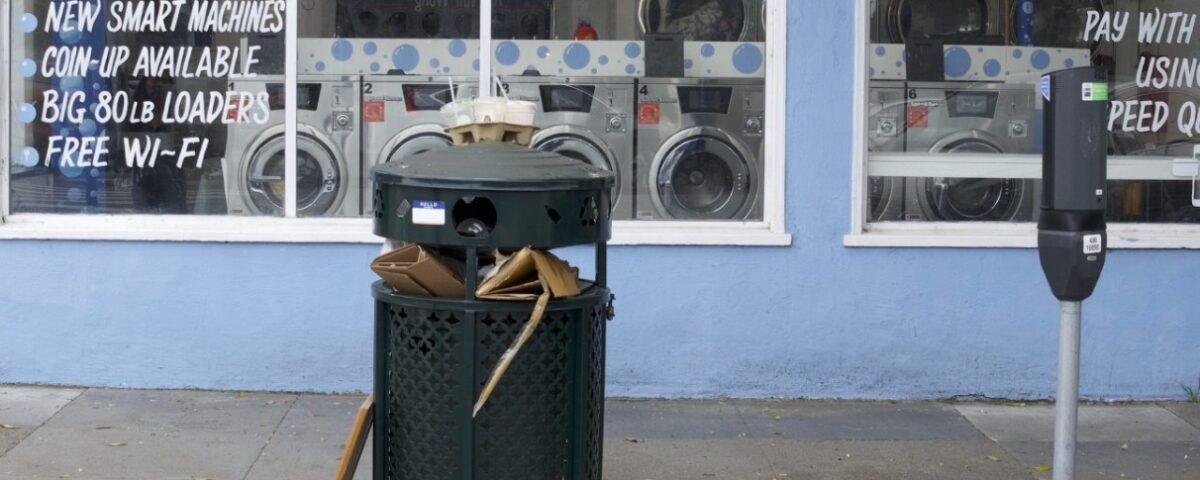
For a long time, San Francisco searched for the perfect trash can. They thought that a better bin meant cleaner streets.
In 2021 we looked at the competition and now we can report the results. But also, this year, they came up with the best bin of all.
Let’s take a look.
San Francisco’s Trash Bins
In charge of trash, San Francisco’s Public Works department hypothesized that more trash bins would achieve their goal of cleaner streets. Legend tells us (might not be true) that Walt Disney observed he needed a trash can for every 30 steps a person walked. However, after a pilot project, San Francisco realized that even with a can in sight people dropped their wrappers. They did though decide that location mattered. As a result, busier spots like bus stops, dog walking routes, transit stops, schools got more trash bins. They also knew psychology mattered (Japan displayed that certain groups did not trash the streets) as might the bin’s appearance. So they initiated a trash bin design competition.
The slim bin won:
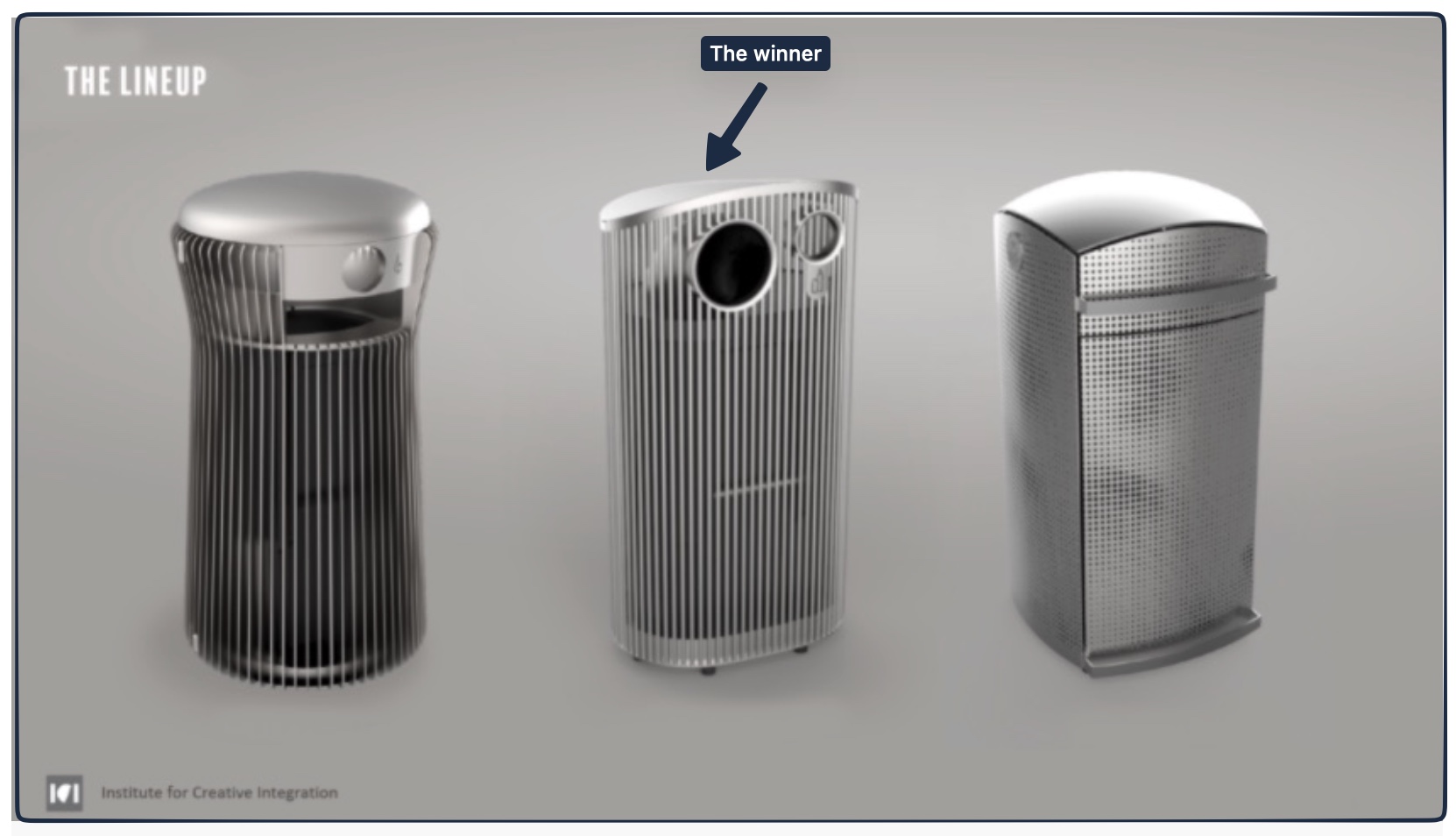 The new cans will hit the streets this summer.
The Best Bin of All
As a city committed to minimizing its trash, they recently identified a problem that has plagued us for millennia.
The pizza box is a garbage person’s nightmare because It does not easily fit into a traditional garbage can (yes, you cannot fit a square box into a round hole) and even when stuffed in, it blocks other garbage. Knowing they had a big problem, finally, someone invented a pizza garbage pail. In the North Beach neighborhood of San Francisco, where pizza proliferates, they installed these bins:
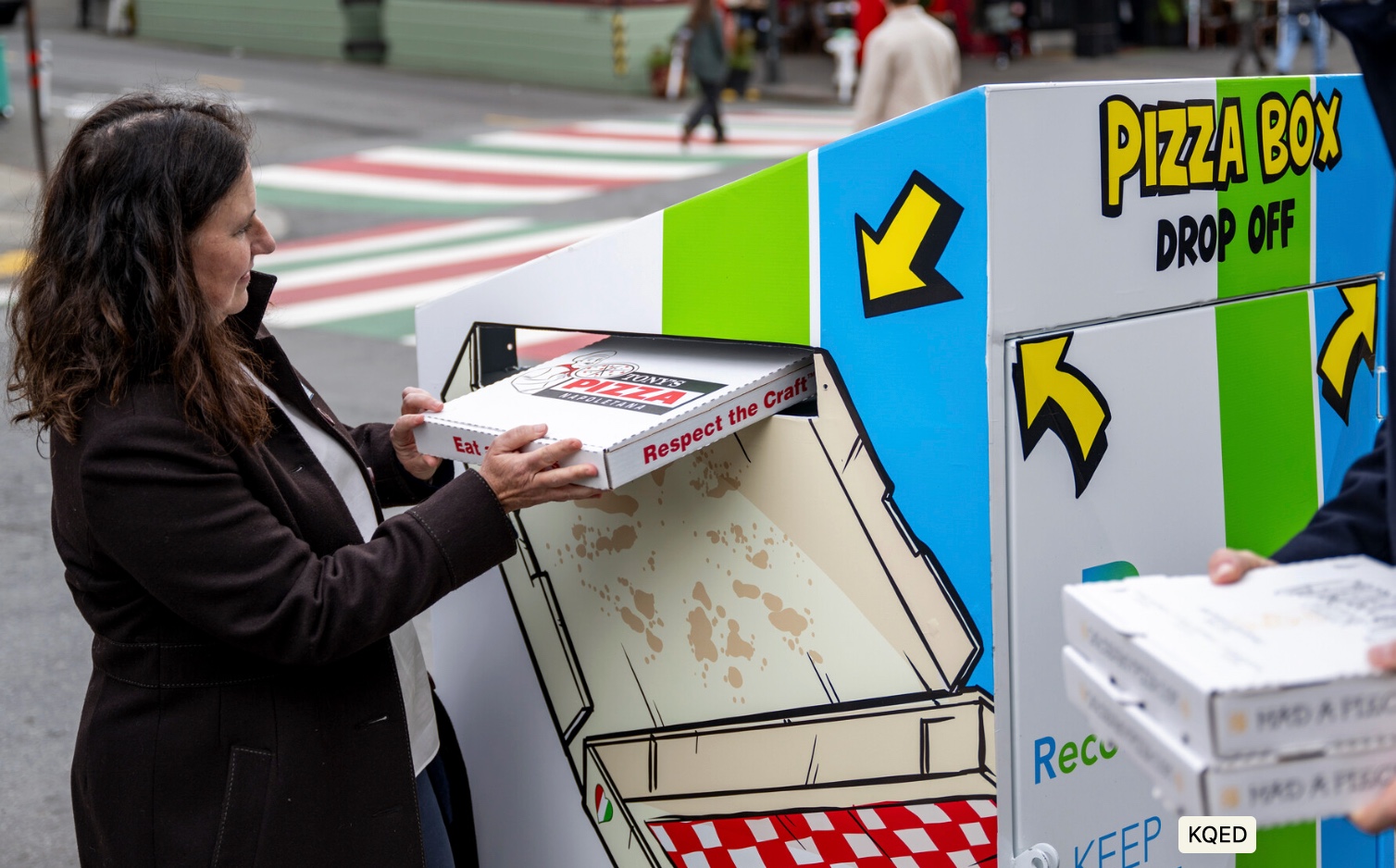
Our Bottom Line: Incentive
San Francisco’s trash can initiative illustrated why logic is not necessarily the ideal way to shape our behavior. They return us to the “Nudge” that Richard Thaler and Cass Sunstein described as “libertarian paternalism” in their classic book. Their thesis suggested that incentives could nudge us in the “right” direction through, for example, default savings plans or painted footprints leading to trash cans. However, an Atlantic article and It’s On You by Loewenstein and Chater tell us that emphasizing personal responsibility diverts us from the real problem. Instead, we should be focusing on the larger forces. One possibility is realizing that the plastics industry is responsible for plastics pollution, not our behavior.
I still would suggest that a pizza garbage pail will work.
My sources and more: Thanks to a 99% Invisible podcast for today’s facts and inspiration. From there, we found out more about San Francisco’s newest trash bins and also their receptacle for pizza. And then finally, winding up with the role of an incentive, we found an update on the value of the “nudge.”
Our featured image is from Peninsula Press.