![econlifelogotrademarkedwebsitelogo[1]](/wp-content/uploads/2024/05/econlifelogotrademarkedwebsitelogo1.png#100878)


The Cost of the Annoyances in Our Lives
April 13, 2026
What Goldilocks Would Say About the Global Economy
April 15, 2026
Contrary to most headlines, our global trade ties remain.
Let’s take a look.
6 Facts About Globalization
According to a 2026 DHL/NYU Stern School report, a slew of metrics displays the role of globalization.
These six facts were among their key takeaways.
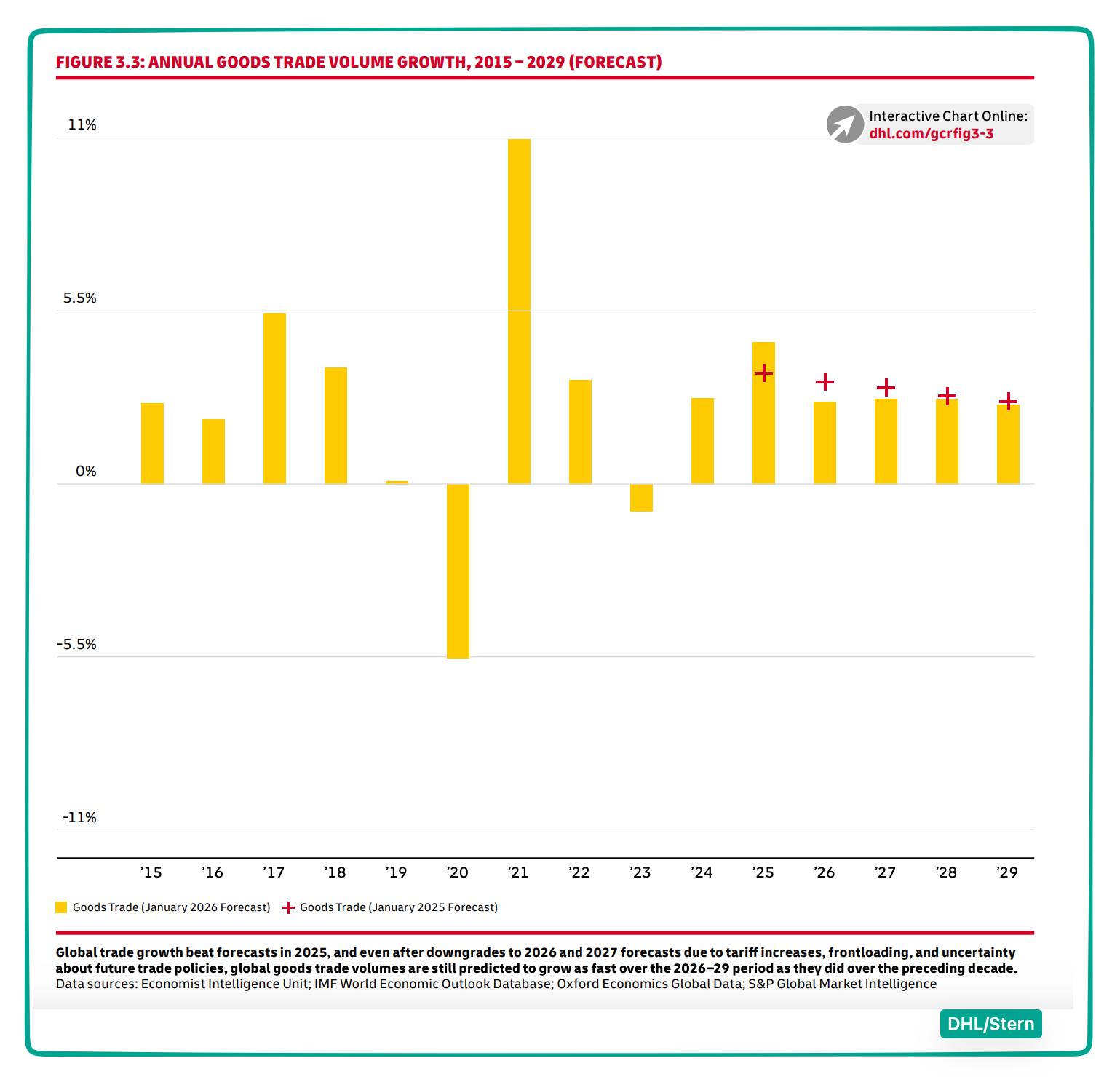
1. Trade volume continues to grow:
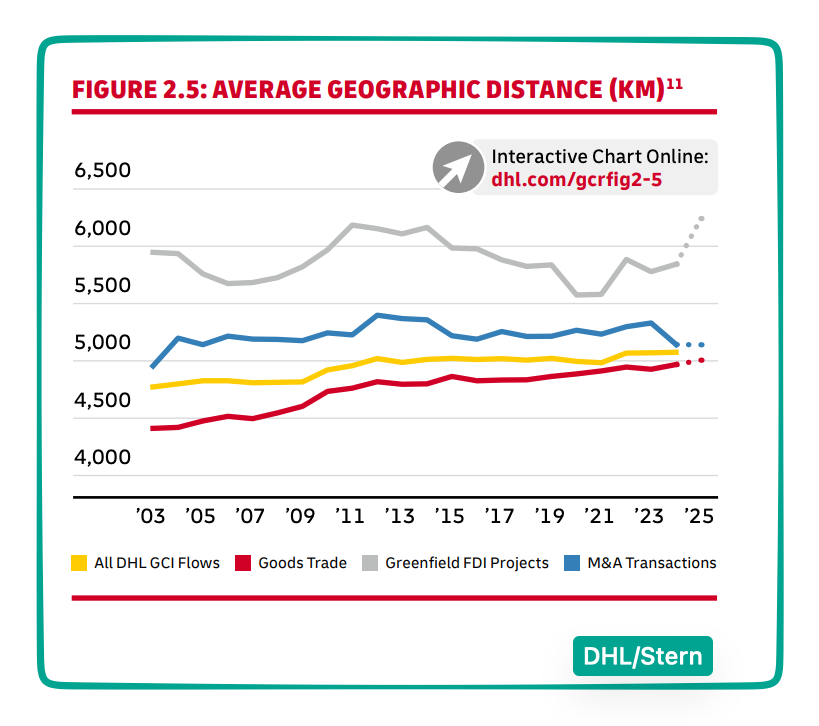
2. Instead of splitting into separate regional blocs, increasingly distant places have become connected by trade:
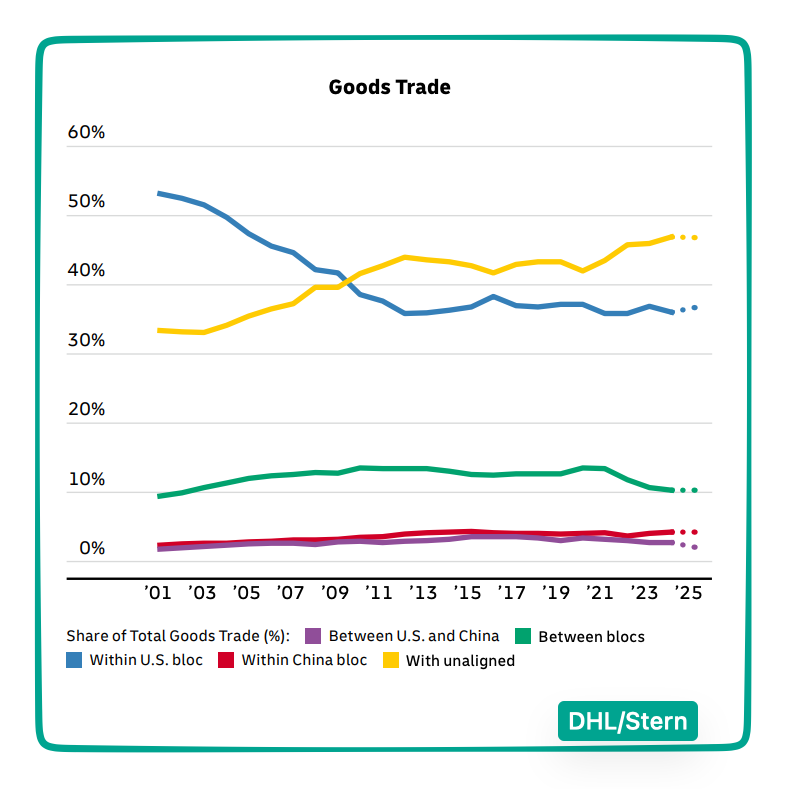
3. Because the goods trade among close allies was three times the trade among geopolitical rivals, the report concluded that friendly nations tend to trade with each other:
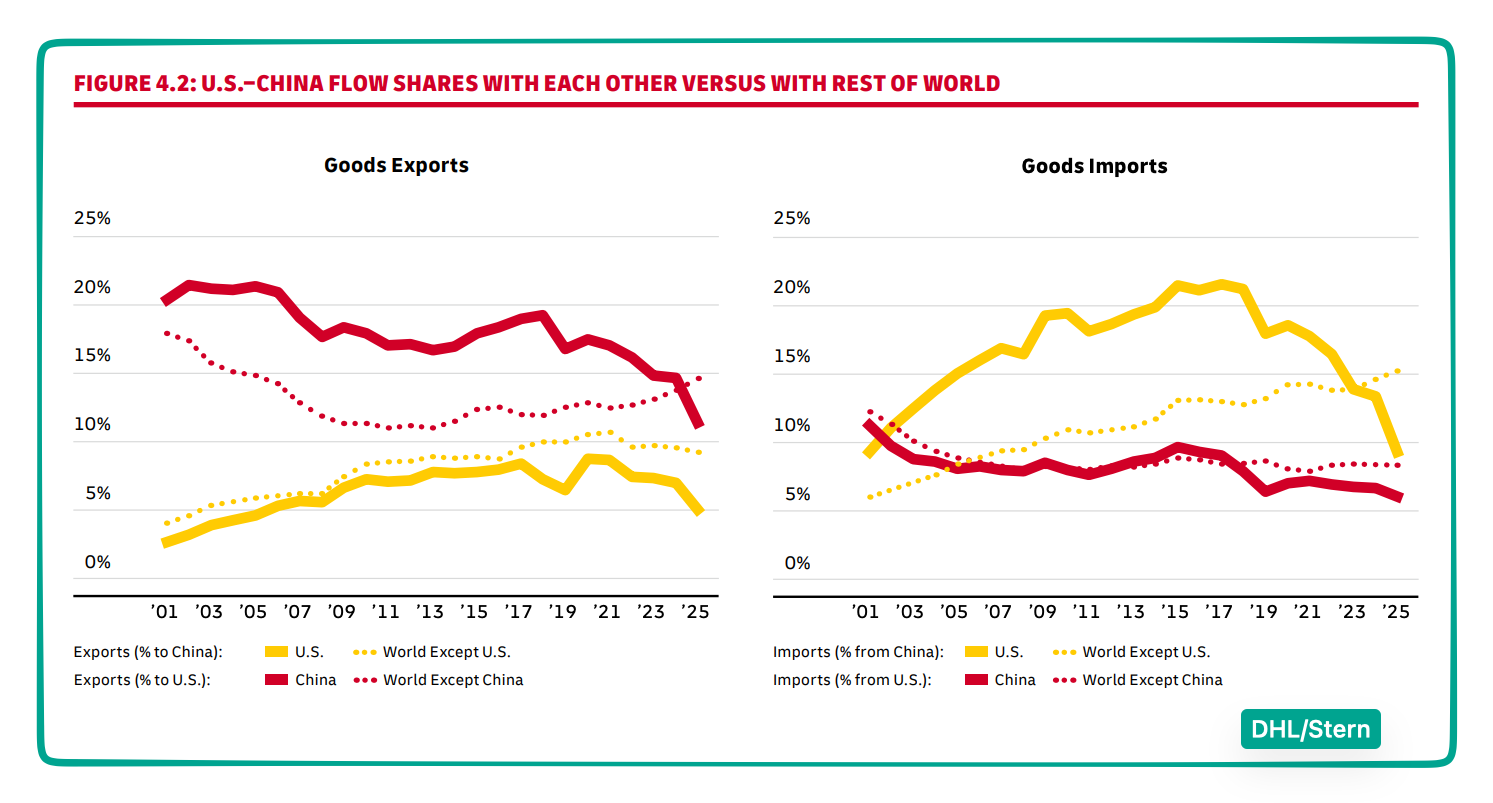
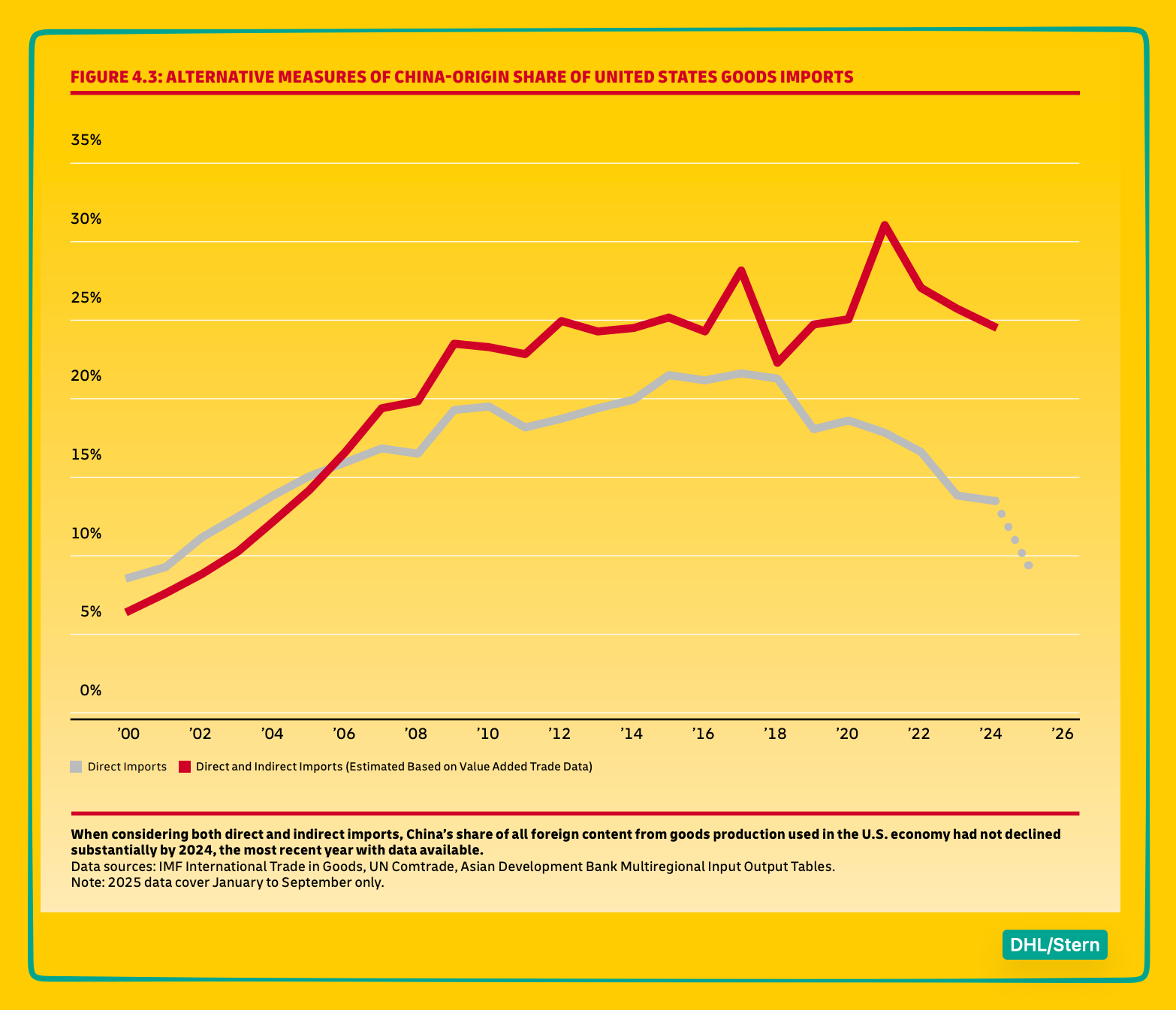
4. As for the U.S. and China, with each other’s share of exports and imports shrinking, the two are decoupling:
5. And yet, still the U.S. and China remain connected through the intermediate goods that China produces:
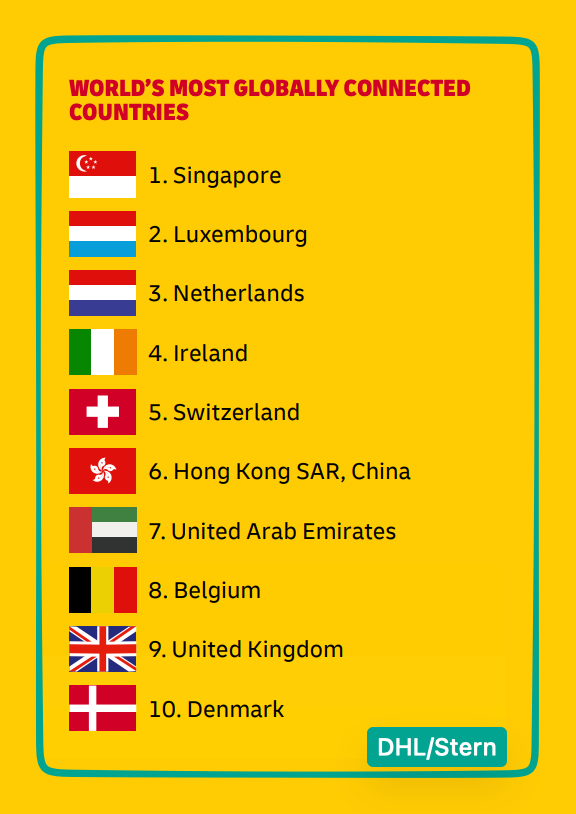
6. In a list of the world’s most globally connected countries, Singapore is #1 while the U.S. is #39.
These are the top 10:
Our Bottom Line: Domestic Trade Flows
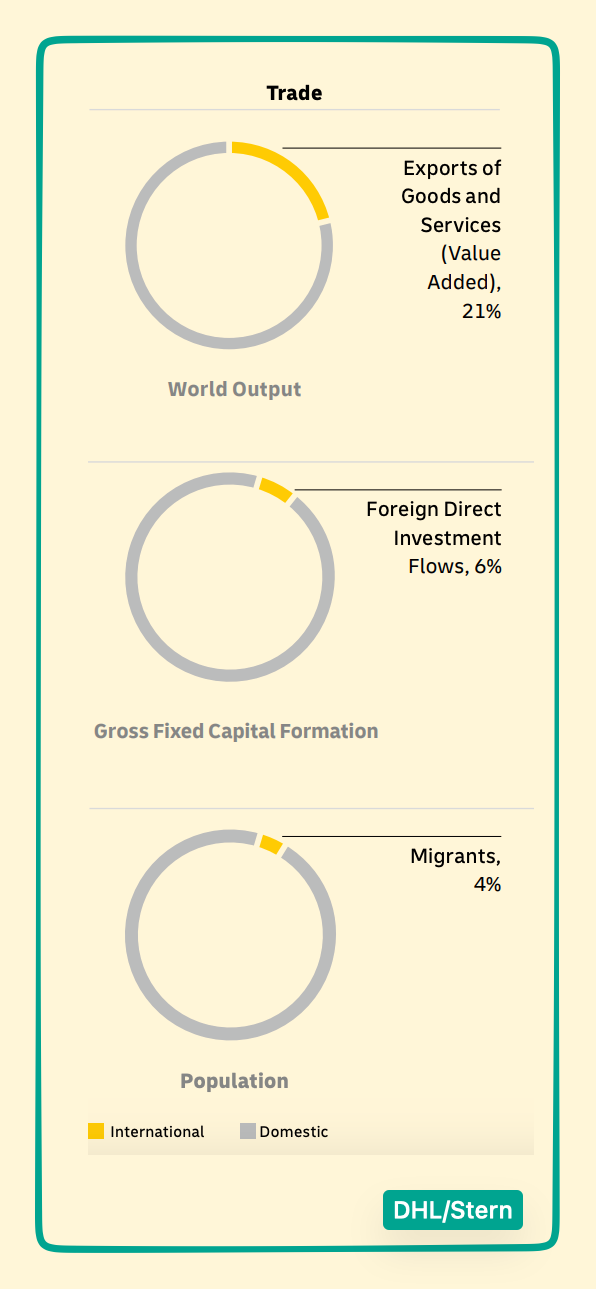
We have to temper all we just said by showing that most flows are domestic. While globalization is a part of our trade environment, we should not overestimate its presence.
The data demonstrate that domestic flows dominate economic activity:
My sources and more: Thanks to Timothy Taylor’s Conversable Economist for alerting me to the DHL/NYU Stern School globalization report. Then, for additional perspectives that range from David Brooks to PIIE to the Bruegel Think Tank, econlife commented on globalization here, here, and here.