![econlifelogotrademarkedwebsitelogo[1]](/wp-content/uploads/2024/05/econlifelogotrademarkedwebsitelogo1.png#100878)


Our Weekly Economic News Roundup: From Ferraris to Gas Prices
March 28, 2026
Through a 2025 survey, 2000 adults told Charles Schwab that it would take a net worth of $2.3 million to be considered wealthy. Also though, when offered a variety of metrics, almost half said happiness contributed the most to their personal definition of wealth:
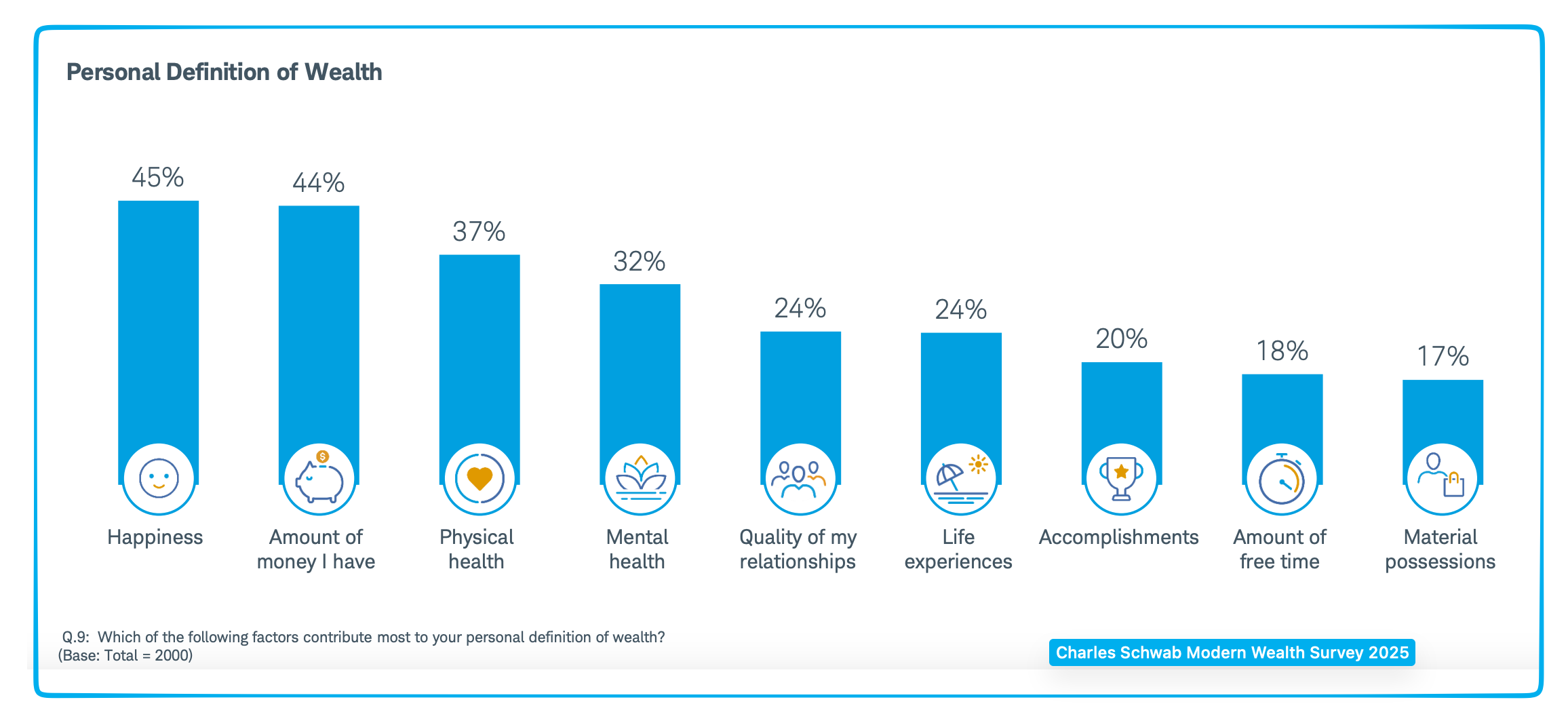
When looking at the superrich, happiness is not a yardstick.
6 Facts About the Superrich
1. How many?
Worth $100 million or more, there are approximately 74,000 superrich households in the United States.
2. What is their net worth?
Meanwhile, a net worth that exceeds $150 million to $200 million places you in the top .01%. During the past 50 years, the wealth of the top .01% grew a whopping 2077.1%.

3. Which generation is wealthiest?
By far, the Baby Boomers accumulated the most wealth. Among households worth $30 million and more (430,000 households), Baby Boomers (born 1946-1964) account for close to two-thirds.
4. What assets do the wealthy own?
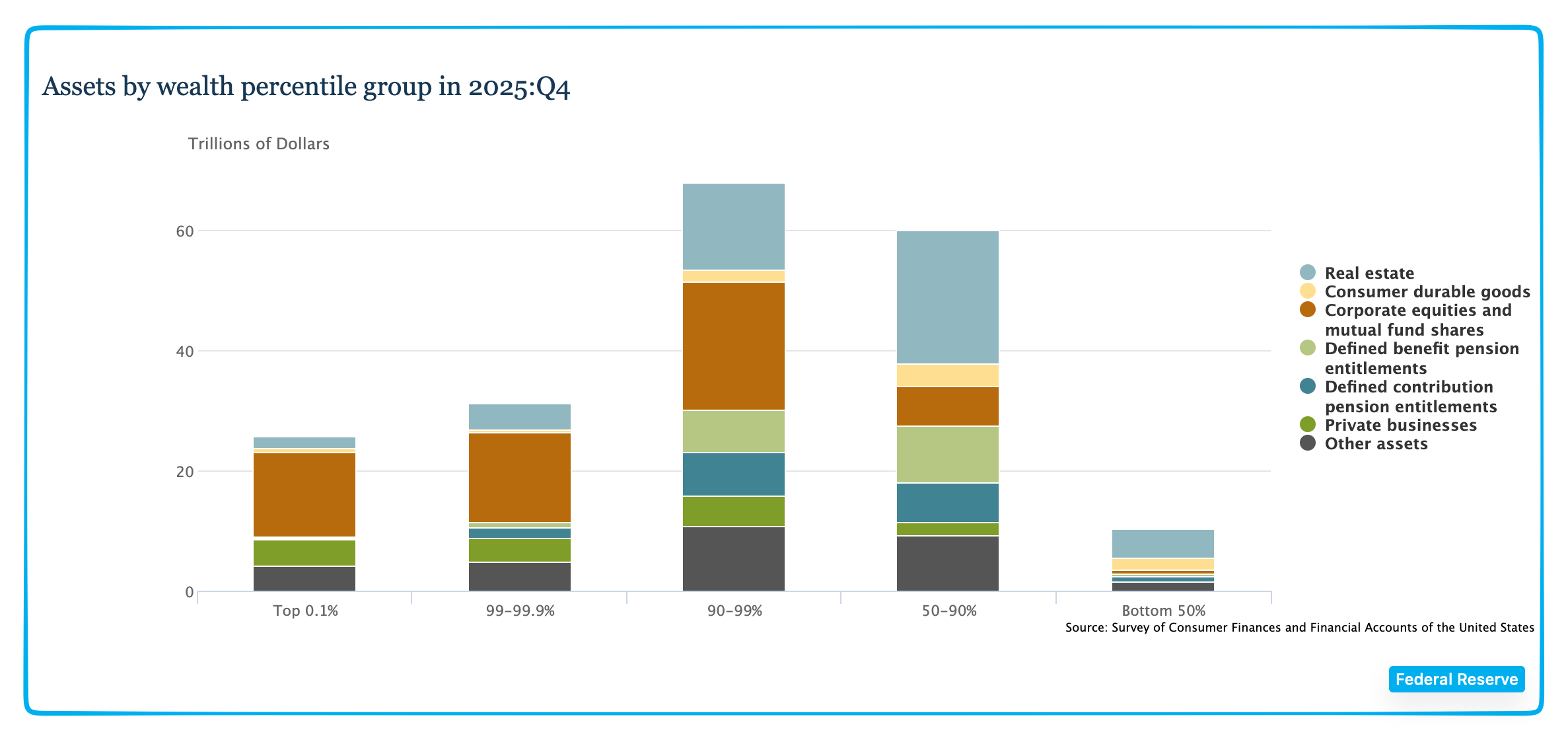
According to the Fed, private businesses, corporate equities, and mutual fund shares fueled the recent rise in the net worth of the wealthy. Correspondingly, as wealth increases, real estate becomes an increasingly smaller proportion:
5. How do the wealthy travel?
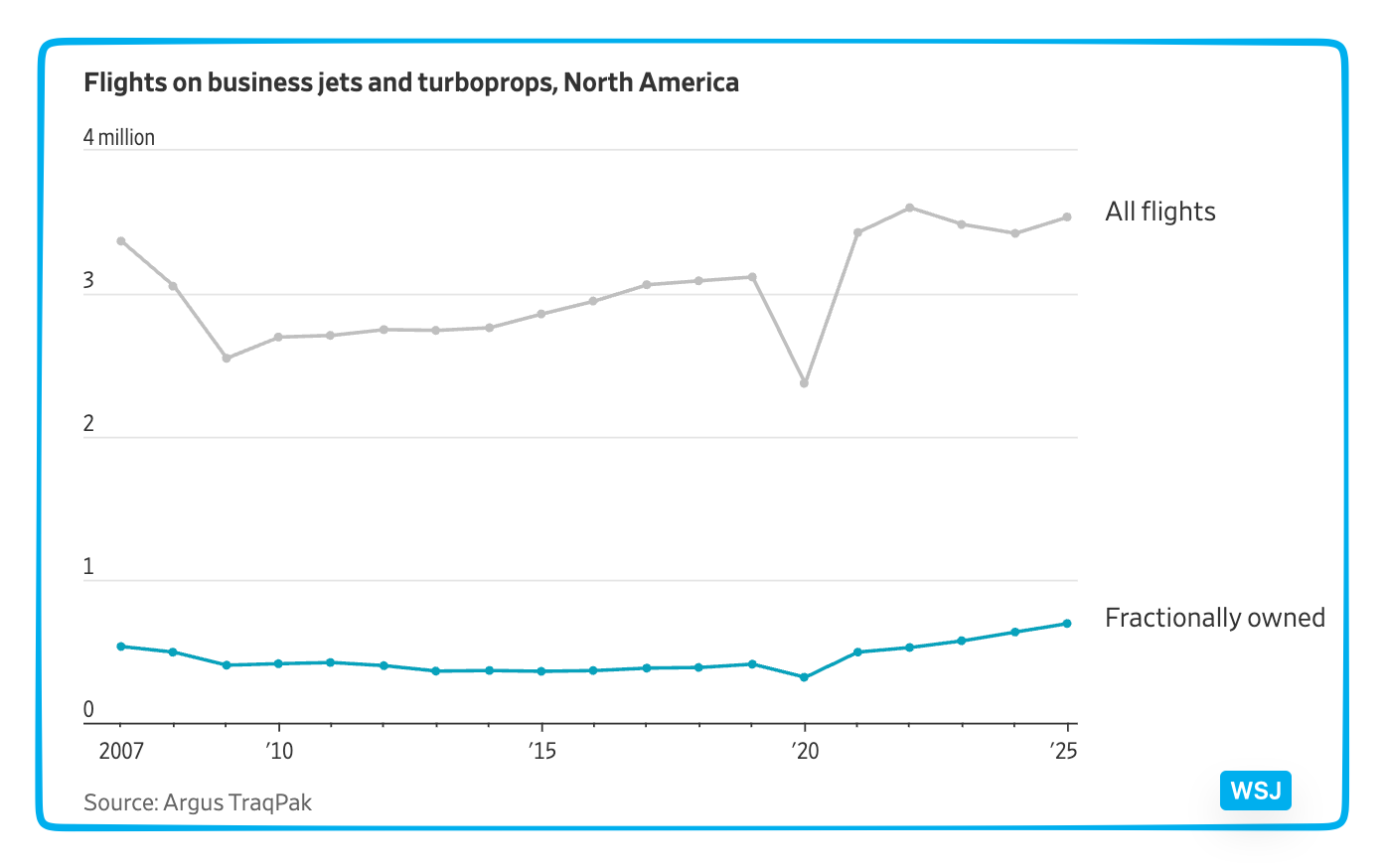
The superrich are flying on their own planes:
6. What else do the superrich buy?
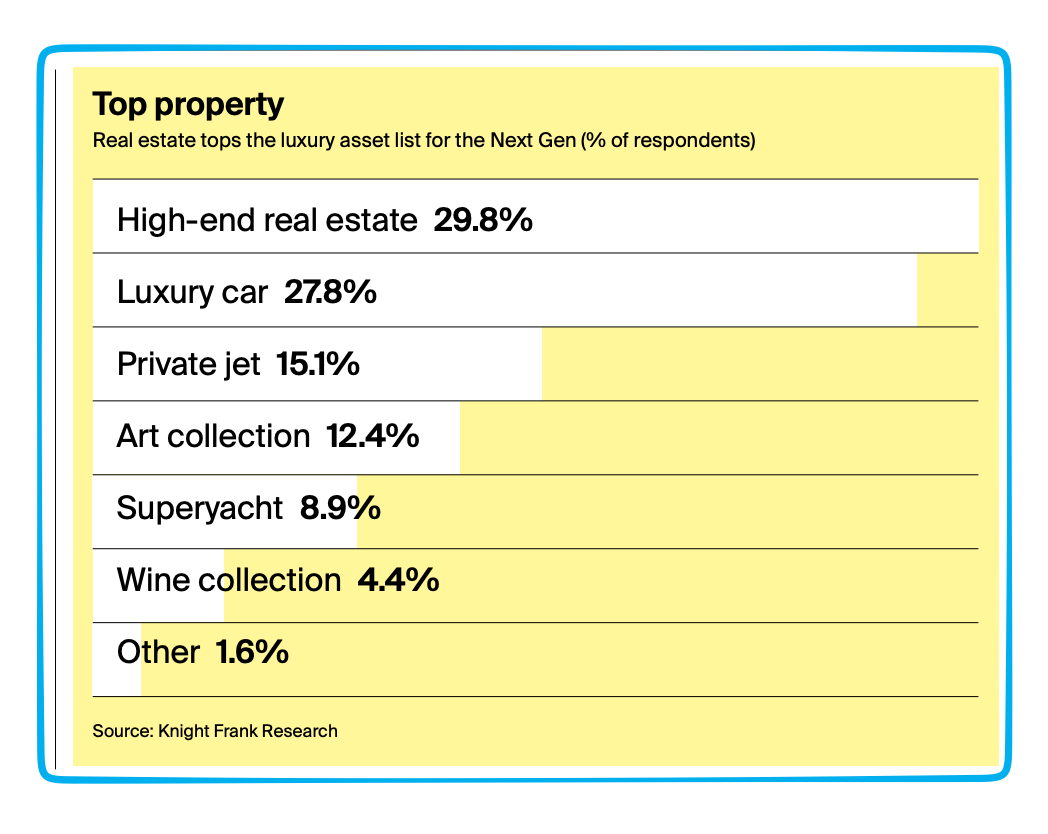
In the Knight Frank Wealth Report, respondents indicated the luxury asset they would most like to own:
Our Bottom Line: Gini Coefficients
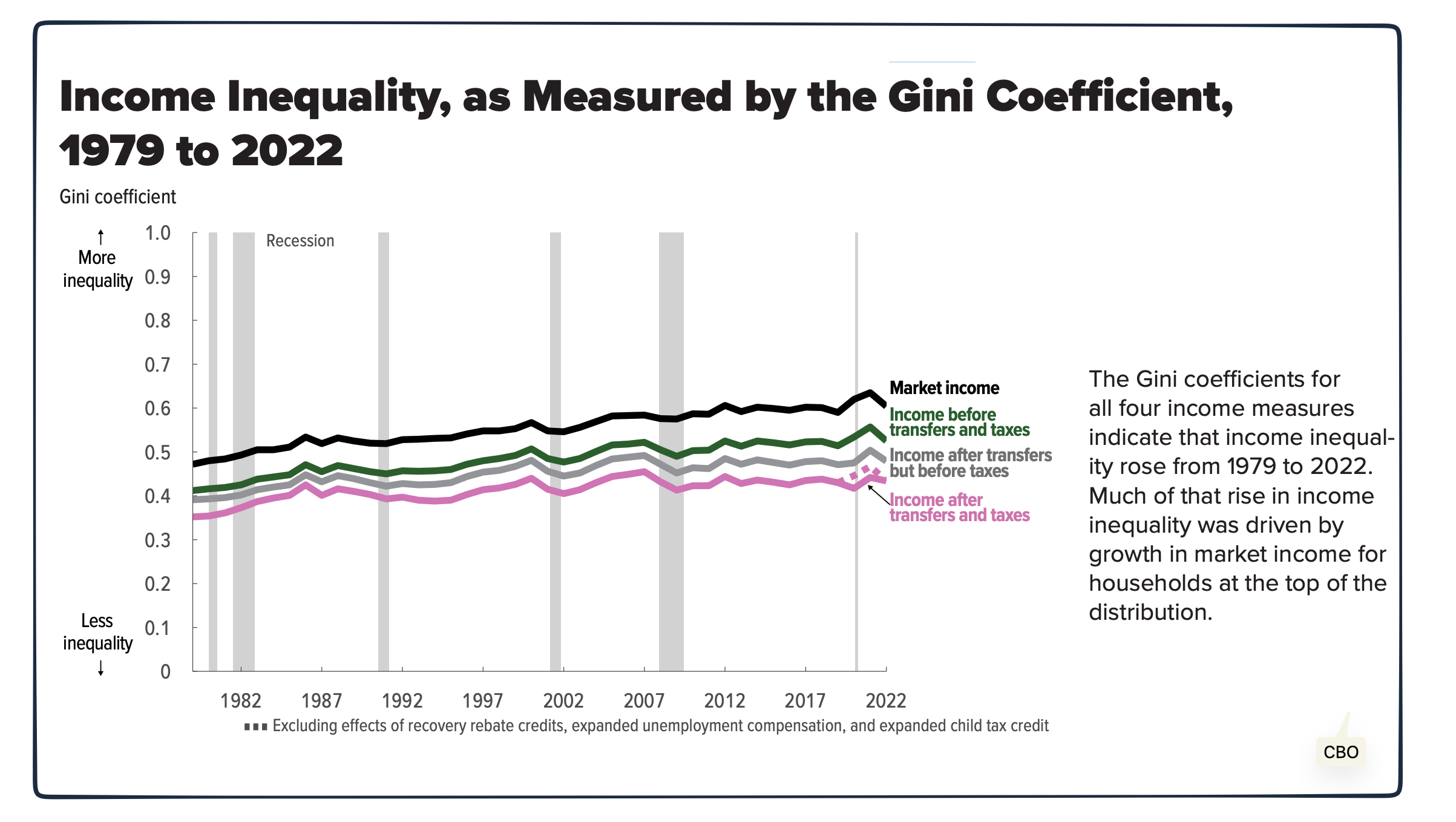
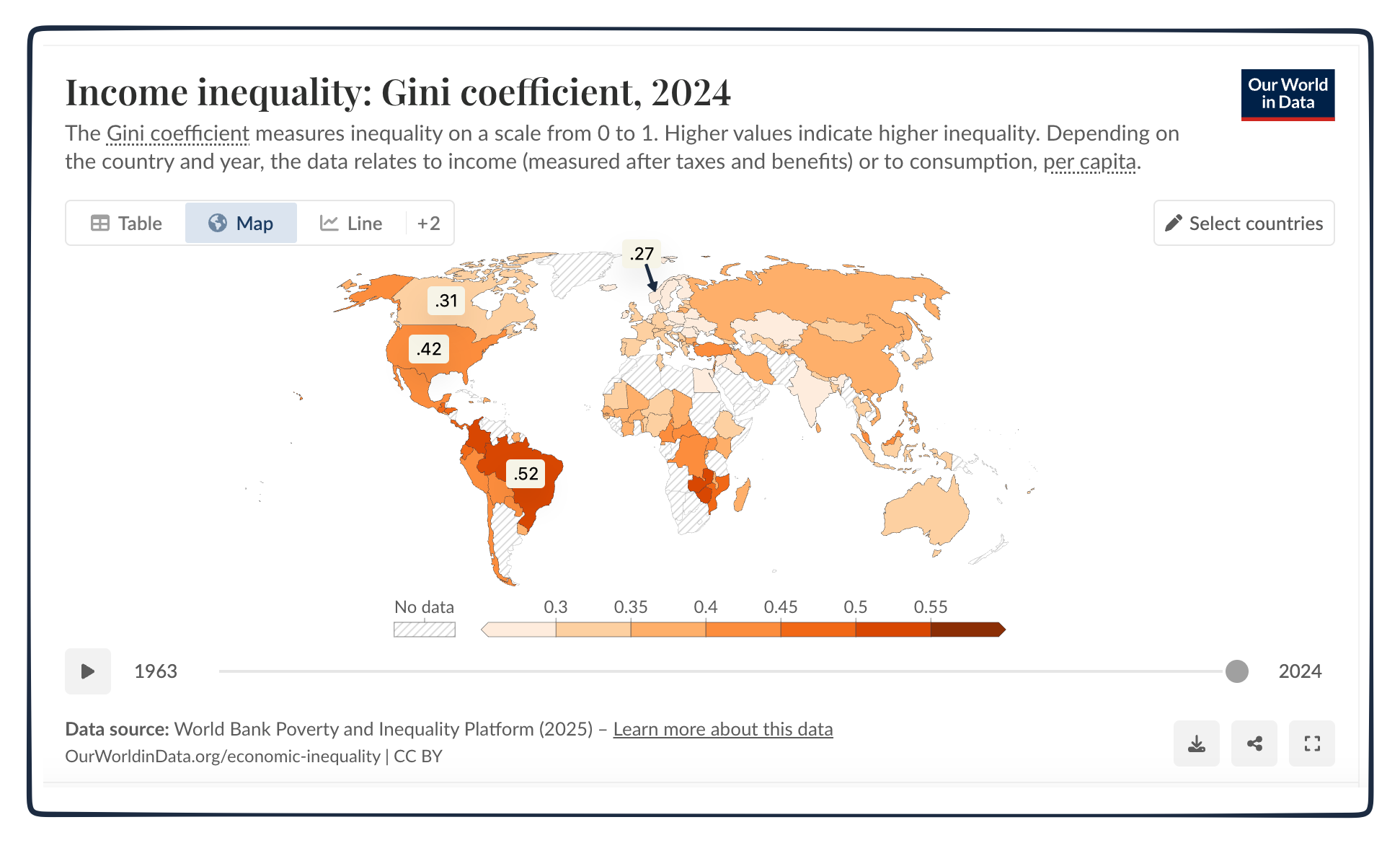
As a final thought, we can look at income distribution through the lens of a Gini Coefficient. Using a scale of 0 to 1, the Gini Index quantifies inequality in a country. The higher the number, the more unequal the distribution of income or consumption expenditures. Consequently, zero is perfect equality while 1 is complete inequality.
A rising Gini Coefficient reflects the growth of inequality fueled by the most affluent households’ growth in market income:
It was interesting to see how the U.S.’s Gini Coefficients compare with others.
In a list we might not want to top, for the G-7 countries (U.S., U.K., Italy, Japan, Canada, Germany, France), the U.S. has the highest Gini Coefficient. As for the rest of the world, Norway, Sweden, and Finland were among the nations with the lowest Gini Coefficients whereas Brazil was up there with a much higher number:
My sources and more: Thanks to WSJ for most of today’s facts. However, we found more at Realtime Inequality, the Fed’s DFA, and the St. Louis Fed. Somewhat different, Charles Schwab’s Modern Wealth Survey looked at our perceptions while McKinsey had the global perspective. And finally, the Visual Capitalist gave us access to the Knight Frank report.
Please note that we’ve copied “Our Bottom Line” from a past econlife post.