![econlifelogotrademarkedwebsitelogo[1]](/wp-content/uploads/2024/05/econlifelogotrademarkedwebsitelogo1.png#100878)


Our Weekly Economic News Roundup: From Traffic Flagging to Mail Delivery
January 3, 2026
A Toothpaste Tube Problem
January 5, 2026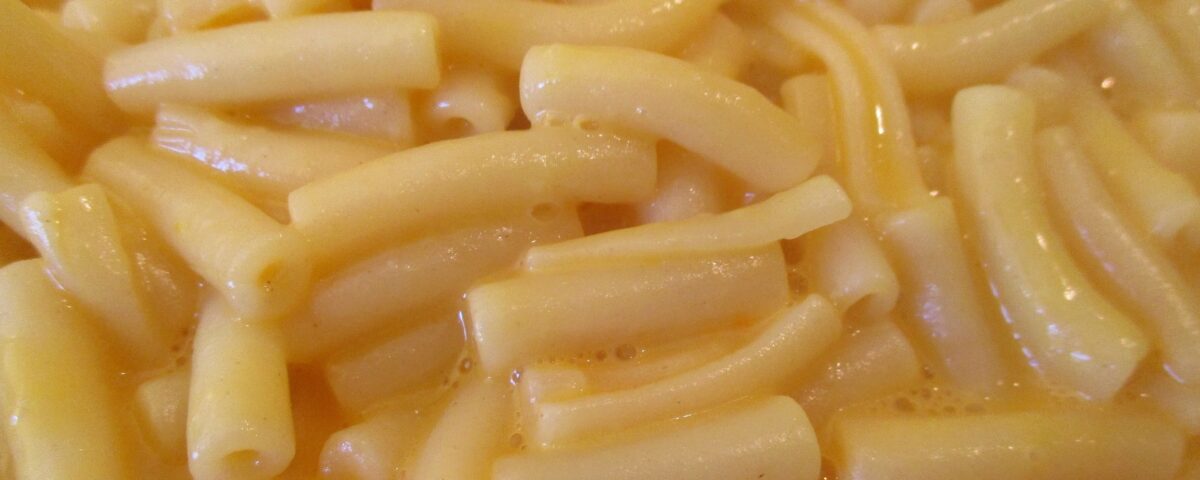
We’ve had mac-and-cheese for a long time. The boxed version though depended on some clever scientists.
Mac-and-Cheese History
During 1802, Thomas Jefferson served mac-and-cheese at a White House dinner. While Jefferson invented a press to make the macaroni, his enslaved chef, James Hemings, brought the recipe to the United States from France.
But, for you and me to get the dish, first someone had to figure out how to preserve the cheese. Fast forwarding through more than a century of U.S. cheese history, we got a solution from two Swiss scientists. By killing the bacteria that spoiled the cheese, they were able to extend the life of Emmenthaler. However, it’s James L. Kraft that we can thank for the first processed cheese patent (1916) that made Cheez Whiz and Velveeta a reality. And only then could someone develop the powdered cheese that just needed butter and milk to be reconstituted. The result, in 1937, was a box of Kraft Mac-and-Cheese that was convenient and affordable. For 19 cents, consumers got a meal that served 4 in 9 minutes. Being processed was also a plus because of the added vitamins and minerals.
An early ad for Kraft Macaroni and Cheese:

Now though, with innovation having stalled, Kraft has a mac-and-cheese problem.
Mac-and-Cheese Competition
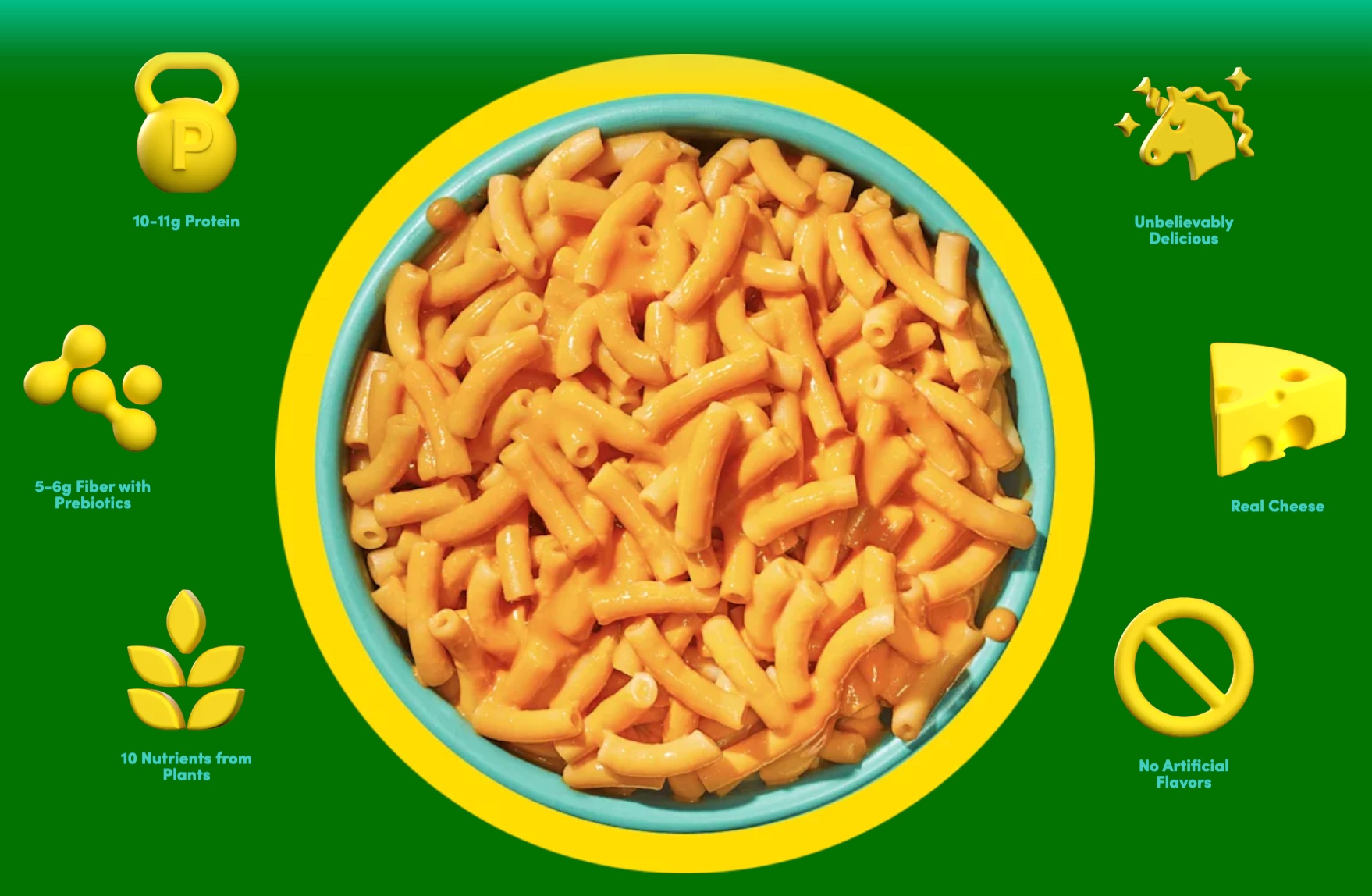
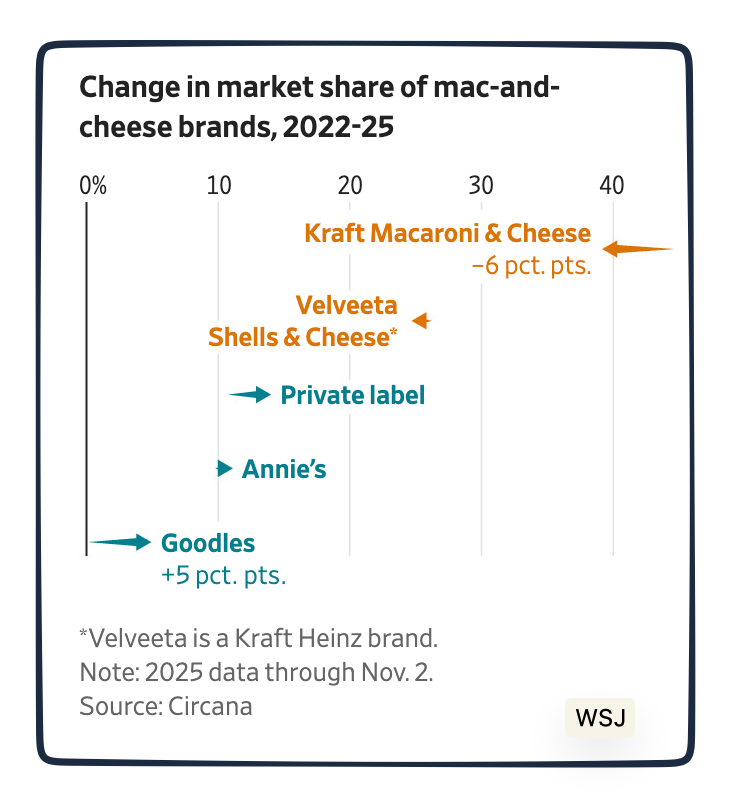
We select a box of Kraft Mac-and-Cheese for its creaminess, cheesiness, pasta texture, and price. More recently, protein content counted as did eliminating artificial ingredients. Then though, with all of this relatively stable, upstarts with something new have been able to challenge Kraft’s dominance. After Goodles entered the market in 2022, Kraft’s market share dipped to 39% from 45%. A premium product, Goodles touted high protein and targeted adults.
From Goodles’s website, we can see how they differentiate themselves from Kraft:
Our Bottom Line: Oligopoly
It all sounds like typical oligopoly behavior.
Along a competitive market continuum, as we move to the right, corporations become more powerful:
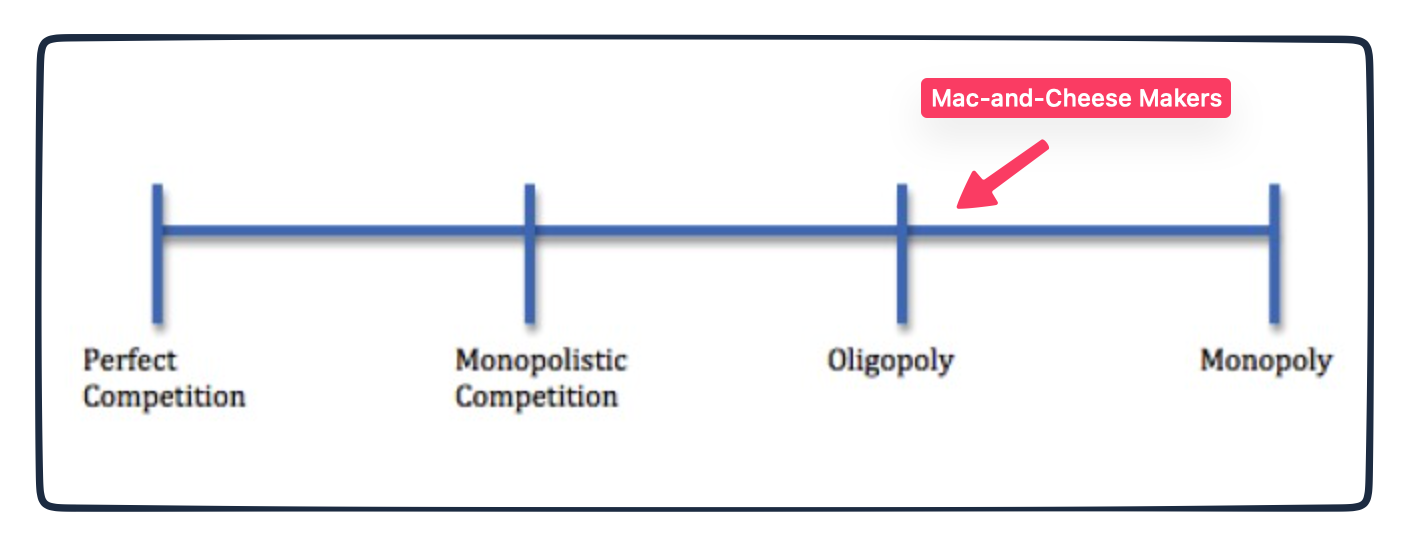
With just three or four but usually no more than eight companies dominating market share, oligopolies are very large firms that enjoy economies of scale, pricing power, and product differentiation. So yes, like Coke says it is different from Pepsi, and Lays tries for the crunchier chip, Kraft has distinguished its mac-and-cheese since 1937.
Now though, by emphasizing nutrition and older consumers, others have diminished Kraft’s slice of the market:
My sources and more: Most of today’s facts came from this WSJ article. From there Smithsonian Magazine here and here had the history.