![econlifelogotrademarkedwebsitelogo[1]](/wp-content/uploads/2024/05/econlifelogotrademarkedwebsitelogo1.png#100878)


What We Need To Know About Central Bank Digital Currencies (CBCDs)
December 9, 2025
Just Ask Jenna Looks At Gym Memberships
December 11, 2025
Christmas trees tell us that tariffs have arrived.
Christmas Tree Supply
Artificial
Almost 90 percent of our Christmas decor comes from China. Recalling the Trump tariffs that were as high as 145 percent but then careened up and down, we can expect Christmas to be pricier. It all depends on when an item was shipped, by whom, and on whether retailers pass along the expense to us. According to the American Christmas Tree Association tariffs could already have nudged artificial tree prices up by 20 percent. Even worse, holiday lighting could reflect a 63% tariff that was added to an existing 33 percent levy.
Real
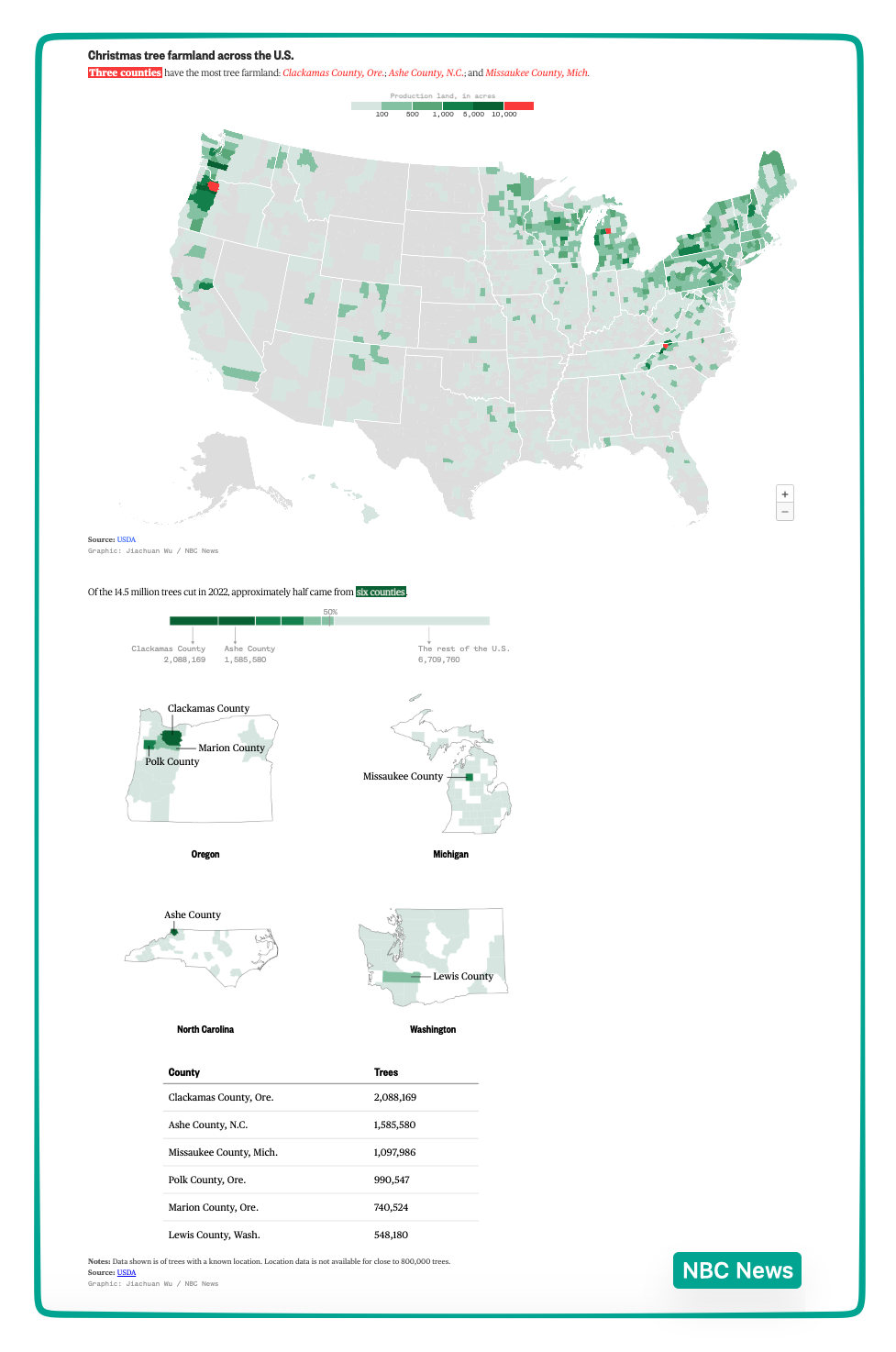
Because it takes 7 to 10 years to grow a Christmas tree, planning ahead is tough. The Hustle tells us that prices plunged during the early 2000’s because farmers planted too many trees. Then, in 2008, they did not plant enough. Today’s 6 to 8 foot trees could have been planted almost a decade ago, most likely in Oregon or perhaps Michigan and North Carolina. Meanwhile, we have close to 15,000 Christmas tree farms:
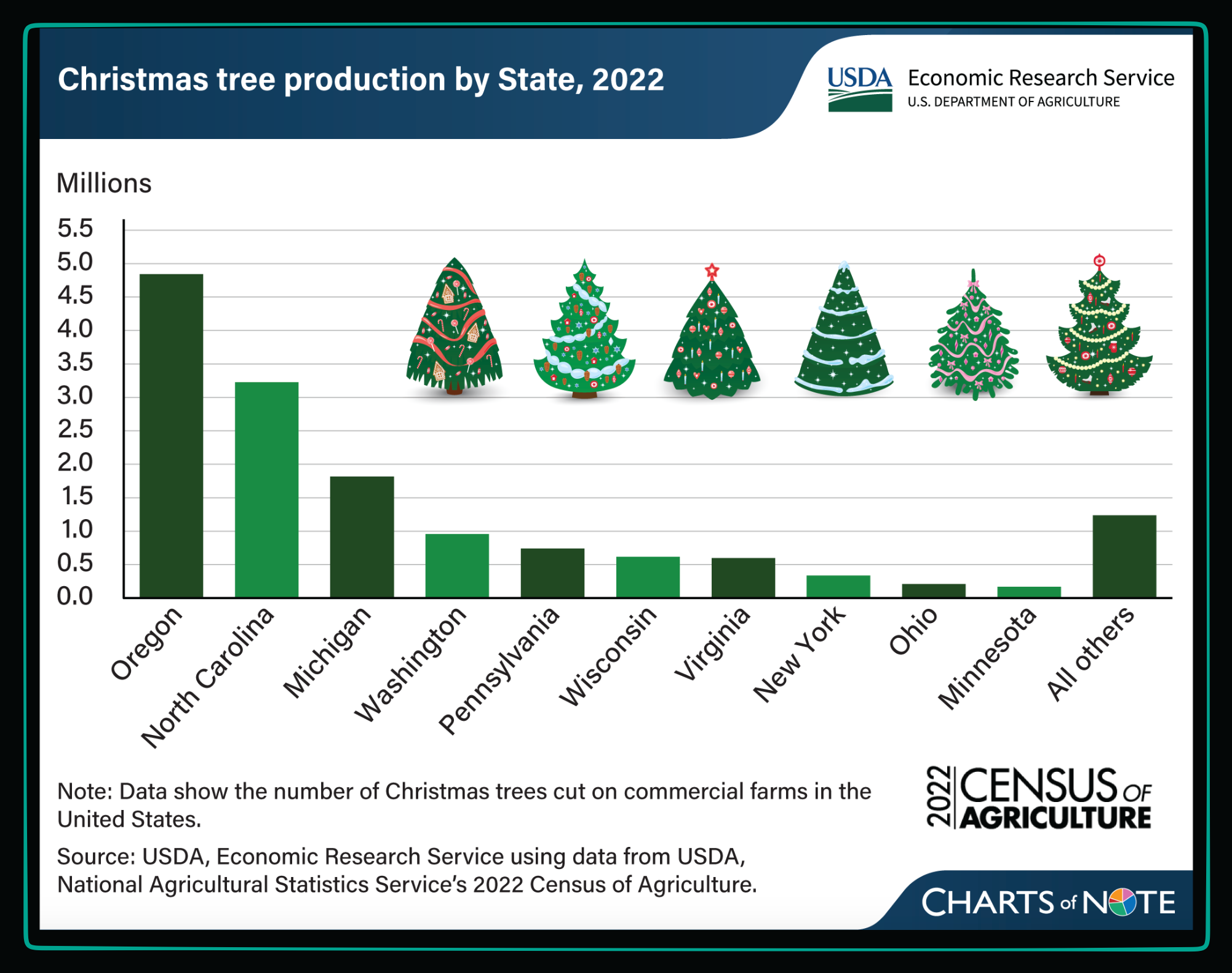
To the two big growers, we can add the trees grown in eight other states:
Our Bottom Line: A Determinant of Demand
This year, demand could increase for real Christmas trees. The reasons relate to classic demand and supply.
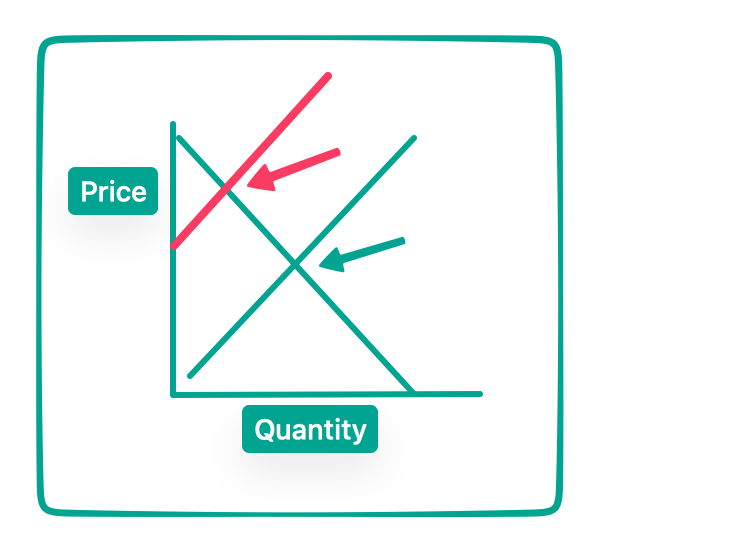
If price is up (red arrow pointing toward equilibrium) for artificial trees because of tariffs, then the quantity we demand declines:
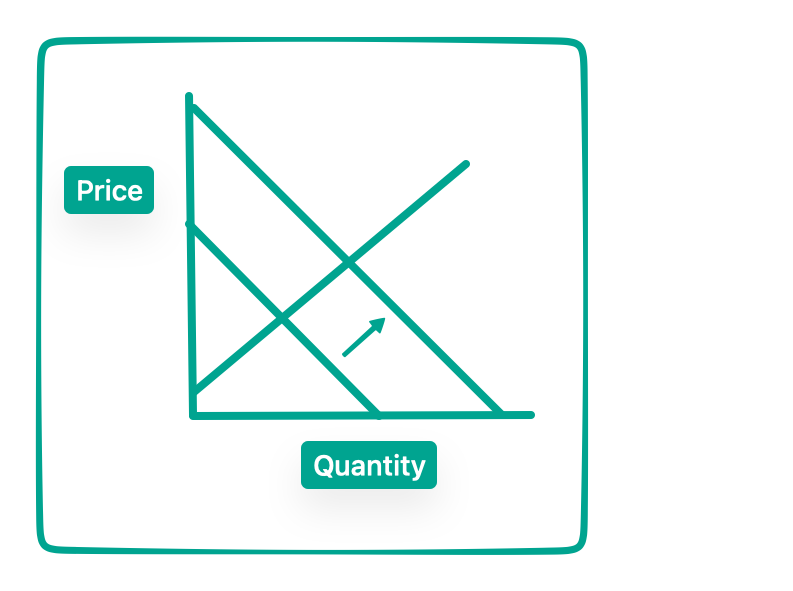
Buying fewer artificial trees, we will most likely boost our demand for real home-grown trees:
My sources and more: While I am not sure of their statistical rigor, still, the American Christmas Tree Association presented the overall tariff situation accurately. From there, my Hustle email had more of the facts. Please note that the 2022 data was the most recent I could find.