![econlifelogotrademarkedwebsitelogo[1]](/wp-content/uploads/2024/05/econlifelogotrademarkedwebsitelogo1.png#100878)


The AI Billionaires You’ve Never Heard Of
September 17, 2026
At 2:00 on Wednesday (September 9), the Federal Reserve told us about its 25 basis point (.25%) rate rise.
It takes us back to a dual mandate whose path ripples to households, businesses, and governments.
Rate history
Initially, a rate increase targets federal funds. As a bank-to-bank loan benchmark, the fed funds rate then impacts what financial institutions charge us. With the recent Fed hike taking us to a 4 percent “upper bound.” It could reflect a return journey to 2023 5+ percent rates:
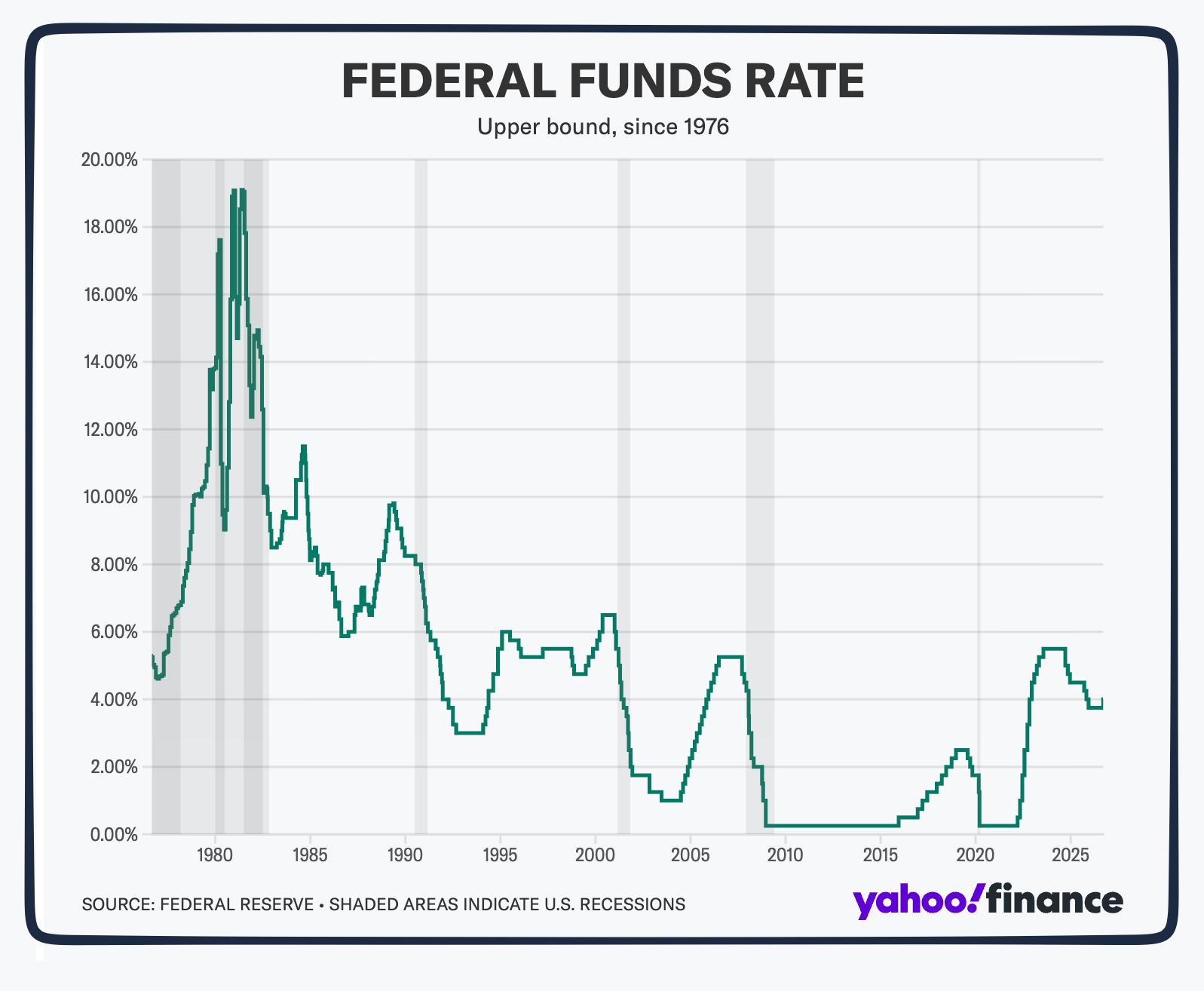
The Federal Reserve Rate Hike
Following the hike’s path, we can see some of the ways it affects consumers, businesses, and government.
Consumers
Credit card debt: Credit card debt could immediately reflect the rate rise. On an average $6,600 monthly balance, we could owe an extra $1.38 a month in interest.
Mortgage rates: Tied to a 10-year Treasury rate that had already priced in the rate increase, mortgage rates did not respond directly to the Fed’s move.
Other debt: Because auto loans echo longer-term rates, they will minimally reflect the rate change. However, consumers will feel the more expensive short-term lines of credit that affect home equity loans.
Savings Accounts: Whether our savings will enjoy more of a return depends on the bank. WSJ tells us that online and high-yield account interest could be repriced. However, it is less likely that larger banks will pass along higher rates.
Businesses
New home construction: Here, it depends on whether the builder accesses loans through long- or short- term rates. The larger enterprises depend on the corporate bond market’s longer-term rates. By contrast, smaller contractors use short-term loans that are more rate sensitive.
Governments
Reflecting the role of expectations, the rates of the bonds that states and cities sell us to raise money have already gone up.
Our Bottom Line: Dual Mandate History
The Fed had an especially tough time with monetary policy during the 1970s. As an era of stagflation, growth was low and inflation high. For the Fed, the policy solutions conflicted. Solving one made the other worse. Hoping to clarify the Fed’s mission, in the Federal Reserve Reform Act of 1977, the Congress stated three basic goals:
- Stable prices
- High employment
- Moderate long-term interest rates
Since then, called the dual mandate, the Fed has explicitly sought to accomplish the prices and employment goals of the 1977 Act. The Act has reform in its title because, when the Fed was first created in 1913, its mission was an elastic currency.
Now, the Fed has let us know that it is focusing on the stable prices half of its dual mandate because the 12-month inflation rate of 3+ percent exceeds its 2 percent target. Looking at our graph, you can see the historically high rates it needed to conquer the inflation half of 1970s stagflation.
My sources and more: WSJ had a good summary of the rate hike ripple. Then, I went straight to the Fed for some dual mandate history.