![econlifelogotrademarkedwebsitelogo[1]](/wp-content/uploads/2024/05/econlifelogotrademarkedwebsitelogo1.png#100878)


Why We Need a New Laundry Detergent
June 25, 2026
June 2026 Friday’s e-links: A Unique U.S. History
June 26, 2026
Long ago, the Danish philosopher Soren Kierkegaard (1813-1855) explained that we can only understand life by looking backwards. The problem though, is that we live it forwards.
Or, as he expressed in his journal:
“It is really true what philosophy tells us, that life must be understood backwards. But with this, one forgets the second proposition, that its must be lived forwards. A proposition which, the more it is subjected to careful thought, the more it ends up concluding precisely that life at any given moment cannot really ever be fully understood; exactly because there is no single moment where time stops completely in order for me to take position (to do this): going backwards.”
Remembering Kierkegaard’s wisdom, we can consider a recent paper from economists Christine and David Romer.
Jerome Powell’s Fed
Since February 2018, when Jerome Powell began his tenure, the world experienced a pandemic, high unemployment, and elevated inflation. He also has had to protect his institution from attempts to erode its independence.
Looking back at Jerome Powell’s Fed in a recent paper, economists Christine and David Romer focus on “six distinct policy episodes:”
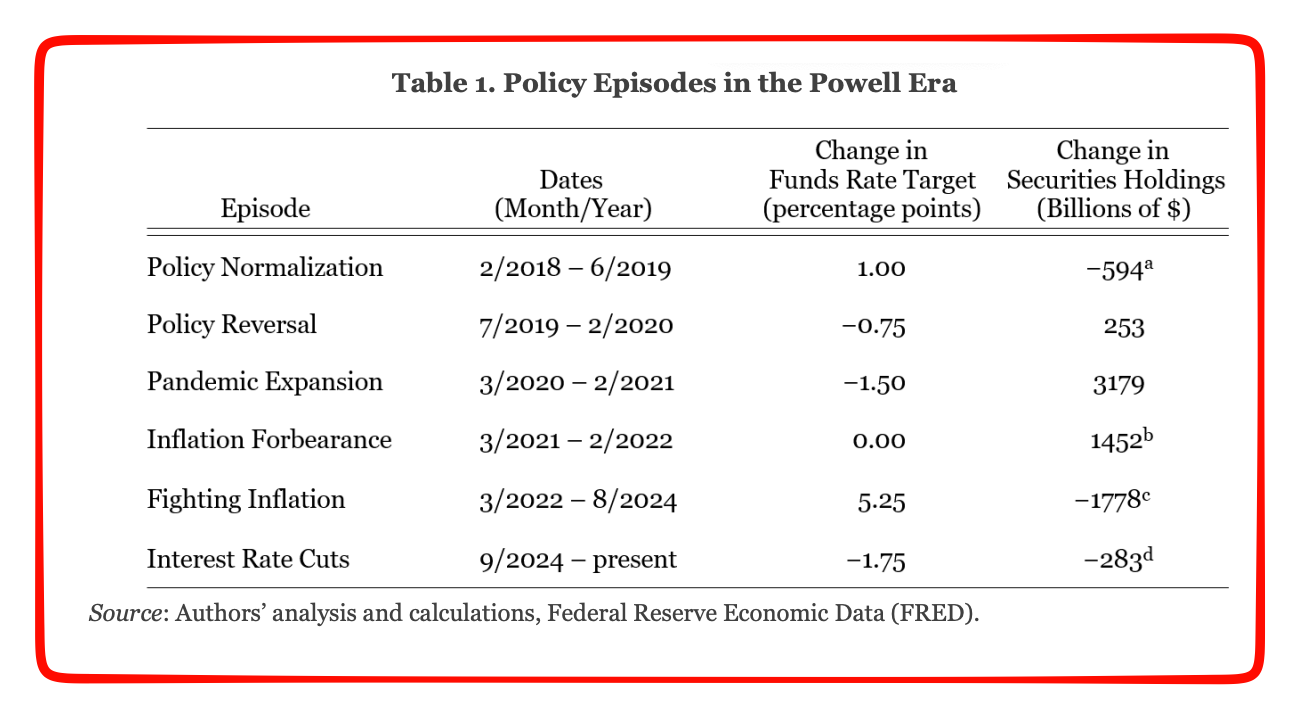
Their goal? To consider the “motivation and reasonableness” of the policies. Citing the circumstances and the results, for each of the six episodes, they conclude that the Fed’s policies were initially “sound” and “sensible” but then they became more questionable. They also add that Powell and the Fed were appropriately resolved and aggressively protective of their independence.
Citing lessons learned, they suggest that Incremental action could be ineffectual. Instead, the Fed should act more quickly and forthrightly when conditions warrant a strong response. Examples include an inadequate response to inflation and by contrast, an effective answer to the pandemic.
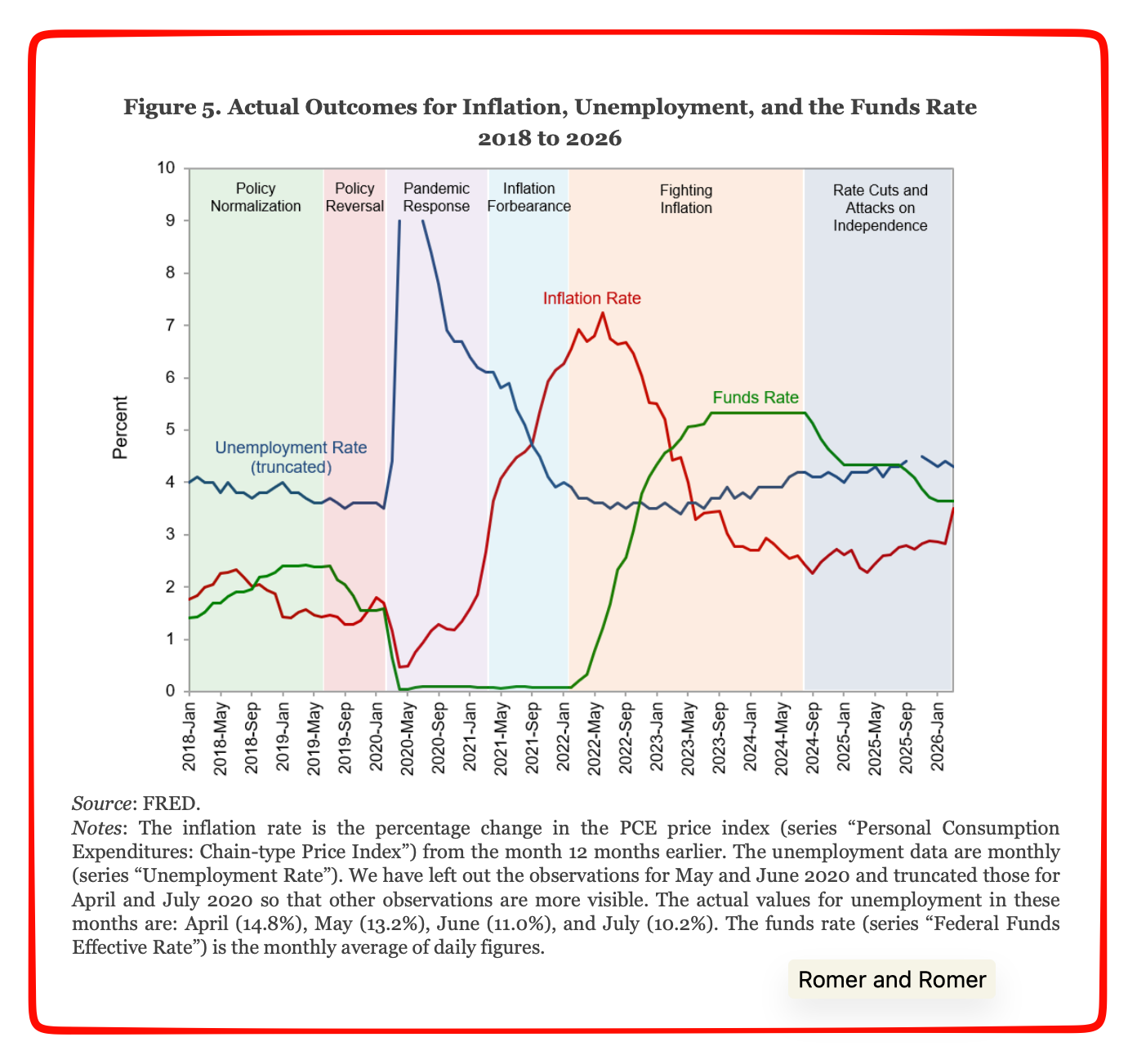
The outcomes shown below can serve as our criteria for their policy decisions: They take us to a consistently higher than targeted inflation rate and employment that winds up in ideal territory:
Our Bottom Line: The Fed’s Dual Mandate
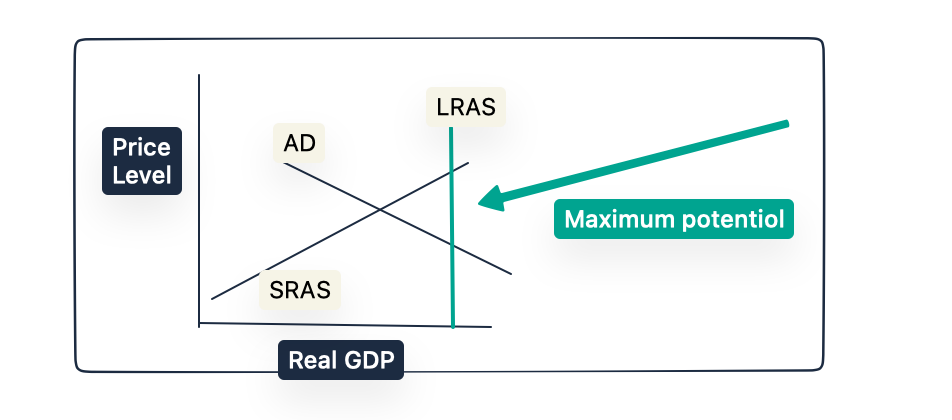
Articulated by the Congress in 1977, the dual mandate requires that the Fed’s goals should be stable prices and high employment. The dual mandate dictates that their policies appropriately shift aggregate demand to achieve stable prices and the employment that flows from GDP growth. As a result, it requires that they optimize their understanding of how contractionary and prosperous economic environments affect us.
Shown below, the goal is to move closer to optimal production possibilities illustrated by LRAS (long run aggregate supply). But also, they require an ideal price level and a GDP that produces high employment:
However, as Kierkegaard implied, it’s tough to understand the full implications of policy decisions when you are looking forward.
My sources and more: Thanks to Ken Burns for citing the Soren Kierkegaard (1813-1855) quote during a Nantucket lecture. From there, we saw how it applied to Jerome Powell’s tenure through this Brookings paper. My Kierkegaard Journal quote came from Philosophy Break.