![econlifelogotrademarkedwebsitelogo[1]](/wp-content/uploads/2024/05/econlifelogotrademarkedwebsitelogo1.png#100878)


Why Two Melons Can Cost $36,000
May 26, 2026
The Significance of Your Baby’s Name
May 28, 2026
During January, the Indian government asked online retailers to eliminate their 10-minute delivery guarantees. Although customers liked it, gig workers complained that their safety was jeopardized.
Speedy Deliveries
With its dense cities and large labor force, India is ideal for fast delivery. Locally positioned, the system depends on a network of micro-fulfillment centers that are known as “dark stores.” With a delivery radius of 1 to 2 miles, they can respond within minutes. Consequently, cities like New Delhi would need at least two hundred 3,000 to 10,000 square foot mini-warehouses. By contrast, Amazon’s normal fulfillment centers are 40,000 square feet.
Visiting a dark store, you would see pickers pluck orders that are rapidly handed off to drivers on scooters:
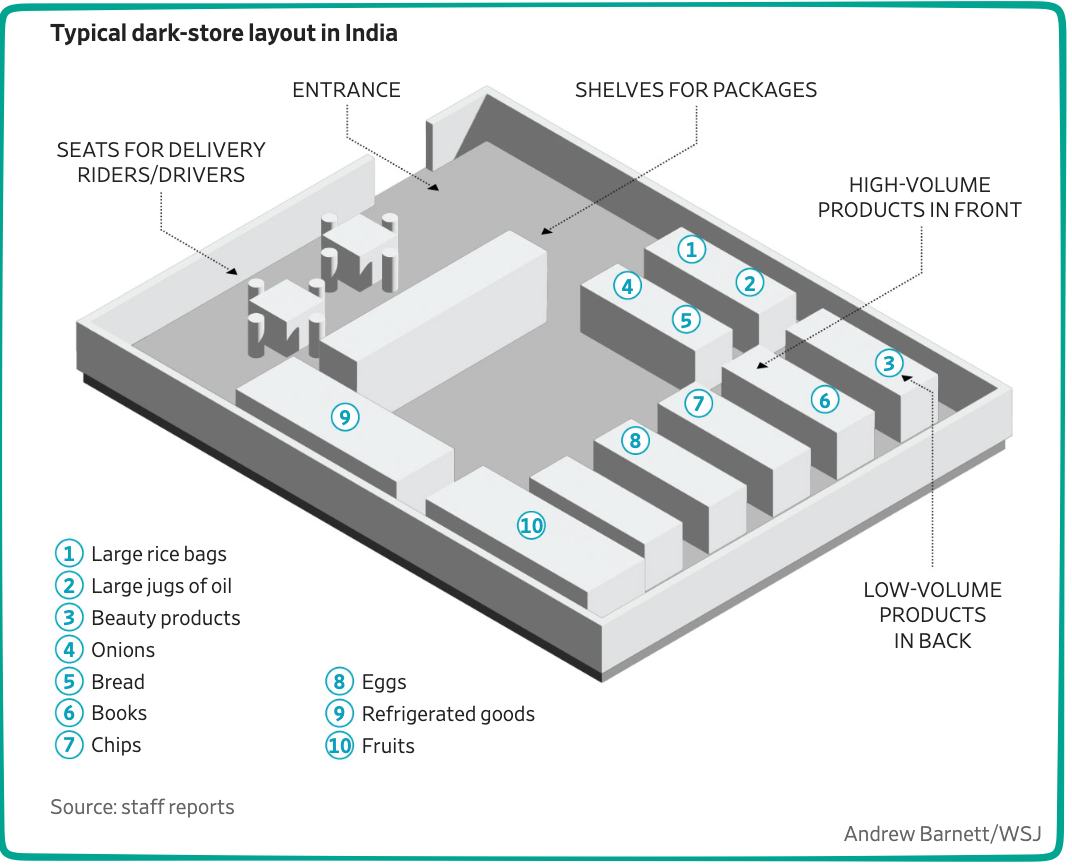
Copying the Indian prototype, Amazon has quick commerce pilot programs in Seattle and Philadelphia.
Our Bottom Line: Reference Points
When most of us thought two-day delivery was fast, Amazon created Prime:
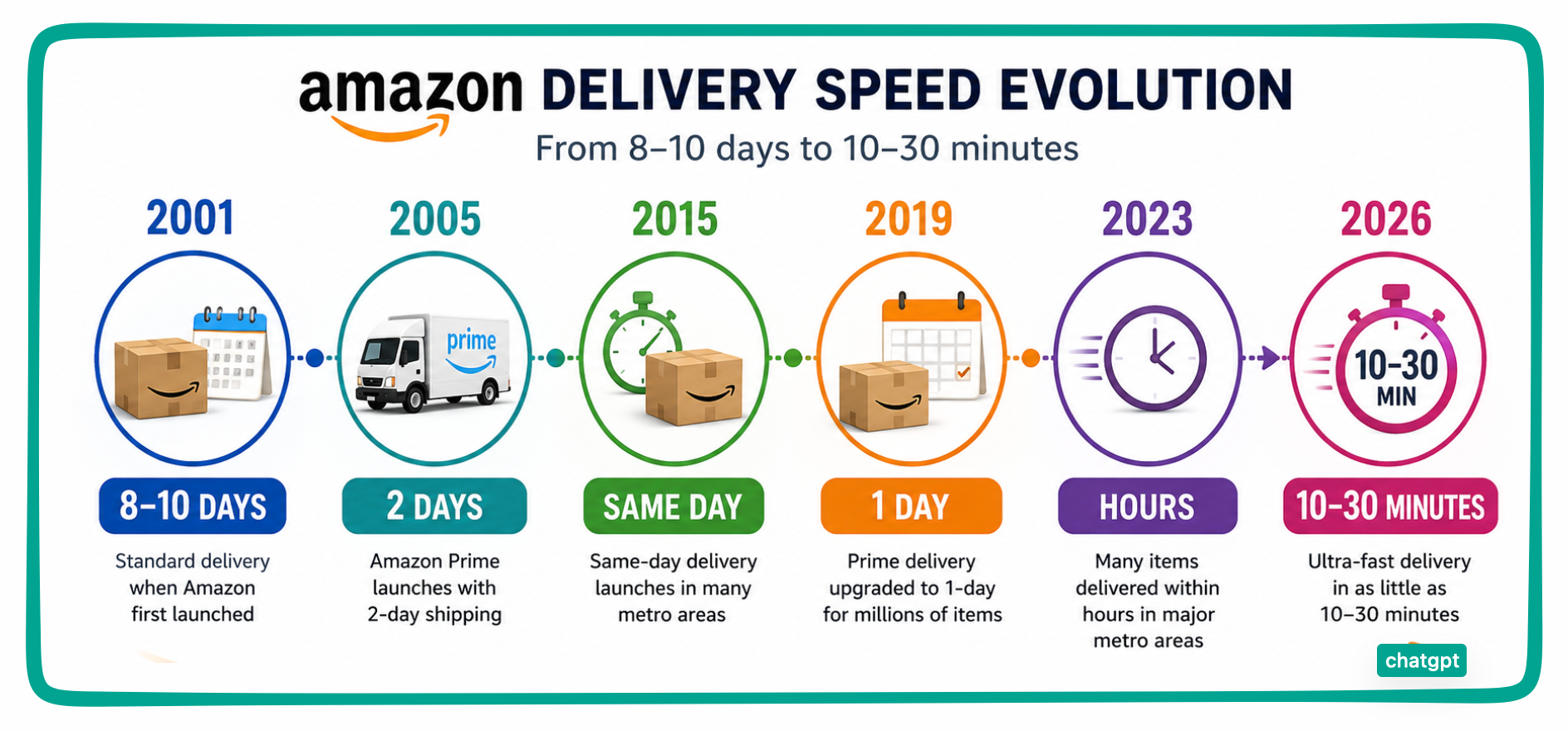
A behavioral economist would tell us that Amazon had transformed our online shipping reference points. A reference point influences our opinion. With gasoline, for example, a previous week’s price of $4.00 a gallon becomes a reference point that signals $3.50 is a bargain. But if the price beforehand had been $3.00, then $3.50 looks astronomical. Similarly, at work, when an associate gets a 7% raise, 5% makes us miserable. If our stock portfolio plunges, we don’t feel so bad knowing that the benchmark S&P declined even more.
Like gas prices and wages, when delivery times accelerated, our reference points changed.
Recently, I received a t-shirt order in 3 days and wondered why it was so slow. However, 23 years ago, I paid Amazon $9.48 to receive an online order in what I thought was a speedy 2 days. So yes, my reference points have changed.
My sources and more: For some delivery time history, we looked back at econlife. From there, leaping to now, India was our focus, here and here. But if you want the behavioral side of reference points and framing and anchors, do go to economics Nobel Laureate Daniel Kahneman’s superb book, Thinking Fast and Slow.
The drone in our featured image could speed up delivery times.
Please note that several of today’s sentences were in a previous econlife post.