![econlifelogotrademarkedwebsitelogo[1]](/wp-content/uploads/2024/05/econlifelogotrademarkedwebsitelogo1.png#100878)


Just Ask Jenna Looks At the Beauty Premium
March 12, 2026
March 2026 Friday’s e-links: The Best Business Histories
March 13, 2026
President Trump recently told us he might suspend the federal gasoline tax. At 18.4 cents, the federal tax gets added to every gallon we buy. The impact will depend on where we live.
The Impact of High and Low Gasoline Prices
High and Low Prices
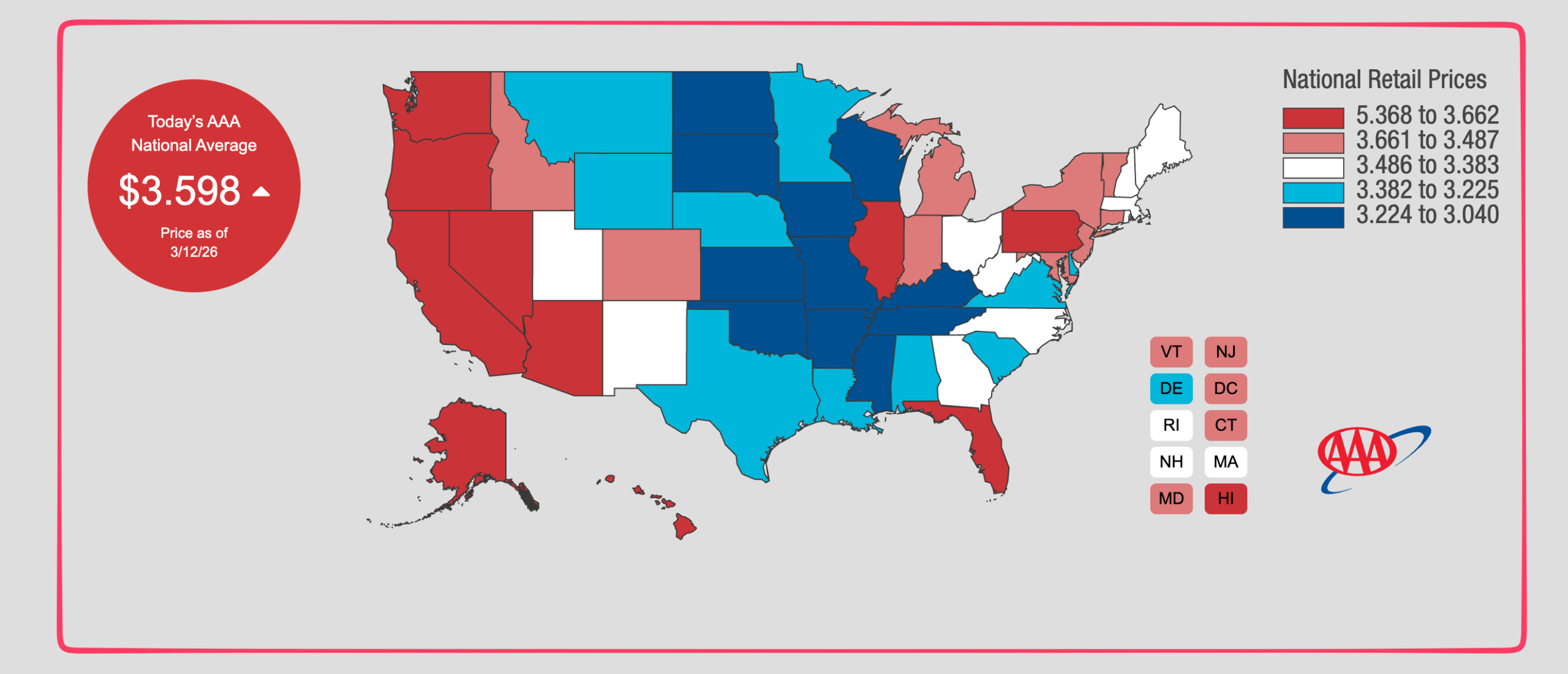
The difference between a gallon of regular gasoline in California and in Kansas can be more than $2.00. You can see that there is a vast split between the high and low gas states in the U.S.:
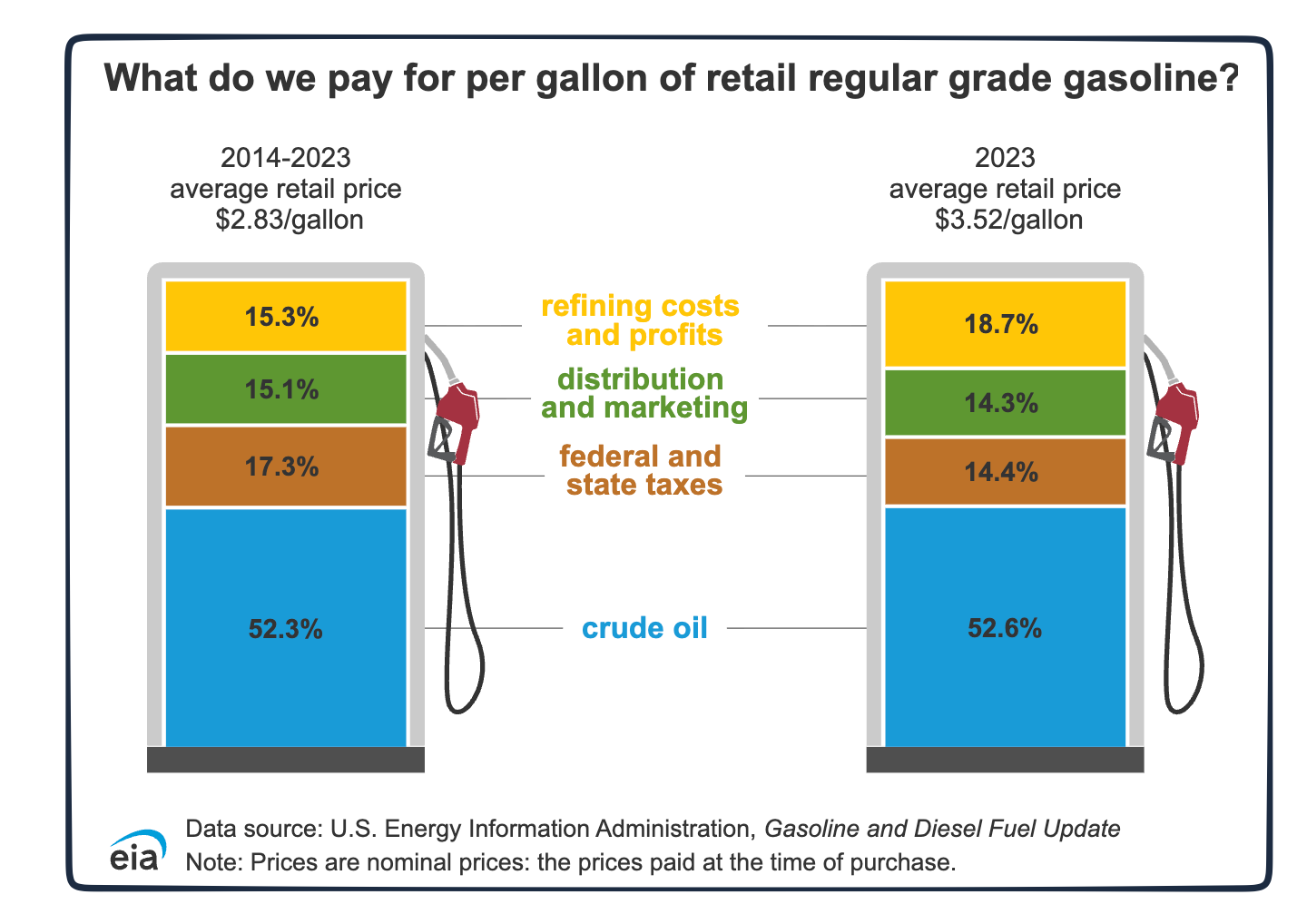
At more than half of what we pay per gallon, soaring crude helps to create our disparate gasoline prices:
Why Prices Vary
With the Iran War elevating the price of crude oil, we have a key reason for soaring gas prices. One focus, according to the Dallas Fed should be the “pass through.” Just what we would expect, the pass-through is the path of the higher crude price from the refiner to the retailer that varies from state to state.
Depending on the state, pass-throughs range from 9% to 65%. They tend to be higher in states with fewer environmental regulations and gas stations with less market power. As a result, South Central and Midwestern states have the highest pass-though prices while the East and West have less. Explained in the Dallas Fed paper, the pass-through diminishes as the refining, distribution., and retail costs build up along the domestic supply chain:
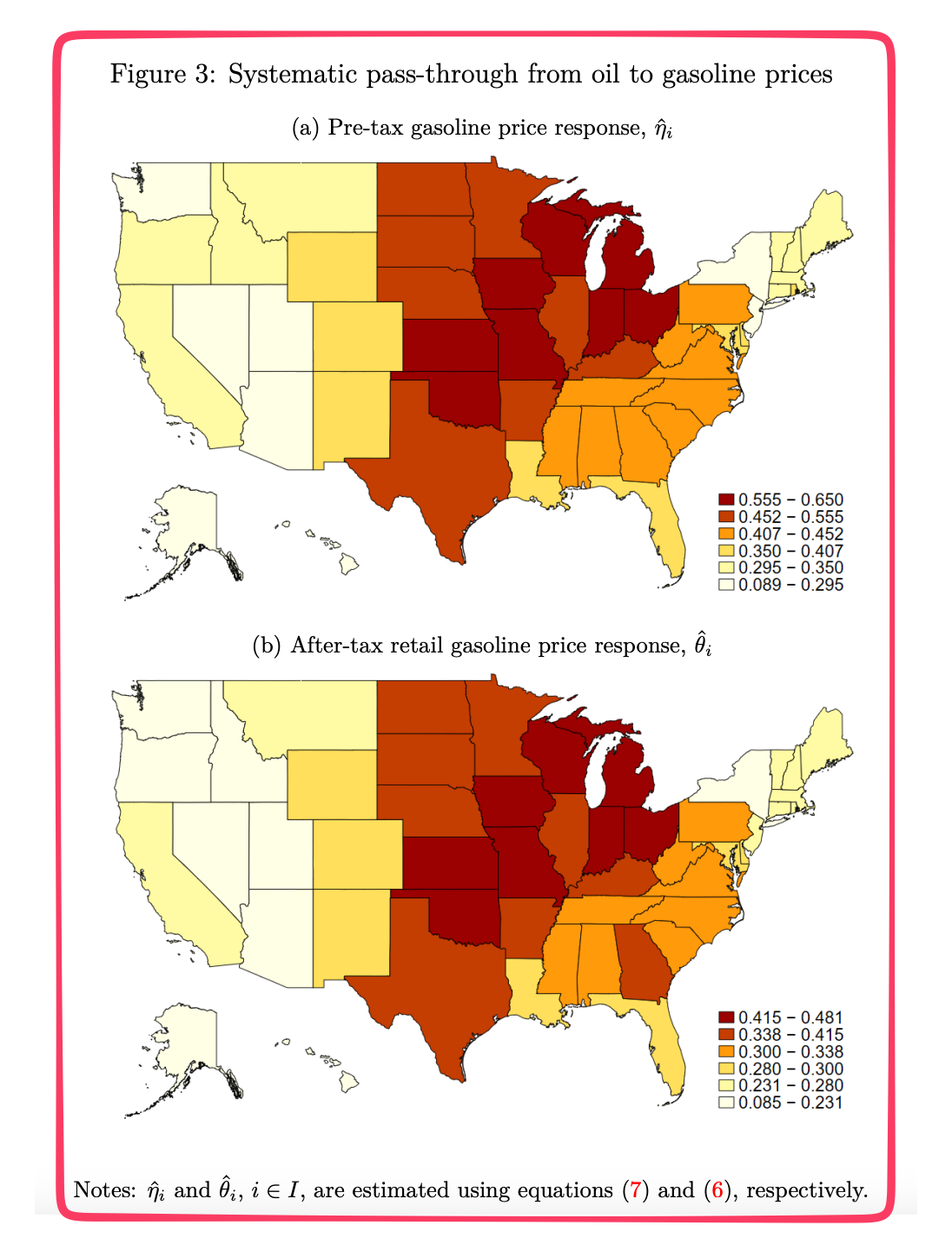
In addition, other policies that affect the price of gasoline are state specific. Looking closer at the reason California gas is so expensive we would see high taxes and fees. Then, further hiking the price, they have more stringent environmental requirements. In addition, California has less access to the energy infrastructure of pipelines and refineries than states like Texas. But they do have less pass-through:
The Impact
The impact of more expensive gas is greater in states with lower real personal income. In addition, researchers concluded there was also an elevated gas price impact in places with the following:
- more unemployment
- more per capita registered autos
- less public transit commuting
- less share of the population that is urban
Our Bottom Line: Elasticity
When an economist looks at gasoline prices, she will probably ask about our elasticity. She will wonder how much the quantity we are willing and able to buy “stretches” or “shrinks” when price changes. If price changes a lot and the quantity we buy remains almost the same, as with medication, then our demand is inelastic. By contrast, if price swings have a big impact on buying, then our response is elastic.
Returning to where we began, knowing about our disparate elasticities, we can predict the impact of suspending the federal gasoline tax.
My sources and more: This Dallas Fed paper provided most of today’s facts. Then, the EIA had more detail as did the AAA.
Please note that several of today’s sentences were in past econlife posts.