![econlifelogotrademarkedwebsitelogo[1]](/wp-content/uploads/2024/05/econlifelogotrademarkedwebsitelogo1.png#100878)


Our Weekly Economic News Roundup: From Sleep to Beef
February 28, 2026
How Taylor Swift Can Cause Distracted Driving
March 2, 2026
Babysitters are earning more.
But the reason is rather surprising
Babysitters’ Rates
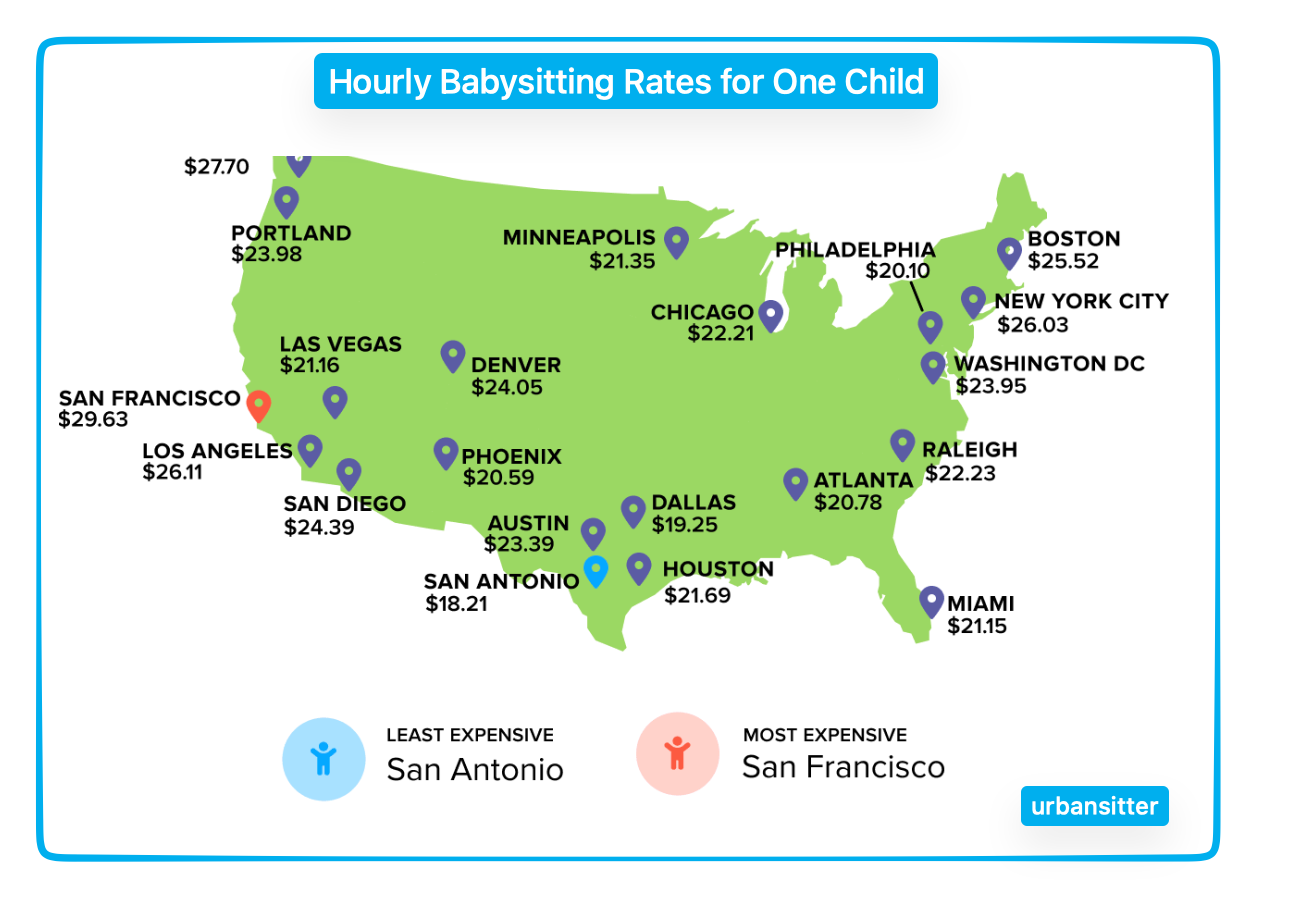
Urbansitter tells us that average hourly babysitter pay for one child is $26.24. while for two kids, it’s $29.87. Up 5% from last year, the spike exceeds inflation. It does, however, depend on where you live. As we might expect, the priciest childcare cities are San Francisco ($29.63/hr), Seattle ($27.70/hr), and Honolulu ($27.72/hr). At the same time, babysitting is cheapest in San Antonio ($18.21/hr), Dallas/Ft. Worth ($19.25/hr), and Columbus ($19.98/hr).
Looking at longer time periods, we find that flat rates are more typical. The average for a weekend is $1,050 and five days, $2,060.
Our Bottom Line: Baumol’s Cost Disease
The reason that babysitters make more is not because they are doing a better job. Instead, explained by economist William Baumol (1922-2017), they’ve caught a cost disease.
It’s a disease that occupations unable to boost productivity catch from others that are more productive. According to Dr. Baumol, for the musicians that compose a Mozart String Quartet, it’s tough to enjoy the benefits of economies of scale when your tasks are labor intensive. Whether it’s the 18th century or the 21st, a string quartet always needs a cellist, 2 violinists, 2 violists. Always, it has the same number of people and the same array of costs. Called Baumol’s Cost Disease, the “unproductive” industry has to pay its workers more even when its lower productivity does not warrant higher wages. The reason? As wages rise elsewhere, they nudge up what workers everywhere are paid.
So yes, for babysitters, like the string quartet, we have a labor intensive job that relies on manual human capital to complete its mission.
My sources and more: Thanks to Slate Money’s “Numbers Round” for inspiring today’s post. From there, for more data on babysitters’ pay, we looked at urbansitter. Also, do take a look at our econlife post where a babysitting co-op uses time as money. And finally, always handy, econlib has more on William Baumol.