![econlifelogotrademarkedwebsitelogo[1]](/wp-content/uploads/2024/05/econlifelogotrademarkedwebsitelogo1.png#100878)


Our Weekly Economic News Roundup: From Pandas to Buffets
October 3, 2026
Why Colleges Are Closing
October 5, 2026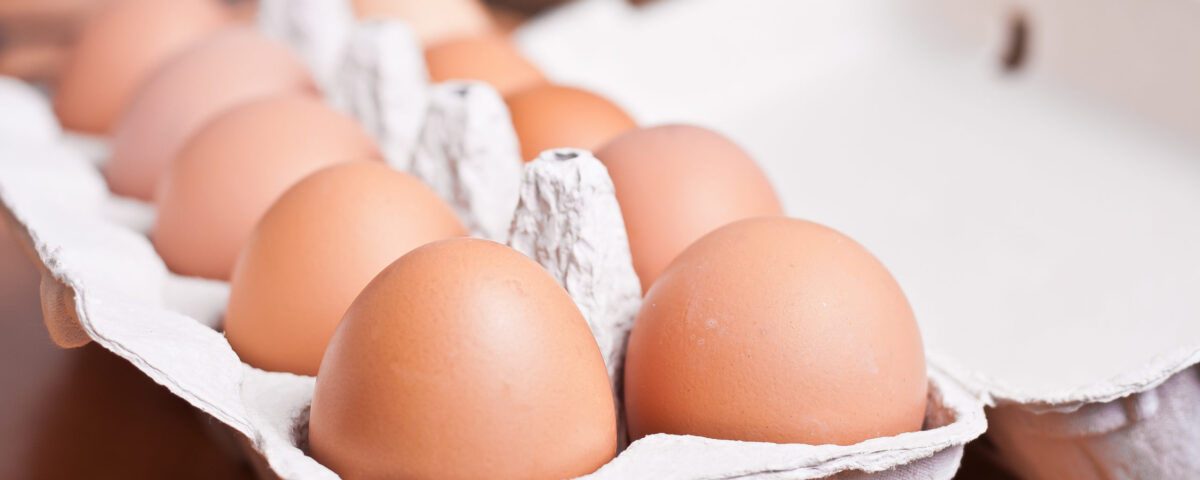
Cal-Maine just reported its second consecutive quarterly loss. As the biggest egg producer in the U.S., it depends on chickens for its livelihood.
And the news for them was not good.
Egg Gluts
During September, egg prices plunged close to 60 percent. At the same time, the number of egg-laying hens was up more than 5 percent from 2025.
Supply History
By contrast, during 2022 and 2023, the egg-laying hen population dropped when farmers, detecting bird flu, had to kill entire flocks. With hens down by an unimaginable 45 million, 2022 egg inventories sank by 29 percent. Although by July 2023, the numbers rose, in 2024 they again reversed.
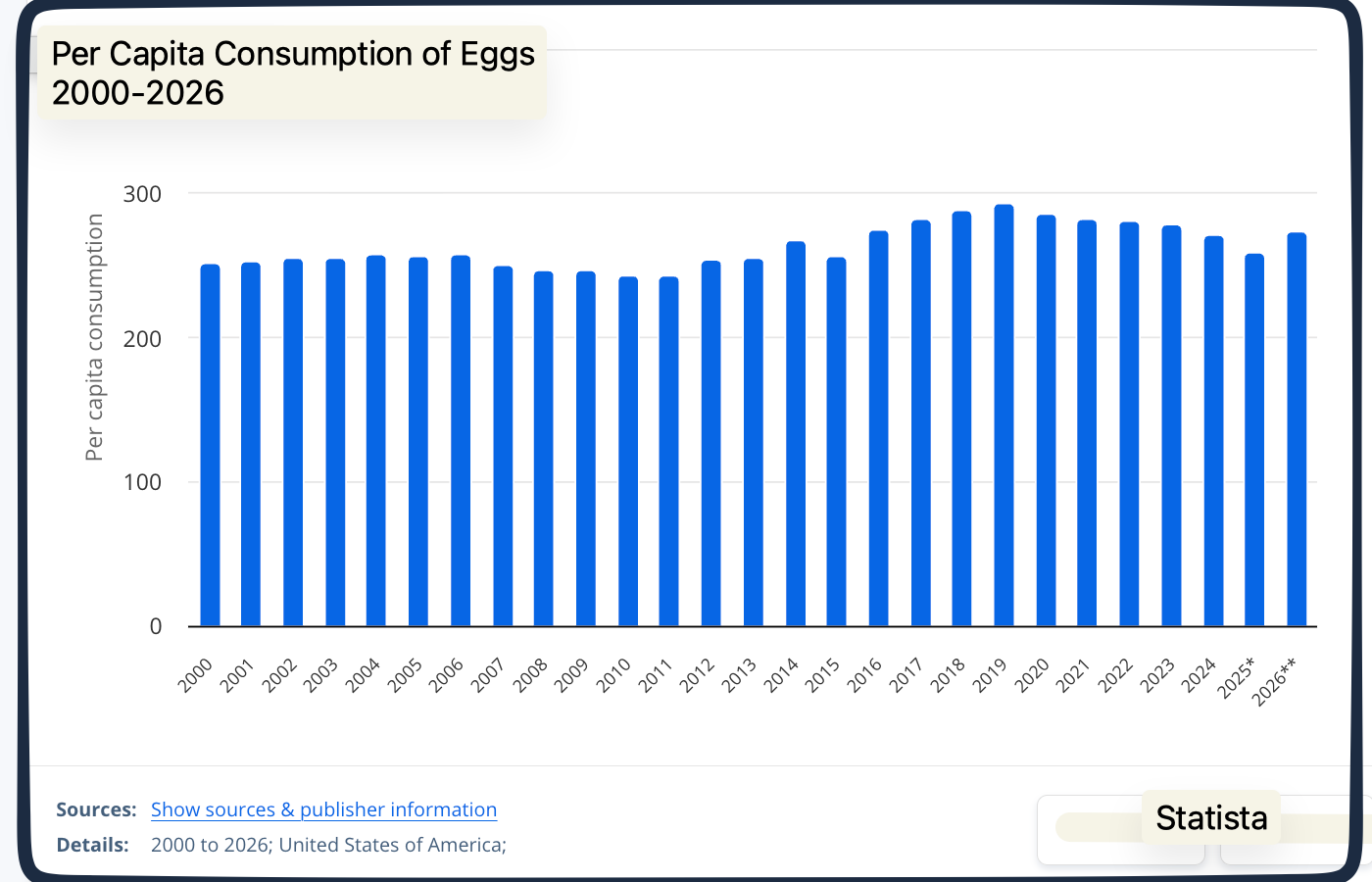
Meanwhile, we have been buying slightly more eggs. Ascending to 22.5 dozen from 21.5 dozen last year, the USDA expects us to consume an additional dozen eggs this year. (Do note, sadly, the 2025 and 2026 estimates reflect the most up-to-date USDA data.):
Our Bottom Line: Egg Prices
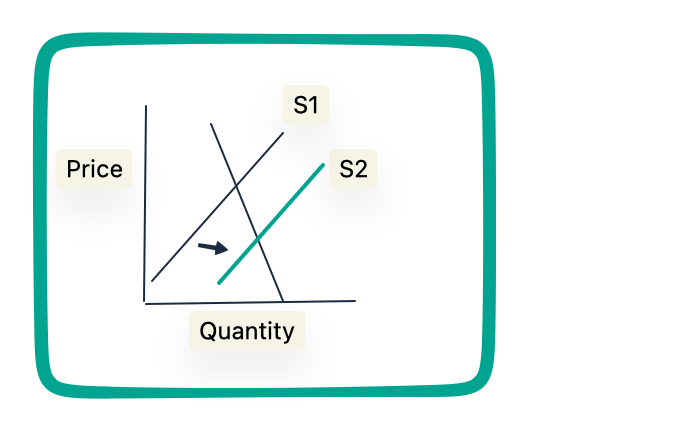
With more egg-laying chickens, and the chicken coming before the egg (sorry, I could not resist), we had more eggs. As economists, we just need to look at a supply and demand graph to see how an increase in supply affected the 2026 egg equilibrium price. (Showing less of a response to a price change, I drew a relatively vertical/inelastic demand curve):
Then, we went to the St. Louis Fed’s FRED for actual prices:
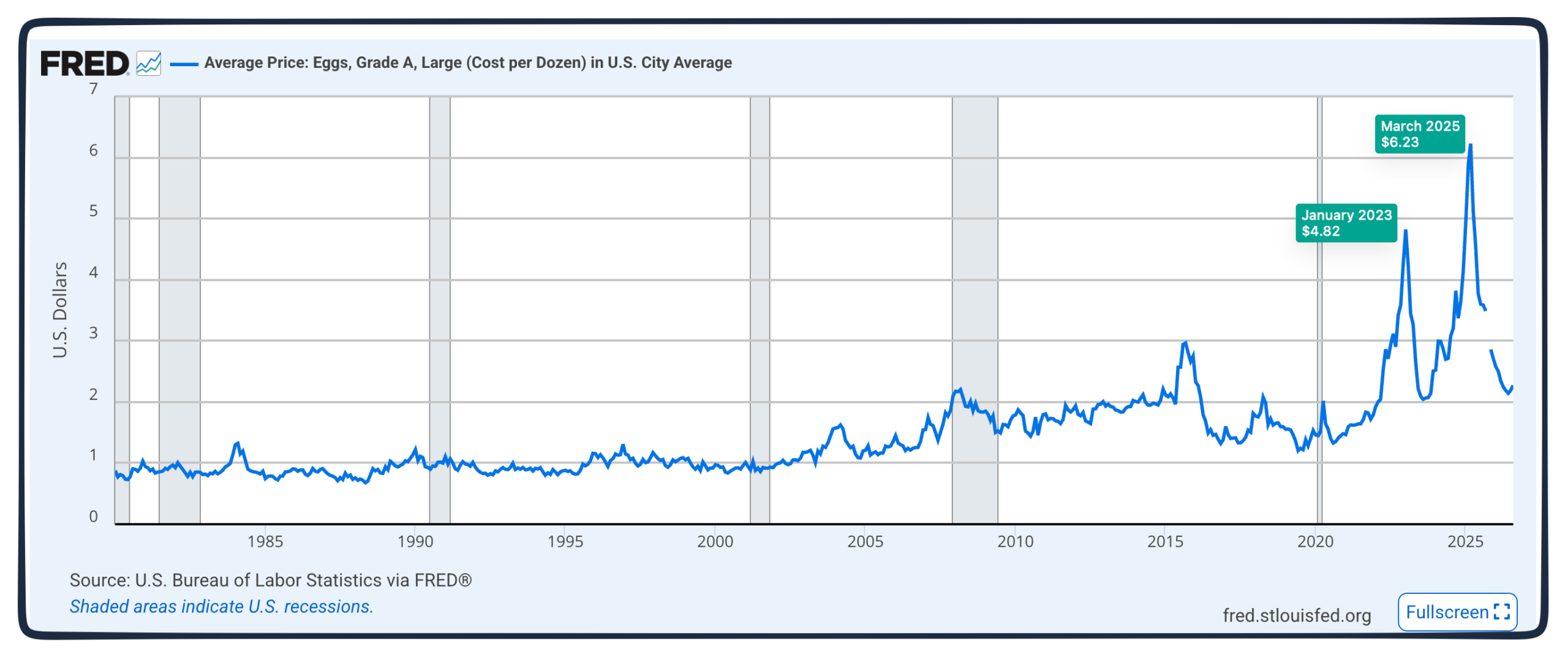
And saw why an egg glut created Cal-Maine’s second consecutive quarterly loss.
My sources and more: During yesterday’s walk, the BBC World Business Report podcast said there was an egg glut. It was worth investigating since last we looked, there was an egg shortage.