![econlifelogotrademarkedwebsitelogo[1]](/wp-content/uploads/2024/05/econlifelogotrademarkedwebsitelogo1.png#100878)


Just Ask Jenna Looks at Movie Distractions
April 30, 2026
May 2026 Friday’s e-links: A Good Book
May 1, 2026
The Bureau of Labor Statistics tells us about families with children:
- In 2025, 32.9 million families had children younger than 18 years old.
- Both parents were employed in 66.3% of these families.
- All parents are employed in 70% of the families with children under age 6.
No need to do the math.
We can just say that lots of families need childcare.
Childcare Deserts
But adequate childcare is a problem.
Not only do parents need to be sure that their child receives adequate care but many also consider the tradeoff between the cost and what they earn. In addition, women especially bear the emotional burden (sometime called mental load). And now, with inflation continuing and the Iran War further escalating prices, affordability is a #1 issue.
So too is finding care if you live in a childcare desert.
According to a report from the Center for American Progress 46% of America’s children live in a childcare desert:
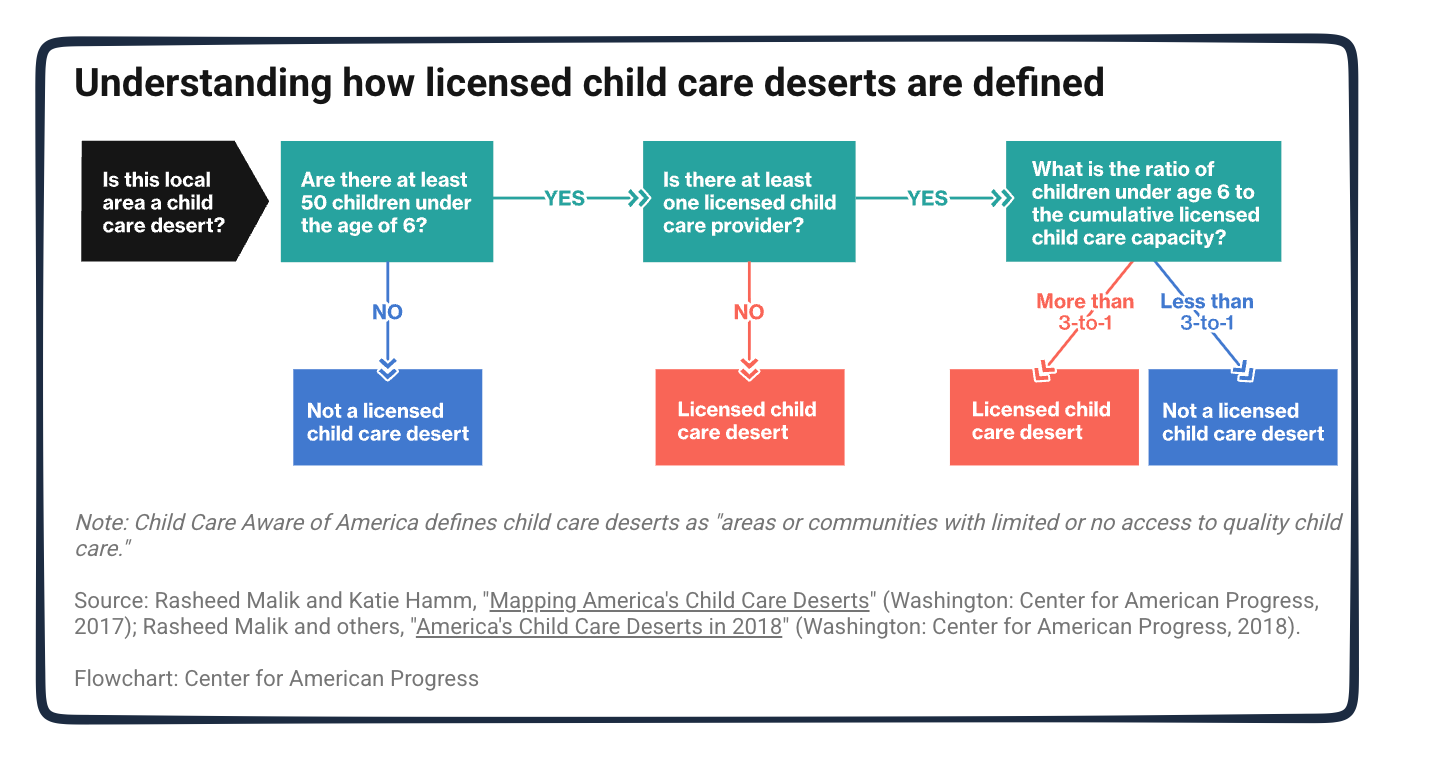
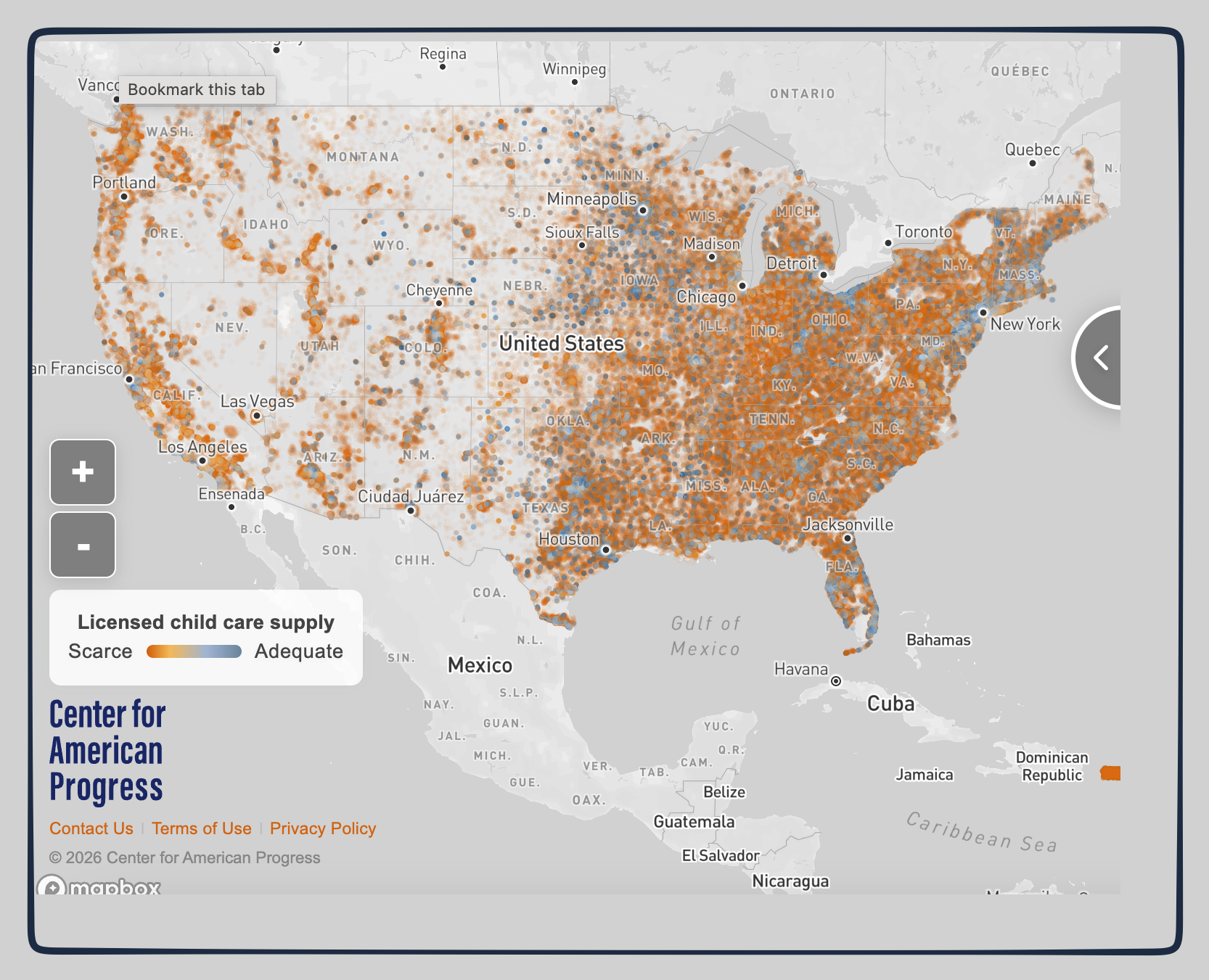
There are fewer licensed childcare facilities in minority and rural communities. Among the most deficient states, we would include Idaho with 83% of its young children in a childcare desert. Even worse, it’s 96% in Alaska and 95% for Hawaii. By contrast, 21% of the children below 6 in Massachusetts live in childcare deserts while for New Jersey it’s 25%, Nebraska, 25%, and Washington D.C., 5%.
It would have been better if the dominant color of this map were blue:
Our Bottom Line: Demand and Supply
As economists, we could say that demand and supply are the problem In childcare markets.
Childcare demand constrains the income licensed facilities can earn. Many have limited incomes that diminish their daycare budget. With free care from grandma a possibility, some families cap what they can pay through the cost paycheck tradeoff. When care is too expensive, one parent could stay home or grandma could kick in.
Meanwhile, on the supply side, childcare facilities face income limits that then get passed to what they pay their employees. Also, they are coping with increasing costs that include food, supplies, insurance, rent or mortgage payments. But it’s their low pay that makes it tough to get enough staff–one reason for childcare deserts.
Where are we? We wind up with high cost and low supply.
My sources and more: Thanks to Emily Peck’s Axios Markets for inspiring today’s post. From there, we found the details in this deserts report and a BLS press release. And of course, it all returns us to the landmark research on women and the workforce from Nobel Laureate Claudia Goldin.